
Bipolar Antidepressant Risk Calculator
Personalized Risk Assessment
Your Risk Assessment
Based on your risk factors, you have a risk of antidepressant-induced mania.
Recommended Action:
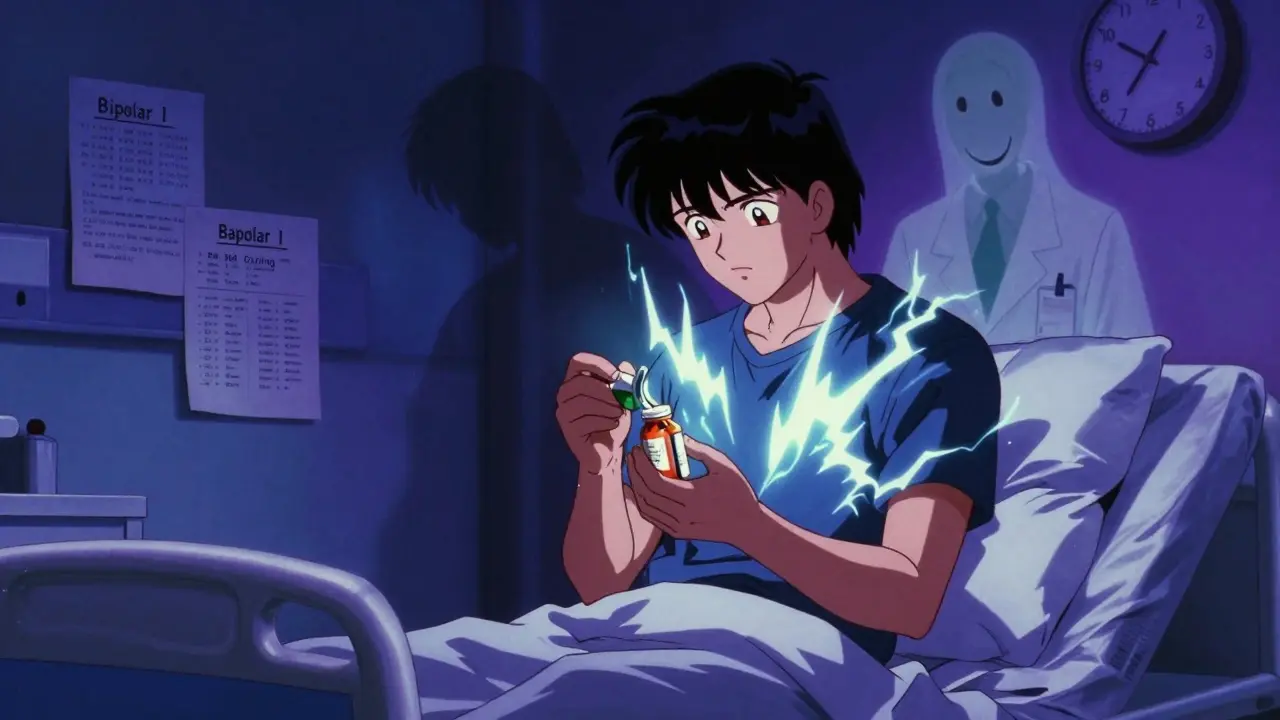
When someone with bipolar disorder feels overwhelmed by depression, it’s natural to reach for an antidepressant. After all, these drugs work well for unipolar depression. But in bipolar disorder, the same medication that lifts mood in one person can send another spiraling into mania - sometimes within days. This isn’t a rare side effect. It’s a well-documented, clinically significant risk that many doctors still overlook.
Why Antidepressants Can Trigger Mania in Bipolar Disorder
Antidepressants were never designed for bipolar depression. They were built for unipolar depression - where the brain lacks serotonin, and boosting it helps. But bipolar disorder isn’t just depression with occasional highs. It’s a cycle of mood instability, and antidepressants can act like a match to dry tinder.
Studies show that about 12% of bipolar patients taking antidepressants experience a switch into mania or hypomania during treatment. That number jumps to 31% in real-world, retrospective data. For comparison, people on mood stabilizers alone have a 10.7% switch rate - meaning antidepressants don’t even reduce the natural risk of mood swings. They just add to it.
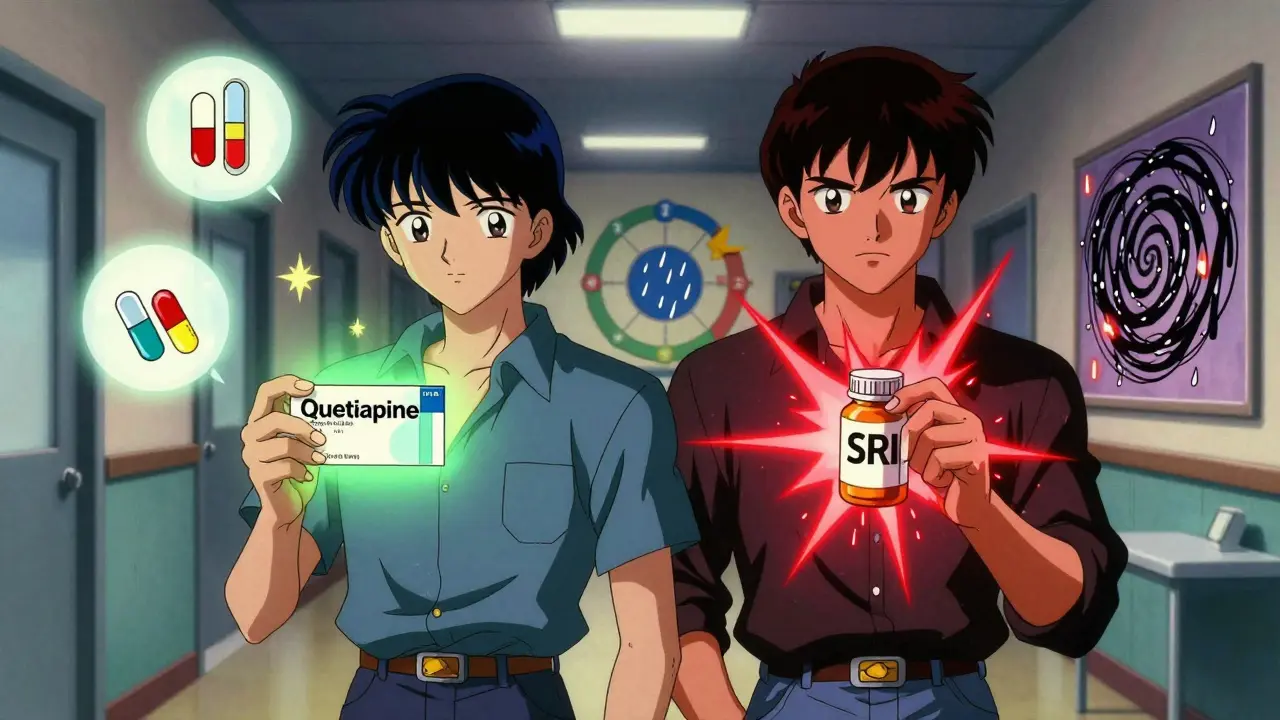
The risk isn’t the same for everyone. Tricyclic antidepressants (TCAs) like amitriptyline carry the highest risk - up to 25% of users switch. SSRIs like sertraline or fluoxetine are safer, but still trigger mania in 8-10% of cases. SNRIs like venlafaxine fall somewhere in between. And bupropion? It’s the least likely to cause a switch, which is why some clinicians prefer it - but even it isn’t risk-free.
Who’s Most at Risk?
Not all bipolar patients are the same. Some are far more likely to destabilize on antidepressants. Here are the key red flags:
- Bipolar I diagnosis - People with Bipolar I (full manic episodes) have a much higher switch risk than those with Bipolar II (only hypomania).
- History of antidepressant-induced mania - If you’ve switched before, you’re 3.2 times more likely to do it again.
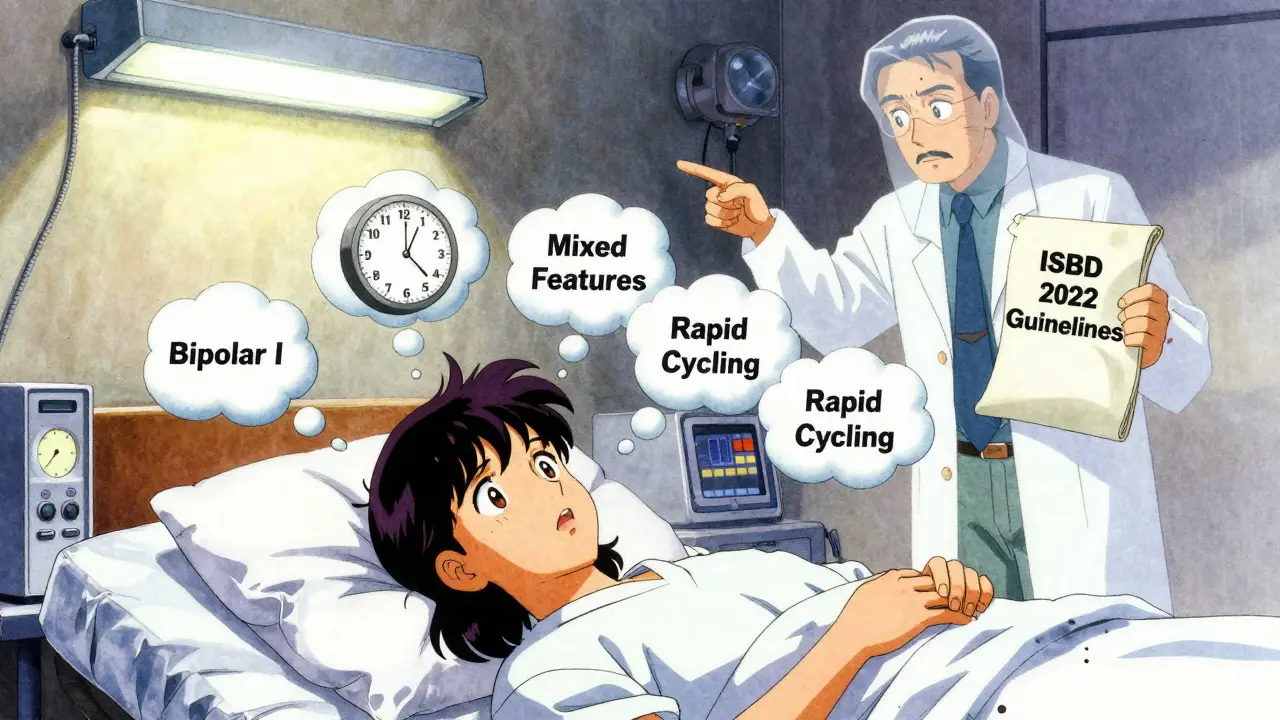
- Fast cycling - If you have four or more mood episodes a year (which affects 18-25% of bipolar patients), antidepressants can make it worse.
- Mixed features - About 1 in 5 people with bipolar depression also have symptoms of mania during the episode - like racing thoughts, irritability, or impulsivity. Antidepressants can make these symptoms explode.
These aren’t theoretical risks. In patients with all four factors - Bipolar I, past switch, rapid cycling, and mixed features - the chance of antidepressant-induced mania exceeds 30%. That’s not a gamble. That’s a guarantee of harm.
What Do the Guidelines Say?
The International Society for Bipolar Disorders (ISBD) and the American Psychiatric Association (APA) both agree: antidepressants should be a last resort. First-line treatments for bipolar depression are FDA-approved options like:
- Quetiapine (Seroquel) - 50-60% response rate, less than 5% switch risk
- Lurasidone (Latuda) - 50% response rate, only 2.5% switch risk
- Cariprazine (Vraylar) - 48% response rate, 4.5% switch risk
- Olanzapine-fluoxetine (Symbyax) - Approved specifically for bipolar depression
These drugs don’t just treat depression - they stabilize mood. They reduce the chance of future episodes. Antidepressants? They only treat the current episode - and may make future ones worse.
ISBD 2022 guidelines say antidepressants should only be used as a short-term add-on - never alone - and only after two FDA-approved treatments have failed. Even then, they should be stopped within 8 to 12 weeks. No exceptions.
The Real-World Gap: Why Doctors Still Prescribe Them
Despite clear guidelines, antidepressants are still prescribed to 50-80% of bipolar patients. Why?
In community clinics, 62% of psychiatrists use them regularly. In academic centers, only 38% do. The difference? Training. Doctors in university hospitals are more likely to follow the evidence. Those in private practice often rely on habits formed before the data changed.
There’s also patient pressure. People with depression want to feel better - fast. Antidepressants work in 2-4 weeks. Mood stabilizers? They take 4-6 weeks. And many patients don’t know the risks. They hear, “This will help your depression,” and assume it’s safe.
But here’s the truth: the benefit is tiny. The number needed to treat (NNT) for antidepressants in bipolar depression is 29.4. That means you need to treat 29 people to help one. Meanwhile, the number needed to harm (NNH) for mood switching is 200. So for every 200 people you treat, one will switch into mania. The math doesn’t favor antidepressants.
What Happens When You Stay on Them Too Long
Long-term use is where things get dangerous. The STEP-BD study tracked patients for years. Those who stayed on antidepressants for more than 24 weeks had a 37% higher risk of having another depressive or manic episode. It’s not just about the switch. It’s about making the whole illness worse.
Some studies show antidepressants can trigger rapid cycling. Others suggest they interfere with the effectiveness of lithium or valproate. And there’s evidence they may increase long-term suicide risk - especially during mixed episodes.
Yet, 65% of patients in community settings stay on antidepressants for over a year. That’s not treatment. That’s a dangerous experiment.
When Might Antidepressants Be Okay?
There are rare cases where antidepressants might help. One study found they might be safe in:
- Bipolar II patients
- With no history of mania from antidepressants
- No rapid cycling
- No mixed features
- On stable mood stabilizers
- For a very short time - 6 to 8 weeks max
Even then, weekly check-ins are required. The moment a patient feels unusually energetic, irritable, or impulsive - the drug must stop. No waiting. No hoping it’ll pass.
Dr. Nassir Ghaemi, a leading bipolar expert, says, “If you’re using an antidepressant in bipolar disorder and you haven’t considered the possibility of mania, you’re not treating the illness - you’re ignoring it.”
What Patients Should Ask Their Doctor
If you have bipolar disorder and your doctor suggests an antidepressant, ask these questions:
- Have I ever switched on an antidepressant before?
- Do I have mixed features or rapid cycling?
- Have I tried FDA-approved options like quetiapine or lurasidone first?
- Will I be monitored weekly for the first month?
- How long will I stay on this? What’s the exit plan?
- What are the signs of mania I should watch for?
If your doctor can’t answer clearly - or says, “It’s worth a try” - walk away. There are better options.
The Future: Better Tools, Fewer Antidepressants
The field is moving fast. New drugs like esketamine nasal spray show 52% response rates in bipolar depression with only 3.1% switch risk. Genetic testing for serotonin transporter variants may soon help predict who’s at risk of switching. Digital tools that track mood, sleep, and activity are making early detection of mania possible before it becomes a crisis.
But until then, the safest choice remains clear: avoid antidepressants unless absolutely necessary. And even then, treat them like a fire extinguisher - not a daily medicine.
Can antidepressants cause mania in bipolar disorder?
Yes. Antidepressants can trigger mania or hypomania in people with bipolar disorder. Studies show about 12% of patients experience a switch during treatment, but the risk rises to 31% in real-world settings. This risk is highest with tricyclic antidepressants and in patients with Bipolar I, rapid cycling, or mixed features.
Are SSRIs safer than other antidepressants for bipolar depression?
SSRIs carry a lower risk of mood switching (8-10%) compared to tricyclics (15-25%) or SNRIs, but they’re still not safe for most people with bipolar disorder. Even SSRIs can trigger mania, especially if used without a mood stabilizer or in patients with a history of switching. Bupropion is the safest SSRI-like option, but it’s not risk-free.
What are the FDA-approved alternatives to antidepressants for bipolar depression?
The FDA has approved four treatments specifically for bipolar depression: quetiapine (Seroquel), lurasidone (Latuda), cariprazine (Vraylar), and the combination of olanzapine and fluoxetine (Symbyax). These drugs have higher response rates (48-60%) and lower switch risks (2.5-5%) than antidepressants. They’re the first-line choices in current guidelines.
How long should someone stay on an antidepressant if they have bipolar disorder?
If used at all, antidepressants should be limited to 8-12 weeks and only as an add-on to a mood stabilizer or atypical antipsychotic. Long-term use increases the risk of rapid cycling, more frequent episodes, and reduced effectiveness of mood stabilizers. The ISBD 2022 guidelines recommend discontinuing antidepressants after this short window, regardless of response.
Can antidepressants increase suicide risk in bipolar disorder?
Evidence is mixed. Some studies suggest antidepressants reduce suicide risk, especially in Bipolar II. Others show increased risk during mixed episodes or after discontinuation. The overall consensus is that antidepressants don’t reliably reduce suicide risk in bipolar disorder - and may worsen it in some cases. Mood stabilizers and antipsychotics have stronger evidence for reducing long-term suicide risk.
Why do so many doctors still prescribe antidepressants for bipolar depression?
Many doctors were trained when antidepressants were seen as safe for all types of depression. Patient demand, lack of access to specialists, and the faster onset of antidepressants (2-4 weeks vs. 4-6 weeks for mood stabilizers) also contribute. In community clinics, up to 80% of bipolar patients receive antidepressants, even though guidelines strongly advise against it. This gap between evidence and practice remains a major challenge.
Nicole Blain
March 18, 2026 AT 06:35Robin Hall
March 19, 2026 AT 05:00Kathy Underhill
March 20, 2026 AT 14:03Srividhya Srinivasan
March 20, 2026 AT 18:35Prathamesh Ghodke
March 22, 2026 AT 05:28Linda Olsson
March 22, 2026 AT 14:26Ayan Khan
March 23, 2026 AT 20:25Emily Hager
March 24, 2026 AT 08:35Melissa Starks
March 25, 2026 AT 17:14