
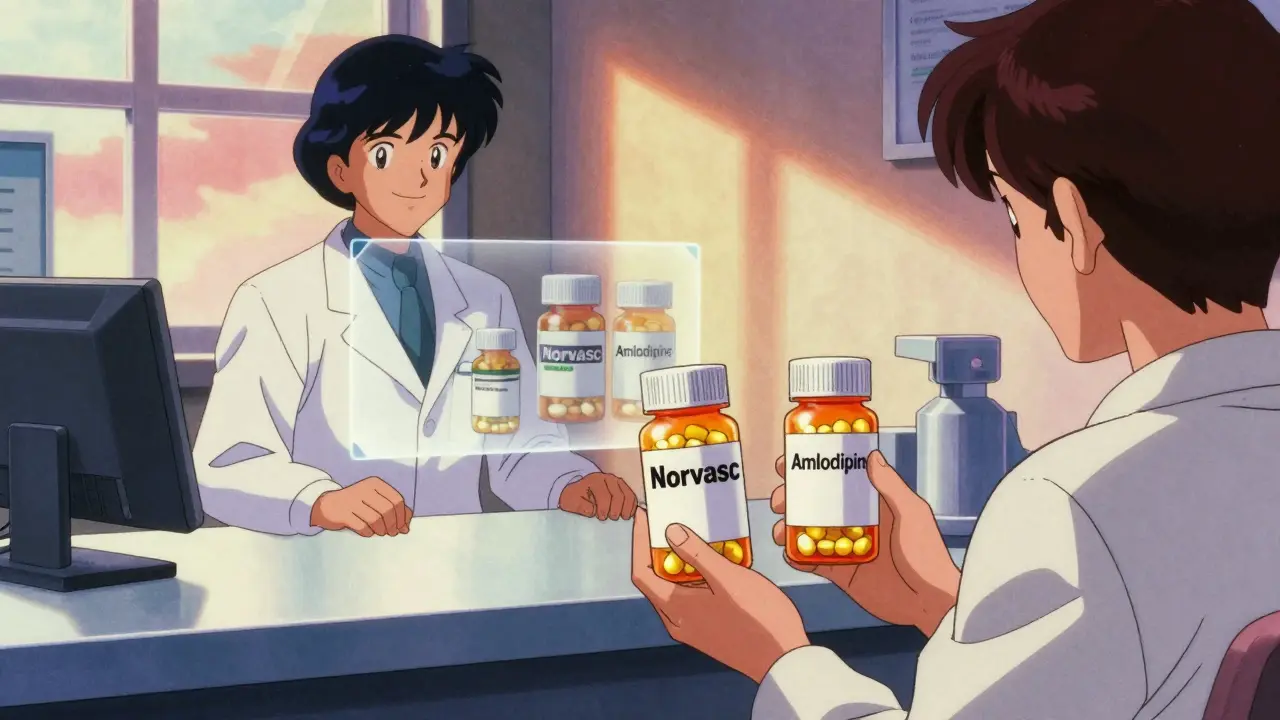
Ever opened your prescription bottle and seen a pill that looks different from the one you’ve been taking-but the name on the label is the same? You’re not imagining things. You might be holding an authorized generic. It’s not a knockoff. It’s not a cheaper copy. It’s the exact same drug, made by the same company, in the same factory, with the same ingredients-but sold under a generic label. And it’s changing how we think about price, trust, and what really makes a generic drug.
What Exactly Is an Authorized Generic?
An authorized generic is a brand-name drug that’s sold without the brand name on the bottle. The company that originally made the drug-say, Pfizer with Lipitor or AbbVie with Humira-produces an identical version and sells it under a different label, often through a subsidiary like Greenstone or Prasco. It’s not a traditional generic. It’s not a branded generic. It’s the original product, just repackaged.
Here’s the key: every active ingredient, every inactive ingredient, every tablet shape, every coating-it’s all identical. The FDA doesn’t require it to prove bioequivalence because it’s not a copy. It’s the same thing. You’re not getting a version of the drug. You’re getting the drug itself, just without the marketing.
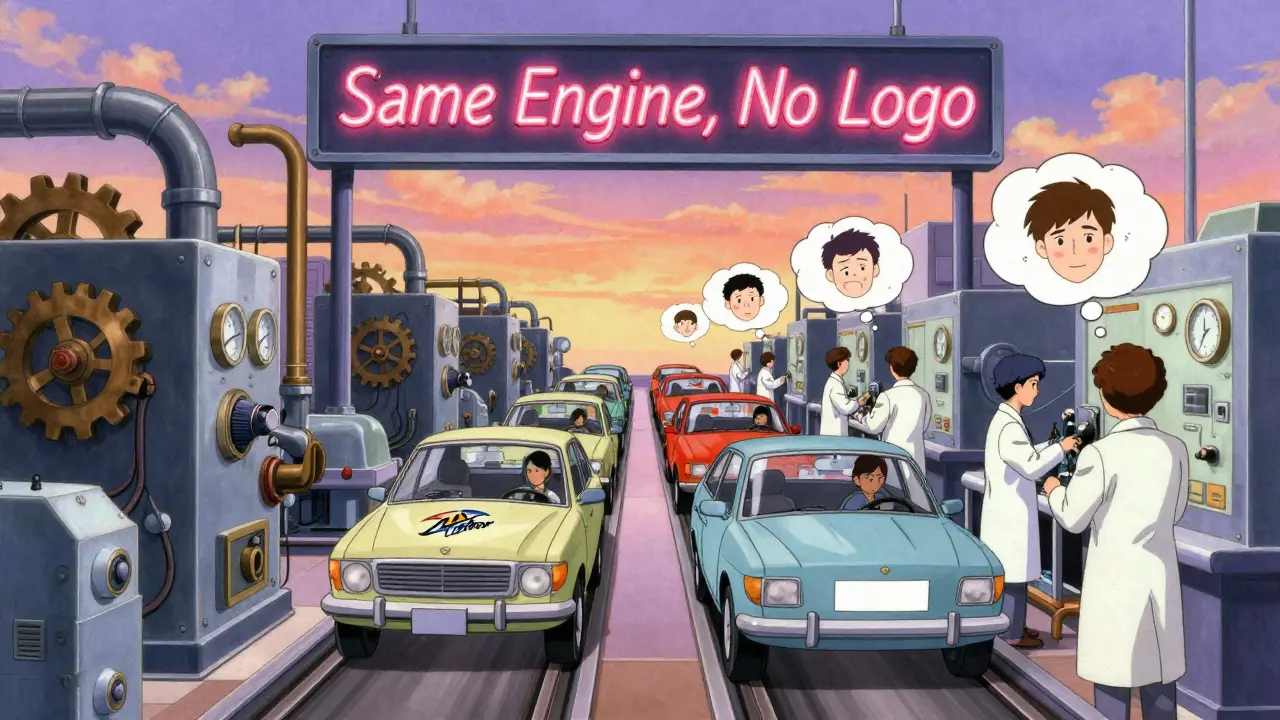
Think of it like buying a car. The brand-name version is the same model with the logo on the hood. The authorized generic is the exact same car, same engine, same seats, same paint-but the logo is gone. You still get the same ride. You just pay less.
How Is It Different From Regular Generics?
Regular generics are made by other companies after the brand patent expires. They have to prove they work the same way as the original. That means testing, trials, and approval through the FDA’s Abbreviated New Drug Application (ANDA) process. They can differ in color, shape, or filler ingredients. Sometimes, people notice a difference in how it feels or how it works-even if science says it shouldn’t.
Authorized generics skip all that. They’re made under the brand’s original New Drug Application (NDA). No extra approval needed. No bioequivalence studies. Just the same drug, same factory, same batch code, same everything. The only difference? The label says “amlodipine” instead of “Norvasc.”
And here’s the twist: authorized generics don’t show up in the FDA’s Orange Book-the official list of approved generic drugs. That’s because they’re not generics in the regulatory sense. They’re the brand product wearing a disguise.
Why Do Companies Do This?
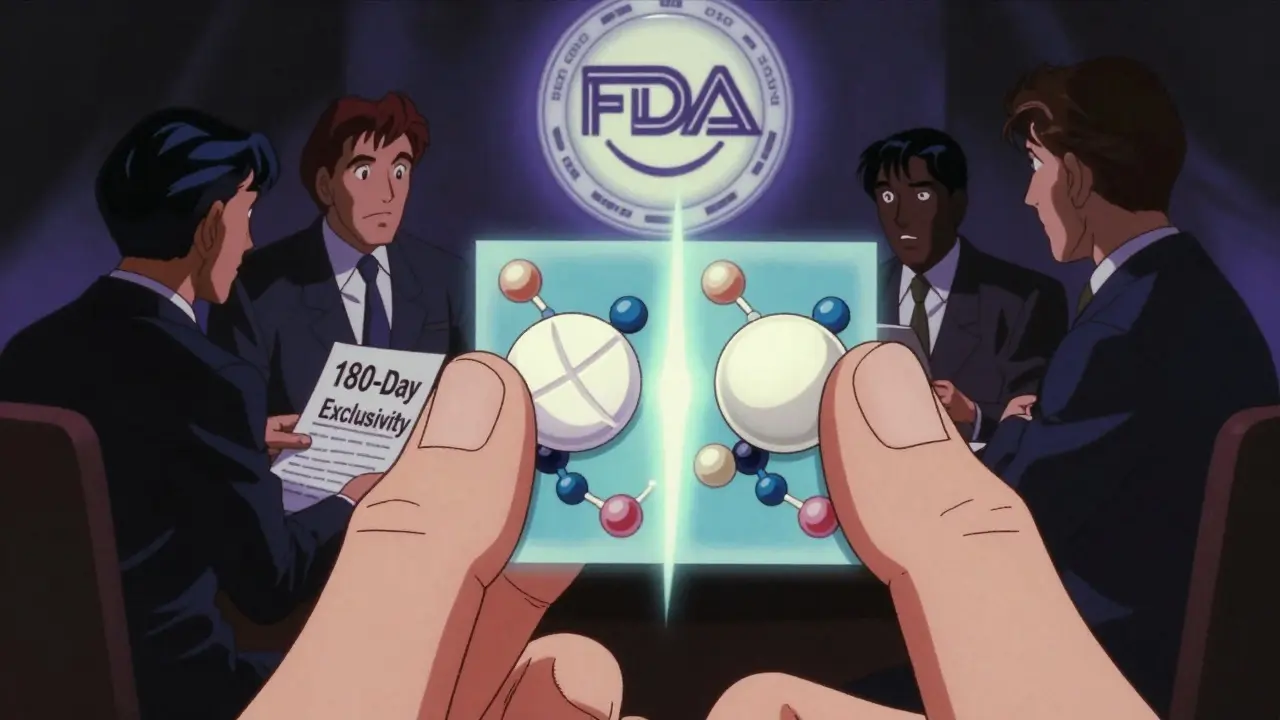
When a drug’s patent runs out, any company can make a generic version. The first one to file gets 180 days of exclusive rights to sell it. That’s a big payday. But here’s what brand manufacturers don’t want: watching their own drug get undercut by a competitor while they lose market share.
So they launch their own generic. Right away. Sometimes even before the first generic hits the market. This is called “authorized generic entry.” It’s a smart business move. They keep their revenue stream, keep control of the supply chain, and undercut the competition before it even gets started.
For example, when Pfizer’s Lipitor patent expired in 2011, they didn’t just sit back. They launched Greenstone’s version of atorvastatin-the same pills, same factory, same packaging except for the name. Within months, they captured nearly half the generic market. The first generic company? They never got their 180-day window. The market was flooded with the exact same drug, sold by the original maker.
Is It Really the Same?
Yes. Absolutely.
The FDA confirms that authorized generics are therapeutically equivalent to the brand-name version. No exceptions. No caveats. If you’re prescribed a brand-name drug and get an authorized generic instead, you’re getting the same medicine. Same absorption. Same effectiveness. Same side effects. Same everything.
Some patients notice a difference in color or markings on the pill. That’s because the brand might use a specific dye or imprint. The authorized version uses a different one, but the active ingredient is unchanged. It’s like switching from a red Coke can to a silver one. The drink’s still the same.
Pharmacists sometimes get tripped up too. Since authorized generics aren’t listed in the Orange Book, they can’t be automatically substituted like traditional generics. A pharmacist might need to check the FDA’s separate List of Authorized Generic Drugs or call the manufacturer to confirm. That’s why some people get confused when their pharmacy switches their prescription.
Why Aren’t More People Talking About This?
Because the system is designed to keep it quiet.
Drug manufacturers don’t advertise authorized generics. You won’t see TV commercials. You won’t find them in pharmacy flyers. They’re sold quietly through wholesalers and mail-order pharmacies. Even many doctors don’t know the difference.
Patients often assume “generic” means “different.” But with authorized generics, the opposite is true. The generic version is actually better-because it’s identical. Yet, it’s priced like a generic. Sometimes even cheaper than traditional generics.
And here’s the catch: because authorized generics aren’t listed in the Orange Book, insurance companies sometimes don’t recognize them as “generic” for cost-sharing purposes. So you might pay more out-of-pocket than expected. Always ask your pharmacist: “Is this an authorized generic?”
Who Makes These?
You’d be surprised. The big players aren’t just the brand companies. They’re subsidiaries built just for this:
- Greenstone - Pfizer’s authorized generic arm
- Prasco - Owned by Procter & Gamble, makes generics for drugs like Zyrtec and Claritin
- Patriot - A major distributor of authorized generics
These aren’t fly-by-night generic manufacturers. These are subsidiaries of the original brand companies. That’s why the quality is consistent. They use the same equipment, same quality control, same inspectors. It’s the same factory. Same people. Same batch.
What’s the Catch?
There’s a dark side.
The Hatch-Waxman Act of 1984 was meant to encourage competition. It gave the first generic company 180 days of exclusivity to reward them for challenging patents. But authorized generics undermine that. When the brand company launches its own generic, it can crush that exclusivity window. The first generic company never gets its payoff. That discourages future challenges to patents.
Some experts argue this is anti-competitive. It’s not illegal-but it’s controversial. The FDA allows it. Congress hasn’t stopped it. And the market keeps growing.
As more blockbuster drugs lose patent protection-like Humira, Keytruda, and Ozempic-we’ll see more authorized generics. More drugs. More savings. More confusion.
What Should You Do?
Here’s what to do if you’re on a brand-name drug:
- Ask your pharmacist: “Is there an authorized generic for this?”
- Check the FDA’s List of Authorized Generic Drugs (search online for “FDA authorized generic list”)
- Compare prices. Sometimes the authorized generic is cheaper than the traditional generic.
- If you’re switching, ask if the pill looks different. That’s normal.
- Don’t panic if your pill changes color or shape. It’s still the same medicine.
And if you’re on a generic right now? Ask if it’s an authorized one. If it is, you’re already getting the best deal possible.
Final Thought
Authorized generics aren’t a loophole. They’re a feature of the system. They exist because the law didn’t anticipate a brand company selling its own drug under a generic label. But they’re here to stay. And for patients? They’re a win. Same drug. Same results. Lower price.
You don’t need to be a pharmacist to understand this. You just need to ask the right question: Is this the same drug, just with a different label? If the answer is yes, you’re getting exactly what you paid for-just without the brand name.
Are authorized generics safe?
Yes. Authorized generics are identical to their brand-name counterparts in every way-active ingredients, dosage, strength, and quality. The FDA requires that they be manufactured under the same conditions and meet the same standards as the original brand drug. There is no increased risk.
Do authorized generics work the same as brand-name drugs?
Yes. Because they are made by the same company using the same formula, manufacturing process, and quality controls, authorized generics work exactly like the brand-name version. There is no difference in effectiveness or side effects.
Why do authorized generics look different?
They may have a different color, shape, or imprint to distinguish them from the brand-name version, but these changes only affect appearance-not the drug’s function. The active ingredients and dosage remain unchanged.
Are authorized generics cheaper than regular generics?
Often, yes. Because they’re produced by the original manufacturer, they can be priced lower than traditional generics. Sometimes they’re even cheaper than the brand-name version. Always compare prices at your pharmacy.
Can my pharmacist substitute an authorized generic without telling me?
No. Authorized generics aren’t listed in the FDA’s Orange Book, so they can’t be automatically substituted like regular generics. Your pharmacist must inform you if they’re switching your prescription to an authorized generic. You have the right to ask what version you’re receiving.
How do I find out if my drug has an authorized generic?
Visit the FDA’s official List of Authorized Generic Drugs, which is updated regularly. You can also ask your pharmacist or check with your insurance provider. Many drug manufacturers also list authorized generics on their websites.
Frank Baumann
February 8, 2026 AT 08:51Let me tell you something-this whole authorized generic thing is like finding out your dad’s been secretly making your favorite cereal but selling it under a different box so he doesn’t have to pay for branding. Same damn ingredients. Same factory. Same damn smell when you open the box. And you’re paying less? Why the hell isn’t everyone screaming about this? This isn’t just smart-it’s revolutionary. We’ve been lied to for decades about what ‘generic’ even means. It’s not a downgrade. It’s a disguise. And the companies that do this? They’re not evil. They’re just playing chess while everyone else is playing checkers. I’m not even mad anymore. I’m just impressed.
And don’t get me started on how pharmacies don’t even know the difference. I switched to an authorized generic last year and my pharmacist looked at me like I’d asked for a unicorn. ‘Is this the same?’ I asked. ‘Uh… it’s generic?’ No, Karen. It’s the *original*. Just without the logo. That’s the whole damn point.
Someone needs to make a TikTok about this. Someone needs to film a side-by-side of the brand pill and the authorized one. Same color, same weight, same everything. Just different imprint. And then play ‘Eye of the Tiger’ while they swallow them. The world needs to see this. We’re not just saving money. We’re exposing a scam dressed up as a system.
Andrew Jackson
February 9, 2026 AT 07:21It is an affront to the principles of free-market competition that a corporation may manufacture a product under its own patent, then repackage it under a generic label to circumvent the legal protections afforded to independent generic manufacturers. The Hatch-Waxman Act was crafted with precision to incentivize innovation and equitable access, yet this practice-this *subterfuge*-undermines the very foundation upon which affordable pharmaceutical access was built. The FDA’s silence on this matter is not neutrality; it is complicity.
When a multinational conglomerate leverages its regulatory dominance to preemptively crush a challenger, we are not witnessing market efficiency-we are witnessing the erosion of fair play. The American public is being sold a myth: that ‘same drug’ means ‘fair price.’ But what of the small generic manufacturers who risked capital, time, and legal resources to challenge patents? They are left with nothing. No reward. No justice. Just a corporate shell game played with lives.
Let us not confuse cost-saving with ethical integrity. This is not a win for consumers-it is a win for monopolies masquerading as benevolence. We must demand transparency. We must demand reform. And we must refuse to be fooled by the illusion of savings when the cost is justice itself.
Brandon Osborne
February 9, 2026 AT 09:46Oh my GOD. I just realized I’ve been taking an authorized generic for my blood pressure med for TWO YEARS and I thought I was being scammed. I went to the pharmacy and they switched me to this white oval pill and I was like ‘oh no, this isn’t the blue one’-I almost called my doctor to complain. Turns out? It’s the exact same thing. Same factory. Same stuff. I was just being paranoid because it didn’t have the Pfizer logo on it.
And now I’m mad because I could’ve been saving $40 a month this whole time. My insurance didn’t even tell me. My pharmacist didn’t tell me. Nobody told me. This is wild. Why is this not on the news? Why isn’t there a billboard? ‘Your Lipitor is here-just without the name.’
Also, I just checked my other meds. Half of them are authorized generics. I’ve been living in a parallel universe where I thought generics were ‘inferior.’ They’re not. They’re just… quieter. Like a luxury car with the emblem sanded off. Still runs like a dream. Still costs half. I’m telling my mom. I’m telling my coworkers. This is the greatest scam I’ve ever been the victim of-and I love it.
Random Guy
February 11, 2026 AT 04:28so like… the brand company makes the drug, then sells it as a generic to screw over the other generic companies? bro. that’s not capitalism. that’s a villain origin story. imagine if mcdonald’s made their own ‘generic’ burger and sold it at wendy’s prices. ‘oh don’t worry, it’s the same beef, same buns, same pickles-just no golden arches.’
also why is the FDA okay with this? are they asleep? also why is no one talking about this? i feel like i found the secret sauce to the american healthcare system and it’s just… a pill with a different label. i’m gonna start a subreddit. r/authorizedgenerics. we’ll have a weekly ‘pill swap’ challenge. post your pill, guess if it’s authorized or not. i’ll bring snacks. and a t-shirt that says ‘i survived the great pill deception.’
Alex Ogle
February 12, 2026 AT 23:10I’ve been on a few different meds over the years, and honestly, I never paid attention to the label until last year when my pharmacy switched my atorvastatin from the blue capsule to a white tablet. I thought, ‘Oh no, they gave me the wrong thing.’ I called my doctor. I called the pharmacy. I even Googled the imprint code. Turns out? It was an authorized generic. Same company. Same batch, basically. I was relieved-but also weirdly disappointed? Like, I’d built this whole narrative in my head that generics were ‘lesser.’
Turns out, the system is way more complicated than we’re told. The brand companies aren’t villains here. They’re just… really good at playing the game. They’re not cutting corners. They’re just removing the brand. And honestly? That’s kind of brilliant. It’s like they said, ‘We’re not going to fight you. We’re just going to be you.’
Now I ask every pharmacist: ‘Is this authorized?’ And I’m not even mad when they don’t know. I just show them the FDA list. It’s become my weird little thing. Like checking if the coffee at Starbucks is ethically sourced. Only… with pills.
Chelsea Cook
February 13, 2026 AT 15:06Y’all, I work in a pharmacy and I have to tell you-this is the most under-discussed thing in healthcare. We get patients who panic because their pill changed color. ‘Is this fake?’ they ask. ‘Did they give me the wrong medicine?’ And we have to explain that no, it’s the same exact drug, just made by the same company under a different label. And half the time, they’re like ‘Wait… so I’ve been overpaying this whole time?’
Here’s the thing: authorized generics are the *best* kind of generic. No compromise. No guesswork. Just the same drug, same quality, same results, lower price. Why isn’t this on every pharmacy flyer? Why don’t insurance companies promote it? Because they don’t want you to realize how much you’ve been overpaying for branded generics.
I’ve started putting little sticky notes on prescriptions: ‘This is an authorized generic. Same as brand. Save $30.’ And guess what? People love it. They feel smart. They feel empowered. And honestly? We should be shouting this from the rooftops. This isn’t a loophole. It’s a gift. And we’re not even using it.
Lyle Whyatt
February 14, 2026 AT 21:25As someone who’s lived in both the US and Australia, I can tell you this: the US system is wild. Here, we have generics, sure-but they’re often made by different manufacturers, and sometimes the fillers change. You get a different pill color, different shape, different absorption speed. It’s not always bad-but it’s unpredictable.
But authorized generics? That’s a whole other level. Same factory. Same equipment. Same quality control team. Same person who packed your brand-name pill? Probably packed yours too. It’s like getting the same coffee from the same barista, just in a different cup. No one’s cutting corners. No one’s cutting costs by cutting quality. They’re cutting costs by cutting branding.
I wish Australia had this. We get generics, sure-but they’re often imported from India or China, and while they’re safe, you never know if they’re from the same batch. Here? It’s literally the same drug. Same date code. Same everything. And the price? Half. Or less. This isn’t just smart. It’s almost elegant. Why isn’t this the default? Why is it a secret? I think it’s because no one wants you to realize how much of what you pay for is just… marketing. And labels.
Andy Cortez
February 16, 2026 AT 17:14ok but like… if it’s the same drug, why does it even matter if it’s ‘authorized’ or not? why not just call it the brand? why go through the whole ‘we’re not the brand but we’re the brand’ thing? sounds like corporate nonsense. also why is this not in the orange book? if it’s the same, why is it treated like a ghost? someone’s got a spreadsheet somewhere that says ‘let’s confuse people so we can charge less but still look legit.’
also i just checked my meds and turns out i’ve been on one for 3 years and didn’t know. my pharmacist didn’t tell me. my doctor didn’t tell me. i think i got scammed. or maybe i got lucky. idk. but now i’m gonna check every pill i take. and if it looks different, i’m gonna ask ‘is this the same thing with a different label?’ and if they say no, i’m gonna laugh in their face.