

BPH Cold Medication Risk Checker
How to use: Select a common cold or allergy medication below to see its risk profile for men with an enlarged prostate (BPH).
Disclaimer: This tool is for educational purposes. Always consult a physician before starting or changing medications.
Medication Name
Mechanism/Effect:
Effect description
Retention Odds Ratio:
Odds ratio
Imagine waking up with a nasty cold, popping a common over-the-counter decongestant to clear your sinuses, and then suddenly finding that you physically cannot urinate. For most people, this sounds like a nightmare, but for men with Benign Prostatic Hyperplasia is a noncancerous enlargement of the prostate gland that can compress the urethra (BPH), it is a very real medical emergency. This condition affects roughly 50% of men by age 60, and as the prostate grows, the window for errors with medication gets much smaller.
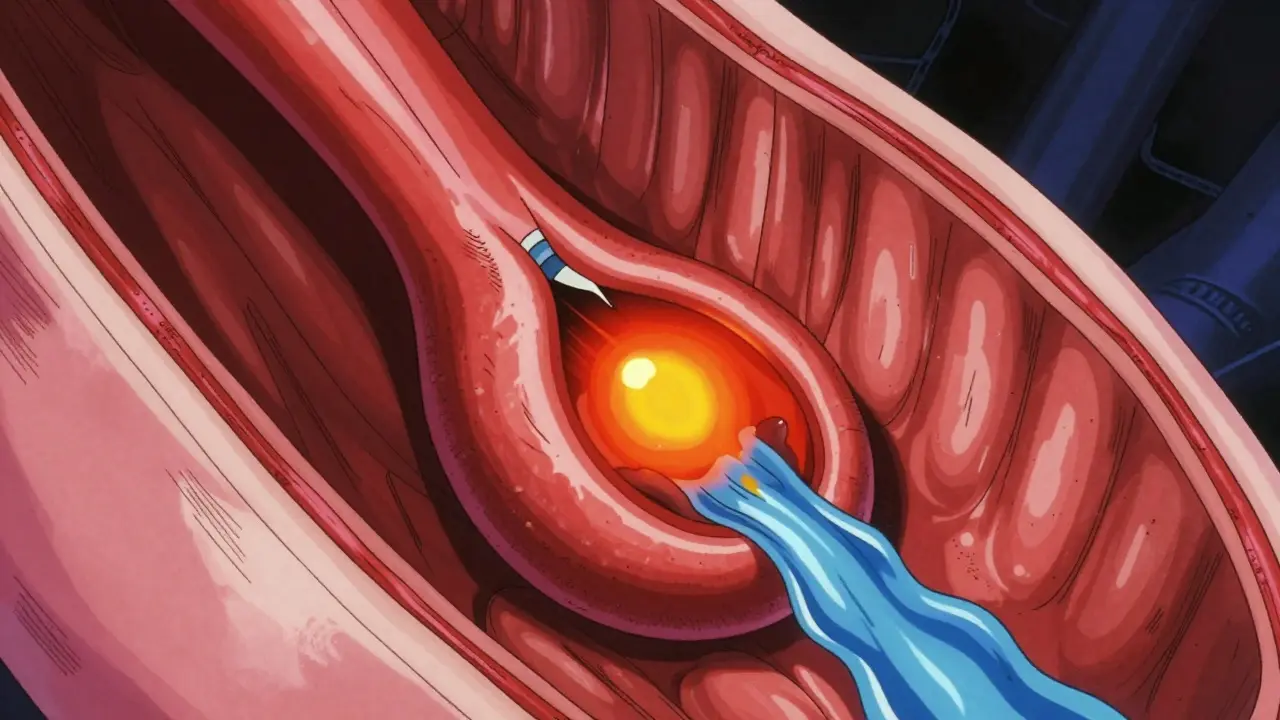
The core problem is a clash of chemistry. Decongestants are designed to shrink swollen blood vessels in your nose, but they don't just stay in your sinuses. They travel through your system and trigger the same muscles in the prostate and bladder neck that BPH is already putting pressure on. When these muscles tighten further, the urinary tract can shut down completely, leading to acute urinary retention.
Key Takeaways for BPH Patients
- Avoid systemic alpha-adrenergic agonists like pseudoephedrine if you have moderate to severe BPH.
- Acute urinary retention can occur even after a single dose of certain decongestants.
- Nasal sprays (like oxymetazoline) generally pose a much lower risk than oral pills.
- Saline rinses and steroid nasal sprays are the safest alternatives for congestion.
- Immediate medical attention is required if you cannot void your bladder.
How Decongestants Trigger Urinary Blockage
To understand why this happens, you have to look at the prostate's anatomy. About 50% of the hyperplastic volume in an enlarged prostate consists of alpha-adrenergic smooth muscle. These muscles control the flow of urine. When you take a decongestant like Pseudoephedrine, it acts as an alpha-1 adrenergic agonist. In plain English: it tells those smooth muscles to contract.
In a healthy man, this contraction might go unnoticed. But in a man with BPH, the urethra is already narrowed. Urodynamic studies show that these medications can increase urethral resistance by as much as 35-40%. It's like trying to push water through a straw that someone is pinching shut. Because pseudoephedrine has a long half-life (12-16 hours), this constriction can last for a full day, leaving you trapped in a state of urinary dysfunction long after your nasal congestion has cleared.
Comparing the Risks of Common Decongestants
Not all cold medicines are created equal. Some are significantly more dangerous for your bladder than others. The risk usually depends on how much of the drug enters your bloodstream and how strongly it hits those alpha-receptors.
| Medication | Risk Level | Mechanism/Effect | Retention Odds Ratio |
|---|---|---|---|
| Pseudoephedrine | High | Strong systemic alpha-agonist; high urethral resistance | 3.45 |
| Phenylephrine | Moderate | Similar to pseudoephedrine but slightly lower potency | 2.15 |
| Oxymetazoline (Nasal) | Low | Localized action; minimal systemic absorption | 1.25 |
| Loratadine (Antihistamine) | Very Low | Non-anticholinergic; minimal effect on prostate | 1.35 |
As the data shows, the risk is highest with oral pills. Interestingly, age plays a massive role here. Men over 70 using pseudoephedrine see a 51.8% incidence of voiding dysfunction, compared to only 17.3% in men under 50. This means the older you are, the more sensitive your bladder is to these chemical triggers.
Warning Signs and Real-World Consequences
What does a "medication-induced" blockage actually feel like? It rarely happens instantly. You'll likely notice a decrease in stream force or find yourself straining more than usual. However, for some, it's an abrupt stop. One documented case from a urology community involved a man who took a single 30mg dose and spent 12 hours in the hospital because he could feel his bladder filling but couldn't push anything out.
When Acute Urinary Retention occurs, the bladder stretches to a painful limit. This isn't just uncomfortable; it's dangerous. About 70% of men who experience this after taking a decongestant require immediate catheterization to drain the bladder and prevent kidney damage. The process of inserting a catheter after hours of retention is often painful and traumatic, which is why prevention is the only real strategy.
Safe Alternatives for Cold and Allergy Relief
You don't have to suffer through a cold just because you have an enlarged prostate. There are several ways to clear your head without shutting down your bladder. The goal is to avoid anything that stimulates alpha-adrenergic receptors systemically.
The safest bet is non-pharmacological. Saline nasal irrigation (like a Neti pot) is effective in nearly 70% of cases and has zero effect on your prostate. If you need a medication, look for intranasal corticosteroids like Fluticasone. Because these work locally in the nasal passage, they don't trigger the systemic muscle contractions that lead to retention.
If you're dealing with allergies, be careful with antihistamines. Old-school options like diphenhydramine (Benadryl) have anticholinergic properties that can worsen BPH symptoms. Instead, choose second or third-generation antihistamines like loratadine (Claritin), which are far less likely to interfere with urination.

Guidelines for Managing the Risk
If you are over 50 and have BPH, your pharmacy trip should be handled with caution. The American Urological Association guidelines suggest that any man with an International Prostate Symptom Score (IPSS) over 12 should consider pseudoephedrine strictly contraindicated.
If you absolutely must use a decongestant for a short-term crisis, follow these safety protocols:
- The 48-Hour Rule: Never take a systemic decongestant for more than two consecutive days without talking to your doctor.
- Alpha-Blocker Support: Some clinical data suggests that having a baseline therapy of alpha-blockers (like tamsulosin) can reduce the risk of retention, but this should only be done under medical supervision.
- Dose Minimums: Stick to the lowest possible dose (e.g., 30mg of pseudoephedrine) rather than extended-release versions that keep the drug in your system longer.
The Future of BPH Safety
Medical researchers are working on ways to bridge this gap. There are currently clinical trials testing novel alpha-blocker/decongestant combinations that aim to clear the nose without tightening the prostate. Some experimental bladder-selective antagonists have shown a 92% efficacy rate in preventing these retention episodes in Phase II trials. Until these become widely available, the burden of safety lies with the patient and the pharmacist.
In many regions, regulatory bodies are pushing for stricter labels on pseudoephedrine. The FDA already requires warnings about urinary retention, and the European Medicines Agency is considering tighter controls on sales to men over 50. This reflects a growing medical consensus: the risk of a trip to the emergency room for a catheter is far greater than the benefit of a slightly clearer nose.
Can I use nasal decongestant sprays if I have BPH?
Generally, yes. Nasal sprays like oxymetazoline have much lower systemic absorption than oral pills. While they still contain alpha-agonists, only a tiny amount reaches the bloodstream, making the risk of urinary retention significantly lower than with oral pseudoephedrine.
What should I do if I can't urinate after taking a cold pill?
This is a medical emergency. You should go to the Urgent Care or Emergency Room immediately. Acute urinary retention can lead to bladder damage or kidney failure if the urine is not drained via a catheter promptly.
Are all antihistamines safe for men with enlarged prostates?
No. First-generation antihistamines (like diphenhydramine) often have anticholinergic effects that can make it harder to urinate. Stick to newer, non-drowsy options like loratadine or cetirizine, which have a much lower risk profile.
How long does the risk last after taking pseudoephedrine?
Because pseudoephedrine has a half-life of 12 to 16 hours, the effects on the prostate can persist for up to 24 hours after a single dose. You may notice urinary symptoms long after the nasal congestion has improved.
Is there a safe "natural" way to clear congestion with BPH?
Yes. Saline nasal rinses, steam inhalation, and using a humidifier are the safest and most recommended methods. They provide physical relief for congestion without affecting the smooth muscles of the prostate.
Bob Collins
April 18, 2026 AT 04:22Fair point about the nasal sprays. Always better to keep things localized than to risk a trip to the A&E over a stuffed nose.
Mike Beattie
April 20, 2026 AT 03:54The systemic alpha-adrenergic agonism here is textbook. Most people just ignore the pharmacokinetic profile of these OTCs, but when you've got a hyperplastic prostate, the urethral resistance just spikes. It's basically a recipe for a bladder blowout if you aren't monitoring your IPSS.
Aaron McGrath
April 21, 2026 AT 02:42GET RID OF THE PILLS! Seriously, why is this stuff even over-the-counter for guys over 50?! It's absolute madness! Just use a Neti pot and stop risking a catheter in your backside because you wanted to breathe through your nose! Pure insanity!
Tokunbo Elegbe
April 21, 2026 AT 07:53This is such a crucial warning!!! Many of us just grab whatever is on the pharmacy shelf... without thinking... about the systemic effects!!! Thank you for laying this out so clearly!!!
Lesley Wimbush
April 22, 2026 AT 13:43I mean, obviously, anyone with a shred of medical literacy would know that pseudoephedrine is a no-go here. It's honestly shocking that we even have to explain this to people in this day and age. I'm just so exhausted by the lack of basic health knowledge.
Shalika Jain
April 22, 2026 AT 18:55Oh please, let's not pretend the nasal sprays are perfectly safe. Everything systemic eventually leaks. The risk is lower, sure, but the panic about the oral pills is just a bit much.
Wendy Ajurín
April 22, 2026 AT 22:07The distinction between first and second-generation antihistamines is an essential point. Many patients confuse the two, and the anticholinergic effect of older drugs can either exacerbate the retention or make the onset of symptoms much more sudden.
dallia alaba
April 23, 2026 AT 14:22It's really helpful to see the odds ratio in that table. It makes the danger of pseudoephedrine much more tangible than just saying it's "high risk."
julya tassi
April 25, 2026 AT 12:03I'll definitely be adding this to my notes for my dad :) <3
Aman Tomar
April 25, 2026 AT 16:55This is truly terrifing to read. I did not know that a simple cold pill could cause such painfull complications. The idea of not being able to void is just horribel. Thank you for sharing this vital info!!
Olushola Adedoyin
April 27, 2026 AT 03:15Sure, they say "medical emergency" but maybe they just want us in the hospitals for the catheters! They're pushing these drugs on us and then acting surprised when our bodies shut down! It's a trap to keep us dependent on the system!
Lucy Kuo
April 29, 2026 AT 00:05My goodness, what an absolutely harrowing prospect! To imagine the sheer agony of a bladder stretched to its limit simply because of a common cold remedy is truly heartbreaking. It is an absolute necessity that we spread this knowledge to every gentleman in our community to avoid such a catastrophic event!
Grace Grace
April 30, 2026 AT 04:48I feel so bad for the man who had to spend 12 hours in the hospitle!! Such a tragedy over one small pill. Plase everyone, be careful with your medecines!!
Truman Media
April 30, 2026 AT 04:53Life is a journey of balance, and it seems we must balance our need for breath with our need for relief. It is a reminder that the body is a delicate temple 🌿. Let us all be kind to ourselves and choose the gentle path of the saline rinse. 😊
William Young
May 2, 2026 AT 01:22I think we can all agree that sticking to the lowest dose is the safest bet if there's no other option.