
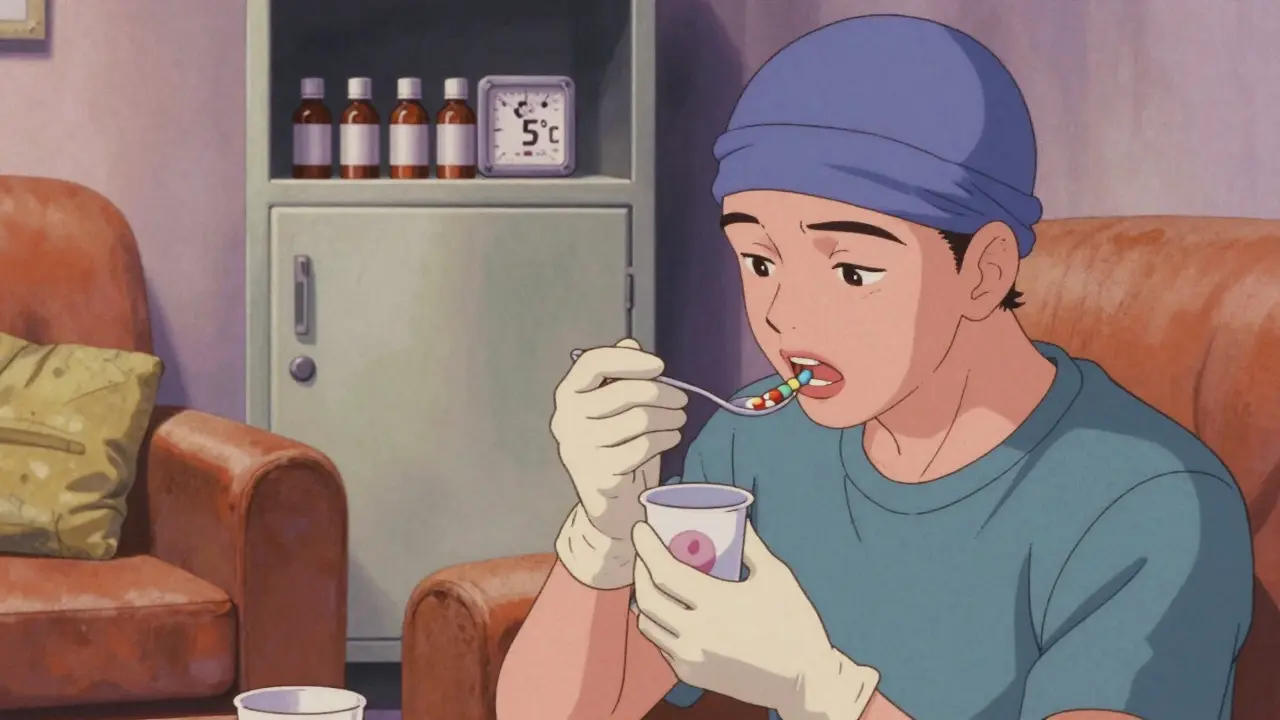
More people are receiving chemotherapy at home than ever before. In 2023, about 65% of cancer patients got some part of their treatment outside the hospital. It’s convenient, less stressful, and often more affordable. But it also comes with serious risks if safety rules aren’t followed. Chemotherapy drugs don’t just target cancer cells-they can harm anyone who comes into contact with them. That means you, your family, even your pets could be at risk if you don’t handle, store, or clean up properly.
Why Home Chemo Is Different
Not all chemo is the same. Some are given through an IV, others come as pills. Some need to be kept cold. Others can sit at room temperature. But every single one is hazardous. Even tiny amounts left on a surface, in sweat, or in urine can be dangerous. The CDC and NIOSH warn that these drugs can cause skin rashes, nausea, dizziness, and long-term damage like fertility problems or even secondary cancers. A 2022 study found that nearly 13% of healthcare workers exposed without protection developed skin issues within six months. Imagine what could happen in a home without training.What You Need to Know About Exposure Time
The biggest rule? 48 hours. After you take chemo-whether it’s a pill or an IV drip-the drugs stay in your body fluids for at least two full days. That means your urine, stool, vomit, sweat, and even semen or vaginal fluid can carry traces of the medicine. Some drugs, like cyclophosphamide, can stick around for 72 hours. During this time, anyone touching these fluids or contaminated surfaces is at risk.Dr. Mary Daly from the National Comprehensive Cancer Network says: "The single most important safety measure is strict adherence to the 48-hour precaution period." That means gloves, double flushing, and no bare-hand contact-not even for a second.
Handling Oral Chemo Pills Safely
About one in three cancer patients now take chemo as pills. It’s easy to forget how dangerous they are. Never crush, cut, or chew them. That turns the drug into dust you can breathe in. Always use a dedicated cup or spoon to pour pills into your hand. Don’t touch them directly. Wash your hands before and after, for at least 20 seconds-like you’re washing off germs after using the bathroom.Also, avoid grapefruit, Seville oranges, and their juices. These interfere with how your body breaks down chemo drugs. That can make side effects worse or turn a safe dose into a toxic one. Always check your medication’s instructions. Companies like Roche and Pfizer include this warning on every pill bottle now.
Storage: Cold, Locked, and Out of Reach
Where you store your chemo matters just as much as how you take it. Refrigerated meds need to stay between 2°C and 8°C (36°F-46°F). Room-temperature ones should be kept between 15°C and 30°C (59°F-86°F). Keep them in a locked cabinet-away from kids, pets, and even other medications. Don’t store them in the kitchen or bathroom where moisture or heat can ruin them. A drawer in a bedroom or closet is often best.Some kits come with a small fridge insert. If yours doesn’t, use a sealed plastic container inside your fridge’s main compartment, not the door. Temperature swings weaken the medicine and make it unsafe.
Spill Kits and Cleanup
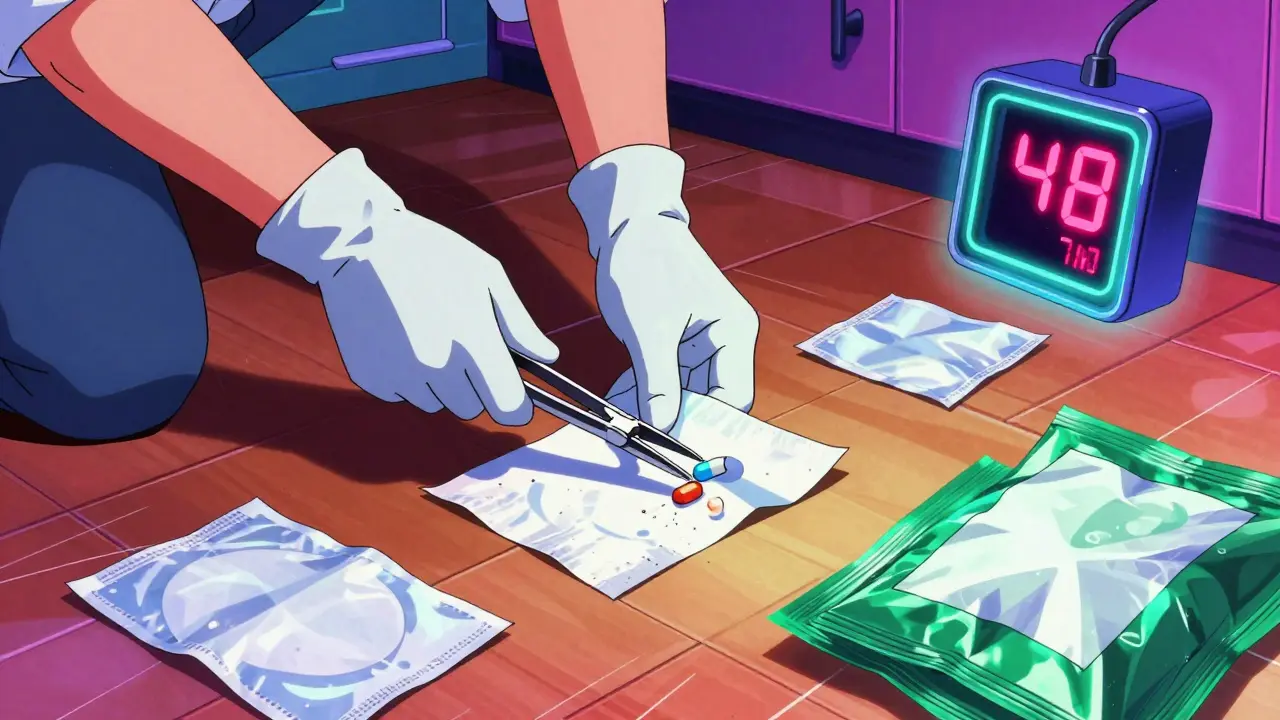
Accidents happen. A pill drops. A bag leaks. A cup spills. That’s why every home on chemo needs a spill kit. These cost about $50 and include absorbent pads, forceps, nitrile gloves, sealed disposal bags, and instructions. Never use paper towels or regular cleaning rags. They won’t contain the chemicals.If a spill occurs, put on two pairs of gloves (minimum 5 mil thickness). Use the forceps to pick up broken pills or glass. Wipe the area with absorbent pads. Seal everything in the disposal bag. Label it "Chemotherapy Waste" and put it in your regular trash. You don’t need a medical waste bin at home. Most patients get this wrong-37.5% of those surveyed by Mayo Clinic thought they had to call a special pickup service. You don’t.
Protecting Others in the House
Pregnant women, those trying to get pregnant, and breastfeeding mothers must avoid all contact with chemo and anything it touches. Studies show chemo drugs can show up in breast milk for up to 72 hours after treatment. Even touching a towel or bedsheet used by the patient can be risky.Everyone else should:
- Wear nitrile gloves when handling laundry, trash, or bathroom items
- Flush the toilet twice with the lid down after every use
- Wash soiled clothes and bedding twice in hot water (140°F / 60°C) with regular detergent
- Use separate towels, washcloths, and utensils for the patient
- Keep at least 6 feet away during the first 24 hours after IV treatment
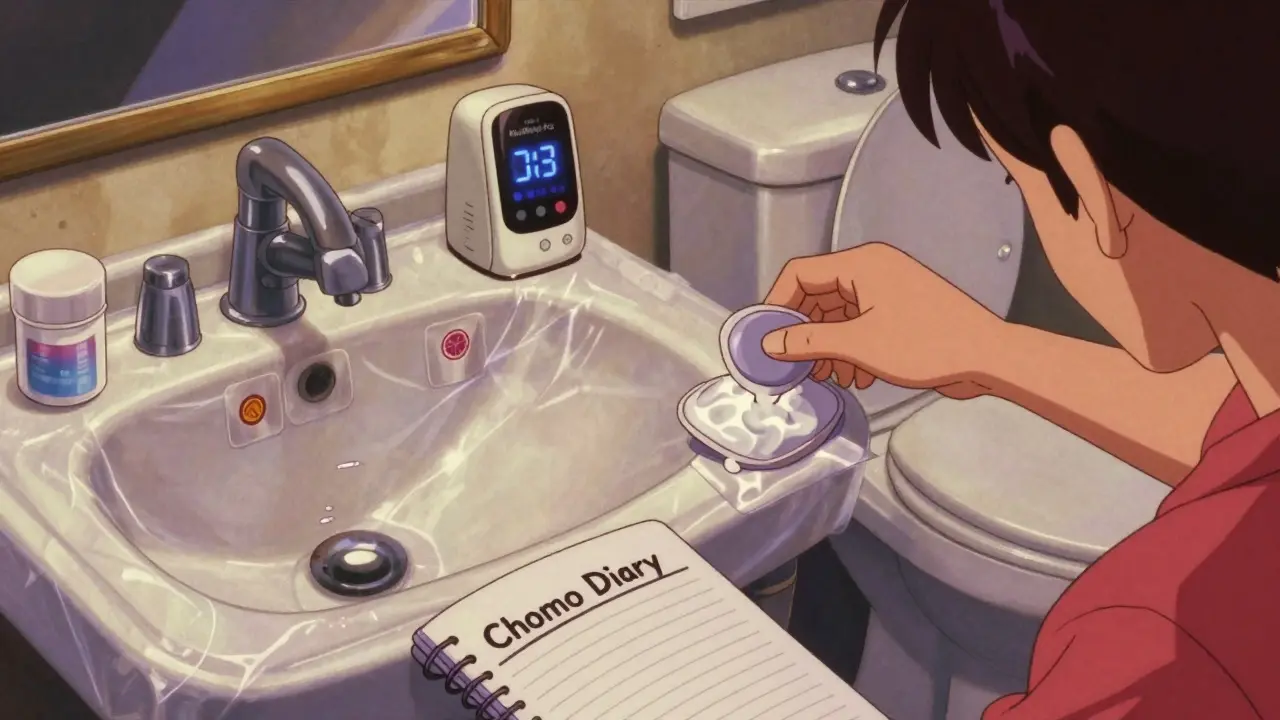
Designate one bathroom as your "chemo zone." Clean it daily. Cover the sink and toilet with plastic-backed pads. This keeps spills contained and makes cleanup easier.
Training and Tools
You can’t just read a pamphlet and be safe. Formal training takes 2-3 hours. Oncology nurses walk you through every step: how to put on gloves, how to clean up a spill, how to track your 48-hour window. A 2022 University of Pennsylvania study showed patients who got trained had 68% fewer safety incidents than those who didn’t.Now, there’s tech help too. The FDA approved the MedMinder Pro Chemo smart pill dispenser in 2022. It reminds you when to take your meds, gives voice prompts for safety steps, and logs every dose. Over 12,000 people are using it now. It’s not cheap, but if you’re forgetful or live alone, it could save your life.
What to Do With Used Supplies
Used gloves, wipes, pads, and even empty pill bottles? Put them in a sealed plastic bag. Label it. Toss it in your regular household trash. You don’t need special pickup. Don’t recycle. Don’t compost. Don’t flush anything except urine and stool. The CDC says home chemo waste isn’t classified as medical waste-so no extra cost or risk.Keep a "chemo diary." Write down when you took each dose. That way, you know exactly when the 48-hour window ends. Some patients use apps. Others use a notebook. Either way, track it.
What’s Changed in 2025
The list of hazardous drugs at home just got longer. In 2023, NIOSH added 27 new medications to its list-mostly newer targeted therapies like sotorasib and dostarlimab. These aren’t traditional chemo. They’re designed to be more precise. But they’re still dangerous to handle. If you’re on one of these, your doctor should give you updated instructions.Also, in 2022, the FDA required all oral chemo packaging to include clear home safety instructions. If your bottle doesn’t have them, ask for a printed copy. That’s your right.
Support Is Available
You’re not alone. The Oncology Nursing Society runs a free 24/7 hotline: 1-866-877-7851. They handled over 12,000 calls in 2022, answering questions in under a minute. The CDC also offers a free printable Home Chemo Safety Checklist-downloaded over 87,000 times. Use it. Tape it to your fridge. Share it with your caregiver.And if you live in a rural area, you’re not alone in struggling. Only 58% of rural patients knew about the 48-hour rule, compared to 82% in cities. The National Cancer Institute is funding new education programs to fix this gap. You deserve to be safe, no matter where you live.
What Happens If You Skip Safety Steps?
It’s not just about getting sick. It’s about legal and financial risk too. OSHA now fines home health agencies $15,625 per violation for inadequate training. If you’re getting chemo through a home care agency and they didn’t train you properly, you have the right to demand it.And if someone in your home gets sick because of exposure? Doctors have seen cases of unexplained rashes, miscarriages, and fertility issues tied to home chemo exposure. These aren’t rare. They’re preventable.
Home chemo is powerful. It gives you control. But it demands respect. Treat it like a live wire. One mistake, one moment of carelessness, and the consequences can last a lifetime.
Aisling Maguire
March 1, 2026 AT 18:31Byron Duvall
March 3, 2026 AT 00:25Katherine Farmer
March 4, 2026 AT 13:39Full Scale Webmaster
March 5, 2026 AT 21:31Brandie Bradshaw
March 7, 2026 AT 04:22Angel Wolfe
March 8, 2026 AT 21:14Sophia Rafiq
March 10, 2026 AT 19:10Martin Halpin
March 12, 2026 AT 04:54Eimear Gilroy
March 13, 2026 AT 23:55Ajay Krishna
March 14, 2026 AT 05:05Charity Hanson
March 14, 2026 AT 15:51Noah Cline
March 14, 2026 AT 21:03Lisa Fremder
March 16, 2026 AT 03:00Justin Ransburg
March 16, 2026 AT 09:38