

You feel thirsty. Really thirsty. You drink water, but it doesn't help. Your mouth feels like sandpaper, and you've been running to the bathroom every twenty minutes. Then comes the nausea. Maybe a headache. Most people think this is just a bad stomach bug or dehydration from summer heat. But if you have diabetes, specifically type 1 or insulin-deficient type 2, this could be something far more dangerous.
This is Diabetic Ketoacidosis (DKA). It is a life-threatening complication where your blood becomes acidic due to high levels of ketones. It happens when your body doesn't have enough insulin to use glucose for energy. Instead, it starts burning fat at an alarming rate. This process releases toxic acids called ketones into your bloodstream. Without immediate medical attention, DKA can lead to coma or death within hours.
The stakes are real. According to the American Diabetes Association, DKA accounts for over 500,000 hospital days annually in the United States alone. While mortality rates have dropped significantly since the discovery of insulin, they still sit between 1% and 5% in developed countries. In resource-limited settings, that number jumps to 5-10%. The good news? If you recognize the warning signs early and get to a hospital fast, DKA is almost always treatable. Let’s break down exactly what to look for and what happens once you arrive at the emergency room.
Recognizing the Early Warning Signs
DKA doesn’t happen overnight. It usually develops over 4 to 12 hours, giving you a window to act. The problem is that the early symptoms mimic common illnesses. That’s why awareness is your best defense.
The first thing you’ll notice is extreme thirst, medically known as polydipsia. Patients often report drinking 4 to 6 liters of fluid daily without feeling satisfied. This pairs with polyuria-excessive urination. You might find yourself passing more than 3 liters of urine in 24 hours. Your mouth will feel dry, a symptom reported by 89% of patients in NHS England's registry.
Check your blood sugar. In classic DKA, glucose levels soar above 250 mg/dL. However, be careful with a condition called "euglycemic DKA." In about 10% of cases, blood sugar stays below 250 mg/dL, often because the patient is taking SGLT2 inhibitors (like Jardiance or Farxiga) or hasn’t eaten much due to nausea. Even if your glucose isn’t sky-high, don’t ignore the other signs.
- Extreme Thirst: Unquenchable need for fluids.
- Frequent Urination: Waking up multiple times at night to go.
- Dry Mouth and Skin: Lack of moisture despite drinking.
- Elevated Blood Glucose: Typically >250 mg/dL, but check regardless.
When Symptoms Escalate: The Red Flags
If you ignore the early signs, DKA progresses rapidly. Within 12 to 24 hours, the buildup of ketones starts affecting your entire system. This is when the situation becomes critical.
Nausea and vomiting are major red flags. About 75% of DKA patients experience nausea, and 65% vomit. Many assume they have gastroenteritis and try to rest it off. This delay is dangerous. Abdominal pain also affects half of all cases, often mimicking appendicitis or an acute abdomen. Fatigue sets in hard; 92% of patients say they cannot perform normal activities. You might feel weak, with grip strength dropping by 30-40%.
Then come the specific signs that scream "DKA" to any clinician:
- Kussmaul Respirations: Your body tries to blow off excess acid through your lungs. You start breathing deeply and rapidly-25 to 30 breaths per minute. This is seen in 80% of severe cases.
- Fruity Breath: Ketones leave your body through your breath. It smells like acetone or rotting fruit. Clinicians detect this in 70% of cases.
- Confusion and Disorientation: As acidity rises (pH drops below 7.1), brain function suffers. Confusion appears in 45% of adults.
- Decreased Consciousness: In severe cases, patients slip into a coma. This comprises 15% of ICU admissions for DKA.
If you see these signs, do not wait. Call emergency services immediately. Every hour counts.

What Happens in the Hospital: Step-by-Step Treatment
Once you arrive at the hospital, the team moves fast. Time is tissue, and in DKA, time is life. The goal is to reverse the metabolic chaos: lower blood sugar, clear ketones, fix electrolytes, and rehydrate. Here is the standard protocol used by endocrinologists and emergency physicians.
1. Fluid Resuscitation (The First Hour)
Your body is severely dehydrated. The first step is aggressive IV fluids. Doctors typically administer 15-20 mL/kg of 0.9% sodium chloride (normal saline) in the first hour. For an average adult, that’s 1 to 1.5 liters. This restores blood volume and helps flush out glucose and ketones through urine. After the first hour, the rate slows to 250-500 mL/hour, adjusted based on your heart and kidney function.
2. Insulin Therapy
Insulin is the key that unlocks your cells to let glucose in. But doctors don’t just blast you with insulin. They start with a small IV bolus (0.1 unit/kg) followed by a continuous infusion (0.1 unit/kg/hour). The target is to lower blood glucose by 50-75 mg/dL per hour. Why so slow? Dropping sugar too fast can cause cerebral edema (brain swelling), which is deadly, especially in children. The ADA and ISPAD guidelines stress this caution heavily.
3. Electrolyte Management (Potassium is King)
This is tricky. When you have DKA, your total body potassium is depleted, even if your blood test shows normal levels initially. Insulin therapy pushes potassium back into cells, causing blood levels to crash dangerously low. So, doctors monitor potassium closely. If it’s below 5.2 mmol/L, they add potassium to your IV fluids immediately. You might receive 20-30 mEq/hour. This prevents fatal heart arrhythmias.
4. Treating the Trigger
DKA rarely happens for no reason. There’s usually a trigger. Infections account for 50% of cases (pneumonia, UTIs, sepsis). Insulin omission (due to cost, denial, or pump failure) causes 30%. New-onset diabetes explains 20%. The hospital team will run tests to find the root cause and treat it alongside the DKA. If you have a fever, they’ll give antibiotics. If your insulin pump failed, they’ll switch you to injections.
| Treatment Phase | Action | Target/Goal |
|---|---|---|
| Fluids | IV Normal Saline (0.9% NaCl) | Restore hydration, improve circulation |
| Insulin | Continuous IV Infusion | Lower glucose by 50-75 mg/dL/hr |
| Potassium | IV Replacement | Maintain serum K+ between 4-5 mmol/L |
| Bicarbonate | Rarely Used | Only if pH < 6.9 (controversial) |
How Long Will You Stay?
The average hospital stay for DKA is 2.5 to 4 days. It depends on how sick you were when you arrived. Patients with a pH between 7.0 and 7.2 average 2.1 days. Those with a pH below 7.0 (severe acidosis) stay nearly 4 days. You aren’t discharged until three things happen: blood ketones drop below 0.6 mmol/L, bicarbonate rises above 18 mmol/L, and pH stays above 7.3 on two consecutive checks. Stopping treatment too early leads to recurrence in 12% of cases within 72 hours.
Prevention: Technology and Daily Habits
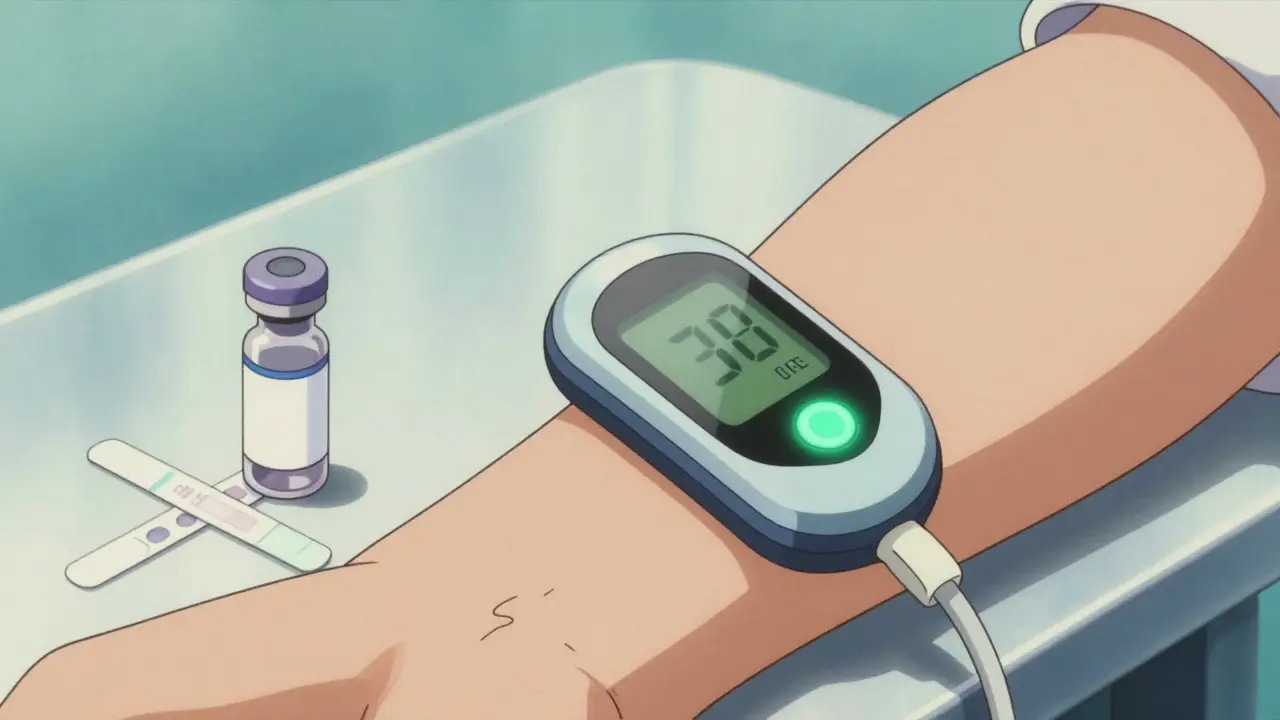
Can you prevent DKA? Yes, largely. The rise of Continuous Glucose Monitors (CGMs) like the Dexcom G7 has been a game-changer. Studies show CGM users reduce DKA incidence by 76%. These devices alert you when glucose trends upward, giving you time to take corrective insulin before ketones build up.
Follow the ADA’s "Rule of 15": If your blood glucose exceeds 240 mg/dL, check urine or blood ketones every 4-6 hours. If ketones are moderate or large, seek medical help. During illness, never stop insulin. Sick days increase insulin resistance. If you use an insulin pump, switch to injections during severe infections, as 35% of pump-related DKA cases involve set failures during high-resistance states.
Cost is a barrier. Nearly 30% of patients attribute DKA to insulin rationing due to price. With average monthly insulin costs around $374, many skip doses. This is a public health crisis. Talk to your doctor about assistance programs or cheaper alternatives. Saving money now can cost you a hospital stay later.
What is the difference between DKA and HHS?
DKA (Diabetic Ketoacidosis) primarily affects Type 1 diabetics and involves high ketones and acidosis. HHS (Hyperosmolar Hyperglycemic State) mostly affects Type 2 diabetics. In HHS, blood sugar is extremely high (often >600 mg/dL), but there are few or no ketones, and acidosis is mild or absent. HHS develops more slowly, over days or weeks, and has a higher mortality rate if untreated.
Can I treat DKA at home?
No. DKA is a medical emergency requiring IV fluids and insulin. Home treatment is insufficient and dangerous. If you have high blood sugar and positive ketones, especially with nausea or vomiting, go to the ER immediately. Delaying care increases mortality risk by 15% per hour after the first two hours.
Why does my breath smell fruity?
Fruity or acetone-like breath is caused by acetone, one of the ketones produced when your body burns fat for fuel instead of glucose. As ketone levels rise in your blood, they are expelled through your lungs. This is a classic sign of significant ketosis and potential DKA.
What triggers DKA in Type 2 Diabetes?
While less common, Type 2 diabetics can develop DKA, especially under stress. Triggers include severe infections, heart attacks, stroke, or stopping oral medications/insulin. Additionally, SGLT2 inhibitors (glucosure drugs) can cause "euglycemic DKA," where blood sugar is normal but ketones are high. Be cautious with these meds during illness or surgery.
How do ketone strips work?
Ketone strips measure acetoacetate in urine or blood. Urine strips are cheap but lag behind current status (showing ketones from hours ago). Blood ketone meters are more accurate and reflect real-time levels. A blood ketone level above 3.0 mmol/L indicates DKA risk. Moderate or large readings on urine strips warrant immediate medical consultation.
Mohit Patil
July 4, 2026 AT 16:19Chris Munton
July 6, 2026 AT 05:43Amrithaa Thayaparan
July 7, 2026 AT 00:50Paul Diamond
July 8, 2026 AT 11:30Peter Sverla
July 9, 2026 AT 17:53Sydney Jarrett
July 9, 2026 AT 19:39Isis Fleming
July 11, 2026 AT 04:21Ben Murphy
July 12, 2026 AT 18:27Anna Bartle
July 13, 2026 AT 11:32