

When a pharmacist swaps a brand-name drug for a generic version, it’s not just a simple switch. There’s a legal and clinical paper trail that must be followed-every time. In the UK and across the US, this isn’t optional. It’s a core part of patient safety, insurance compliance, and legal protection for the pharmacist. But what exactly needs to be documented, and why does it matter so much?
Why Generic Substitution Needs Documentation
Generic drugs are cheaper, often 80-90% less expensive than brand-name versions. That’s why nearly 90% of prescriptions filled in the US use generics when available. But cost savings shouldn’t come at the cost of safety. A patient taking warfarin for blood thinning might react differently to a generic made by one manufacturer versus another-even if both meet FDA bioequivalence standards. That’s why documentation isn’t just bureaucracy. It’s a lifeline.When a substitution happens, the pharmacist must record what was prescribed, what was given, and why. This creates a clear audit trail. If a patient has an unexpected reaction, the prescriber, pharmacist, and regulator can trace the exact product used. Without that, you’re guessing. And in healthcare, guessing can get people hurt.
What Must Be Documented
Across most jurisdictions, the core elements are the same. Here’s what every pharmacist needs to log for every generic substitution:- Brand name prescribed - The exact name the doctor wrote on the script.
- Generic name dispensed - The active ingredient, like amlodipine instead of Norvasc.
- Manufacturer name - Who made the generic? Different companies use different fillers and coatings that can affect absorption.
- Lot number - Critical for recalls or tracking adverse events.
- Expiration date - Ensures the patient gets a safe, effective product.
Forty-eight U.S. states require all five of these details to be recorded. In the UK, while the system is different, the dispensing record must still show the product dispensed, the quantity, and the prescriber’s details. Even if the law doesn’t explicitly say it, good practice demands it.
State-by-State Differences (U.S. Focus)
The U.S. has 50 different sets of rules. That’s a nightmare for national pharmacy chains. In 27 states, pharmacists can swap generics without asking the patient. In 14, they must get explicit consent-written or verbal-and document it. Nine states use a mix.Some states have extra layers. Oklahoma, for example, says you can’t substitute unless the prescriber or patient gives direct authority. California’s SB 564, effective January 2024, now requires real-time electronic updates so the prescriber sees the substitution the moment it happens. If you’re working in a chain pharmacy, your system might auto-populate your state’s rules-but if you’re in a small independent shop, you need to know your state’s law cold.
Narrow Therapeutic Index (NTI) Drugs: Higher Risk, Higher Documentation
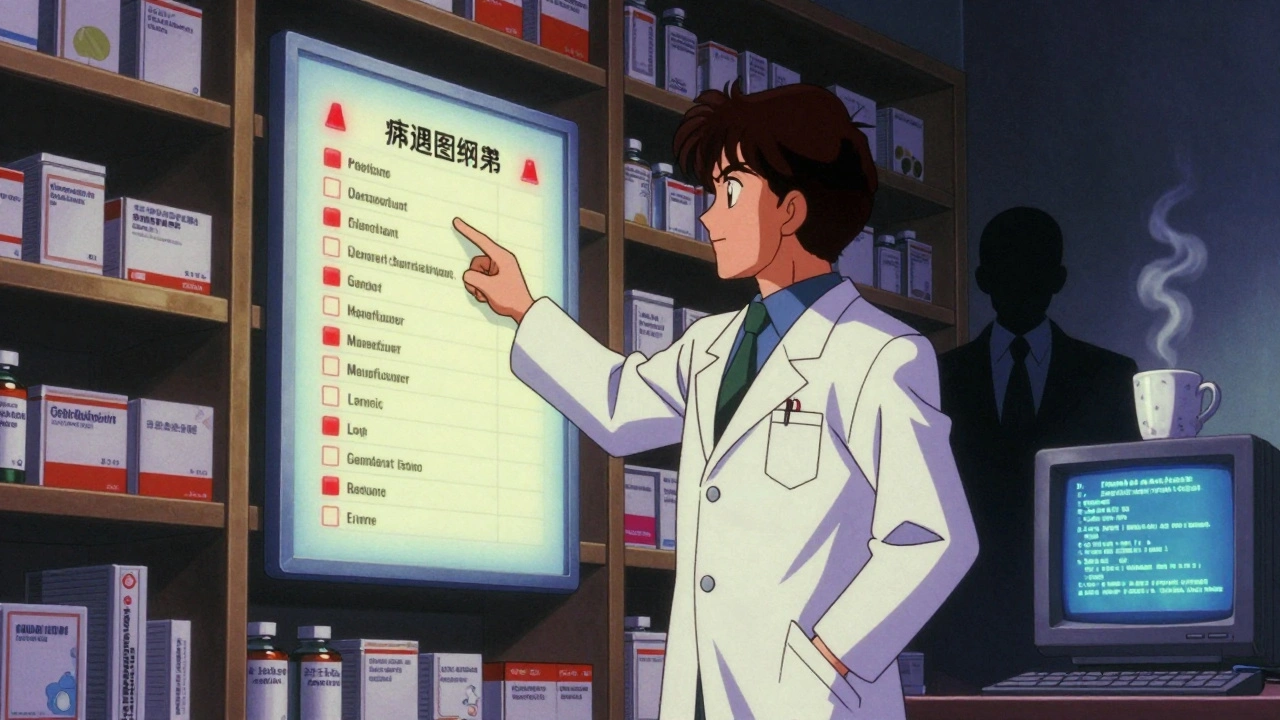
Not all drugs are created equal. Some have a tiny window between effective and toxic. These are called Narrow Therapeutic Index (NTI) drugs. Examples include warfarin, levothyroxine, lithium, and phenytoin.Even though the FDA doesn’t officially label NTI drugs in the Orange Book, 17 U.S. states treat them differently. For these, substitution often requires:
- Explicit patient consent
- Notification to the prescriber
- Documentation of the reason for substitution
- Follow-up monitoring plan
One 2021 case in the Journal of the American Pharmacists Association showed a patient hospitalized after a generic switch for warfarin. The pharmacist didn’t document the change, the doctor didn’t know, and the patient’s INR levels spiked dangerously. That’s not a rare mistake. It’s preventable.
Electronic Systems and the Burden of Compliance
Most pharmacies use digital systems now-Epic, Cerner, or local pharmacy software. But here’s the catch: not all systems are built for this. A 2023 update from Epic Systems found that 32% of pharmacies had to manually customize their software to meet state documentation rules.That means pharmacists are spending extra time tweaking fields, double-checking pop-ups, or even printing and signing paper forms when the system won’t auto-fill correctly. The American Pharmacists Association found that 68% of pharmacists see documentation as “moderately burdensome.” But 23% say it’s already prevented an adverse event. That’s the trade-off.
Training new pharmacists takes 4 to 6 weeks just to learn the documentation rules in their state. That’s not just about software. It’s about understanding the legal landscape, knowing which drugs are NTI, and recognizing when to push back on a substitution.
What Happens When Documentation Fails
Insurance companies audit pharmacy records. If the substitution isn’t documented properly, the claim gets denied. The pharmacy eats the cost. The patient gets billed. The system breaks down.But worse than billing errors are the clinical ones. A 2022 study across 150 community pharmacies found that complete documentation of substitutions reduced medication errors by 17.3%. That’s not a small number. That’s lives saved.
Conversely, a lack of documentation can lead to:
- Unnecessary hospitalizations
- Delayed diagnosis of adverse reactions
- Legal liability for the pharmacist
- Loss of license in extreme cases
There’s no gray area here. If you don’t document it, it didn’t happen-and the system will hold you accountable.
Future Trends: Standardization and Blockchain
The variation across states is unsustainable. The Model State Pharmacy Act, updated in 2022, pushes for uniform documentation rules. Twelve states have already adopted it. The Medicare Part D program now requires clear substitution notes for audit purposes. And in 2023, the ASPE began drafting national guidelines-expected in mid-2024-that could finally bring consistency.On the tech side, blockchain pilots are showing promise. A National Pharmaceutical Council trial in 2023 used blockchain to track substitutions. Result? A 22% drop in documentation errors. Imagine a system where every substitution is timestamped, encrypted, and instantly visible to the prescriber, pharmacist, and patient. That’s not science fiction-it’s coming.
What Pharmacists Should Do Today
You don’t need to wait for national standards. Here’s what you can do right now:- Know your state’s law. Use the National Community Pharmacists Association’s online tool-it’s updated quarterly.
- Set up your pharmacy software to auto-populate all five required fields. If it doesn’t, push for an upgrade.
- For NTI drugs, always get consent and notify the prescriber. Document it in writing.
- Train new staff. Don’t assume they know the rules. Make it part of onboarding.
- Review your records monthly. Spot-check 10 substitutions. Are all five details there?
Documentation isn’t busywork. It’s the glue that holds safe, efficient pharmacy practice together. Every time you log a substitution, you’re not just following rules-you’re protecting someone’s life.
Do pharmacists need patient consent to substitute generics?
It depends on the state. In 27 U.S. states, pharmacists can substitute without consent. In 14 states, explicit patient consent is required by law. Nine states use a hybrid approach. In the UK, consent is typically assumed unless the prescriber specifies "dispense as written." Always check your local regulations.
What if the generic drug comes from a different manufacturer than usual?
You must document the new manufacturer’s name and lot number-even if the generic name is the same. Different manufacturers use different inactive ingredients, which can affect absorption, especially with NTI drugs like levothyroxine or warfarin. Many adverse events happen because the pharmacist didn’t track the manufacturer change.
Are electronic records enough for documentation?
Yes, as long as the system is secure, auditable, and meets state requirements. Most states accept electronic records as legally valid. But if your system doesn’t auto-fill all required fields (brand name, generic name, manufacturer, lot, expiration), you’re at risk. Always verify the record before finalizing the dispense.
How long do I need to keep substitution records?
Most states require records to be kept for at least two to five years. Medicare Part D requires a minimum of five years. Some states, like California, require seven years for controlled substances. Always follow the longest requirement that applies to you.
Can I substitute a brand-name drug for a generic without checking the prescription?
No. Always verify the prescription first. Some doctors write "dispense as written" or "no substitution." Some patients request brand-name drugs for medical reasons. Never assume substitution is allowed. The responsibility for checking rests with the pharmacist.
What should I do if a patient complains after a generic substitution?
First, review your documentation. Did you log the manufacturer, lot number, and patient consent (if required)? Then contact the prescriber to report the reaction. Document the complaint and your response. If the reaction is serious, report it to your state’s pharmacy board and the FDA’s MedWatch program. Your records could be critical in determining if the issue was drug-related.
Rich Paul
December 10, 2025 AT 15:23bro i just logged a sub for warfarin and forgot the lot number. 20 mins later my boss is screaming at me like i just set the pharmacy on fire. jfc. it’s not just paperwork-it’s your license on the line.
Delaine Kiara
December 11, 2025 AT 22:42ok but let’s be real-why does the FDA even allow generics if they can cause INR spikes? if a patient’s life hinges on a pill that’s ‘bioequivalent’ but not identical, that’s not science, that’s russian roulette with a prescription.
and don’t even get me started on how some manufacturers use talc as a filler. TALC. in my heart medicine.
Ruth Witte
December 11, 2025 AT 23:18THIS. THIS RIGHT HERE. 🙌
every time i log a generic sub, i picture some grandma on her couch wondering why she’s dizzy. i’m not just filling a script-I’m keeping someone alive. 💙
if your system doesn’t auto-fill the 5 fields, demand a better one. your patients deserve better than guesswork.
Katherine Rodgers
December 13, 2025 AT 15:29so pharmacists are now data entry clerks with a 6-figure salary and zero autonomy
congrats america, you turned healthcare into a compliance spreadsheet with a white coat
and yet somehow the system still fails 17% of the time? amazing
Lauren Dare
December 14, 2025 AT 18:05the fact that we need a 4-6 week training module just to document a generic substitution says everything about how broken this system is.
you don’t need a PhD to know that changing a pill’s manufacturer can kill someone. you need a functional EHR. and we don’t have one.
but hey, at least we’ve got the paperwork.
Gilbert Lacasandile
December 14, 2025 AT 21:14i’ve been doing this for 12 years and i still double-check the state rules every time. i know it’s annoying but honestly? i’d rather be over-cautious than end up on a news headline.
also, i just started using the NCPA tool last month. game changer. if you haven’t tried it, do it.
Lola Bchoudi
December 16, 2025 AT 19:50you’re not just documenting-you’re building a safety net.
train your new hires like their lives depend on it. because they do. if you skip the manufacturer field for levothyroxine, you’re not being efficient-you’re playing with thyroid levels.
and yes, i’ve seen it happen. it’s not pretty. don’t be the reason someone ends up in the ER.
Morgan Tait
December 17, 2025 AT 17:48blockchain for pharmacy records? sounds like the government’s trying to track us. who’s really controlling this data?
and why do i feel like this is just the first step before they start charging patients for ‘substitution transparency fees’?
next thing you know, they’ll scan your iris before you get your lisinopril.
just saying… i’ve seen what happens when systems get ‘optimized’.
Darcie Streeter-Oxland
December 18, 2025 AT 10:49It is, of course, a matter of considerable concern that the regulatory architecture governing generic substitution remains fragmented across jurisdictions. The absence of a unified protocol not only engenders operational inefficiencies but also compromises the integrity of pharmacovigilance systems.
Moreover, the reliance upon electronic health record systems that are not interoperable with national standards constitutes a latent risk to patient safety. One might reasonably conclude that the current paradigm is neither sustainable nor scientifically defensible.
Christian Landry
December 19, 2025 AT 12:20so… if i switch from one generic to another generic, do i still need to log the new manufacturer? or is that just extra drama?
also, is there a list of which companies are ‘better’? like, does anyone actually know if Teva’s levothyroxine is less likely to wreck someone’s thyroid than Mylan’s?
just asking for a friend who’s tired of being yelled at for ‘missing details’.
Maria Elisha
December 20, 2025 AT 00:22why are we even talking about this? just let the computer do it.
Angela R. Cartes
December 20, 2025 AT 17:49oh sweet jesus another ‘pharmacist as compliance officer’ manifesto.
next you’ll tell me we need a notary to witness the pill being handed out 😭
also, who has time for this? i’ve got 3 people yelling for their blood pressure meds.
Lisa Whitesel
December 22, 2025 AT 03:31documentation is a lie. no one reads it. no one cares. it’s just theater to make regulators feel safe while patients get the wrong dose anyway
you log it. i log it. no one checks. we all know it
Larry Lieberman
December 22, 2025 AT 12:57has anyone tried using QR codes on the pill bottle? scan it and boom-full substitution history, manufacturer, lot, expiration, even the pharmacist’s name.
imagine if the patient could see this on their phone. no more ‘but i thought it was the same pill’
also, i’m lowkey obsessed with blockchain for this. 🤖💊