

Most women know they need folic acid, which is the synthetic form of vitamin B9 essential for preventing neural tube defects in developing fetuses. You take it every day. But here is the catch: that same vital nutrient can clash with other medications you might be taking, potentially reducing their effectiveness or causing side effects. It is not just about getting enough folate; it is about making sure your body can actually use it without interfering with other treatments.
If you are pregnant or planning to conceive, understanding these interactions is crucial. The Centers for Disease Control and Prevention (CDC) recommends 400 micrograms (mcg) daily for all women capable of becoming pregnant. This recommendation stems from a landmark 1992 study by Czeizel and Dudas, published in the New England Journal of Medicine, which showed a 72% reduction in first occurrences of neural tube defects (NTDs) with periconceptional vitamin supplementation. However, this standard dose does not account for the complex pharmacological landscape many women navigate during pregnancy.
How Folic Acid Works and Why Timing Matters
To understand interactions, you first need to know how folic acid behaves in your body. Folic acid, chemically known as pteroylmonoglutamic acid, has a molecular weight of 441.4 g/mol. It functions as a cofactor in one-carbon transfer reactions, which are essential for DNA synthesis and methylation. Your body absorbs folic acid primarily in the jejunum via pH-dependent transporters.
The bioavailability differs significantly depending on the source. Synthetic folic acid from supplements consumed on an empty stomach has a 100% bioavailability. Fortified foods offer 85% bioavailability, while natural food folate only provides 50%. This efficiency is why the FDA mandates fortification in enriched grain products at 140 mcg per 100g, a policy implemented in 1998 that reduced NTD prevalence by 28-50% according to the China-U.S. Collaborative Project for Neural Tube Defect Prevention.
Timing is everything because neural tube closure occurs between 21 and 28 days post-conception. Often, this happens before you even realize you are pregnant. That is why guidelines emphasize starting supplementation at least one month pre-conception. If you wait until your positive test, the critical window for preventing major structural defects may have already passed.
High-Risk Medication Interactions
Not all medications play nice with folic acid. Some drugs interfere with its absorption, while others have their efficacy reduced by high levels of folate. Here are the most critical interactions to discuss with your healthcare provider:
- Anticonvulsants (e.g., Phenytoin, Carbamazepine): Women with epilepsy face a double-edged sword. Anticonvulsants like phenytoin and carbamazepine can increase the risk of neural tube defects. However, folic acid can antagonize the anticonvulsant action of phenytoin, potentially leading to breakthrough seizures. The American College of Obstetricians and Gynecologists (ACOG) notes that women taking carbamazepine (Carbatrol, Tegretol) require higher doses-4,000 to 5,000 mcg daily-under strict neurologist supervision to balance seizure control and NTD prevention.
- Methotrexate: Used for conditions like ectopic pregnancy or autoimmune disorders, methotrexate works by inhibiting folate metabolism. Taking folic acid concurrently can reduce methotrexate’s efficacy. Conversely, stopping folic acid abruptly while on methotrexate can increase toxicity. Coordination with your doctor is essential to mitigate toxicity while maintaining therapeutic levels.
- Pyrimethamine: Prescribed for toxoplasmosis, pyrimethamine’s efficacy is reduced when taken with folic acid. Pharmacists at CVS Health reported in their 2023 Medication Safety Review that 32% of pregnant women taking pyrimethamine required dose adjustments when adding folic acid to their regimen.
- Sulfasalazine: Commonly used for inflammatory bowel disease, sulfasalazine interferes with folate absorption. The UK’s National Institute for Health and Care Excellence (NICE) guideline NG212 (January 2023) specifically warns against using folic acid with sulfasalazine without medical supervision due to reduced efficacy of the anti-inflammatory drug.
The Iron Factor: Absorption Conflicts
Prenatal vitamins almost always contain iron, and for good reason. Iron deficiency anemia is common in pregnancy. However, there is a direct conflict between iron and folic acid absorption. Research published in the American Journal of Clinical Nutrition (2017) found that prenatal vitamins containing iron can reduce folic acid absorption by 20-30% when taken simultaneously.
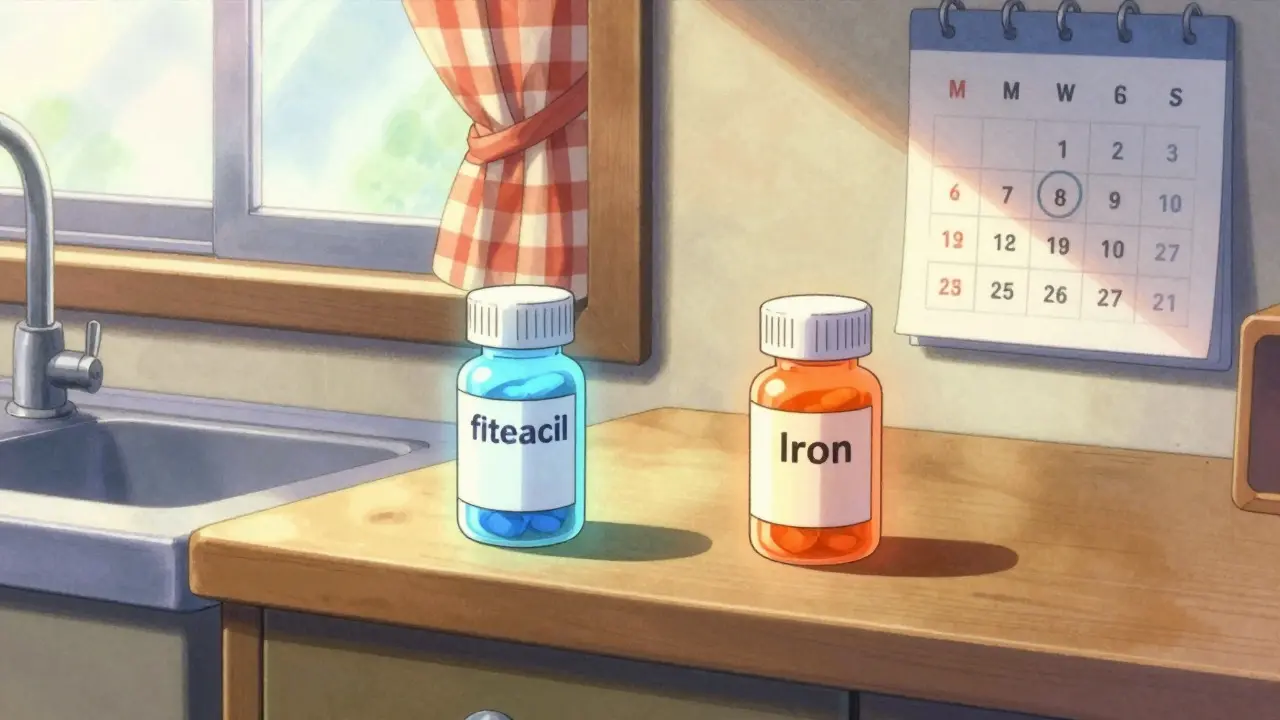
This creates a practical dilemma. Many women experience nausea from iron-containing prenatal vitamins. A survey by What to Expect (n=2,145) found that 78% of users reported nausea with iron-containing formulations, leading 62% to switch to separate folic acid supplements and iron pills taken at different times. This strategy improves tolerance but requires careful scheduling to ensure optimal absorption of both nutrients.
To maximize absorption, take folic acid on an empty stomach with water. Avoid concurrent intake with calcium-rich foods, which can reduce absorption by 25%, or antacids, which can cut absorption by up to 50%. If you must take iron, space it out by at least two hours from your folic acid supplement.

MTHFR Polymorphism: When Standard Folic Acid Isn't Enough
About 10-15% of Caucasians and 20-25% of Hispanics carry the MTHFR 677C>T polymorphism. This genetic variation reduces the efficiency of converting synthetic folic acid into its active form, L-methylfolate. For these individuals, standard folic acid supplementation may lead to unmetabolized folic acid accumulation in the blood.
Dr. Joseph Selhub of Tufts University raised concerns in a 2021 American Journal of Clinical Nutrition review about potential issues with unmetabolized folic acid at doses exceeding 1,000 mcg daily. While the CDC maintains that no confirmed health risks have been found from circulating unmetabolized folic acid, some experts argue that L-methylfolate supplementation is safer and more effective for those with MTHFR mutations.
In 2023, the FDA approved the first prenatal vitamin containing Quatrefolic® (glucosamine salt of (6S)-5-methyltetrahydrofolate), specifically designed for women with MTHFR polymorphisms. Priced at $45.99/month, it offers a targeted solution for those who struggle to convert standard folic acid. If you suspect you have this polymorphism, ask your doctor about genetic testing or consider switching to a methylated folate formula.
| Source Type | Bioavailability | Typical Daily Intake | Best For |
|---|---|---|---|
| Natural Food Folate | 50% | Variable (diet-dependent) | General maintenance, low-risk pregnancies |
| Fortified Foods | 85% | 140 mcg per 100g grains | Baseline public health protection |
| Synthetic Folic Acid Supplements | 100% | 400-1,000 mcg | Standard NTD prevention, high-risk pregnancies |
| L-Methylfolate (Quatrefolic®) | ~100% (active form) | 400-800 mcg equivalent | Women with MTHFR polymorphism |
Dosing Guidelines and Safety Limits
More is not always better. The Recommended Dietary Allowance (RDA) for folate increases from 400 mcg Dietary Folate Equivalents (DFE)/day for nonpregnant women to 600 mcg DFE/day during pregnancy, as established by the Food and Nutrition Board (FNB). However, maximum daily intake limits exist to prevent potential issues.
Current guidelines specify a maximum daily intake of 800 mcg for pregnant women under 18 years and 1,000 mcg for those 18 and older. Prescription prenatal formulations sometimes exceed these amounts under medical supervision, such as Prenate Pixie, which contains 1,000 mcg of folic acid. Over-the-counter options like Nature Made Prenatal Multi + DHA typically contain 800 mcg.
A 2020 ConsumerLab comparison found that 12 of 15 tested prenatal vitamins met USP <232> and <233> heavy metal standards, with prices ranging from $8.99/month (CVS Health Prenatal) to $38.99/month (Thorne Basic Prenatal). Quality matters, so choose brands that undergo third-party testing.
Emerging Research: Autism Spectrum Disorder and Beyond
The conversation around folic acid is evolving beyond neural tube defects. The NIH’s 2024 research agenda prioritizes investigating folic acid’s role in mitigating autism spectrum disorder (ASD) risk. A 2022 JAMA Pediatrics study (n=45,300) showed a 40% reduced ASD risk with periconceptional folic acid supplementation. However, evidence is contradictory. A 2021 Danish cohort study (n=35,059) found no association, highlighting the need for further research.
Future directions include the 2025 CDC initiative to increase folic acid fortification in corn masa flour to address NTD disparities among Hispanic populations, who have 20-30% higher NTD rates than non-Hispanic whites according to 2023 National Birth Defects Prevention Network data. These efforts aim to close gaps in public health protection through targeted nutritional interventions.
Practical Steps for Safe Supplementation
Navigating medication interactions during pregnancy can feel overwhelming. Here is a clear action plan to ensure you and your baby stay safe:
- List All Medications: Include prescription drugs, over-the-counter meds, and herbal supplements. Share this list with your obstetrician and pharmacist.
- Check for Interactions: Ask specifically about anticonvulsants, methotrexate, pyrimethamine, and sulfasalazine. If you take any of these, do not start folic acid without medical guidance.
- Space Out Supplements: If you take iron and folic acid separately, take them at least two hours apart. Take folic acid on an empty stomach for best absorption.
- Consider MTHFR Testing: If you have a family history of birth defects or poor response to standard folic acid, ask about MTHFR genetic testing. Consider switching to L-methylfolate if indicated.
- Monitor Side Effects: Watch for signs of breakthrough seizures, increased inflammation, or unusual fatigue. Report any changes to your healthcare provider immediately.
- Choose Quality Brands: Select prenatal vitamins that meet USP standards for purity and potency. Avoid excessive dosing unless prescribed.
Remember, folic acid is a powerful tool for preventing serious birth defects, but it must be used wisely. By understanding its interactions and following expert guidelines, you can protect your health and your baby’s development throughout pregnancy.
Can I take folic acid with iron supplements?
Yes, but you should space them out. Research shows that iron can reduce folic acid absorption by 20-30% when taken simultaneously. For optimal results, take folic acid on an empty stomach and wait at least two hours before taking your iron supplement.
What is the recommended daily dose of folic acid during pregnancy?
The standard recommendation is 400-800 mcg daily for most women. The RDA increases to 600 mcg DFE/day during pregnancy. Maximum limits are 800 mcg for women under 18 and 1,000 mcg for women 18 and older, unless higher doses are prescribed for specific conditions like epilepsy.
Does folic acid interact with seizure medications?
Yes, folic acid can antagonize the effects of certain anticonvulsants like phenytoin, potentially leading to breakthrough seizures. Women on these medications often require higher doses of folic acid (4,000-5,000 mcg) under strict medical supervision to balance NTD prevention and seizure control.
What is MTHFR polymorphism and why does it matter?
MTHFR polymorphism is a genetic variation present in 10-15% of Caucasians and 20-25% of Hispanics that reduces the body's ability to convert synthetic folic acid into its active form. These individuals may benefit from L-methylfolate supplements to avoid unmetabolized folic acid accumulation and ensure proper folate utilization.
When should I start taking folic acid?
Ideally, start at least one month before conception. Neural tube closure occurs between 21-28 days post-conception, often before you know you are pregnant. Starting early ensures adequate folate levels during this critical developmental window.