
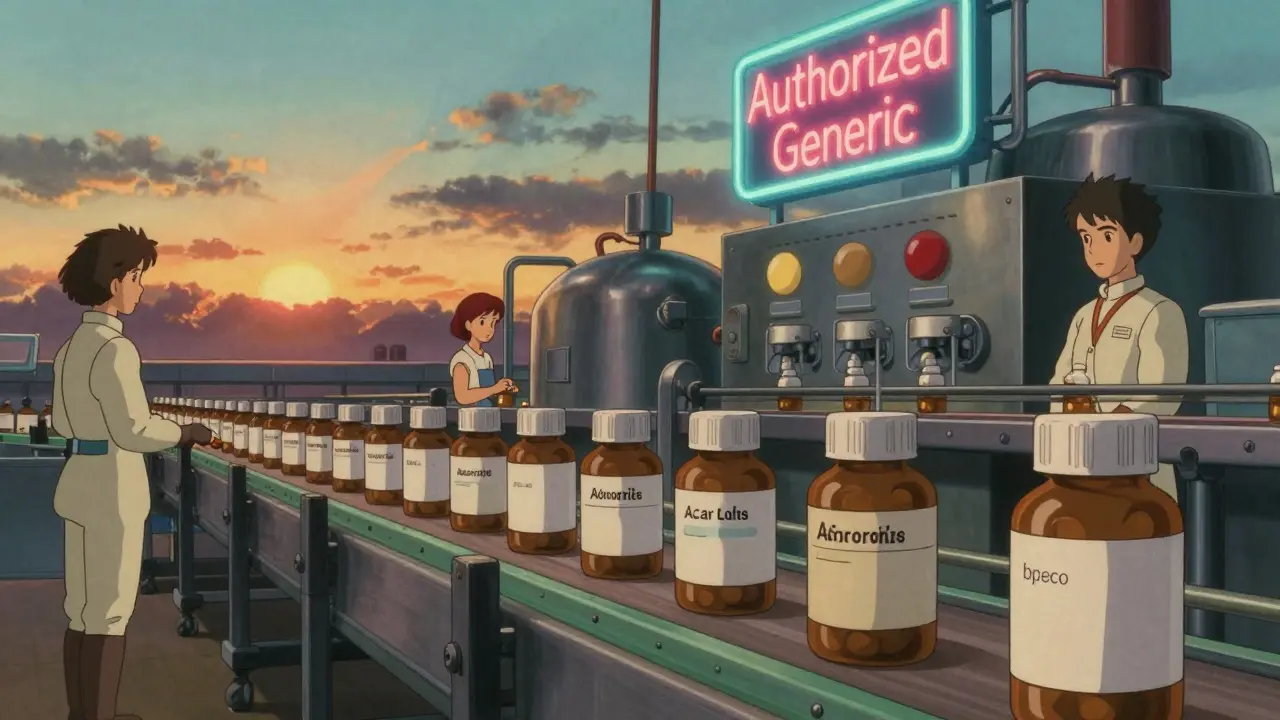
When a brand-name drug loses its patent, you’d expect prices to drop fast-thanks to generic competitors stepping in. But sometimes, the same company that made the original drug launches its own version under a generic label. That’s an authorized generic. It’s not a copycat. It’s the exact same pill, same factory, same packaging-just without the brand name. And in the next decade, these products will play a bigger, more complex role in how drugs are priced, sold, and accessed across the U.S. healthcare system.
What Exactly Is an Authorized Generic?
An authorized generic is a brand-name drug that the original manufacturer sells under a generic name, usually right after patent expiration. Unlike traditional generics made by third-party companies (who file ANDAs with the FDA), authorized generics come straight from the brand company’s own production lines. They’re identical in active ingredients, dosage, strength, and quality. The only difference? No marketing, no fancy packaging, and a much lower price tag.
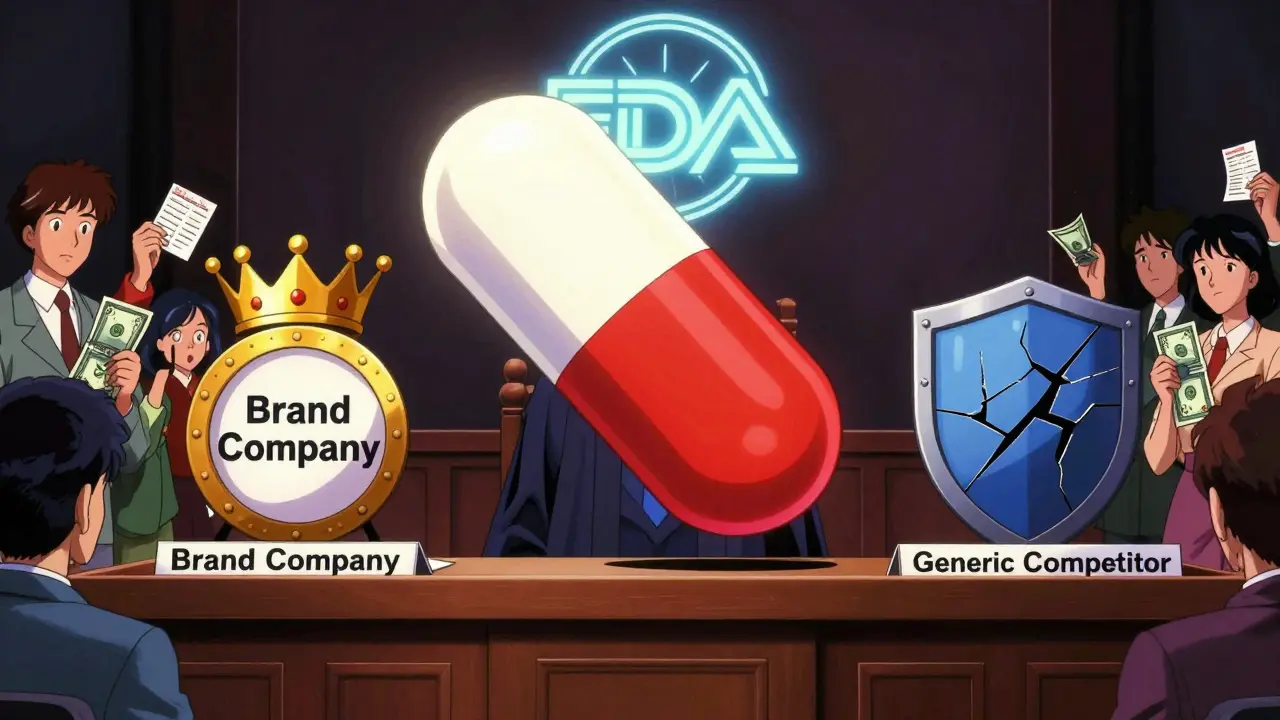
This isn’t charity. It’s strategy. When a drug’s patent expires, the brand company faces a steep revenue drop. If a traditional generic enters first, it can grab up to 80% of the market within months. To stop that, the brand manufacturer might launch its own generic version-right on the same day. This lets them keep some of the sales, while still undercutting their own branded product. It’s a way to control the transition, not lose it.
Why Did Authorized Generics Become So Common?
The rise of authorized generics started with the Hatch-Waxman Act of 1984. It gave drug companies a 180-day exclusivity window for the first generic applicant. That meant if you were first to file, you could be the only generic on the market for half a year-no competition. But brand manufacturers didn’t want to sit idle while someone else stole their customers.
So they started launching their own generics during that window. Between 2010 and 2019, there were 854 authorized generic launches, according to Health Affairs. Most of them didn’t come right after patent expiry. They waited-until the first traditional generic got approved. Then, boom: the brand’s version showed up. In 70% of cases where the first generic had exclusivity, the authorized generic came in before or during that period. That’s not coincidence. That’s calculated.
Oral tablets and capsules made up the majority of these launches. Why? Because they’re easier and cheaper to copy. Injectables, inhalers, or complex biologics? Harder. That’s why authorized generics are mostly found in common pills for blood pressure, cholesterol, or diabetes-not in cutting-edge cancer drugs (yet).
Is This Practice Changing?
Yes. And fast.
In the past, brand companies often delayed launching their own generics to keep the branded version on the market longer. That meant patients paid higher prices for months-or even years-after the patent expired. But that tactic is fading. According to RAPS in June 2025, fewer companies are holding back. The reason? Pressure from regulators, lawmakers, and public scrutiny over drug pricing.
Now, the FDA is pushing back in other ways. In October 2025, they launched a pilot program to fast-track ANDA reviews for generic drugs made entirely in the U.S. That’s a big deal. If you’re making your generic pills in Ohio instead of India, you get quicker approval. That’s not just about speed-it’s about supply chain security. And it’s changing the math for authorized generics.
Brand manufacturers now have a choice: launch an authorized generic made overseas (slower approval, cheaper labor) or make it in the U.S. (faster approval, higher cost). Many are choosing the latter. That could mean fewer authorized generics overall-but ones that are more reliable and better regulated.
What’s Driving the Generic Market Forward?
The real engine behind all of this? Patent expirations.
Between 2025 and 2030, drugs making between $217 billion and $236 billion in annual sales will lose patent protection. That’s a tidal wave. The U.S. generic market, already at $138 billion in 2024, is projected to hit nearly $200 billion by 2034. Globally, it could reach $800 billion by the early 2030s.
And it’s not just pills. Biologics-complex drugs like Humira, Enbrel, and now ustekinumab-are hitting patent cliffs too. The first biosimilars for these drugs are coming online in 2025. Experts estimate a $25 billion opportunity in oncology and immunology alone by 2029. Will brand companies launch authorized biosimilars? Probably. It’s already happening with some drugs. And if they do, it’ll be the next frontier for authorized generics.
Who Wins and Who Loses?
Patients benefit when prices drop. Generic drugs saved the U.S. healthcare system $467 billion in 2024 alone. Over the last decade, that’s $3.4 trillion in savings. Authorized generics add to that-especially when they arrive quickly after patent expiry.
But here’s the catch: when a brand company launches its own generic, it can suppress price competition. If you’re the only generic on the market-even if it’s your own product-other companies won’t enter. That means prices don’t fall as much as they could. A 2025 JAMA Health Forum study found that delaying generic entry by three years costs commercial insurers $2.5 billion and Medicare $2.4 billion. Drugs like imatinib and celecoxib are prime examples.
So authorized generics aren’t good or bad. They’re a tool. Used well, they speed up access and lower costs. Used to stall competition, they keep prices high. The shift away from delayed launches is a sign that the tool is being used more responsibly.
The Road Ahead: What to Expect by 2030
By 2030, authorized generics won’t disappear. But they’ll look different.
- More will be made in the U.S. because of the FDA’s pilot program. Domestic production will become the norm, not the exception.
- They’ll be used more for complex drugs-especially biosimilars. If a brand company can make a cheaper version of its own biologic, they’ll do it.
- Regulators will keep watching. The FDA and Congress are already looking at whether authorized generics reduce competition. New rules could force earlier launches or ban them entirely in certain markets.
- Pharmacy benefit managers (PBMs) and insurers will push for them. Why? Because they’re cheaper than branded drugs and more reliable than some third-party generics.
The biggest change? Transparency. The FDA’s listing of authorized generics since 1999 has been manual and slow. But with more pressure for accountability, expect real-time public databases soon. You’ll be able to see not just which drugs are authorized generics, but when they launched, who made them, and where.
Bottom Line: More Competition, Less Manipulation
The future of authorized generics isn’t about hiding from competition. It’s about managing it smarter. As more high-revenue drugs lose patents, brand companies will need to respond-not resist. The days of dragging out the transition are ending. The FDA’s push for domestic manufacturing, the rise of biosimilars, and public pressure on drug prices are all pushing the industry toward faster, fairer access.
For patients, that means lower prices sooner. For the system, it means billions more in savings. For the companies? It means adapting to a world where control isn’t about delaying generics-but leading them.
Are authorized generics the same as regular generics?
Yes, in every way that matters. Authorized generics have the same active ingredients, strength, dosage form, and quality as the brand-name drug. The only differences are the label and the price. They’re made in the same factory, on the same line, using the same formula. Traditional generics are copies made by other companies after reverse-engineering the brand drug. Authorized generics are the real thing, just sold under a generic name.
Why do brand companies make authorized generics?
To keep revenue after patent expiry. If they don’t launch their own generic, a competitor will take over most of the market. By launching their own version, they capture a share of the generic sales while undercutting their branded product. It’s a way to soften the financial blow of losing exclusivity without completely giving up control.
Do authorized generics lower drug prices?
Usually, yes-but not always. When an authorized generic enters the market quickly after patent expiry, it often triggers price competition from other generics, driving prices down further. But if it’s the only generic available for months, it can block others from entering, keeping prices higher than they should be. Timing matters. The trend now is toward faster launches, which helps lower prices sooner.
Is the FDA doing anything to change how authorized generics work?
Yes. In October 2025, the FDA launched a pilot program to fast-track approval for generic drugs made entirely in the U.S. This encourages domestic production and could make authorized generics more expensive to produce-but also more reliable. It may also lead to fewer authorized generics overall, as companies rethink whether it’s worth making them overseas. The goal is to reduce reliance on foreign supply chains and improve quality control.
Will authorized generics be used for biologic drugs like Humira?
They already are. While traditional generics are hard to copy for biologics, biosimilars are the equivalent. Some brand companies are launching their own biosimilars under generic names-essentially authorized biosimilars. For example, when ustekinumab’s patent expires in 2025, we’ll likely see the brand manufacturer launch its own version. This trend will grow as more biologics lose exclusivity.
How can I tell if my prescription is an authorized generic?
Check the label. Authorized generics are listed with the generic name, not the brand name. But the manufacturer name might still match the original brand. For example, if you’re taking a generic version of Lipitor made by Pfizer, it’s likely an authorized generic. Your pharmacist can confirm. Some pharmacies also label them as “authorized generic” on receipts or in their systems.
Are authorized generics safer than other generics?
They’re not inherently safer. All generics, whether authorized or traditional, must meet the same FDA standards for quality, strength, and purity. But because authorized generics come from the original manufacturer’s facility, some patients and providers feel more confident in their consistency-especially for narrow-therapeutic-index drugs like warfarin or levothyroxine.
Juan Reibelo
January 25, 2026 AT 10:12Authorized generics are such a clever loophole-brand companies basically say, 'Hey, we’re not cheating, we’re just… rebranding our own stuff.' It’s legal, sure, but it feels like a magic trick where the rabbit is still the same rabbit, just in a cheaper hat.
I’ve seen this with my dad’s cholesterol med-same pill, same bottle, different label. He saved 60% and didn’t even know it was the same thing he’d been paying $200 for.
It’s not evil. It’s capitalism with a wink.
John McGuirk
January 27, 2026 AT 04:09They’re lying to you. All of them. The FDA, the pharma giants, your pharmacist-they all want you to think this is about savings. But it’s about control. The same companies that made you pay $500 for a pill now sell you the same pill for $10… and then lobby to block ANY other generic from entering. They’re not lowering prices. They’re monopolizing the discount.
And don’t get me started on the ‘made in the USA’ pilot. That’s just a PR stunt to make you feel better while they outsource the real manufacturing to China under a different name.
They’re playing you. Always have been.
Michael Camilleri
January 27, 2026 AT 18:54Let’s be real nobody cares about the legal technicalities here. The system is rigged. Big Pharma owns the FDA, Congress, and your insurance plan. Authorized generics? Just another way for them to pretend they’re being fair while still pocketing the cash. You think they care about your diabetes meds? No. They care about their quarterly earnings.
And now they’re making them in Ohio? Please. That’s just to get tax breaks and look patriotic while the real profits still flow offshore. This isn’t innovation. It’s theater.
People need to stop applauding corporate ‘transparency’ and start demanding real price caps. Or we’re all just paying for the same drug under three different names.
Kevin Waters
January 29, 2026 AT 00:09As a pharmacist, I see this every day. Authorized generics are actually a win for patients when they launch fast. They’re the fastest way to get prices down without waiting for a third-party to reverse-engineer the formula.
And yeah, sometimes they block competition-but that’s changing. More companies are launching them on day one now because the public pressure is real.
Also, for narrow-therapeutic-index drugs like warfarin or levothyroxine? Many prescribers still prefer authorized generics because the consistency is better. Not because they’re ‘safer’-but because batch-to-batch variation is lower. That’s a real clinical advantage.
It’s not perfect, but it’s better than the alternative.
Dolores Rider
January 30, 2026 AT 18:45OMG I KNEW IT!!! They’re ALL LYING!! I just filled my prescription for the generic version of my antidepressant and the label said ‘Made by Pfizer’-SAME COMPANY!! I cried!! 😭
Why do they do this?? It’s like they’re mocking us!! I paid $80 for the brand and now I pay $12 for the ‘generic’ but it’s the SAME THING!!
Someone needs to burn down the FDA. 💥
lorraine england
January 31, 2026 AT 23:16It’s wild how much this stuff flies under the radar. I had no idea my blood pressure med was an authorized generic until my pharmacist mentioned it last month.
And honestly? I’m kinda glad. I’d rather get the same pill I’ve been on for years, just cheaper. No need to switch to some unknown manufacturer’s version.
It’s not perfect, but it’s a decent middle ground. I wish more people knew this existed. Could save so many folks money.
Darren Links
February 2, 2026 AT 14:29They’re making these in Ohio now? That’s great. Real American medicine. Not some foreign factory dumping junk into our bodies.
But don’t be fooled. This isn’t about safety. It’s about control. The same corporations that got us hooked on opioids are now selling us the same pills under a different name.
And they’ll keep doing it until we stop letting them. This isn’t progress. It’s just a new kind of exploitation.
Elizabeth Cannon
February 4, 2026 AT 12:32Y’all are overthinking this. If the pill is the same and costs less, why are we mad? The system’s broken, sure-but this is one of the few things that actually helps people right now.
I’ve been on an authorized generic for my thyroid med for 3 years. No issues. No side effects. Saved me $300 a month.
Let’s not turn a win into a villain. If the brand company wants to undercut itself to help patients? Cool. Let’s not punish them for it.
Also, spelling ‘generic’ right matters. Just saying. 😅
Phil Maxwell
February 5, 2026 AT 03:53I just read this and thought about my grandma. She’s on 7 meds. Half of them are authorized generics. She doesn’t know the difference. She just knows she can afford them.
Maybe the system’s flawed. Maybe the companies are shady. But for her? This is what keeps her alive.
I don’t need a philosophy lesson. I need my grandma to not choose between her pills and her groceries.
Shelby Marcel
February 5, 2026 AT 17:13wait so if its the same pill why does it cost less?? like… how does that even work??
also is it like… the same factory? same workers? same machine??
why dont they just sell it as the brand for cheaper then??
im so confused but also kinda obsessed now
Josh McEvoy
February 6, 2026 AT 05:50Imagine if your car company made a ‘generic’ version of your Tesla… but it was literally the same car, same battery, same paint… just without the logo and for $20k less 😳
That’s what’s happening here. And the industry is like ‘look how ethical we are!’
Meanwhile, they’re still the only ones allowed to make the ‘generic’ version for 6 months. That’s not competition. That’s a rigged game.
Also… 🤡
Heather McCubbin
February 7, 2026 AT 03:07People think this is about access but it’s not. It’s about power. The brand companies don’t want to lose control. They don’t want some startup in India making their drug and undercutting them. So they make their own version. They control the supply. They control the price. They control the narrative.
This isn’t capitalism. This is feudalism with pill bottles.
And the FDA? They’re just the royal scribe signing off on the new serfdom.
Wake up. The game is rigged. Always has been.