
Whether it's a common painkiller or a critical heart medication, a recall doesn't always mean your medicine is poisonous. Sometimes it just means it isn't working as well as it should. The real danger often lies not in the recall itself, but in how people react to it-like stopping a critical medication abruptly without talking to a doctor. Understanding why these recalls happen and how to handle them can save you from unnecessary health risks.
What exactly is a drug recall?
In simple terms, a recall is a request to return a product after discovering a serious problem. In the pharmaceutical world, Generic drug recalls is a safety mechanism where medications are removed from the market because they fail to meet quality, purity, or potency standards. It is a process primarily overseen by the FDA (Food and Drug Administration). Most of the time, companies start these recalls voluntarily before the government even tells them to, which shows that manufacturers are often monitoring their own batches.
Not all recalls are equal. The FDA uses a three-tier system to tell you how worried you should actually be:
- Class I: The most serious. There is a reasonable probability that using the drug will cause serious health problems or death.
- Class II: The middle ground. The drug might cause temporary or reversible health issues, but the risk of serious harm is low.
- Class III: The lowest risk. These medications are unlikely to cause any adverse health consequences, but they still don't meet strict quality standards.
Why do generic drugs get recalled?
You might wonder why a generic version of a drug-which has the same active ingredient as the brand name-would suddenly fail. The issue is rarely the chemical itself, but how it's made. The most common culprit is a failure in CGMP is Current Good Manufacturing Practices, the regulations that ensure drugs are consistently produced and controlled according to quality standards.
When a factory ignores CGMP, things go wrong. This could be as simple as a piece of equipment not being calibrated correctly or as serious as a facility having poor maintenance. For example, in April 2025, Glenmark Pharmaceuticals had to recall nearly 40 types of generic meds, including Acetaminophen and Ibuprofen, because of these manufacturing violations at a plant in India. Because these were Class II recalls, the risk was relatively low, but the scale was massive, affecting products sold at major retailers like Walmart and Amazon.
Then there is the issue of "failed dissolution specifications." This sounds technical, but it just means the pill doesn't dissolve in your stomach at the rate it's supposed to. If a drug doesn't dissolve right, your body doesn't absorb the medicine, making it ineffective. This happened with generic versions of Vyvanse (lisdexamfetamine) and Lipitor (Atorvastatin) in late 2025. For someone taking Atorvastatin to manage high cholesterol, a dissolution failure means their cholesterol isn't being lowered, leaving them vulnerable to heart issues despite taking their medicine daily.
Finally, there's contamination. This is where things get dangerous. We're talking about microbial growth, foreign particles, or cross-contamination from other drugs. One of the most alarming examples involved fentanyl patches. Due to leaked seals, some patients were underdosed, while others received far too much medication, creating a high risk of fatal overdoses. Roughly 27.8% of all drug recalls between 2015 and 2024 were linked to these kinds of contamination issues.
The global manufacturing problem
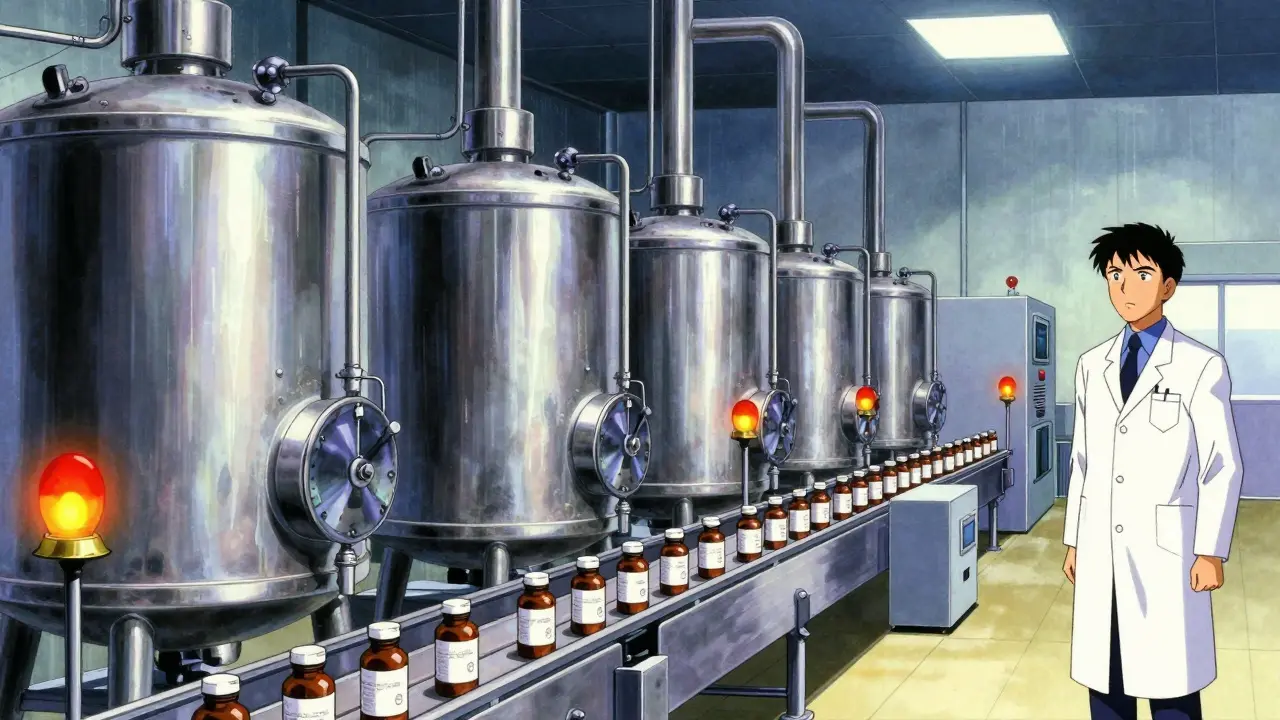
Why is this happening so frequently? A big part of the answer is where the medicine is made. A huge chunk of the world's generic drugs come from overseas. Data from IQVIA shows that about 68.3% of drug recalls between 2015 and 2024 came from facilities outside the US, with India accounting for nearly 43% of those foreign recalls.
The problem is that the FDA simply doesn't have enough inspectors to be in every factory in India or China every few months. This creates a gap in oversight. To fight this, the FDA has started using the PREDICT system to better target high-risk imports and has increased how often they inspect problematic plants. Industry giants like Teva and Viatris are even putting money into independent quality centers in those regions to stop these errors at the source.
What should you do if your medicine is recalled?
Finding out your medication is part of a recall can be stressful, but the worst thing you can do is panic and stop your treatment immediately. Depending on the drug, stopping "cold turkey" can be more dangerous than the recall itself.
| Recall Class | Risk Level | Immediate Action | Priority |
|---|---|---|---|
| Class I | High | Stop use immediately (unless life-critical) and call doctor. | Critical |
| Class II | Moderate | Consult doctor before stopping; arrange replacement. | High |
| Class III | Low | Finish current supply or swap at pharmacy for a newer lot. | Routine |
If you're dealing with a Class II recall for something like an ADHD medication (e.g., generic Vyvanse), do not just stop taking it. Abruptly quitting stimulants can lead to extreme fatigue, severe depression, and a rebound of symptoms. Always call your healthcare provider first.
Here is the practical checklist for handling any recall:
- Check your lot number: Look at the packaging of your medication. Compare the lot number and expiration date to the official recall notice. If they don't match, you're safe.
- Call your doctor: Ask them if the specific issue with the recall (like potency or contamination) poses a real risk to your specific health condition.
- Visit your pharmacy: Take the affected medication back. Most major chains like CVS or Walmart have systems to alert you during refills, but it's always better to double-check.
- Report side effects: If you think you've been harmed by a recalled drug, use the FDA's MedWatch program to report it. This helps the government spot patterns and trigger recalls faster.
The ripple effect: Shortages and costs
Recalls don't just affect the patient; they shake up the whole healthcare system. When a huge amount of a generic drug is pulled from the shelves, it often leads to a shortage. About 37.2% of generic drug recalls result in temporary shortages that last, on average, over eight weeks. For the 47 million people relying on statins, this can mean a stressful scramble to find an alternative brand.
On the business side, these mistakes are incredibly expensive. A major recall can cost a company nearly $48 million when you add up the cost of getting the product back, lost sales, and the hit to their reputation. When Glenmark announced their recall in 2025, their market value dropped by over 14% almost overnight. This financial pressure often forces companies to either improve their quality or go out of business, which ironically can lead to even more shortages in the short term.
Staying proactive about your health
While we can't control how a factory in India operates, we can control how we manage our medications. Be an active participant in your care. Don't just trust that the pharmacy will call you-though CVS reported a 92.4% notification rate, that still leaves thousands of people in the dark. Every few months, it's a good habit to glance at the FDA's enforcement reports or check with your pharmacist about any recent alerts for the drugs you use daily.
Should I stop taking my medication the moment I hear about a recall?
No, not immediately. For many medications, especially those for mental health, blood pressure, or diabetes, stopping abruptly can cause dangerous withdrawal symptoms or a health crisis. Always contact your doctor first to create a transition plan to a safe alternative.
How do I know if my specific bottle is affected?
Check the "Lot Number" (often labeled as LOT or Batch) printed on the side of the bottle or the blister pack. Compare this number to the list provided in the FDA recall notice. If your lot number is not listed, your medication is not part of that specific recall.
Will I get my money back for a recalled drug?
In most cases, yes. You can return the medication to the pharmacy where you purchased it for a refund or a replacement from a safe lot. Some manufacturers also provide registration portals to request reimbursement.
What is the difference between a Class I and Class III recall?
A Class I recall is the most urgent because the product could cause serious health problems or death. A Class III recall is for products that violate FDA labeling or manufacturing rules but are unlikely to cause any health problems at all.
Why are so many generic drugs made in India and China?
These countries offer lower manufacturing costs and have built massive industrial infrastructures for chemical production. However, this geographic concentration makes it harder for the FDA to conduct frequent, surprise inspections of every facility.
Darius Prorok
April 4, 2026 AT 14:25Everyone knows that generics are just cheaper for a reason. If you want the good stuff, you pay for the brand name. It's basic economics.
Del Bourne
April 5, 2026 AT 05:30It is so important to remember that lot numbers are your best friend here. Always double-check the packaging against the official FDA list before panicking. If you're unsure, your pharmacist is usually the fastest way to get a definitive answer since they have direct access to the recall notices from the distributor. Just a friendly reminder to keep a list of your current medications and their lot numbers in a digital note for quick reference!
Benjamin cusden
April 6, 2026 AT 13:23The obsession with generic flaws is quite tedious. The reality is that the chemical synthesis remains identical; the variance is purely in the excipients and the manufacturing environment. To suggest that this is a systemic failure of the generic model is a gross oversimplification of pharmaceutical engineering.
GOPESH KUMAR
April 7, 2026 AT 17:52Typical Western perspective. You complain about India providing 40% of your meds but you won't pay the prices that would actually allow for more local oversight. We are the world's pharmacy because we accept the risks you're too lazy to manage. The philosophy of cost-cutting always leads to this. It's a cycle of greed and then shock when a pill doesn't dissolve. Truly a comedy of errors.
Nathan Kreider
April 8, 2026 AT 05:38Glad this info is out there. It can be really scary to find out your meds are recalled, but knowing there are different classes helps a lot!
Windy Phillips
April 9, 2026 AT 14:10Some people just don't care about the purity of what they put in their bodies... it's truly tragic!!! I've always said that we attract the energy we put out, and taking substandard medication is just a reflection of a substandard lifestyle... sadly!!!
Kathleen Painter
April 11, 2026 AT 05:36I think we should all just take a deep breath and realize that the system is trying its best, even if it's flawed. It's okay to feel anxious about this, but maybe we can use this as a moment to support more transparent supply chains. I've always felt that if we just opened up the conversation between patients and manufacturers, we'd find a more peaceful way to handle these errors without all the blame games. Let's just look out for one another and make sure our elderly neighbors know how to check their lot numbers too, because they're often the ones most affected by these changes.
Ruth Swansburg
April 11, 2026 AT 13:46Stay strong everyone! Please reach out to your doctors immediately!
Nikhil Bhatia
April 13, 2026 AT 12:49Too many recalls. Just typical.