

Why does a smartphone app work perfectly in Tokyo but fail in São Paulo - even when it’s the exact same code? Why do people in Germany demand detailed manuals before trying a new tool, while people in Brazil trust a recommendation from a friend before even reading the instructions? The answer isn’t in the software. It’s in the culture.
Culture Isn’t Just Traditions - It’s a Hidden Operating System
Most people think of culture as food, holidays, or language. But beneath that surface, culture runs like a silent program inside every decision we make. It shapes what we trust, what we fear, and what we’re willing to try - even when something is completely generic. A medical app, a payment system, a new way to file taxes: none of these are inherently better or worse. But whether people accept them? That’s all culture. Think of it this way: if you gave the same hammer to someone in Japan and someone in Mexico, one might use it to build a shelf, the other to fix a fence. The tool didn’t change. The meaning behind using it did. That’s what cultural acceptance means - not just using something, but believing it belongs in your life.The Five Hidden Rules That Decide Acceptance
Back in the 1980s, Geert Hofstede cracked open a massive dataset from IBM employees across 50 countries. He didn’t find differences in job performance. He found differences in how people thought. From that, he built five cultural dimensions that still explain most of why people accept - or reject - new things today.- Individualism vs. Collectivism: In places like the U.S. or Australia, people decide based on personal benefit. In Japan, South Korea, or Nigeria, they ask: "Will this help my team? My family? My group?" If a new app doesn’t show social proof - like "Your colleagues are using this" - it’s ignored, no matter how good it is.
- Uncertainty Avoidance: In countries like Greece or Japan, people hate surprises. They need rules, manuals, clear steps. In Singapore or Denmark, people are fine with "just try it and see." A software update that works fine in Sweden might get blocked in Italy because it didn’t come with a 30-page guide.
- Power Distance: In India or Saudi Arabia, people expect authority figures to decide what’s good. If a doctor says a health app is safe, it gets used. In Sweden or Canada, people want to verify it themselves. Top-down approval doesn’t work there.
- Long-Term Orientation: In China or South Korea, people plan decades ahead. They’ll adopt a tool now if it saves effort later. In the U.S. or UK, people care more about immediate results. A productivity app that takes two weeks to learn? Most won’t stick with it.
- Masculinity vs. Femininity: In countries like Germany or Japan, success is tied to performance, speed, and results. In Sweden or Norway, cooperation and quality of life matter more. A fitness app that pushes "beat your friend’s record" will flop in Oslo. One that says "feel better together" will thrive.
These aren’t stereotypes. They’re measurable patterns. A 2022 study in BMC Health Services Research found that uncertainty avoidance alone explained 37% of why healthcare workers accepted or rejected new digital systems. That’s not a small detail. That’s the difference between adoption and failure.
Why Western Models Keep Failing Globally
For decades, tech companies used the same formula: make it fast, make it clean, make it easy. That’s the Technology Acceptance Model - or TAM. It worked great in the U.S. It explained about 40% of why people used software there. But take that same model to Brazil, South Korea, or Egypt? It drops to 22%. Why? Because TAM assumes everyone thinks like a Silicon Valley engineer: independent, risk-tolerant, logic-driven. That’s not the world. That’s one corner of it. Real-world examples prove it. A hospital in Milan rolled out a new electronic health record system. It had perfect usability scores in testing. But doctors refused to use it. Why? Because it didn’t show who had approved it - no clear authority sign-off. In Germany, the same system got rave reviews because it came with 17 validation steps and compliance certificates. Same tool. Two reactions. Culture did the work.
What Works - And What Doesn’t
Companies that get this right see adoption rates jump by 23% to 47%. Here’s what they do:- In collectivist cultures: Add social proof. Show team usage stats. Let managers approve access. Don’t just say "download now." Say "Your team is already using this. Join them."
- In high uncertainty avoidance cultures: Provide step-by-step guides. Offer live support. Include legal disclaimers. Don’t assume people will figure it out. They won’t - and they’ll blame the tool, not themselves.
- In high power distance cultures: Get endorsements from respected figures. A doctor’s signature. A government stamp. A CEO’s video message. Trust flows from authority, not reviews.
- In long-term oriented cultures: Highlight future benefits. "This saves you 10 hours a month next year." "Reduces errors over time." Don’t just say "it’s faster today."
- In feminine cultures: Focus on harmony, well-being, teamwork. Avoid aggressive language like "dominate" or "win." Use "support," "balance," "together."
On the flip side, the biggest failures happen when companies assume one size fits all. A fitness app launched in 15 countries with the same interface. In the U.S., users loved the leaderboard. In Thailand, they turned it off. Why? Because ranking people publicly felt embarrassing. The app didn’t fail because it was buggy. It failed because it didn’t respect cultural norms around status and shame.
The Hidden Cost of Ignoring Culture
Ignoring culture doesn’t just slow adoption. It costs money. A 2023 IEEE survey found that 68% of tech implementations failed because cultural factors were ignored during design. That’s not a bug. That’s a blind spot. Imagine spending $2 million building a global HR platform. You test it in Chicago. It works. You roll it out in Jakarta. Employees refuse to use it. Why? Because the system required them to log personal goals - something they saw as invasive. In Indonesia, personal ambition is kept private. The system wasn’t broken. It was culturally offensive. The fix? Start with cultural assessment. Tools like Hofstede Insights let you compare countries on all five dimensions. But don’t just buy a report. Talk to real people. Interview users in each region. Watch how they interact with prototypes. You’ll find things no model predicts - like how a simple color choice (red means danger in the West, luck in China) can make or break acceptance.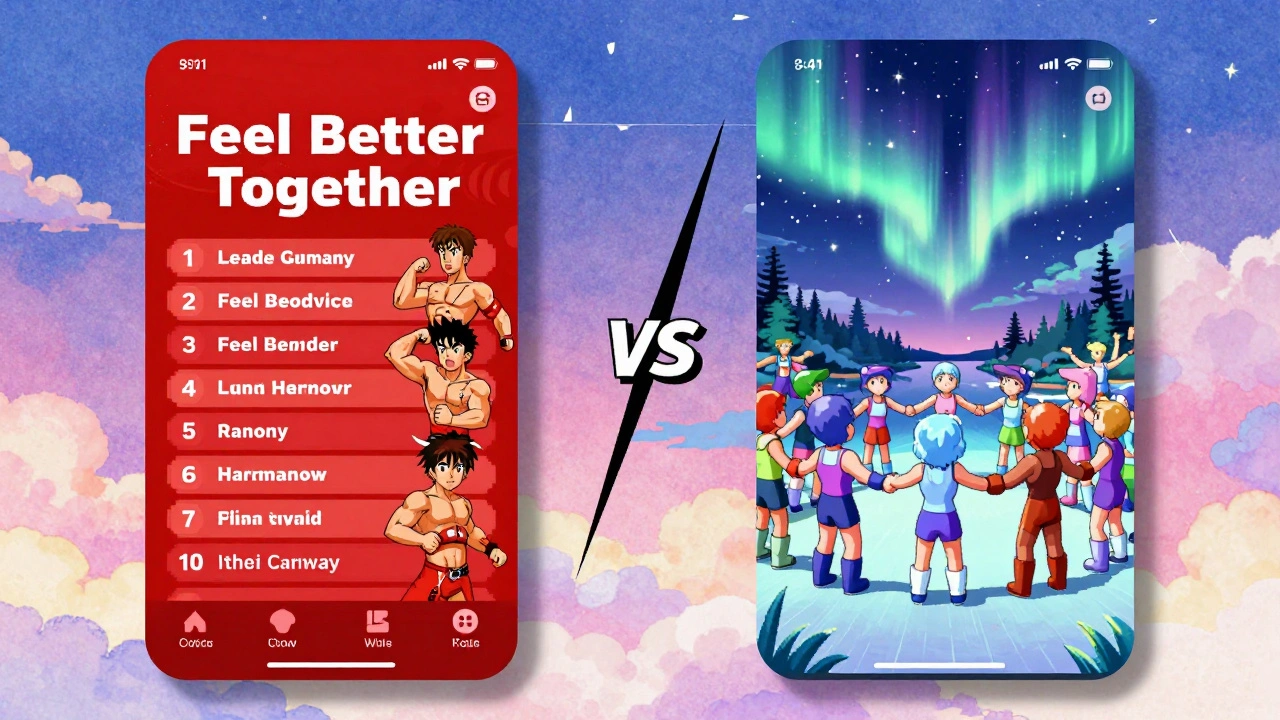
AI Is Changing the Game - But Not Solving It
In 2024, Microsoft launched Azure Cultural Adaptation Services. IBM and Google are testing AI that adjusts interfaces in real time based on user location and behavior. That sounds amazing. But here’s the catch: AI can detect patterns. It can’t understand meaning. An algorithm might notice users in Poland click "Help" 12 times more than users in Finland. It can auto-generate a manual. But it won’t know why. Maybe Polish users don’t trust automation. Maybe they’re used to asking a coworker. Maybe they’ve been burned by bad tech before. AI doesn’t care. It just responds. That’s why human insight still matters. The best systems combine AI speed with cultural expertise. Use AI to flag risks. Use local teams to explain them.What’s Next? Culture Is Moving Faster Than Ever
Here’s the twist: culture isn’t static. A 2024 MIT study found that Gen Z’s cultural values are shifting 3.2 times faster than previous generations. What worked last year might be outdated today. In South Korea, collectivism is weakening among young professionals. They now value personal freedom over group harmony. In Brazil, uncertainty avoidance is dropping as digital payments become normal. In Germany, younger workers are rejecting rigid hierarchies. This means cultural assessment can’t be a one-time project. It needs to be ongoing. Companies that treat culture like a checkbox are already falling behind. The winners will build feedback loops - listening, adapting, testing - continuously.Final Thought: It’s Not About Localization. It’s About Belonging.
You can translate text. You can change colors. You can adjust buttons. But you can’t force someone to feel something they don’t. Generic acceptance isn’t about making something work. It’s about making someone feel like it was made for them. That’s not a design problem. It’s a human one. If you want people to use your product - truly use it - don’t ask if it’s better. Ask: "Does it feel like mine?"Why do some cultures reject technology even when it’s clearly better?
Better doesn’t matter if it doesn’t fit. A faster app won’t be used if it breaks social norms - like forcing public goal-tracking in a collectivist culture, or skipping approval steps in a high power distance society. People don’t reject technology because it’s bad. They reject it because it feels wrong - even if it’s objectively better.
Can cultural dimensions be measured accurately?
Yes, but with limits. Tools like Hofstede Insights use decades of survey data to assign scores to countries. These scores are reliable for broad trends - like showing Japan has high uncertainty avoidance. But they don’t predict individual behavior. Within any country, 70% of variation comes from personal experience, education, and age - not culture alone. Use dimensions as a guide, not a rulebook.
Is cultural adaptation expensive?
It costs more upfront. A full cultural assessment adds 2-4 weeks to a project. But skipping it costs more later. Studies show implementations without cultural planning fail 68% of the time. That means wasted development, lost revenue, and damaged trust. The real expense isn’t the assessment - it’s the failure to do it.
Do small businesses need to worry about cultural acceptance?
If you’re only serving one country, maybe not. But if you’re selling online to anyone in the world - yes. Even a simple e-commerce site can fail in a new market because of cultural mismatches. A "Buy Now" button that works in the U.S. might feel pushy in Japan. A checkout process that’s fast in Germany might seem rushed in Brazil. Cultural awareness isn’t just for big tech - it’s for anyone who wants to reach beyond their borders.
How do I start applying cultural acceptance in my team?
Start small. Pick one feature you’re launching in a new country. Talk to 3-5 real users there. Ask: "What would make you trust this?" "What would make you stop using it?" Then compare their answers to Hofstede’s dimensions. You don’t need a big budget. You need curiosity. The first step isn’t buying a tool - it’s listening.
Marvin Gordon
December 6, 2025 AT 06:17Man, this post hits different. I’ve seen this firsthand when my company rolled out a new time-tracking app. Engineers in Austin loved it-quick, clean, no manuals. But our team in Mumbai? They wouldn’t touch it until their manager sent a signed email saying it was approved. No joke. The app wasn’t broken. It just didn’t come with a badge that said ‘this is safe.’ Culture isn’t fluffy stuff-it’s the invisible wiring behind every click.
And yeah, Hofstede’s still relevant. Not perfect, but better than pretending everyone thinks like a Silicon Valley bro.
Rupa DasGupta
December 6, 2025 AT 15:27LOL at all this ‘cultural dimensions’ nonsense 😂 I work in a call center in Delhi and we use the same app as the NY office. No one reads manuals here. We just ask the person next to us. If they’re using it, we use it. No need for ‘collectivist proof’-it’s just how humans work. Stop overcomplicating it with fancy graphs and academic jargon. We’re not robots with country codes.
Also, who even uses Hofstede anymore? 😴
Jennifer Patrician
December 8, 2025 AT 00:50Of course culture matters. But let’s be real-this whole ‘cultural acceptance’ thing is just corporate speak for ‘we’re too lazy to design one good product.’
Why not just make it work for everyone instead of slapping on 17 different versions? You think the iPhone needed 12 cultural modes? No. It just worked. And it dominated. Stop using culture as an excuse for bad UX.
Also-how many of these ‘studies’ are funded by consultants selling Hofstede reports? 🤔
Mark Ziegenbein
December 9, 2025 AT 17:11Let’s not pretend this is groundbreaking. This is just Geert Hofstede dressed up in a Figma theme with a dash of 2024 buzzwords. The real insight? Humans are irrational. Technology doesn’t fail because it’s buggy-it fails because it violates unspoken social contracts. And those contracts are woven into the fabric of every society, from the way a German waits in line to the way a Brazilian nods politely while ignoring your instructions.
What’s fascinating is how these dimensions aren’t static. I’ve seen Gen Z in Tokyo reject hierarchy so hard they use anonymous feedback apps to bypass managers. Meanwhile, millennials in India still defer to authority even when it’s clearly wrong. So yes, culture matters-but culture is also a moving target. And most tech teams are still using a 1980s map to navigate a 2024 jungle.
Also, the idea that AI can ‘adapt’ culturally is laughable. Algorithms don’t understand shame. They don’t know that in some cultures, being ranked publicly is a form of social death. That’s not a data point. That’s a human truth. And no neural net will ever replace the quiet conversation with a local user who says, ‘We just don’t do that here.’
So yes-stop assuming your app is universal. It’s not. And pretending it is? That’s not innovation. That’s arrogance wrapped in a UX audit.
And before you say ‘but what about global scalability?’-I’ll tell you this: the most scalable thing in tech isn’t code. It’s humility.
an mo
December 9, 2025 AT 20:33Let’s cut through the noise. This isn’t about culture-it’s about cognitive load and institutional inertia. The 37% variance in healthcare tech adoption? That’s not ‘uncertainty avoidance.’ That’s poor change management. Doctors don’t trust apps because they’re trained to distrust anything that isn’t peer-reviewed and FDA-cleared. That’s not culture-that’s professional epistemology.
And the ‘social proof’ fix? That’s just bandwagoning repackaged as cultural insight. If you’re relying on ‘your team is using this’ to drive adoption, your product has zero intrinsic value. Fix the product. Don’t game the social psychology.
Also-Hofstede’s data is from IBM employees in the 80s. That’s not a cultural model. That’s a relic. We’re in the age of algorithmic identity formation. Culture isn’t national anymore. It’s algorithmic. Your TikTok feed is your new cultural vector.
Stop treating culture like a static variable. It’s a dynamic, fragmented, multi-layered mess-and no 5-dimension matrix is going to capture that.
ashlie perry
December 11, 2025 AT 18:48so… you’re telling me the whole tech industry is being manipulated by some 40 year old study funded by ibm and consultants who want to sell $20k reports?
what if… the real reason apps fail abroad is because they’re just bad? and we’re using ‘culture’ as a shield so we don’t have to admit we suck at design?
also-why is every ‘global’ app still designed by white guys in san francisco who think ‘collectivist’ means ‘people who don’t know how to use a button’?
they didn’t ask me what i wanted. they just assumed. again.
and now they want to use ai to ‘adapt’? lmao. the ai doesn’t even know what ‘shame’ is. it just sees clicks.
we’re not solving problems. we’re just adding layers of nonsense on top of bad code.
also-red = luck in china? who told you that? that’s a myth. it’s red = danger in rural areas too. stop repeating google translate wisdom as fact.
they’re selling you a fairy tale. and you’re buying it.
and yes. i’m paranoid. because i’ve seen this movie before. and it always ends with the same thing: another $3 million wasted. on ‘culture’.
Ali Bradshaw
December 13, 2025 AT 15:22I’ve worked on global product teams for over a decade. The truth? Culture matters-but not in the way these models suggest.
It’s not about ‘high power distance’ or ‘uncertainty avoidance.’ It’s about trust. Who do people trust? Their neighbor? Their boss? Their cousin? Their local YouTube reviewer?
I once saw a health app succeed in rural Kenya because it used a voice message from a local nurse-no text, no logo, just her voice saying ‘I use this too.’ That’s not a cultural dimension. That’s human connection.
AI can’t replicate that. But you can. Just listen. Talk to real people. Not surveys. Not dashboards. Real conversations.
And if you’re spending more on ‘cultural assessments’ than on hiring local testers? You’re doing it wrong.
Stop over-engineering. Start listening.
Mellissa Landrum
December 14, 2025 AT 00:26