
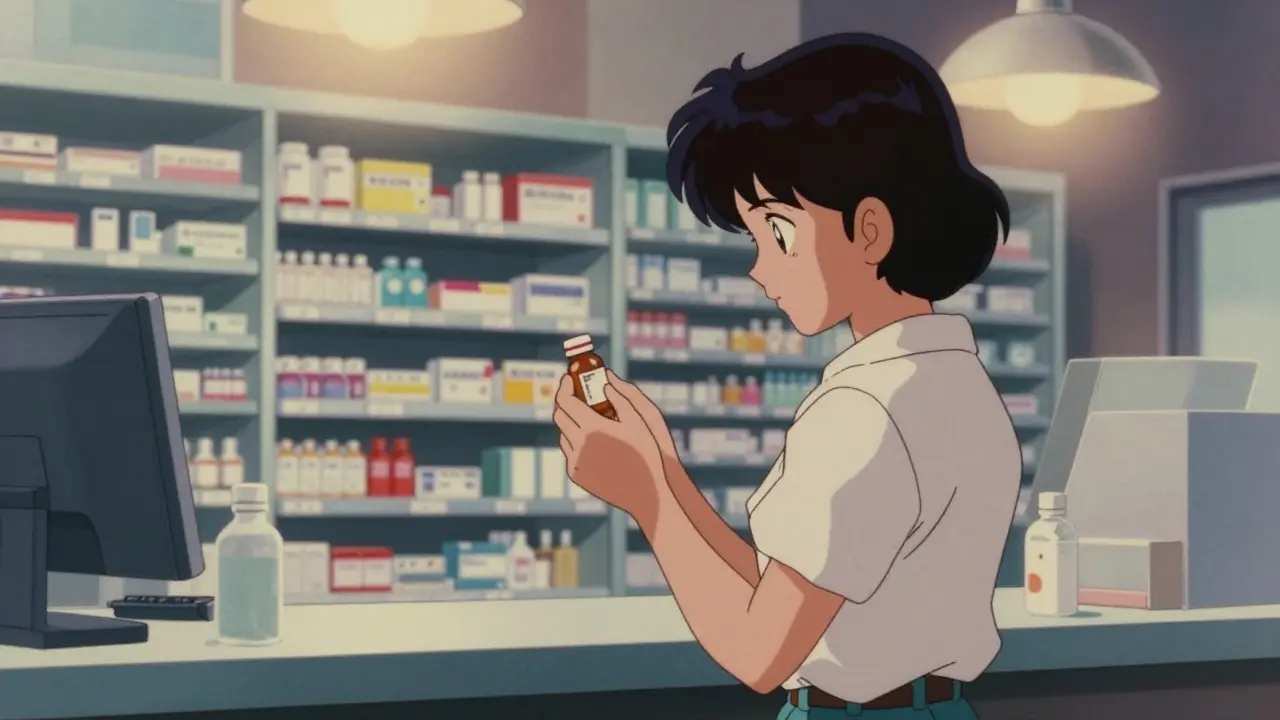
You pick up your medicine from the pharmacy counter. The pharmacist hands you the bottle, smiles, and says, "Here you go." It feels routine. Most people just throw the container in their bag. But that small sticker on the bottle holds the difference between healing and harm. Every year, millions of medication errors occur simply because someone didn’t check the numbers on the bottle against the doctor’s orders. You can prevent this yourself.
This isn’t about doubting the medical team. It is about adding a final layer of safety that belongs to you. By learning to read your prescription labels correctly, you become an active partner in your own health care. This process takes less than a minute but protects you from serious dosing mistakes.
Understanding Medication Strength Units
The most critical part of any label is the strength. This tells you how much active ingredient is actually inside the pill or liquid. Without understanding the unit of measurement, the numbers mean nothing. The Food and Drug Administration requires these details to be printed clearly on every dispensed product, yet they often look confusing at first glance.
Metric Dosing is the standard used globally for pharmaceuticals. This system uses milligrams and micrograms to measure medication potency. Also known as Metric System, it ensures precision across different pharmacies and countries.
Most solid medications, like tablets or capsules, list strength in milligrams. You might see "Amoxicillin 500 mg" on a label. That "mg" stands for milligram, which is one-thousandth of a gram. In simpler terms, imagine a standard paperclip weighing about one gram. A milligram is a tiny fraction of that weight.
- Milligrams (mg): Used for most common drugs like pain relievers or antibiotics.
- Micrograms (mcg): Used for potent hormones or heart medications. This is 1,000 times smaller than a milligram.
- Units (U or IU): Often used for insulin or vitamins like Vitamin D.
- Percentages (%): Common on creams or topical ointments (e.g., 1% Hydrocortisone).
The trap lies in the similarity between milligrams (mg) and micrograms (mcg). If your doctor prescribed a thyroid medication in micrograms, and you accidentally took the same number in milligrams, you would take a dose 1,000 times too high. This is why visually distinguishing these letters is life-saving work.
Decoding Quantity and Volume
While strength tells you how powerful the medicine is, quantity tells you exactly how much you received. This applies differently depending on whether the form is solid or liquid. Solid forms are measured in count, while liquids and creams are measured in volume or weight.
A typical label for a tablet might say "Quantity: 30 Tablets." This means the bottle contains thirty individual pieces. You do not swallow thirty tablets at once unless explicitly instructed, though sometimes doses range from multiple pills per day. For liquid medicines, the label specifies volume in milliliters (mL).
| Form Type | Unit of Measure | Label Example |
|---|---|---|
| Tablet/Capsule | Count (Each) | 30 Cap |
| Liquid Suspension | Volume (mL) | 120 mL |
| Cream/Ointment | Weight (g) | 30 Grams |
Liquids require extra attention because they have two sets of numbers. First is the concentration, such as "250 mg / 5 mL." This means there are 250 milligrams of drug dissolved in every 5 milliliters of liquid. Second is the total bottle size, usually 100 mL or 120 mL. Many parents of young children confuse these numbers, leading to accidental overdoses when measuring syrup.
Four Steps to Verify Your Medicine
Verification does not require a degree in chemistry. You just need a systematic approach. The American Society of Health-System Pharmacists recommends a quick visual audit before leaving the pharmacy counter or immediately upon returning home. Here is the sequence that catches the majority of errors.
- Find the Name: Look for the generic name first. Brand names change, but chemical names stay consistent. Ensure the spelling matches your doctor’s referral slip.
- Check the Strength: Locate the number right next to the name. Does the amount of milligrams match what you expect? If your blood pressure med was 10 mg last time and now says 20 mg, pause.
- Verify the Pill Shape: Sometimes the label is correct, but the wrong pill is in the bottle. Compare the physical appearance of the tablet in the blister pack to the old bottle or your memory.
- Read the Quantity: Count the pills in the tray or shake the bottle to check fill level. If the label says 30 tablets but you only count 28, something went wrong during dispensing.
Doing this for even just one month helps you memorize what your regular medications look like. Muscle memory creates a baseline for spotting anomalies quickly.
Common Labeling Pitfalls to Watch For
Even trained professionals miss things. Humans make mistakes, and printing machines glitch. There are specific patterns of error that tend to happen repeatedly in pharmacy systems. Being aware of these patterns makes you more skeptical when you spot a visual oddity.
Decimal points are notorious trouble spots. A label saying "0.5 mg" looks visually similar to "5 mg" if the zero is faint or smudged. This type of confusion accounts for nearly 20% of fatal pediatric errors. Always look for that leading zero before the period. If the number seems off, ask the pharmacist to clarify the decimal placement specifically.
Abbreviations are another red flag. Regulations often ban using abbreviations like "U" for units because a lowercase "u" can look like a handwritten number 2 or 4. However, some older systems or compounded meds still slip through. If you see an ambiguous abbreviation for units, never guess what it means.

Digital Tools and Support Systems
Technology is changing how we access information. Many major chains, including CVS Health and Walgreens, now include QR codes directly on the bottle stickers. Scanning this code with your smartphone pulls up a digital version of the package insert.
These apps provide detailed images of the actual pill. If the shape or color of your tablet doesn’t match the image in the app, you have immediate confirmation that a swap may have occurred. Some apps also calculate fluid dosages for children, allowing you to input the concentration on your label and enter the prescribed dose to get the correct milliliter measurement automatically.
Accessibility matters too. If you have low vision, federal law guarantees you can request large-print labels. About 89% of chain pharmacies offer this service. Do not assume they won’t do it; simply ask the pharmacist manager. Clarity is a right, not a privilege.
When to Speak Up at the Counter
Pharmacists appreciate patients who ask questions. They know you are the last line of defense. If something looks wrong, speak up calmly before you leave the building. Correcting an error at the pickup counter is free and easy. Fixing it after you go home might mean paying for a refund or, worse, suffering a health incident.
If you notice the pill looks different than usual, check the imprints. These are tiny letters or numbers molded into the tablet surface. They act like fingerprints. Even if the shape looks right, different strengths of the same drug sometimes have different imprints. Keep a photo of your previous bottles on your phone for comparison.
What do "mg" and "mcg" really mean?
Milligrams (mg) are thousandths of a gram, while micrograms (mcg) are millionths. Taking a dose meant for micrograms in milligrams could result in an overdose by a factor of 1,000.
My liquid medicine label has two numbers. Which one do I use?
Use the concentration (e.g., 250 mg/5 mL) combined with your prescribed dose to determine how many milliliters to measure. Never use the total bottle volume as your dose.
Is it okay to trust the color of the pills alone?
No. Different manufacturers produce different colored pills for the same drug. Always rely on the printed strength and imprint code rather than relying solely on color.
Can I get a clearer label for better eyesight?
Yes. Federal regulations allow pharmacies to reprint labels in larger font sizes upon request. Ask your pharmacy manager for this accommodation if you cannot read the small print.
Why do some labels show brand names instead of generic names?
Some prescribers request brand names due to insurance formularies or therapeutic needs. However, the generic name (chemical name) must also appear to ensure accurate identification regardless of branding.
Callie Bartley
April 1, 2026 AT 15:10I always do this myself because the pharmacy staff clearly never checks anything anyway.
Arun Kumar
April 3, 2026 AT 09:38That feeling of distrust is understandable but maybe try asking politely first.
In my culture we value respect before assuming bad intent.
Still good to double check everything.
Rod Farren
April 3, 2026 AT 10:54Pharmacists adhere to strict dispensing protocols.
However human error remains a constant variable in every workflow.
Metric dosing requires absolute precision from all handlers.
A single milligram discrepancy changes therapeutic outcomes significantly.
Solid dosage forms present unique identification challenges visually.
Liquid suspensions require volume-to-concentration ratio checks daily.
Parents often struggle with pediatric syringe calibrations correctly.
Decimal placement is critical for established safety thresholds.
Abbreviations must follow ISMP guidelines strictly everywhere.
Visual inspection verifies dispensed inventory counts accurately.
Pill imprints serve as secondary verification markers effectively.
Digital tools provide supplementary image references for comparison.
Accessibility options like large print are legally mandated services.
Clear instructions prevent accidental overdoses in home settings.
Patient education empowers the primary care consumer fully.
Molly O'Donnell
April 3, 2026 AT 23:01You missed the decimal point risk entirely.
That is the most common issue.
Not the chemistry stuff.
Eleanor Black
April 4, 2026 AT 02:43It is indeed crucial to understand the nuances :).
Thank you for the detailed breakdown of the pharmaceutical metrics we see daily.
The explanation regarding milligrams versus micrograms is particularly insightful.
We must remain vigilant regarding patient safety protocols in our homes.
The metric system does require careful attention though.
It is good to share this knowledge here.
Russel Sarong
April 4, 2026 AT 07:15Wow!
So many things can go wrong!!!
I was shocked!!!
Safety is key!!!
Owen Barnes
April 4, 2026 AT 22:15thats a gud tip everyone shoudl check thier meds.
i did this once and catched a mistake.
its easy to make eros but we gotta look out for each other.
Jenny Gardner
April 6, 2026 AT 17:53Exactly!
Everyone needs to take control of their health!!!
Checking the label saves lives!!!
I love sharing these tips!!!
Christopher Beeson
April 8, 2026 AT 07:04Society is crumbling because we trust systems we cannot verify.
Medicine is just another transaction where power dynamics shift.
If you do not check your own bottle you are part of the problem.
It is a systemic failure disguised as routine care.
True autonomy requires vigilance against the machine.
James DeZego
April 10, 2026 AT 07:04Whoa let's stay calm 😅.
Checking labels is just practical self-care.
No need for the doom and gloom narrative today.
We can be proactive without being cynical :).
Sharon Munger
April 11, 2026 AT 03:00i agree with the main points here.
clear communication helps us avoid mistakes.
thanks for the summary.