

You’ve just left the pharmacy with your new prescription, and the pharmacist gave you a quick rundown of how to take it. But as soon as you get home and look at the bottle, a wave of uncertainty hits: Did they say take it with food? Was it once a day or twice? This is a common and dangerous gap in healthcare. According to the Institute for Safe Medication Practices, about 50% of medication errors happen during the administration phase-basically, when you're actually taking the drug at home.
The problem is that while pharmacists are legally required to offer counseling, the actual notes they write aren't always easy to find once you've walked out the door. Whether you're managing a chronic condition or starting a new treatment, knowing how to pharmacist counseling notes can be the difference between a successful recovery and a trip to the emergency room. Here is how you can track down that information and ensure your medication safety.
Quick Summary: How to Verify Your Counseling
- Request it immediately: Ask for written counseling points before you leave the pharmacy counter.
- Check the app: Use the pharmacy's mobile portal, but be prepared for a 24-72 hour delay in note availability.
- Verify your identity: Complete biometric or security questions in the app to unlock restricted pharmacy notes.
- Request email summaries: Ask the pharmacist to email a summary of the counseling points for a permanent digital record.
The Legal Right to Counseling (OBRA-90)
You might not know it, but you have a legal right to this information. Under the Omnibus Budget Reconciliation Act of 1990 is a federal law known as OBRA-90 that mandates pharmacists offer counseling to patients on all new prescriptions . This isn't just a courtesy; it's a safety requirement designed to prevent adverse drug reactions.
However, while the law says they must offer the counseling, it doesn't strictly mandate how they document it for the patient. This creates a huge inconsistency. A survey by the National Community Pharmacists Association found that only about 37% of community pharmacies consistently provide written documentation. This means the "notes" you're looking for might exist in their internal computer system, but not in a format you can actually see.
Accessing Notes via Major Pharmacy Chains
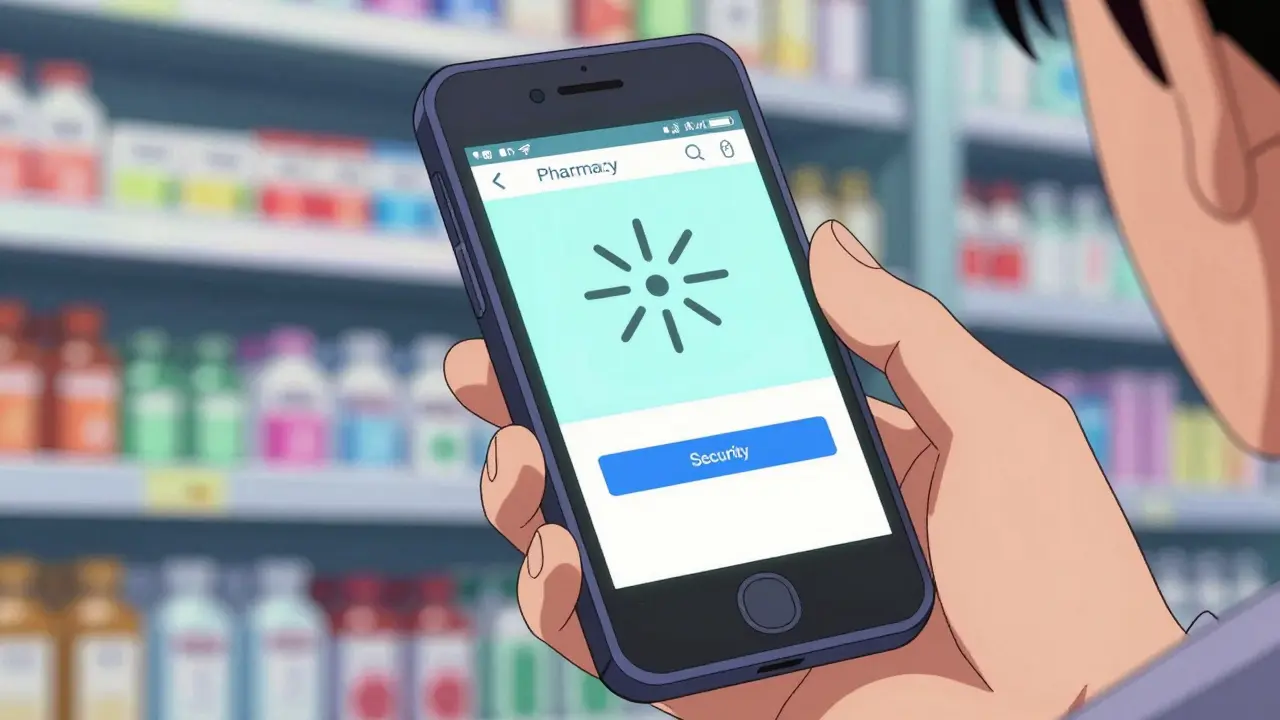
If you use a large chain, your best bet is their mobile app. However, the experience varies wildly depending on where you shop. Most systems have a built-in delay, meaning the notes the pharmacist typed while you were talking might not appear for a day or two.
CVS Pharmacy is one of the largest retail pharmacy chains in the US, offering digital access to medication info through a dedicated mobile app . Their system generally has the highest success rate for digital access. To see your notes, you'll likely need to use biometric authentication (like FaceID) in their app. Just be aware that there is often a 48-hour lag before those specific counseling points sync to your profile.
If you're at Walgreens is a major American pharmacy chain that provides prescription verification and counseling notes via their digital health platform , the process is slightly different. You usually need your phone number and an 8-digit authentication code. If you complete your identity verification while you're still at the store, the notes are much more likely to appear within a few hours rather than days.
| Pharmacy Chain | Access Method | Typical Delay | Reliability |
|---|---|---|---|
| CVS Pharmacy | Mobile App (Biometric) | 48 Hours | High |
| Walgreens | App (8-digit code) | 24 Hours | Moderate |
| Rite Aid | Patient Portal (Security Qs) | Variable | Moderate |
| Independents | Phone/Email (Manual) | Immediate/None | Low (Digital) |
The Independent Pharmacy Gap
Local, independent pharmacies often provide the best face-to-face counseling, but their tech is often lagging. Research from the University of Michigan shows that only about 29% of independent pharmacies have electronic systems that let patients see their notes immediately. In contrast, over 63% of big chains have some form of digital access.
If you use a local pharmacist, don't rely on an app. Instead, ask for a printed summary. Since they have a closer relationship with their patients, they are often more willing to spend an extra minute printing out a customized sheet of "do's and don'ts" for your specific medication.
Special Handling for Controlled Substances
If you are picking up a controlled substance, the rules get stricter. Because of DEA is the Drug Enforcement Administration, which regulates the distribution of controlled substances in the US regulations, pharmacies have higher security barriers. You'll almost always have to present a government-issued ID at pickup to unlock the ability to view documentation online later. If you forget to verify your ID at the counter, you might find your digital notes are completely locked, regardless of the pharmacy's general policy.
Pro Tips for a Safer Pickup
Since the digital systems are clearly broken (with many users reporting inconsistent answers even within the same store), you need to take a proactive approach. Relying on a portal that might take three days to update isn't a great strategy when you need to take your first dose tonight.
The most reliable method, with a nearly 80% success rate in field tests, is simply asking for the written counseling documentation before you leave the window. If they say they don't have a printout, ask them to email the summary to you. This creates a time-stamped digital trail that you can refer to instantly on your phone.
Another trick is to use the "Teach-Back" method. After the pharmacist gives you the counseling points, say, "Just to make sure I've got this right, I should take this [X] way, at [X] time, and avoid [X], correct?" This forces the pharmacist to confirm your understanding and often prompts them to be more thorough in the notes they record in your file.

The Future of Medication Verification
The industry is finally starting to realize that a 72-hour delay in notes is unacceptable. New platforms like ScriptPath's MedConfirm are attempting to send real-time SMS summaries of counseling points immediately after pickup. Additionally, the National Association of Boards of Pharmacy is the NABP, an organization that develops standards for pharmacy practice and ensures safety across the US is pushing for all accredited pharmacies to make notes available within two hours of pickup by the end of 2025.
Why can't I see my pharmacist notes in the app immediately?
Most pharmacy systems have a sync delay. Data from CVS and Walgreens indicates a 24 to 48 hour window where the pharmacist's internal entry doesn't yet push to the patient-facing portal. This is often due to server updates and HIPAA-compliant verification checks.
What should I do if the pharmacist refuses to give me written notes?
Under OBRA-90, you have a legal right to be offered counseling. While the law doesn't mandate a specific paper format, you can request a printed version of the "patient education" sheet that is standard for that medication. If they still refuse, you can ask to speak with the Pharmacy Manager to ensure your safety needs are met.
Are pharmacist notes the same as the printed leaflet in the bag?
No. The printed leaflet (the one with the tiny text and long list of side effects) is a generic manufacturer insert. Pharmacist notes and counseling points are personalized instructions based on your specific health history, other medications you're taking, and the doctor's specific orders.
Does HIPAA prevent me from accessing my own counseling notes?
HIPAA protects your privacy from others; it does not prevent you from accessing your own records. While pharmacies often cite HIPAA as a reason for strict identity verification (like biometric scans), they cannot use it as a reason to deny you access to your own medication instructions.
How do I know if the notes in my portal are accurate?
Always compare the portal notes to what you remember from the face-to-face conversation. If there is a discrepancy-for example, the app says "take with food" but the pharmacist said "take on an empty stomach"-call the pharmacy immediately for clarification before taking the dose.
Next Steps and Troubleshooting
If you are a first-time patient: Set up your pharmacy app before you go to pick up your meds. Complete the identity verification and biometric setup so you don't have to fight with the app while you're trying to start a new medication.
If you use multiple pharmacies: Keep a personal medication log. Since different chains have different systems (CVS vs. Walgreens vs. Independents), having one central place where you jot down the key counseling points yourself is the only way to ensure you have a consistent record.
If you notice a mistake: If you find an error in your counseling notes after the fact, don't just ignore it. Contact your provider and the pharmacy to have the record corrected. This is vital for your medical history and ensures any future pharmacist who sees your file has the correct information.
emmanuel okafor
April 12, 2026 AT 09:18just funny how we trust machines more than a simple talk with a human being in a store
Simon Jenkins
April 13, 2026 AT 23:35Honestly, it is absolutely abysmal that we even have to discuss this in the modern era. The sheer incompetence of these corporate pharmacy chains is nothing short of a tragedy! I personally find it insulting that a patient should have to navigate a labyrinth of biometric scans and 48-hour sync delays just to know if they should eat a piece of toast before taking a pill. It is a systemic failure of the highest order and frankly, I am appalled that this is the standard of care in this country. One would think that basic communication would be the bare minimum, but no, we are instead forced to rely on glitchy apps that probably sell our data anyway. Absolute madness!
Rakesh Tiwari
April 15, 2026 AT 13:52Oh sure, because a corporate app is exactly what we need to save lives. I'm sure the 48-hour lag is just a feature to keep us on our toes, right? Truly peak healthcare efficiency.
Julie Bella
April 17, 2026 AT 03:51Omg I tried this and the pharmasist was SO rude when I asked for a printout!! 🙄 Like hello?? It is my health!! Some of you people just dont care about saftey anymore and its honestly scaryyy 😱
Robin Walton
April 17, 2026 AT 23:33I'm so sorry you had that experience. It's really stressful when you're just trying to do the right thing for your health and you feel shut down. Hope you got your answers eventually! ❤️
Kelly DeVries
April 19, 2026 AT 00:44totally get it but honestly the staff is just burnt out lol they dont get paid enough to hold your hand through a printout
Chad Miller
April 20, 2026 AT 02:11who cares about a printout just read the lable lol its not that hard
Simon Stockdale
April 22, 2026 AT 00:08Its just crazy how these big companies take over everything and then the servce goes down the drain because they care more about the bottom line than actually helping americans stay healthy in their own homes and it makes me sick that we have to rely on some app made in a cubicle to know how to take our own meds when the pharmacists used to just talk to ya and make sure you were good to go before you walked out that door with your bag of pills!!
Suchita Jain
April 22, 2026 AT 01:48It is a matter of fundamental professional negligence to expect a patient to navigate a digital portal for basic safety instructions. One must insist upon the highest standards of clinical documentation regardless of the pharmacy's size.
Thabo Leshoro
April 23, 2026 AT 06:13This is a critical issue regarding the pharmacokinetics... of the drug administration process!!! I agree... that the titration and dosing schedules... need clear records!!!