

Insurance Formulary Cost Calculator
Medication Details
Estimated Annual Cost
Based on current tier pricing estimates
Imagine this: You’ve been taking the same heart medication for three years. It works perfectly. Then, one January morning, you check your pharmacy bill and see a charge that’s ten times higher than usual. Or worse, the pharmacist tells you the insurance won’t cover it anymore. This isn’t a nightmare scenario-it’s happening to thousands of Americans every year due to insurance formularies.
A formulary is simply the list of prescription drugs your health plan agrees to pay for. But it’s not static. It changes. Drugs get moved up or down tiers, removed entirely, or hit with new paperwork requirements like prior authorization. If you don’t know how these lists work, you risk paying hundreds more out of pocket-or worse, skipping doses because the cost is too high.
In 2026, navigating these changes is harder than ever. With new regulations under the Inflation Reduction Act and shifting market dynamics managed by giant Pharmacy Benefit Managers (PBMs), understanding your formulary is no longer optional. It’s a critical part of your safety plan. Here is exactly how to stay on top of it without losing your mind.
What Is a Formulary and Why Does It Matter?
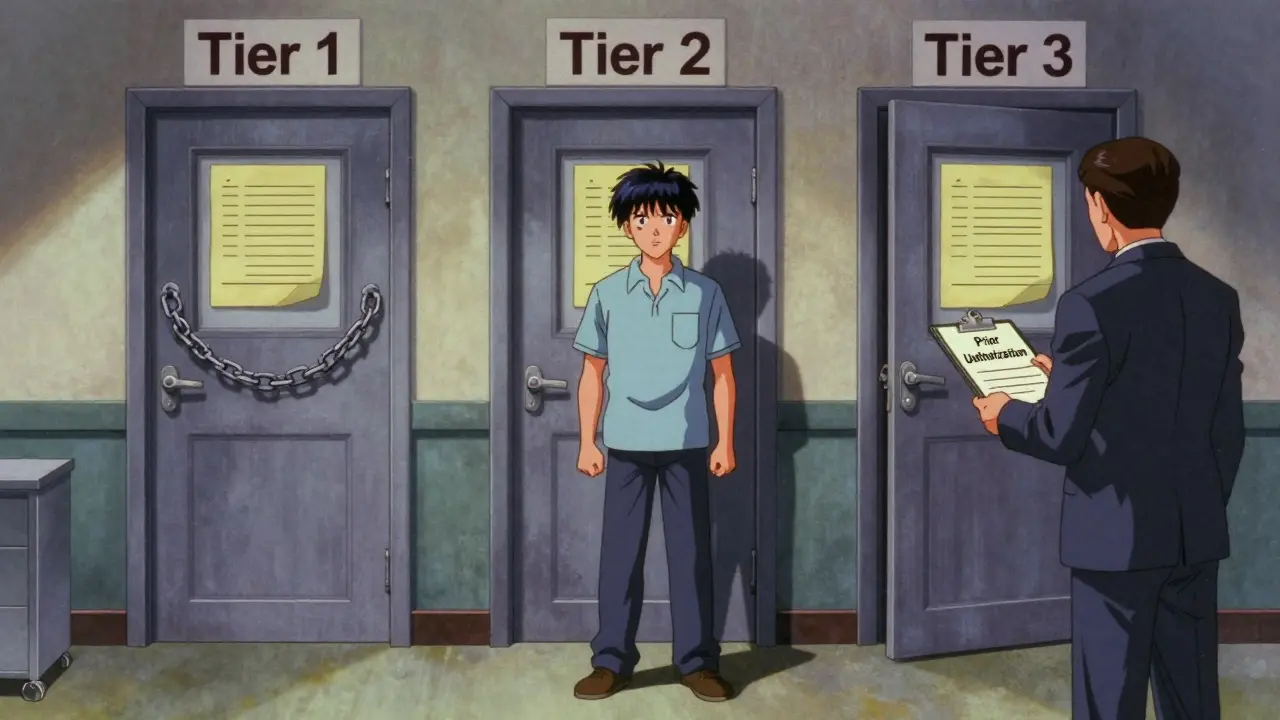
Think of a formulary as a menu. Your insurance company decides which dishes (medications) are available and how much they cost you. Most plans use a tiered system, usually with three to five levels.
- Tier 1: Generic drugs. These are the cheapest, often costing $0 to $10 per prescription.
- Tier 2: Preferred brand-name drugs. Expect to pay between $25 and $50.
- Tier 3: Non-preferred brand-name drugs. Costs jump to $50-$100.
- Tier 4/5: Specialty medications. These can cost $100+ or be a percentage of the drug’s total price.
Why do insurers do this? They want to steer you toward cheaper, equally effective alternatives. According to the Congressional Budget Office, this system reduces overall spending by 22-34%. For you, the goal is simple: keep your current meds on Tier 1 or 2 if possible. If your doctor prescribes a Tier 4 drug without a good reason, you’re paying for the privilege.
But here’s the catch: formularies change. About 23% of plans make mid-year adjustments. And at the start of every new plan year (January 1), nearly everyone gets a new list. That’s when things get tricky.
The Hidden Traps: Prior Authorization and Step Therapy
You might find your medication listed on the formulary, but there’s a fine print asterisk next to it. Two common barriers are prior authorization and step therapy.
Prior authorization means your doctor has to call or email the insurance company to prove why you need this specific drug before they’ll pay for it. In 2023, 47% of commercial plans required this for specialty drugs. It sounds bureaucratic, but it’s designed to prevent unnecessary expensive treatments. The problem? It delays care. A National Patient Advocate Foundation survey found that 43% of patients experienced treatment delays because of these restrictions.
Step therapy is even more frustrating. Also known as “fail-first” therapy, it requires you to try a cheaper medication first. Only if that fails-and your doctor documents it-will the insurer cover the more expensive option. While studies show this reduces inappropriate high-cost usage by 18%, it feels punitive when you know the cheaper drug won’t work for your body chemistry.
If you’re facing either of these, don’t just accept the denial. Ask your doctor to submit an appeal. Document everything. Keep records of side effects from previous attempts. This paper trail is your best weapon.
Medicare vs. Commercial Plans: What’s Different?
If you’re on Medicare Part D, your rules are stricter-and sometimes better. Medicare plans must cover all drugs in six protected classes: antidepressants, antipsychotics, immunosuppressants, HIV/AIDS meds, anti-seizure drugs, and cancer treatments. Commercial plans have no such requirement.
However, commercial plans often have more restrictive prior authorization rules. Meanwhile, Medicare requires 60 days’ notice if a drug is removed due to FDA safety announcements, compared to just 30 days for most commercial plans. This extra time gives you a buffer to switch doctors or find alternatives.
Also, remember the Inflation Reduction Act caps. Starting in 2025, Medicare beneficiaries pay no more than $2,000 out-of-pocket annually for prescriptions. Plus, insulin is capped at $35 per month. These changes have already forced many plans to adjust their formularies, removing cost-sharing for insulin in 94% of Medicare Part D plans.
| Feature | Medicare Part D | Commercial Insurance |
|---|---|---|
| Protected Classes | Mandatory coverage for 6 classes | No mandatory protections |
| Notice for Removals | 60 days (FDA-related) | 30 days (standard) |
| Prior Authorization Rate | 32% for specialty drugs | 47% for specialty drugs |
| Out-of-Pocket Cap (2025+) | $2,000 annual limit | Varies by plan |
How to Check Your Coverage Before It Changes
Don’t wait until January. Start now. The biggest mistake people make is assuming their current coverage will stay the same. It rarely does.
- Find your exact plan name. Look at your insurance card. Don’t just search “Blue Cross.” Search “Blue Cross PPO Plan XYZ-2026.”
- Visit the insurer’s website. Go during Open Enrollment (October 15-December 7 for Medicare). Look for “Plan Materials” or “Drug List.”
- Search by drug name. Type in your medication. Note the tier number and any symbols like PA (Prior Authorization) or ST (Step Therapy).
- Check for exceptions. If your drug is missing or on a high tier, look for the exception request process.
According to Kaiser Family Foundation, 68% of beneficiaries struggle to find their formulary online. If you can’t locate it, call customer service. Ask them to email you the PDF. Save it. Print it. Put it in your medical folder.
Pro tip: Set a reminder on your phone for November 1st. Use the Medicare Plan Finder tool if you’re on Medicare. It lets you compare multiple plans side-by-side based on your specific medications. This saves an average of $1,845 annually for those who switch wisely.
Fighting Back: How to Get Exceptions Approved
Your drug got kicked off the formulary. Now what? Don’t panic. You have rights.
An exception request asks the insurer to cover a non-formulary drug or waive a restriction. CMS data shows 78% of requests submitted by physicians are approved within 72 hours. But you need to play it right.
The two strongest arguments are:
- Documented treatment failure: Your doctor proves you tried the preferred alternative and it didn’t work.
- Adverse reaction: You had serious side effects from the cheaper option.
For example, if your diabetes med was removed, your doctor should submit a letter explaining why the generic alternative causes hypoglycemia in your case. Approval rates vary by condition-92% for cancer meds versus only 65% for dermatological treatments.
If denied, you can appeal. First-level appeals are handled by the insurer. Second-level goes to an independent review organization. Most successful appeals happen at the first level if the documentation is solid.
Real-world example: A user on Reddit shared that after seven phone calls and three weeks, they got an exception approved for a heart medication that jumped from Tier 2 to Tier 4. Another beneficiary reported getting approval in 48 hours because their doctor included lab results showing the alternative failed.

Future Trends: What’s Coming in 2026 and Beyond
The landscape is shifting fast. Three major trends will affect your wallet and health:
- AI-driven formulary design: By Q2 2024, 37% of PBMs were using artificial intelligence to decide which drugs get covered. This means faster updates but less human oversight.
- More specialty tiers: Projected to cover 58% of all specialty drugs by 2026. Expect higher costs for rare disease treatments unless you qualify for patient assistance programs.
- Real-world evidence integration: Insurers are increasingly using data from actual patient outcomes rather than just clinical trials. This could help some patients access newer drugs sooner.
Regulatory scrutiny is also increasing. The FTC filed an antitrust lawsuit against major PBMs in June 2023, alleging anti-competitive practices. While legal battles take years, the pressure may force more transparency.
Meanwhile, the Congressional Budget Office predicts formulary restrictions will increase by 15-20% over the next five years as drug prices rise. However, new Medicare drug price negotiations starting in 2026 may offset some of this pain.
Your Action Plan for Safe Navigation
Here’s your checklist to avoid surprises:
- Review your formulary annually. Do it in November, not January.
- Keep a medication log. Record doses, side effects, and effectiveness. This helps if you need to file an exception.
- Know your tier costs. Calculate the annual cost of each drug. If one jumps tiers, budget accordingly.
- Ask about generics. Sometimes switching to a generic saves hundreds. Discuss with your doctor.
- Use the Medicare Plan Finder. Even if you’re not switching, compare your current plan against others. You might find a better fit.
- Set calendar reminders. Mark Open Enrollment dates and renewal deadlines.
Remember, you’re not powerless. Formularies are tools, not traps. When used correctly, they protect your finances and ensure you get appropriate care. Stay informed, stay proactive, and never hesitate to ask questions.
Can my insurance deny coverage for a life-saving medication?
Yes, but you can appeal. If a drug is removed from the formulary, your doctor can submit an exception request citing medical necessity. For Medicare Part D, certain classes like cancer and HIV drugs are protected, making denials harder. Always document previous treatment failures or adverse reactions to strengthen your case.
How far in advance do I get notified of formulary changes?
Most plans notify you 30 days before changes take effect. Medicare Part D plans must provide 60 days’ notice if a drug is removed due to FDA safety issues. However, many patients report missing these notices, so always check your plan materials directly during Open Enrollment.
What is step therapy and how can I bypass it?
Step therapy requires trying a cheaper medication first before covering a more expensive one. To bypass it, your doctor must submit a prior authorization explaining why the initial step is medically inappropriate. Success depends on strong documentation of past failures or contraindications.
Are there penalties for not following formulary guidelines?
There are no legal penalties, but financial consequences can be severe. If you skip prior authorization, your claim may be denied, leaving you responsible for the full cost. Some pharmacies may still dispense the drug, but you’ll pay out-of-pocket. Always verify coverage before filling prescriptions.
How does the $2,000 Medicare out-of-pocket cap affect formularies?
Starting in 2025, Medicare beneficiaries cannot pay more than $2,000 annually for prescriptions. This cap encourages insurers to reduce restrictions on high-cost drugs, as patients hit the cap faster otherwise. Many plans have already adjusted formularies to include more affordable options to avoid triggering the cap early.
Brian Lee
May 4, 2026 AT 23:57its so true about the formulary changes. i always get shocked by the bills in january. thanks for the tips on checking early.
Amelia Vaughan
May 5, 2026 AT 01:13Typical american healthcare nightmare. You pay premiums and still get screwed. The system is broken beyond repair. Fix it or shut it down.
Kevin S
May 5, 2026 AT 12:00Great info! 🌟 I learned a lot about tier levels today. It really helps to know what to look for before January hits. Thanks for sharing this guide! 👍
Madison Jones
May 7, 2026 AT 03:31This is incredibly helpful!! I was totally unaware that step therapy could delay my treatment so significantly. I am going to call my doctor immediately to discuss prior authorization options. Thank you for such a detailed breakdown!!!
Jake Williams
May 8, 2026 AT 11:36Spare me the corporate speak. PBMs are just greed incarnate. They don't care about your health, they care about their stock price. Good luck fighting them with a 'paper trail'. 😒
Sarah Kwiatkowski
May 9, 2026 AT 15:54I have been struggling with this exact issue for months. My medication got moved to Tier 4 and the cost doubled. I am so frustrated but I will try the appeal process you mentioned. Does anyone have a template for the exception request?
Madison Jones
May 10, 2026 AT 17:24@Sarah Kwiatkowski Yes, please ask your pharmacist or insurance member services! They often have standard forms. Document everything carefully!!
Nilesh Mandani
May 11, 2026 AT 06:15The logic behind step therapy is flawed from a human perspective. Just because a drug is cheaper does not mean it is better for every individual body. We need more personalized medicine rather than one size fits all protocols. Interesting read though.
Kenny Pines
May 11, 2026 AT 20:56Lol yeah right. 'Stay informed' as if we have time to decode legal jargon while working two jobs. But sure, let's blame the patient for not reading the fine print. 🙄
Guy Birtwhistle
May 13, 2026 AT 16:28Look, I'm not saying the system isn't rigged, but ignoring the rules doesn't help you personally. If you want your meds covered, you play the game. Read the damn formulary. It's annoying, but it's the only way to keep your wallet intact. Stop whining and start researching.