

Have you ever sat down for your evening routine and stared at the bottle, wondering if you already took that pill? You are not alone. This moment of doubt is terrifying, but it is also incredibly common. Accidental double-dosing-taking two doses of the same medication within the prescribed time frame-is one of the most frequent medication errors in home settings. It happens to busy parents, overwhelmed caregivers, and older adults managing complex health conditions. The stakes are high. According to the U.S. Food and Drug Administration, medication errors cause at least one death every day and cost billions annually. While we often think of hospital mistakes, about half of all medication-related adverse events happen right here, in our living rooms.
The good news? You have total control over this risk. Prevention isn't about being perfect; it's about building systems that catch you when your memory slips or life gets chaotic. Whether you are managing your own prescriptions or caring for a loved one, the strategies below combine low-tech habits with smart tools to keep you safe.
The Visual Power of Pill Organizers
If there is one tool that stands out as the gold standard for preventing double-dosing, it is the weekly pill organizer. St. Louis Children's Hospital specifically recommends using a container with compartments for each day of the week so you can 'quickly see whether the dose for the day has been taken.' It is that simple. An empty slot means you haven't taken your medicine. A full slot means you have.
WesleyLife’s 2023 caregiver survey found that 68% of seniors use these organizers, and for good reason. They come in various configurations. For most people, a basic 7-day box with slots for morning, noon, evening, and bedtime works best. The data shows that using a pill organizer alone reduces double-dosing errors by approximately 35%. But here is the pro tip: do not just fill it yourself once a week if possible. Involve a family member or pharmacist in the filling process to ensure no pills were missed during setup.
For those who take only one or two medications daily, the Stanford Medicine adherence handout suggests a low-tech alternative: flipping the pill bottle upside down after taking your dose. It provides immediate visual confirmation. However, for anyone managing multiple drugs, the weekly pillbox offers superior protection because it tracks history across days, not just hours.
Digital Reminders and Smart Tracking
While physical boxes handle the 'what,' digital tools handle the 'when.' Smartphone medication reminder apps have become powerful allies in this fight. Apps like Medisafe don't just beep at you; they track your adherence. In a 2022 study published in the Journal of Medical Internet Research, users of such apps reported an 87% improvement in adherence rates.
Why does this matter for double-dosing? Because many modern apps allow shared access. If you live with a spouse or caregiver, they can see exactly when you logged a dose. Right at Home Chesterfield notes that synchronized tracking prevents the scenario where one person gives a dose, forgets to write it down, and another person gives it again an hour later.
Setting up these apps takes about 20-30 minutes initially, but the payoff is significant. WesleyLife reports that success rates skyrocket when family members participate in the setup. Think of it as a team effort. The app becomes a single source of truth that everyone respects.
| Strategy | Effectiveness Rate | Best For | Limitations |
|---|---|---|---|
| Pill Organizer Alone | 35% reduction in errors | Seniors, simple regimens | Requires manual filling; no time alerts |
| Digital App Alone | High adherence (87%) | Tech-savvy users | Relies on user logging the dose manually |
| Combined Approach | 62% reduction in errors | Complex regimens, multi-caregiver homes | Higher initial setup effort |
| Smart Dispensers | 76% reduction in incidents | High-risk patients, cognitive decline | Higher cost; requires charging/maintenance |
Mastering Liquid Measurements
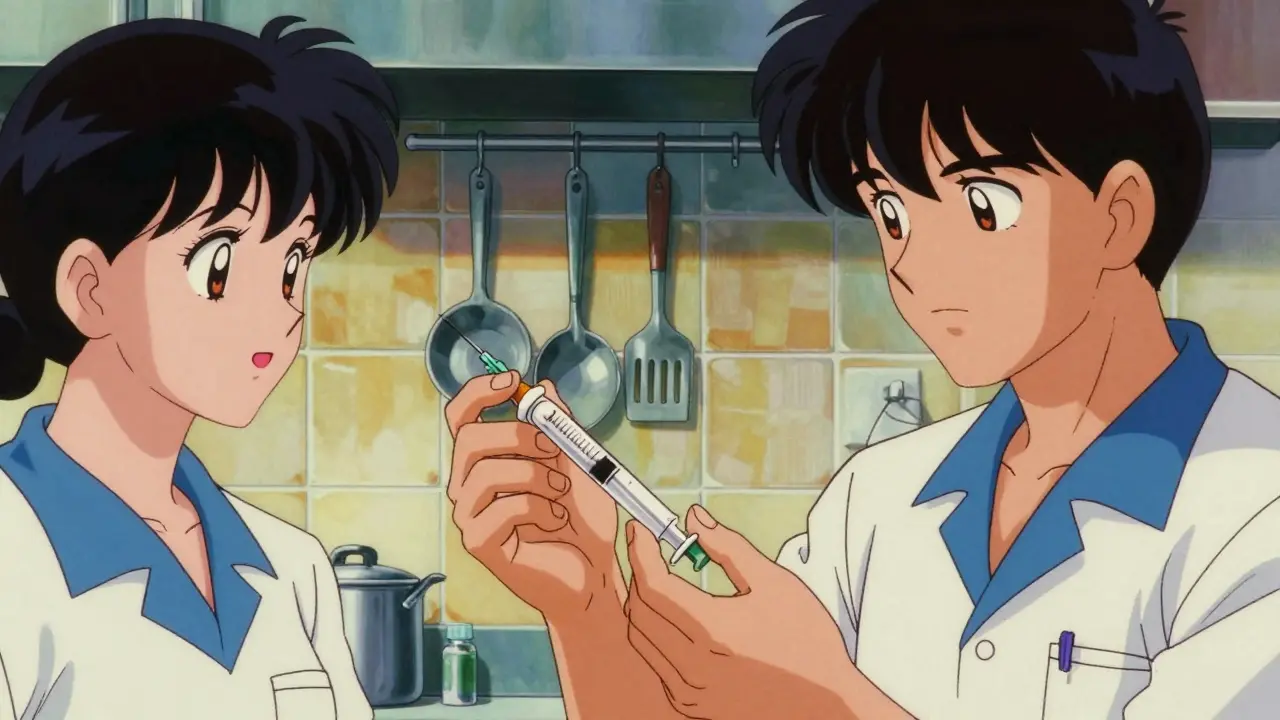
If you or your child takes liquid medication, the kitchen drawer is a dangerous place. Children's Healthcare of Atlanta emphasizes measuring doses exactly using only the syringe or dispenser that came with the product. Why? Because kitchen spoons vary wildly in volume. Their 2023 safety data shows that household teaspoons can vary by 20-65% in capacity. That means one spoon might hold 2.5mL while another holds nearly 4mL. With potent medications, that difference can lead to accidental overdose.
Right at Home Chesterfield warns that kitchen spoons are not appropriate substitutions. Always use the oral syringe provided by the pharmacy. If you lose it, ask your pharmacist for a replacement immediately. Do not improvise. This is especially critical for pediatric dosing, where weight-based calculations leave little room for error.
Communication in Multi-Caregiver Homes
Double-dosing often happens not because of negligence, but because of miscommunication. In households with multiple caregivers-parents, grandparents, babysitters-the risk spikes. Dr. Karen Smith, a Pediatric Pharmacologist at St. Louis Children's Hospital, states that 'Designating one parent as the vitamin giver' reduces double-dosing errors by nearly 50%.
Children's Healthcare of Atlanta found that in 41% of pediatric double-dosing cases reviewed in 2023, parents gave additional doses because children refused medication initially, then accepted it later from another caregiver without proper communication. The fix? A centralized log. Use a whiteboard in the kitchen or a shared digital note. When Caregiver A gives the dose, they mark it instantly. Caregiver B checks the log before offering anything.
This principle applies to adult care too. If you hire help or rely on family rotation, create a 'medicine schedule' as recommended by Children's Healthcare of Atlanta. Clarity saves lives. Ambiguity causes accidents.
Hidden Dangers: Duplicate Ingredients
Not all double-dosing comes from taking the same pill twice. Sometimes, it comes from taking two different pills that contain the same active ingredient. EssexCare Pharmacy documented that 32% of double-dosing incidents in 2023 involved medications with overlapping active ingredients that patients didn't recognize as duplicative.
For example, you might take a prescription pain reliever and then grab an over-the-counter cold medicine for a headache, unaware that both contain acetaminophen. This unintentional double-dosing can lead to liver damage. The solution is a comprehensive medication list. Right at Home Chesterfield recommends maintaining a list that includes 'prescription drugs, as well as over-the-counter medications, vitamins, and supplements.' Review this list with your pharmacist regularly. Ask them: 'Are any of these doing the same thing?'

Building Habits and Reducing Anxiety
WesleyLife’s 2023 caregiver survey revealed that 63% of seniors experience 'Did I take my pill?' anxiety at least weekly. This stress is exhausting. To combat it, sync your medication with existing routines. St. Louis Children's Hospital notes that 78% of successful adherence cases incorporated medication into tasks like brushing teeth or eating breakfast. By anchoring the habit to something you already do automatically, you reduce the mental load required to remember.
Also, identify your triggers. EssexCare Pharmacy asks patients to identify instances that lead to overdosing. Their data shows that travel, schedule disruptions, and daylight saving time changes account for 67% of double-dosing incidents. One patient noted that checking off doses helped him realize he'd already taken his morning pills when he got confused during a clock change. Anticipate these disruptions. Pack your pill organizer extra carefully when traveling. Set phone alarms when schedules shift.
What to Do If It Happens
Mistakes happen. If you suspect a double dose, stay calm. Do not wait for symptoms to appear. Call the National Poison Control Center at 1-800-222-1222 immediately. They provide expert guidance tailored to the specific medication and dosage. As St. Louis Children's Hospital advises, following their care instructions is critical. Never induce vomiting unless instructed to do so by a professional. Keep the medication bottle handy to provide exact details to the experts.
Is it safe to skip a dose if I accidentally double-dosed?
This depends entirely on the medication. Some drugs, like blood thinners or insulin, require strict timing, while others are more forgiving. Never make this decision alone. Call your pharmacist or the Poison Control Center for specific advice based on the drug and your health history.
Do smart pill dispensers really prevent double-dosing?
Yes, significantly. A 2023 Johns Hopkins study found that smart pill dispensers that lock after dose administration reduced double-dosing incidents by 76%. They physically prevent a second dose from being accessed until the next scheduled time, removing human error from the equation.
How can I tell if my child has taken too much medicine?
Symptoms vary by medication but may include drowsiness, nausea, vomiting, confusion, or difficulty breathing. If you suspect an overdose, call 911 or the Poison Control Center immediately. Do not wait for severe symptoms to develop. Early intervention is crucial.
Should I use a kitchen spoon for liquid medication?
No. Kitchen spoons vary by 20-65% in volume, which can lead to dangerous overdoses. Always use the oral syringe or dispenser provided with the medication. If lost, request a replacement from your pharmacist.
What is the most effective way to manage meds for someone with dementia?
For individuals with cognitive decline, smart pill dispensers with locking mechanisms are highly effective. Combined with a designated single caregiver responsible for administration and a clear log, this approach minimizes the risk of confusion and double-dosing.