
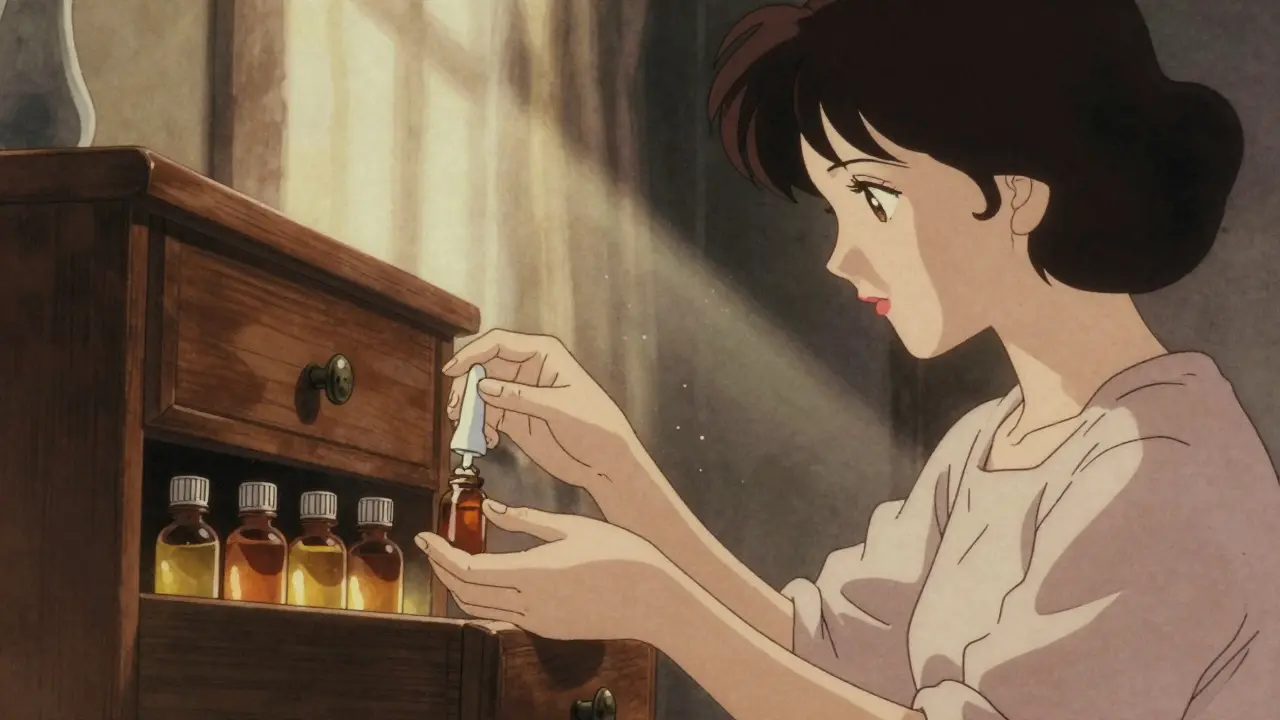
Why Light Matters More Than You Think
Your eye drops or antibiotic cream might look fine-same color, same smell-but if they’ve been sitting on the bathroom counter under a bright light, they could be losing half their power. It’s not magic. It’s chemistry. Light, especially blue and UV light, breaks down the active ingredients in many medications. This isn’t just theory. Studies show some eye drops lose up to 40% of their strength in just seven days when exposed to normal indoor lighting. That means if you’re treating glaucoma or an infection, you’re not getting the dose you paid for.
Pharmacies don’t put medications in amber bottles just to look old-school. Those brown or opaque containers are engineered to block wavelengths below 470 nanometers-the exact range that causes photodegradation. The U.S. Pharmacopeia (USP) requires this standard for over 470 injectable drugs alone. And eye drops? They’re even more vulnerable because they’re liquid, exposed to air, and often used daily for weeks. A 2021 Alcon study found that clear containers reduced effectiveness by 35% in just two weeks compared to amber ones.
What Medications Are Light-Sensitive?
Not all meds need special care, but many do. Here’s what to watch for:
- Eye drops: Latanoprost, travoprost, bimatoprost (glaucoma meds), some antibiotic drops like ciprofloxacin, and steroid drops like prednisolone.
- Topical creams: Tretinoin (for acne or aging), minoxidil (for hair loss), and some vitamin D formulations.
- Oral meds: Nitroglycerin (for angina), tetracycline antibiotics, chlorpromazine (for psychosis), and certain chemotherapy drugs.
- Injectables: Insulin (especially unopened vials), some biologics, and potassium iodide.
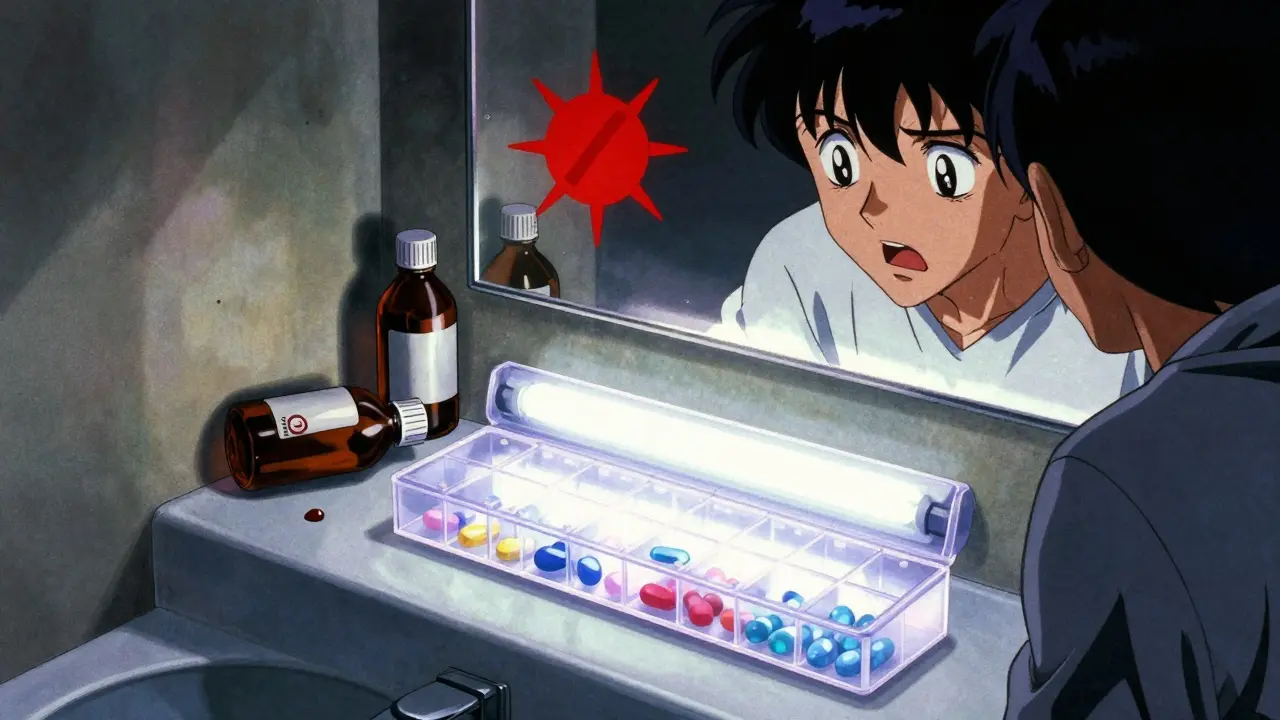
Check the label. If it says "protect from light," "store in original container," or has a little sun-with-a-slash icon, treat it like a live wire. About 78% of these meds have that warning, according to USP data. If you’re unsure, ask your pharmacist. Don’t guess.
Where to Store Them-The Right Place
Your medicine cabinet? Bad idea. Bathrooms are hot, humid, and full of light from overhead bulbs. Even if your cabinet is closed, light still sneaks in. The same goes for windowsills or countertops near bright lamps.
Instead, pick a cool, dry, dark spot. A kitchen cabinet away from the stove or sink works well. A drawer in your bedroom dresser is even better. Temperature matters too. Most medications are stable between 59°F and 77°F (15°C-25°C). Some, like insulin or certain biologics, need refrigeration (36°F-46°F / 2°C-8°C). But here’s the catch: if a medication needs both cold and darkness, don’t just stick it in the fridge without protection. Fridge light can still degrade it.
For refrigerated meds, use an opaque container inside the fridge. Some people use small Tupperware boxes with dark lids. Others buy insulated medication bags with UV-blocking lining-those cost $25-$50 but keep things stable during travel or power outages.
Amber Bottles vs. Opaque Containers: What’s Best?
If your medication came in an amber bottle, leave it there. Don’t transfer it to a clear pill organizer. That’s one of the most common mistakes. Even if you think you’re being neat, you’re risking potency.
But what if the original bottle is gone? Or you’re using a multi-dose container that’s been opened? Here’s what works:
- Amber glass bottles: Block 98% of harmful light. Best protection. But they’re harder to see through-so you can’t tell how much is left without shaking or tipping.
- Opaque plastic containers: Block about 85% of light. Cheaper and easier to see contents. Good for travel. Look for ones labeled "UV-blocking" or "USP-compliant."
- Aluminum foil wraps: Block 100% of light. But you have to unwrap each time. People forget. Studies show 32% of users skip this step because it’s inconvenient.
- Specialized storage boxes: These are like small lockers with built-in UV filters. They cost $20-$60 but hold multiple bottles. Great for families or people on several light-sensitive meds.
For eye drops specifically, brands like Bausch + Lomb now use dual-layer packaging: amber glass inside, opaque outer shell. That combination keeps potency 25% longer than standard amber bottles, according to a 2022 study in the Journal of Ocular Pharmacology and Therapeutics.
Signs Your Medication Has Gone Bad
You don’t need a lab to tell if something’s degraded. Here’s what to look for:
- Color change: White cream turning yellow? Tretinoin gone bad. Clear liquid turning cloudy? Eye drop compromised.
- Unusual smell: Aspirin that smells like vinegar? It’s broken down into acetic acid. Don’t take it.
- Texture change: Creams that separate, pills that crumble, liquids that become thick or grainy.
- Loss of effect: Your glaucoma pressure isn’t dropping. Your acne isn’t improving. That’s not just bad luck-it could be the meds.
If you see any of these, stop using it. The FDA’s MedWatch system recorded over 300 adverse events in 2022 tied directly to light exposure. That’s not a small number. It’s a warning.
Traveling with Light-Sensitive Meds
Going on vacation? Here’s how to keep your meds safe:
- Keep them in original amber containers.
- Use a small insulated cooler bag with UV-blocking lining. These are designed for insulin and biologics but work for eye drops too.
- Never leave them in the car. Even on a cool day, a closed car can hit 120°F.
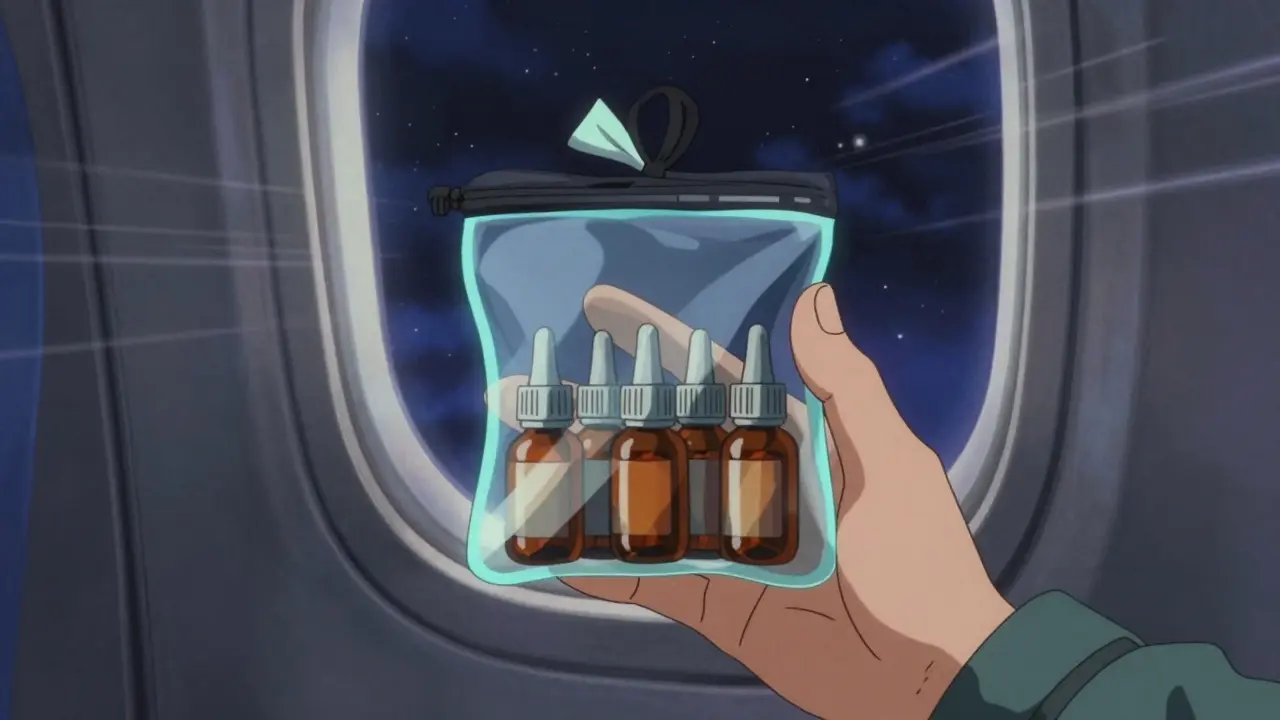
- If flying, carry them in your personal item-not checked luggage. Temperature swings in cargo holds can ruin meds.
- For long trips, bring extra. If one bottle degrades, you’ll have a backup.
Some new smart containers are in testing-like ones with UV sensors that send alerts to your phone if they’ve been exposed. They’re not widely available yet, but keep an eye out. They’re coming.
What Not to Do
Here are the top mistakes people make:
- Transferring eye drops to a clear dropper bottle. You think you’re being clever. You’re risking vision loss.
- Storing in the bathroom. Steam, heat, and light-triple threat.
- Leaving them on the nightstand. Morning sunlight hits hard. Even 10 minutes a day adds up.
- Ignoring expiration dates after opening. Most eye drops last 4-6 weeks after opening, even if the bottle says 2 years. Light exposure shortens that.
- Using expired meds. Degraded antibiotics can fail to treat infections. Degraded glaucoma drops can lead to permanent vision damage.
When in Doubt, Ask
Pharmacists are your best resource. They know what’s in your meds and what breaks down under light. Call them. Don’t Google it. Their advice is free, accurate, and tailored to your meds.
Also, use the American Society of Health-System Pharmacists’ online storage checker. It’s free. Just type in your drug name and it tells you the exact storage needs: temperature, light, humidity. It covers over 12,000 medications.
And if you’re still unsure? Store it darker and cooler than you think you need to. Better safe than sorry.
Final Tip: Make It Routine
Proper storage isn’t a one-time task. It’s a habit. Put your meds in the same dark drawer every night. Check them once a week for color changes. Write the opening date on the bottle with a marker. That’s all it takes.
People who do this consistently report fewer flare-ups, better control of chronic conditions, and less waste. One Reddit user, "Eyesafe2022," said their latanoprost lasted the full 6 weeks after opening-instead of going bad at 4 weeks-after switching to an amber storage box. That’s $120 saved and better eye pressure control.
You don’t need fancy gear. You just need awareness. Light isn’t just something you see. It’s something that can break your medicine. Treat it that way.
Can I store eye drops in the fridge?
Yes, if the label says to. Most eye drops are fine between 40°F and 77°F (4°C-25°C). Refrigeration can extend shelf life after opening, especially for preservative-free drops. But always keep them in their original amber bottle inside the fridge. Never put them in a clear container, even in the fridge-light from the bulb can still degrade them.
What if my medication came in a clear bottle?
If the label says "protect from light," transfer it immediately to an amber or opaque container. Many pharmacies offer free amber bottles if you ask. If you can’t get one, wrap the bottle tightly in aluminum foil and store it in a dark drawer. This isn’t ideal, but it’s better than leaving it exposed.
How long do eye drops last after opening?
Most last 4 to 6 weeks after opening, even if the bottle says 1-2 years. Light exposure, air contamination, and bacteria growth reduce effectiveness. Always write the opening date on the bottle. If it’s been longer than 6 weeks, throw it out. Don’t risk eye infections or poor pressure control.
Is it okay to use expired light-sensitive meds?
No. Expired meds don’t just lose strength-they can break down into harmful compounds. Tetracycline can damage kidneys. Nitroglycerin can stop working when you need it most. Even if it looks fine, don’t use it past the expiration date. When in doubt, dispose of it safely.
Where can I safely dispose of old or degraded meds?
Take them to a pharmacy with a drug take-back program. Many pharmacies, especially in Australia and the U.S., offer free disposal bins. Don’t flush them or throw them in the trash-this contaminates water and harms wildlife. If no drop-off is available, mix them with coffee grounds or cat litter in a sealed bag before tossing. But always check local rules first.
Marian Gilan
January 27, 2026 AT 20:05Conor Murphy
January 29, 2026 AT 00:33Conor Flannelly
January 30, 2026 AT 08:27Patrick Merrell
February 1, 2026 AT 01:43Aurelie L.
February 2, 2026 AT 00:58Josh josh
February 2, 2026 AT 16:22SWAPNIL SIDAM
February 3, 2026 AT 06:46Sally Dalton
February 5, 2026 AT 01:56Allie Lehto
February 6, 2026 AT 11:46