
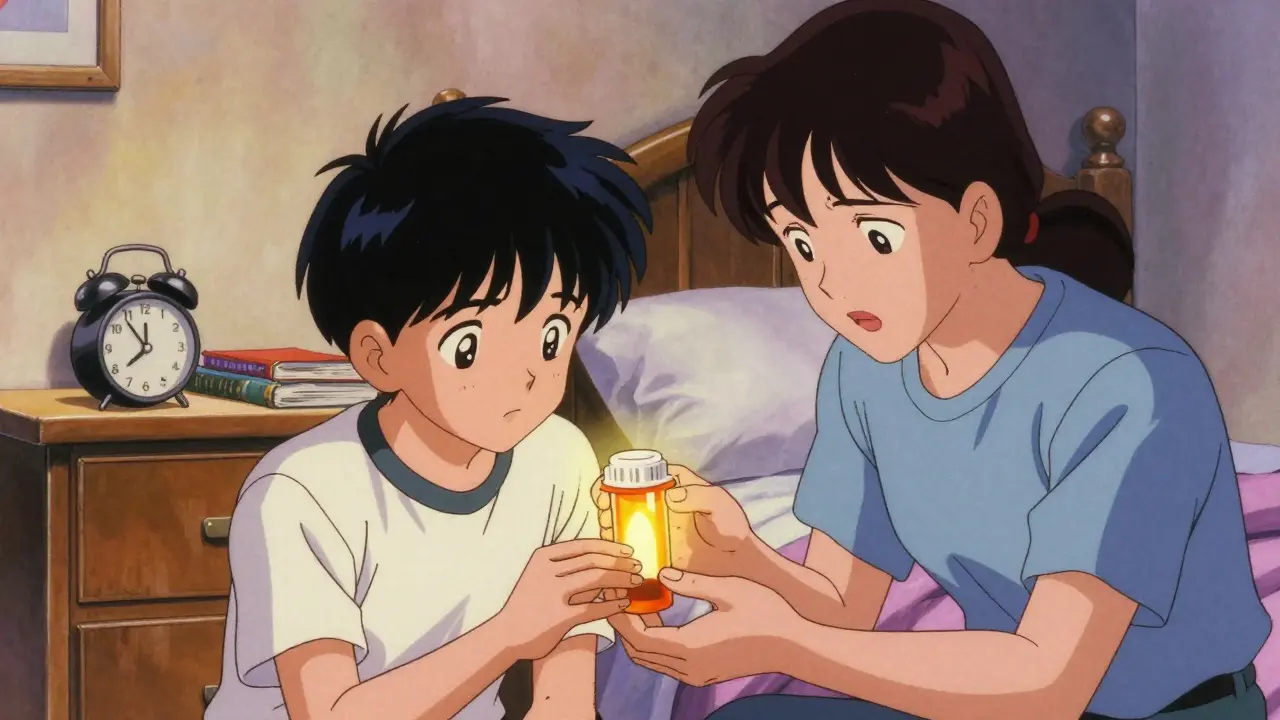
Imagine handing your teenager the keys to the car. You wouldn’t just toss them in their lap and say, 'Good luck.' You’d teach them how to check mirrors, signal turns, and handle emergencies. Now, look at the pill bottle on your nightstand. That medication is just as powerful-and potentially dangerous-as that car. Yet, many parents skip the driving lesson for medicine, assuming their teen will somehow figure it out. The result? Missed doses, dangerous side effects, or worse, misuse. Teaching your teen to manage their own prescription medications isn’t just about independence; it’s a critical safety skill that can prevent life-altering mistakes.
The transition from parent-managed care to self-management is one of the most stressful parts of adolescence. According to Dr. Allison Baker, a child and adolescent psychiatrist cited by the Child Mind Institute, this shift should start no later than junior year of high school. Why so early? Because college and adulthood don’t wait. If your teen leaves home without knowing how to refill a script, recognize an allergic reaction, or store meds safely, they are setting themselves up for failure. This guide breaks down exactly how to make that handoff smooth, safe, and effective.
Why This Transition Is Non-Negotiable
You might think, 'My kid is responsible. They’ll be fine.' But data tells a different story. The American Academy of Pediatrics (AAP) highlights that proper medication education drastically reduces the risk of prescription drug misuse. In fact, the 2022 Monitoring the Future study found that approximately 14% of high school seniors have misused prescription drugs. These aren't necessarily 'bad kids'; often, it's confusion, peer pressure, or simple forgetfulness that leads to trouble.
Prescription drug misuse is the second most common form of illicit drug use among teenagers, right after marijuana, according to the Drug Enforcement Administration (DEA). Opioids, ADHD stimulants, and benzodiazepines are the usual suspects. When teens don't understand *why* they take a med, *how* it affects their brain, or *what* happens if they miss a dose, they become vulnerable. Teaching them to manage their meds is essentially teaching them respect for their own biology.
Is it legal for a teen to manage their own prescriptions?
Yes, but with caveats. While parents are legally responsible for minors, healthcare providers increasingly involve teens in their own care plans starting around age 13. However, controlled substances (like opioids or strong ADHD meds) often require stricter parental oversight due to diversion risks. Always check local laws and consult your pediatrician.
The Six-Step Framework for Success
Throwing your teen into the deep end doesn't work. You need a ladder. The National Kidney Foundation outlines six evidence-based components for this transition. Think of these as the training wheels you slowly remove.
- Understanding the 'Why': Your teen needs to read the label. Not just glance at it, but understand what the drug does, its potential side effects, and why it’s necessary. Ask them to explain the medication back to you in their own words. If they can’t, they don’t get full responsibility yet.
- Routine Building: Memory fades. Habits stick. Research from the University of Rochester Medical Center shows that pairing medication with existing habits-like brushing teeth or eating breakfast-increases adherence by 37%. Help them anchor their meds to daily rituals.
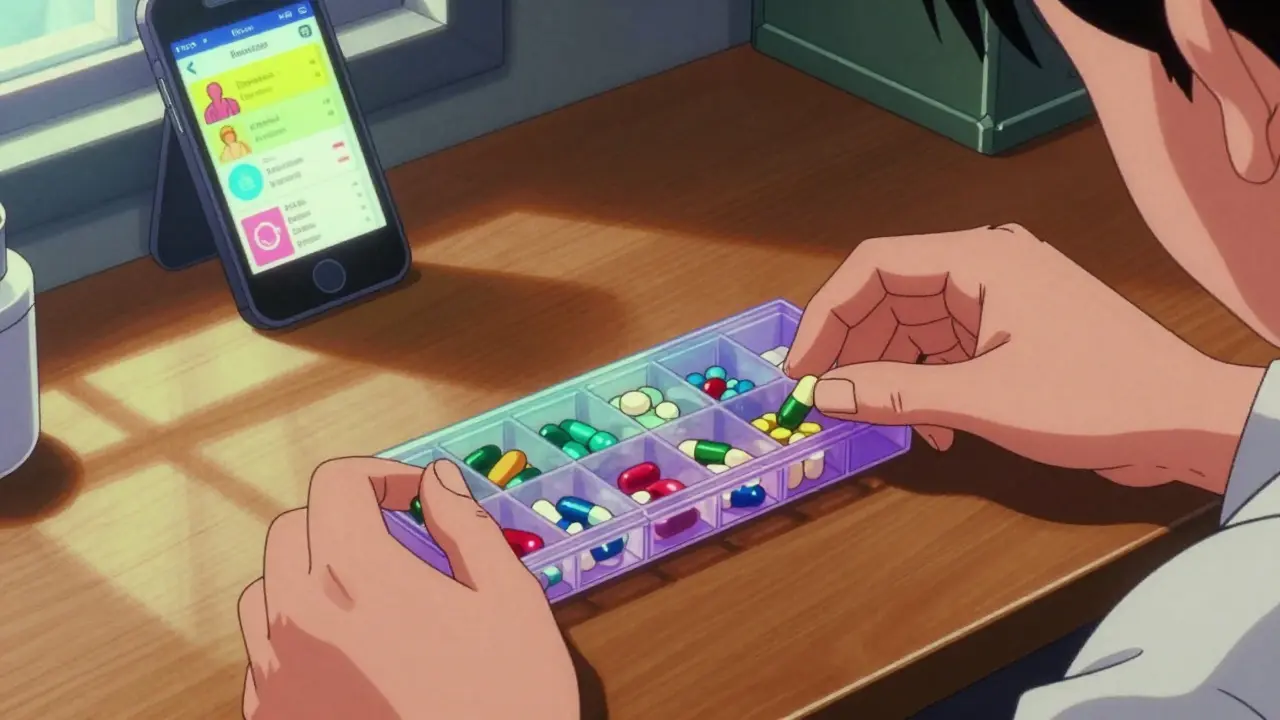
- Organizational Systems: Chaos kills compliance. Introduce tools like weekly pill organizers, smartphone alarms, or apps like Medisafe or MyMeds. Studies show these digital tools improve adherence rates by 28% among adolescents. Let them choose the tool; ownership matters.
- Misuse Education: This is the hard conversation. The DEA’s 'Prescription for Disaster' report notes that 70% of teens falsely believe prescription drugs are safer than street drugs. Debunk this myth. Explain that sharing pills is illegal and dangerous.
- Communication Skills: Teach them to talk to doctors. Role-play scenarios where they report side effects or ask questions during appointments. They need to feel comfortable advocating for their own health.
- Peer Accountability: It sounds odd, but having a 'medication buddy'-a friend who also takes meds-can boost adherence by 22%, according to the Journal of Adolescent Health. Shared struggle creates support.
Phasing Out Parental Control: A Timeline
Nicholas Chadi, MD, MPH, author of AAP guidelines, advises coaches to 'gradually let them take responsibility... well before they leave home.' Here is a practical timeline based on the Child Mind Institute’s recommendations:
| Grade Level | Teen Responsibility | Parent Role |
|---|---|---|
| 10th Grade | Identify meds, understand purpose, read labels. | Supervise administration, verify intake. |
| 11th Grade | Manage dosage schedules, set alarms, request refills. | Verify via text/check-ins, monitor storage. |
| 12th Grade | Full management: pharmacy calls, doctor comms, disposal. | Periodic spot-checks, emergency backup only. |
In 10th grade, your job is teacher. By 11th grade, you’re the auditor. By 12th grade, you’re the consultant. If your teen messes up in 11th grade, pull back slightly. Did they miss a dose because they were lazy or overwhelmed? Adjust the support level accordingly. There is no shame in going backward; it’s better to fix habits now than in a dorm room.
Safety First: Storage and Disposal
Let’s talk about the elephant in the room: controlled substances. Dr. Harold Paz, MD, warns that even responsible teens should not control their own painkillers or strong stimulants without strict boundaries. Why? Diversion. Friends asking for 'just one' to help them study or sleep is a huge risk.
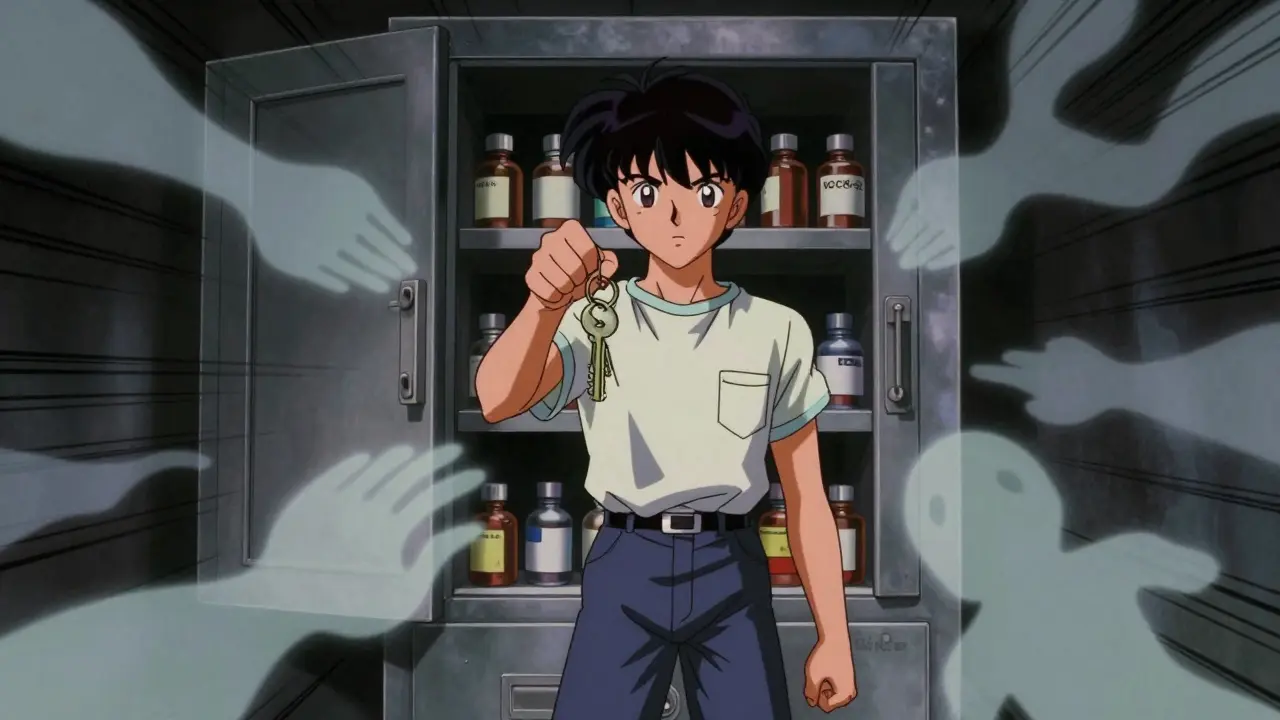
- Lock it up: Keep controlled substances in a locked box or cabinet. Your teen holds the key, but the container must be secure. This teaches them that these drugs are serious business.
- Count them: Perform random pill counts. If a bottle says 30 pills and only 5 days have passed, there should be 25 left. If not, have a calm, non-accusatory conversation. 'I noticed the count is off. Can you help me understand?'
- Dispose properly: Never flush meds unless instructed. Use pharmacy take-back programs. The DEA lists over 14,000 locations across the U.S. where teens can drop off unused meds safely. Make this part of their routine when a prescription ends.
Digital Tools: Friend or Foe?
Your teen lives on their phone. Leverage that. Medication app usage among teens jumped from 18% in 2019 to 39% in 2023. Apps like Medisafe send reminders, track refills, and even alert parents if a dose is missed. However, caution is needed. The Mayo Clinic notes that only 22% of available apps are clinically validated. Stick to reputable ones with good reviews and clear privacy policies.
Also, consider electronic health records (EHR). Many systems now allow patients aged 13+ to access their own portals. Encourage your teen to log in, view their history, and message their provider directly. This builds digital literacy alongside medical literacy.
Handling Setbacks and Misuse
Even with perfect planning, things go wrong. Maybe they forget a week of antibiotics. Maybe they share an ADHD pill with a friend. How you react defines the future relationship.
If misuse occurs, avoid immediate punishment. Instead, focus on education and consequences related to the behavior. If they shared meds, they lose access to independent management until trust is rebuilt. Connect them with resources like Generation Rx, which provides schools with modules to help teens resist peer pressure. Schools using this program saw a 33% drop in misuse incidents.
Remember, the goal isn't perfection. It's competence. Your teen will make mistakes. Your job is to ensure those mistakes happen under your watch, where you can guide them back on track, rather than alone in the world.
What if my teen refuses to take their medication?
Refusal is common. Listen first. Are they experiencing side effects? Do they feel stigmatized? Involve their doctor to discuss alternatives (e.g., extended-release formulas). Empower them to voice concerns, but maintain firmness on safety-critical treatments.
How do I know if my teen is misusing their prescription?
Watch for behavioral changes: sudden mood swings, secrecy, declining grades, or physical signs like dilated pupils or excessive drowsiness. Regular pill counts and open, non-judgmental conversations are key detection methods.
Should I let my teen order refills online?
Only after they’ve demonstrated consistent adherence for several months. Start by having them call the pharmacy while you listen, then progress to texting requests, and finally, independent portal ordering. Ensure they understand insurance copays and pickup logistics.