
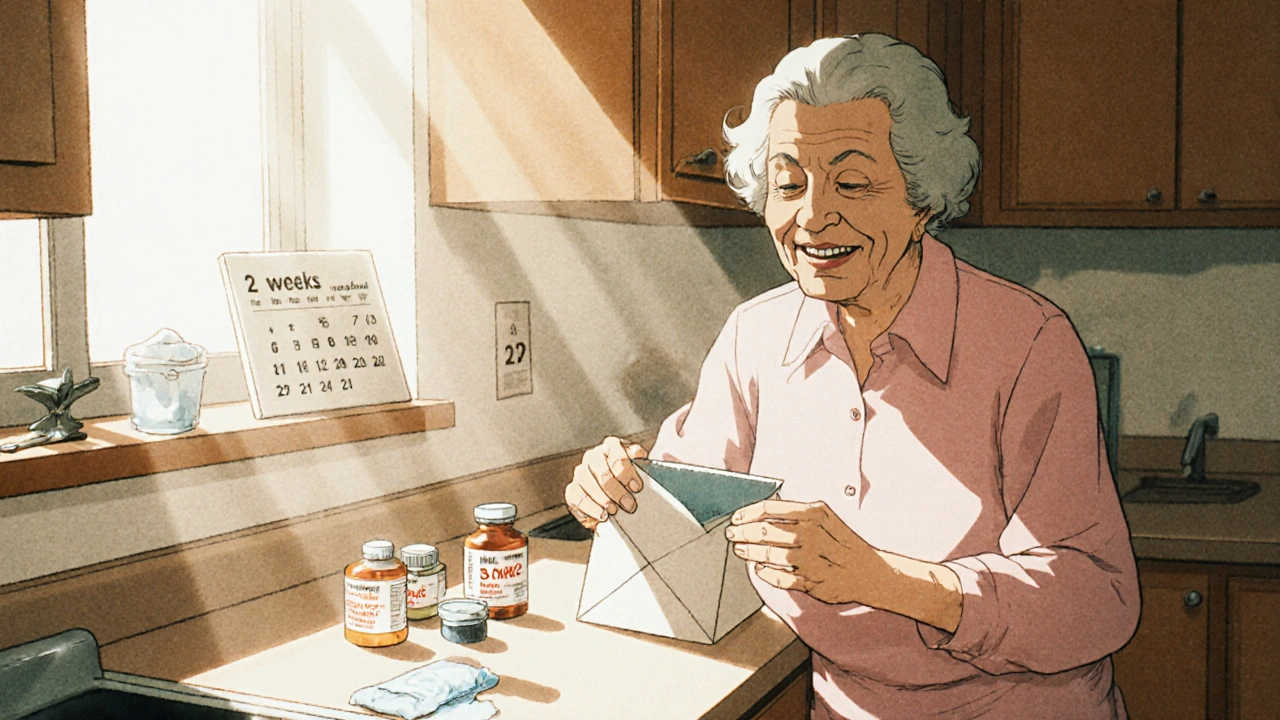
Buying your monthly blood pressure pills or diabetes meds through the mail sounds simple: no trips to the pharmacy, lower copays, and your meds arrive right at your door. But behind the convenience lies a system full of contradictions. Mail-order generics are saving some people money and keeping them alive - but for others, they’re creating dangerous gaps in care, exposing drugs to heat damage, and hiding massive price markups.
Why People Choose Mail-Order Generics
Most people turn to mail-order pharmacies because they’re cheaper - at least on paper. If you’re on a 90-day supply of a generic statin, your insurer might charge you just $10 instead of $30 for a 30-day retail refill. That’s a $45 monthly savings for some. For chronic conditions like high blood pressure, asthma, or depression, where you need the same meds every single month, the math makes sense. The system was designed to improve adherence. And it works. Studies from the National Institutes of Health show people using mail-order services are more likely to take their meds on time, especially for heart disease and diabetes. That’s not small. Missing doses of these drugs can lead to strokes, kidney failure, or hospital stays.How the System Actually Works
Mail-order pharmacies aren’t random websites. They’re mostly run by three big companies: Express Scripts, CVS Caremark, and OptumRx. These are pharmacy benefit managers (PBMs) - middlemen between insurers, drug makers, and pharmacies. They negotiate prices, set copays, and control which drugs are covered. When your insurance plan offers mail-order, it’s usually because the PBM has struck a deal to push you toward 90-day supplies. You sign up once, get automatic refills, and your meds ship in a padded envelope. Delivery takes about a week. It’s meant to be seamless. But here’s the catch: you’re locked in. If you want to switch to a cheaper retail pharmacy later, you might have to go through paperwork, wait for approval, or lose your automatic refill schedule. And if you’re on multiple medications - say, one for cholesterol, one for thyroid, one for pain - you might need to use different pharmacies to get the lowest price on each. That’s when things get risky. Your pharmacist at the mail-order service can’t see what you’re getting from your local pharmacy. Drug interactions? They might never know.The Hidden Price Game
The big promise? Lower costs. But the reality? It’s a pricing maze. A 2023 analysis found that a generic antidepressant costing $12 at a retail pharmacy was billed at $100 through a mail-order service - an 800% markup. Brand-name drugs? Sometimes 35 times higher. These aren’t mistakes. They’re business models. PBMs profit from the spread between what they pay drugmakers and what they charge insurers. And since most patients don’t see the full price - just their $10 copay - they never know they’re paying more behind the scenes. The numbers tell a wild story. Mail-order pharmacy sales jumped from $86 billion in 2013 to over $206 billion in 2023. Prescription volume? Only up 11%. That means the money isn’t coming from more pills - it’s coming from higher prices. And if you’re uninsured? Forget the $10 copay. Direct-to-consumer mail-order pharmacies now charge up to $500 a month for newer weight-loss drugs like semaglutide. That’s unaffordable for most.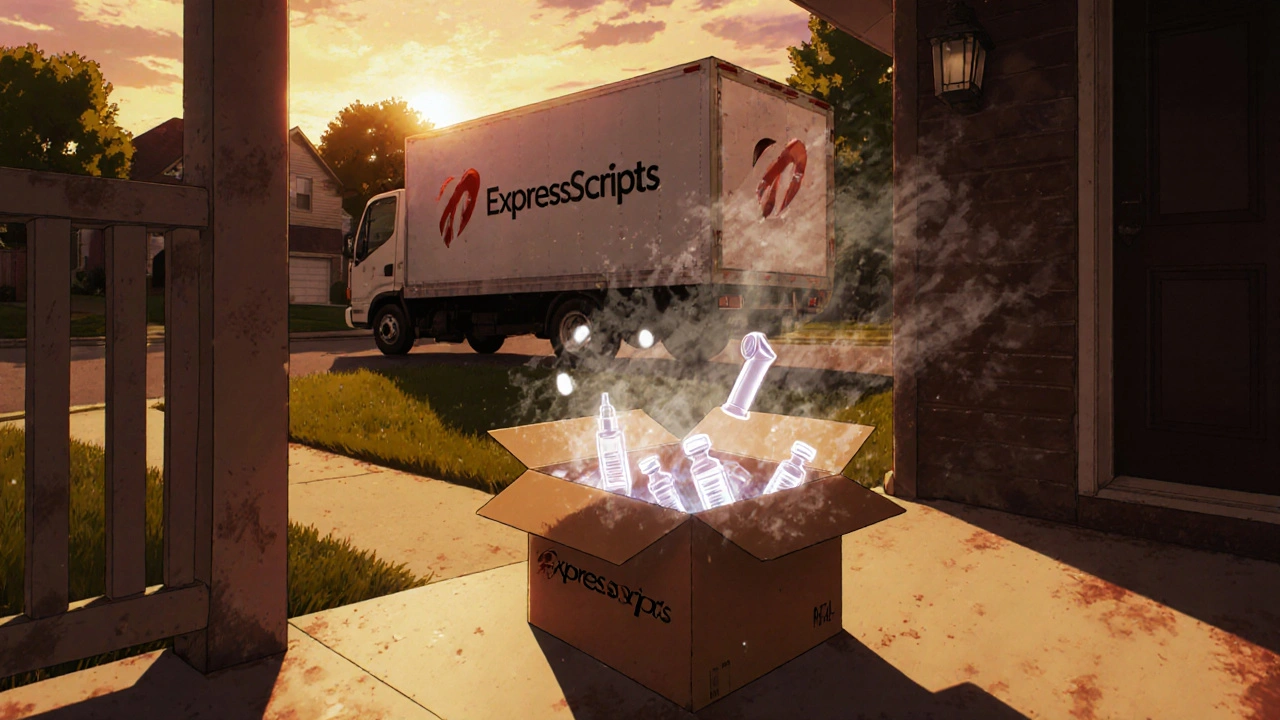
Temperature Trouble: When Your Meds Go Bad
Your insulin, your thyroid pills, your epinephrine auto-injector - these aren’t just pills. They’re delicate chemicals. Most need to stay between 68°F and 77°F during shipping. But a study found that only one-third of mail-order medications are shipped within that safe range. In summer, packages sit on hot porches for hours. In winter, they freeze in delivery trucks. There are real stories: insulin melting in the mailbox, asthma inhalers losing pressure, seizure meds turning cloudy. The FDA received over 1,200 reports of temperature-related failures between 2020 and 2023. That’s likely just the tip of the iceberg. People don’t always report it. They just feel worse and assume their condition got worse - not that their meds failed. No federal law requires mail-order pharmacies to monitor or guarantee temperature control. No one checks the box when it arrives. You’re expected to trust a cardboard envelope with a cold pack that might have melted two days ago.Loss of the Pharmacist Connection
At your local pharmacy, the pharmacist knows your name. They ask how you’re feeling. They spot that you’re on three new meds and say, “Wait - this one interacts with your blood thinner.” That human check is gone with mail-order. A Consumer Reports survey found 68% of users worry about missing those face-to-face safety talks. You can’t ask a delivery driver if your new generic looks different. You can’t ask if it’s okay to take with your morning coffee. And when you get a new pill - different color, shape, size - you might panic. Generic switching is legal. But for some, especially older adults or those with anxiety, it feels like a betrayal. One study linked switching between multiple generic versions of topiramate (a seizure drug) to higher hospitalization rates. Why? Because patients got confused, skipped doses, or thought the drug wasn’t working.
When Mail-Order Is a Bad Fit
Mail-order is great for long-term meds. It’s terrible for anything urgent. Need antibiotics for a sudden infection? A new inhaler after an asthma attack? Pain meds after surgery? Don’t wait for a week-long delivery. You’ll be in trouble. Mail-order pharmacies often don’t carry limited-market generics or specialty drugs at all. If your doctor prescribes something unusual, you’ll get a rejection notice - and then you’ll have to scramble to a retail pharmacy anyway. And timing matters. If you wait until your bottle is empty to reorder, you’re risking a dangerous gap. Experts recommend ordering at least two weeks before you run out. That’s not just advice - it’s a safety net. One Reddit user shared how their insulin shipment arrived melted in July. They didn’t notice until their blood sugar spiked. By then, they’d been without it for three days.What You Can Do to Stay Safe
If you’re using mail-order generics, don’t just accept the system. Take control.- Check your meds when they arrive. Look at the color, shape, size. Compare it to your last bottle. If it’s different, call your pharmacy. Don’t assume it’s the same.
- Track temperature-sensitive drugs. If you’re on insulin, epinephrine, or certain biologics, ask your mail-order pharmacy if they use cold-chain shipping. If they don’t, switch. Your life depends on it.
- Keep a list of all your meds. Even if you use different pharmacies, keep a written or digital list - including doses and why you take them. Share it with your primary doctor every six months.
- Set reminders. Don’t rely on automatic refills alone. Set a calendar alert two weeks before you run out. That gives you time to fix delays.
- Compare prices. Use GoodRx or SingleCare to check retail prices. Sometimes your local CVS or Walmart is cheaper than your mail-order copay - especially if you’re paying cash.
The Bigger Picture
Mail-order generics were meant to fix a broken system. They’ve helped millions take their meds. But they’ve also become a profit engine with little oversight. The rise in sales isn’t about better care - it’s about corporate leverage. And while insurers and PBMs tout savings, many patients are left with confusing bills, damaged meds, and no one to call when things go wrong. The proposed Pharmacy Delivery Safety Act could change that. If passed, it would require temperature monitoring, clearer labeling, and better communication. But until then, the burden falls on you. You’re not just a customer. You’re the last line of defense for your own health.Mail-order generics aren’t good or bad. They’re a tool. And like any tool, they work best when you understand how they’re built - and where they might break.
Hannah Magera
November 28, 2025 AT 07:32My grandma takes six different meds and uses mail-order for all of them. She never checks the pills when they arrive, and I used to think that was fine until last summer when her insulin got melted in the mailbox. She didn’t realize until her blood sugar went sky-high. Now I make her open every package right away and take a pic of the pills before she takes them. Simple thing, huge difference.
Also, she uses GoodRx to compare prices now - turns out Walmart’s $10 list is cheaper than her mail-order copay for her metformin. Who knew?
Just saying: if you’re not checking, you’re gambling with your health.
Nicola Mari
November 28, 2025 AT 07:57This entire system is a disgrace. People are being manipulated into passive compliance by corporations that don’t give a damn if their meds melt or if they overdose because they switched generics without knowing. And yet here we are, praising convenience over safety. It’s not innovation - it’s negligence dressed up as efficiency.
Sam txf
November 28, 2025 AT 14:34These PBMs are crooks with spreadsheets. They’re not saving you money - they’re robbing you blind while you think you’re getting a deal. I worked at a PBM for two years. I saw the spreadsheets. The $10 copay? That’s just the bait. The real profit is in the spread between what they pay the manufacturer and what they charge the insurer - and guess who pays for it? You. In hospital bills. In ER visits. In dead relatives. They don’t care. They just want your data, your compliance, and your silence.
Stop being a good little patient. Start asking questions. Demand cold-chain shipping. Call your insurer. Make noise.
Michael Segbawu
November 30, 2025 AT 02:56americans are so lazy theyd rather risk their life than walk to the pharmacy for 5 minutes. mail order is a scam for people who think convenience is more important than safety. i work in pharma and i can tell you 90 of these meds are shipped in cardboard boxes with a single ice pack that melts in 3 hours. your insulin is probably soup by the time it hits your porch. and you still think its fine because you saved 5 bucks. dumb dumb dumb
Jake Ruhl
November 30, 2025 AT 12:38Have you ever stopped to think that this whole mail-order thing is just the next step in the Great Pharma Control Plan? They want you dependent. They want you passive. They want you so used to getting your pills in the mail that you forget you can even walk to a store. And then when you get sick - when your meds fail - who do you blame? Yourself? No. You blame your body. But it’s not your body. It’s the system. They’ve engineered this. The temperature issues? The hidden markups? The lack of pharmacist contact? All of it. Designed to keep you docile. To keep you paying. To keep you silent. The FDA doesn’t regulate it because they’re paid off. The Congress doesn’t act because PBMs donate millions. You’re not just taking pills - you’re living inside a corporate experiment. And you didn’t even notice.
Wake up. The pills are watching you.
Chuckie Parker
December 2, 2025 AT 02:22Mail-order generics are not inherently dangerous. The problem is patient ignorance. If you dont check your meds dont rely on auto-refills and dont ignore temperature sensitivity then its your fault not the system. The article is correct to advise vigilance. But dont blame the model blame the user who skips the safety steps. Simple as that.
George Hook
December 2, 2025 AT 13:38I’ve been on mail-order for my blood pressure med for five years. I’ve never had an issue. But I also do exactly what the article says: I check the pills every time. I take a photo of the label and compare it to the last bottle. I call if anything looks off. I set two reminders - one at two weeks out, one at one week. I also keep a printed list of everything I take and bring it to every doctor visit.
I don’t see this as a conspiracy. I see it as a tool that requires responsibility. I’m not anti-mail-order. I’m pro-informed-use. If you treat it like a vending machine, you’re going to get junk. Treat it like your health depends on it - because it does - and it works fine.
Katrina Sofiya
December 3, 2025 AT 17:14To everyone feeling overwhelmed or scared - you’re not alone. This system is confusing and sometimes terrifying. But you have more power than you think. Start small. Pick one thing from the list: check your pills this week. Or compare one price with GoodRx. Or call your pharmacy and ask about cold-chain shipping. You don’t have to fix everything at once.
You’re not failing. You’re learning. And every step you take - even the tiny ones - is a win for your health. Keep going. You’ve got this.
kaushik dutta
December 4, 2025 AT 18:27In India we have a similar issue with generic drug distribution but the scale is different. Here, people buy meds from roadside stalls or unregulated online pharmacies because they can’t afford branded ones. The problem isn’t just temperature - it’s authenticity. Counterfeit pills are rampant. We have no cold-chain infrastructure. But here’s the thing - people still survive. Why? Because they have community networks. Neighbors check each other’s meds. Local pharmacists know their patients by name. We don’t have PBMs, but we have human connection.
Maybe the real lesson isn’t about regulation - it’s about rehumanizing care. Even in a broken system, trust between people saves lives.
doug schlenker
December 5, 2025 AT 13:02I used to think mail-order was great until my dad had a stroke because his anticoagulant got exposed to heat. He didn’t know the pills looked different. He didn’t know they were supposed to be refrigerated. He trusted the system. We never found out if it was the temperature or a bad batch. But we do know this - he never got a call from the pharmacy. No one checked in. No one asked if he was feeling okay.
That’s the real tragedy. Not the markup. Not the delay. It’s the silence. When you’re vulnerable, you need someone to say, ‘Hey, are you okay?’ - not just a box on your doorstep.
Olivia Gracelynn Starsmith
December 6, 2025 AT 11:53For anyone using mail-order for insulin or epinephrine - please please please ask for cold-chain shipping. If they say no switch immediately. Your life is not worth saving $10. I work in home health and I’ve seen too many cases where people assume their meds are fine because they look right. They’re not. Heat degrades insulin fast. A cloudy vial isn’t just a cosmetic issue - its a death sentence.
And yes I know its annoying to call. But its your job now. The system won’t protect you. You have to.
anant ram
December 6, 2025 AT 23:08Let me tell you something - I’ve been using mail-order for my thyroid med for six years, and I’ve never had a problem. I check the pills, I store them properly, I call when something looks off. And I use SingleCare to compare prices every time. It’s not hard. It just takes five minutes. People act like this is some massive conspiracy, but really, it’s just about taking a little responsibility. You don’t need to be a genius - you just need to be careful. And if you’re not willing to be careful, then maybe you shouldn’t be on these meds at all.
king tekken 6
December 8, 2025 AT 09:40Have you ever thought that maybe the real reason they push mail-order is because they want you to get addicted to the system? Like, imagine if your meds just showed up every month - you never have to think about them. You never have to interact with a human. You never have to question anything. You just… take them. And then when you get sick, you blame yourself. But what if the pills were bad? What if the system is designed to make you passive? What if they don’t want you to be aware? What if they want you to be a zombie with a pill bottle? I mean… think about it.
Also I think the moon is fake.
Bruce Hennen
December 9, 2025 AT 16:22Anybody who complains about temperature control in mail-order meds is either lying or incompetent. If your insulin melts in the mail then you’re not storing it properly when it arrives. The responsibility ends when the package is delivered. The rest is on you. Stop blaming corporations for your own negligence.
Aarti Ray
December 10, 2025 AT 14:35My aunt in rural Texas uses mail-order for her diabetes meds. She doesn’t have a car. She’s 78. She can’t walk to the pharmacy. For her, this isn’t convenience - it’s survival. The system’s broken? Yes. But what’s the alternative? She’d stop taking her meds. And that’s worse. So we fix the system - not the people using it.