

Imagine getting a three-month supply of your daily heart medication for the price of two months. That is the promise of mail-order pharmacy, a service that ships prescriptions directly to your door. For millions of people managing chronic conditions, this isn't just about convenience; it is a financial lifeline. But does the math actually work out? And what happens when you need medicine fast?
The mail-order model has been around since the 1970s, starting with the U.S. Department of Veterans Affairs. Today, giant players like Express Scripts (owned by Cigna), CVS Caremark, and OptumRx dominate the space. They handle over 1.5 billion claims a year. The big idea is simple: automate the process, bulk-buy drugs, and pass some savings to you while keeping you on your meds longer. Let's look at whether this system helps your wallet or hurts your peace of mind.
How Mail-Order Pharmacy Pricing Actually Works
The core benefit here is cost sharing. Most health insurance plans treat mail-order differently than local retail pharmacies. Typically, you pay the copay for a 30-day supply twice to get a 90-day supply. If your monthly pill costs $10 at a local shop, the mail-order version might cost you $20 total for three months. That saves you $10 immediately. Over a year, if you take four different maintenance drugs, those small gaps add up to hundreds of dollars.
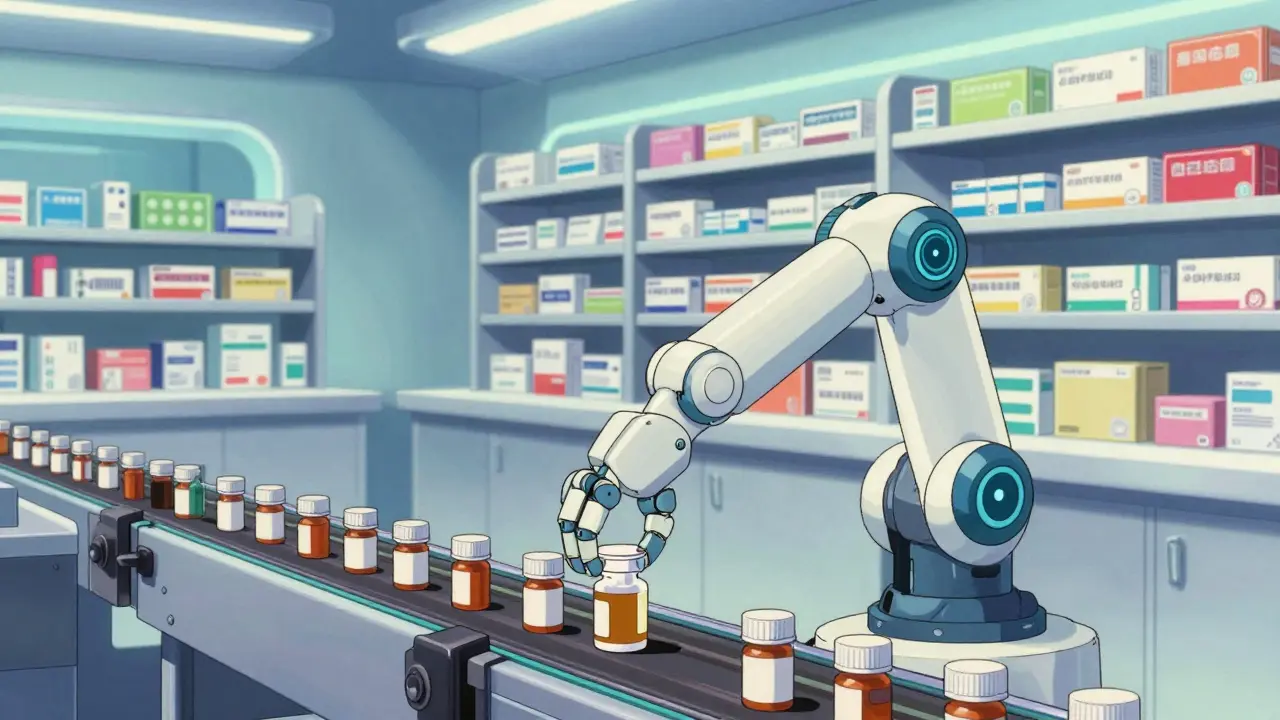
Why are they cheaper? It comes down to scale and automation. Mail-order fulfillment centers use robotic systems to pick and pack pills. This reduces labor costs significantly compared to a local pharmacist manually counting capsules. According to the Pharmaceutical Care Management Association (PCMA), these efficiencies allow mail-order providers to offer median discounts on brand-name drugs that are 4-7 percentage points better than retail options. While that sounds small, across billions in spending, it translates to real savings for patients.
However, not all savings are equal. Some studies show mixed results depending on your specific plan design. If your insurance already negotiates very low prices with local chains, the mail-order discount might be negligible. Always check your plan’s formulary-the list of covered drugs-to see which tier your medications fall into before switching.
The Hidden Benefit: Better Health Through Adherence
Saving money is great, but staying healthy is better. One of the strongest arguments for mail-order pharmacy services is improved medication adherence. When you get a 90-day supply, you don’t have to remember to refill every month. You also avoid the "forgetting" factor entirely because the next shipment is often automatic.
Data supports this. A 2011 analysis published in PubMed Central found that patients using mail-order services showed 5-15% better adherence rates for cardiometabolic medications like blood pressure and cholesterol drugs. Why does this matter? Missing doses leads to hospital visits. Hospital visits cost thousands. By keeping you consistent, mail-order pharmacies help reduce overall healthcare costs, not just drug costs. Dr. Robert Popovian, Chief Science Officer at the Community Pharmacy Advancement Coalition, noted that increased adherence improves patient outcomes and lowers total care expenses.
Furthermore, these centralized systems review your entire medication profile electronically. They screen for dangerous interactions between drugs even if you previously filled them at different stores. This safety net is something a busy local pharmacist might miss during a quick counter transaction.
Where Mail-Order Falls Short: The Cons
It is not all smooth sailing. The biggest drawback is speed. Mail-order pharmacies are designed for maintenance medications-drugs you take every day for long periods. They are terrible for acute needs. If you wake up with an ear infection and need antibiotics today, mail-order won't help. Delivery takes 5-7 business days on average. GoodRx explicitly warns that these services are "not ideal for acute medications that you need filled quickly." Another risk is logistics. Your medication travels through the postal system. While rare, packages can get lost, damaged, or delayed. In a June 2024 Reddit thread, one user shared a frustrating experience: "Had my blood pressure meds lost in transit once - had to pay out of pocket for an emergency refill at Walgreens." Industry data suggests about 0.5% of shipments face delivery issues. If you live in a rural area with unreliable mail service, this anxiety can outweigh the savings.
There is also the loss of personal connection. Many patients value chatting with their local pharmacist. They ask questions about side effects or diet. With mail-order, you are talking to a call center agent or leaving a message. While 24/7 pharmacist lines exist, it is not the same as face-to-face advice. Blue Cross NC satisfaction data shows that while 82% of users love the convenience, 18% cited delivery timing or communication issues as a pain point.
Comparison: Retail vs. Mail-Order Pharmacy
| Feature | Retail Pharmacy | Mail-Order Pharmacy |
|---|---|---|
| Supply Duration | Typically 30 days | Typically 90-100 days |
| Cost Sharing | Full monthly copay | Often 2x 30-day cost for 90 days |
| Speed | Same-day pickup | 5-7 business days delivery |
| Error Rate | ~0.04% | ~0.016% (60% lower) |
| Best For | Acute illnesses, immediate needs | Chronic conditions, maintenance drugs |
| Convenience | Requires travel | Delivered to home |
Who Should Use Mail-Order Pharmacy?
You should consider switching if you fit the following profile:
- Chronic Condition Patients: You take daily meds for diabetes, hypertension, high cholesterol, or thyroid issues.
- Budget-Conscious Consumers: You want to maximize your insurance benefits and reduce annual out-of-pocket spending.
- People with Mobility Issues: Traveling to a pharmacy is difficult or painful for you.
- Rural Residents: You live in a "pharmacy desert" where local options are scarce or expensive.
- Organized Planners: You do not mind planning ahead and can wait a week for delivery.
Conversely, stick with local retail if you frequently change medications, need urgent refills, or prefer personalized human interaction for every prescription.

How to Get Started Without Headaches
Setting up a mail-order account is usually straightforward. Most major Pharmacy Benefit Managers (PBMs) like Express Scripts or CVS Caremark offer online portals. Here is how to do it right:
- Check Your Plan: Log into your insurance provider’s website. Look for "Mail Order" or "Home Delivery" under pharmacy benefits. Confirm which PBMs they partner with.
- List Your Meds: Gather names, dosages, and prescriber information for all maintenance drugs. Do not include occasional painkillers or antibiotics.
- Transfer Prescriptions: Call the mail-order number or use their app. Transferring from a retail pharmacy can sometimes take a few days, so start early. A 2024 Kaiser Family Foundation survey noted that 32% of new users faced challenges coordinating transfers.
- Sync Your Refills: Ask the pharmacist to synchronize your deliveries. This means all your 90-day supplies arrive on the same day, rather than staggered throughout the quarter.
- Set Up Auto-Refill: Enable automatic renewals so you never run out. You can usually pause or adjust these via the portal.
Most users complete their first order within 15 minutes. Keep your old retail pharmacy open for emergencies until you confirm the mail-order package has arrived safely.
Future Trends and Regulatory Risks
The landscape is shifting. In Q1 2024, Express Scripts introduced real-time GPS tracking for all shipments, addressing the "lost package" fear. CVS Caremark announced same-week delivery options for most U.S. addresses in March 2025. These tech upgrades make mail-order more reliable.
However, politics play a role. The proposed Lower Drug Costs Now Act (H.R.3) could restrict how much insurers can save by pushing patients toward mail-order. If regulations limit cost-sharing differentials, your potential savings could drop by up to 40%, according to PCMA economic analysis. Despite this, the industry projects growth. UnitedHealth Group estimates that if 70% of maintenance meds moved to home delivery, we could see $23.5 billion in savings over ten years. For now, the incentives remain strong for consumers to participate.
Is mail-order pharmacy cheaper than local pharmacy?
Yes, typically. Most plans charge you the equivalent of two 30-day copays for a 90-day supply. This effectively gives you one month free. Additionally, mail-order centers often negotiate better wholesale prices due to volume, leading to lower overall costs for both the insurer and the patient.
Can I use mail-order for any medication?
No. Mail-order is strictly for maintenance medications taken regularly over long periods, such as blood pressure or cholesterol drugs. It is not suitable for acute medications like antibiotics, steroids, or painkillers needed for short-term treatment. Controlled substances may also have restrictions depending on state laws.
What happens if my mail-order package is lost?
If a package is lost, contact the mail-order pharmacy immediately. Most providers will resend the medication quickly. However, if you need it urgently, you may have to visit a local pharmacy for an emergency refill, which might require paying a higher copay out-of-pocket initially. Always track your shipment using the provided link.
Does mail-order pharmacy improve medication adherence?
Yes. Studies show a 5-15% improvement in adherence for cardiometabolic drugs. The convenience of a 90-day supply, combined with automatic refills and synchronized delivery dates, reduces the likelihood of running out of medication due to forgetfulness or travel barriers.
Are mail-order pharmacies safe regarding errors?
They are generally safer. Automated dispensing systems in mail-order centers have error rates of approximately 0.016%, compared to 0.04% at retail pharmacies. This represents a 60% reduction in dispensing errors. Additionally, electronic reviews screen for drug interactions across all your prescriptions.
Which companies provide mail-order pharmacy services?
The market is dominated by three major Pharmacy Benefit Managers (PBMs): Express Scripts (owned by Cigna), CVS Caremark, and OptumRx (UnitedHealth Group). Together, they control about 90% of the mail-order market. Your specific provider depends on your health insurance plan.