

Antibiotic Side Effect & Dosage Manager
Use this guide to understand how to handle side effects safely without stopping your treatment prematurely.
You've been prescribed antibiotics because you're fighting an infection. You know you need to take them, but your stomach is churning, you're sweating, or you just can't seem to keep the pills down. It feels easy to think, "I'll just stop now." Don't do it. Stopping early doesn't just leave the infection hanging; it teaches the bacteria inside you how to survive next time.
The goal here is straightforward: you need to finish the medicine without letting the side effects derail your recovery. Antibiotics are powerful tools designed to kill harmful bacteria, but they aren't picky. They often damage the good bacteria in your gut along the way, leading to digestive trouble and other discomforts. By learning how to manage these reactions before they become unmanageable, you protect yourself from complications and help prevent the spread of superbugs.
The Hidden Cost of Skipping Doses
It's tempting to cut the course short once you start feeling better. You wake up one morning, fever gone, throat less sore, and you assume the job is done. But that's exactly when the risk spikes. Incomplete courses contribute significantly to antimicrobial resistance. When you stop prematurely, you haven't killed every last bacterium. The survivors multiply and adapt, making future infections harder to treat.
Data from the World Health Organization highlights that incomplete adherence drives resistance rates up globally. In many outpatient settings, nearly one-third of patients report stopping therapy due to side effects like nausea or vomiting. This isn't a personal failure; it's a common biological reaction. Understanding what to expect makes a massive difference. Patients who know that mild stomach upset might happen are much more likely to push through it than those who panic at the first sign of discomfort.
Taming the Most Common Side Effects
Gastrointestinal distress tops the list for reasons why people quit antibiotics. About one in five patients experiences some form of stomach trouble, ranging from a queasy feeling to significant diarrhea. This happens because antibiotics disrupt the microbiome-the community of beneficial bacteria living in your intestines.
Here is how you handle the big three:
- Nausea: This is often caused by the pill itself irritating the stomach lining. Try taking your dose immediately after a meal rather than on an empty stomach. If the taste triggers you, drink a small amount of water or juice right after swallowing.
- Vomiting: If you vomit within 30 minutes of taking the dose, you likely didn't absorb enough of the medicine. Check with your pharmacist about whether you need to repeat the dose. If it's been longer than an hour, usually you wait until the next scheduled dose.
- Diarrhea: Mild looseness is common, especially with broad-spectrum antibiotics. However, severe watery diarrhea can indicate a C. diff infection. If you have blood or mucus, seek medical help immediately. Do not take anti-diarrheal meds without asking your doctor first, as this can trap toxins in your body.
When Food Matters: The Timing Strategy
Finding the balance between eating and absorption is tricky. Some medications fight each other. For instance, certain drugs like tetracycline work best when your stomach is empty because dairy products bind to the active ingredients and block absorption. On the flip side, amoxicillin and doxycycline often cause less irritation when taken with a bit of food.
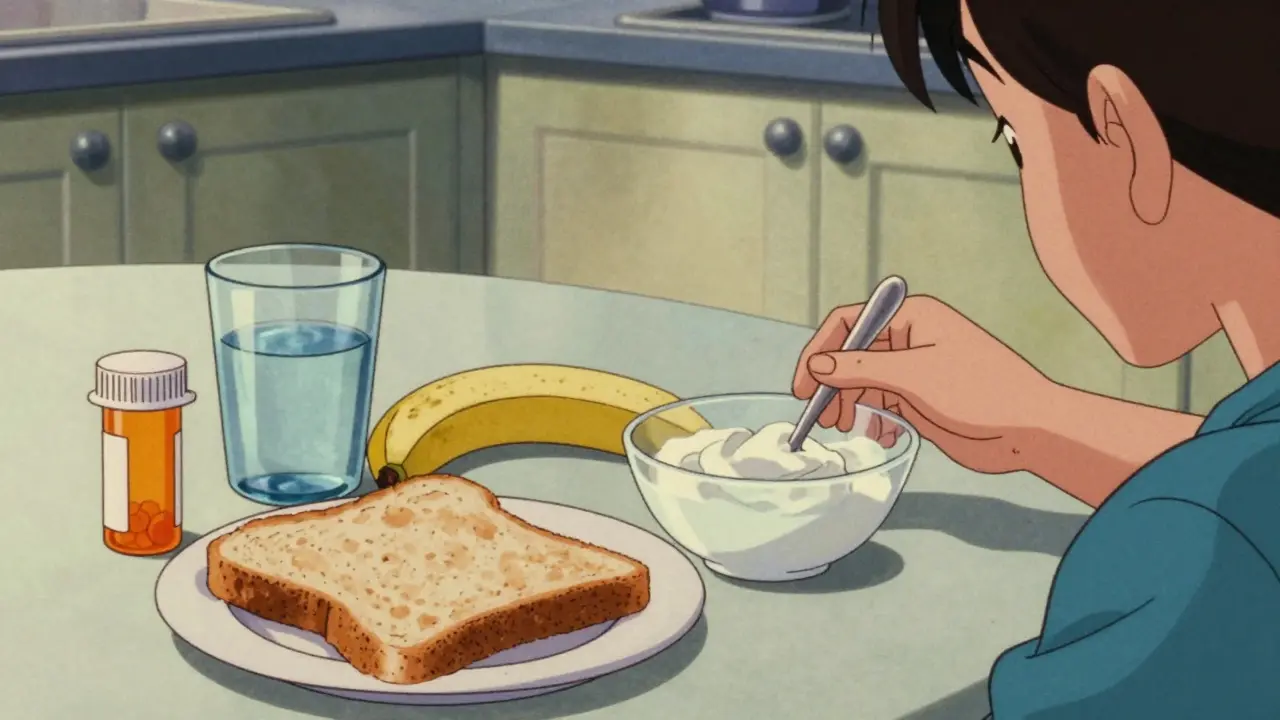
If your medication label doesn't specify, a safe bet is a light snack-something like toast, crackers, or a banana. Avoid heavy, greasy meals right after dosing if you notice they worsen nausea. Consistency helps too. Take your pills at the same time every day to keep steady levels of the drug in your bloodstream. Set alarms on your phone to create a routine.
Protecting Your Gut During Treatment
Your gut flora needs backup during a heavy antibiotic round. Studies suggest that using probiotics alongside antibiotic therapy can reduce the risk of associated diarrhea. The most researched strains include Lactobacillus rhamnosus GG and Saccharomyces boulardii.
| Strategy | Best Used With | Timing Tip | Effectiveness |
|---|---|---|---|
| Plain Greek Yogurt | Most Oral Antibiotics | Eat between doses | Moderate |
| L. rhamnosus Supplement | High-Risk Patients | Separate from antibiotic by 2 hours | High |
| Kefir Drink | Dairy Tolerators | As a daily snack | Moderate to High |
A word of caution on spacing: do not take your probiotic at the exact same minute as your antibiotic. The antibiotic can simply kill the live culture you just swallowed. Wait at least two hours after your dose to take the supplement or eat the yogurt. This allows the antibiotic to move into your system and clears the immediate path in your stomach.
Skin Sensitivity and Other Symptoms
Gut issues aren't the only thing to watch. Some classes of antibiotics, particularly tetracyclines and fluoroquinolones, increase your skin's reaction to sunlight. This condition, called photosensitivity, can lead to blistering burns much faster than usual.
While you are on these drugs, treat your skin like sensitive fabric. Wear long sleeves, hats, and apply sunscreen with SPF 30 or higher. Reapply every two hours if you are outdoors. This simple step prevents painful skin injuries that could make you want to stop treatment.
Another rare but serious issue is "Red Man Syndrome," associated with IV vancomycin. If you are receiving treatment in a hospital setting, nurses adjust the infusion rate to slow the delivery over two hours, which reduces this flushing reaction by nearly 70%. If you experience sudden redness of your neck or face, alert the staff immediately.

Recognizing When to Call for Help
Not all side effects are things you should tough out. There is a fine line between expected minor discomfort and a warning sign of a dangerous reaction. Here are the red flags that require calling your doctor or visiting the emergency department:
- Hives or a rash that spreads rapidly.
- Skin peeling or blistering (like Stevens-Johnson syndrome).
- Difficulty breathing or tightness in the throat.
- Severe abdominal pain accompanied by bloody stool.
- High fever that returns after initially improving.
Allergic reactions occur in a small percentage of patients, but they can escalate quickly. If you notice swelling around your lips or tongue, that is an allergy emergency. Meanwhile, mild bloating or temporary loss of appetite usually fades once the course finishes.
The Final Push to Finish Strong
Finishing the course is the victory lap. Even if you feel completely cured halfway through, those remaining bacteria are hiding deeper in your tissues. You must destroy them completely to prevent recurrence. Think of the antibiotic course like cleaning a moldy surface; scrubbing half the spots leaves the rest to grow back stronger.
Keep a log of your doses if memory is shaky. Using a small planner or a pill organizer with days labeled takes the mental load off decision-making. Ask your pharmacist for tips on flavor masking if the taste is an issue-they have tricks that can hide the bitterness.
Remember, your compliance impacts more than just your own health. Misuse contributes to the growing problem of resistance, which affects everyone in your community. By managing side effects smartly, you stay healthy and play your part in keeping these medicines effective for future generations.
Can I stop taking antibiotics if I feel better?
No. You must finish the entire prescribed course even if symptoms disappear. Stopping early allows surviving bacteria to grow back and develop resistance to the medication, potentially causing a worse infection later.
Is it safe to drink alcohol while on antibiotics?
It depends on the type of antibiotic. Some, like metronidazole, cause severe reactions when mixed with alcohol, including violent vomiting. Generally, it is safer to avoid alcohol to minimize side effects and ensure the medication works effectively.
Do probiotics really help with antibiotic diarrhea?
Yes, clinical trials show that specific strains like Lactobacillus rhamnosus GG can reduce the risk of antibiotic-associated diarrhea significantly. It is important to take them at least two hours apart from your antibiotic dose.
What should I eat to calm my stomach?
Try bland foods like bananas, rice, applesauce, and toast (the BRAT diet). Greek yogurt is also excellent for replenishing good bacteria. Avoid spicy, acidic, or very sugary foods while your gut recovers.
When is nausea a sign of something serious?
Mild nausea is common. Severe uncontrollable vomiting, especially if you cannot keep any fluid down, requires medical attention. Also watch for signs of allergic reaction like rash or breathing difficulty.
Calvin H
March 30, 2026 AT 14:36People think they know medicine simply because they read a label online.
Kendell Callaway Mooney
March 31, 2026 AT 04:28Taking food with your pills really does help so much with the stomach issues.
I always keep some crackers nearby just in case I feel queasy after the dose.
It is worth checking the instructions on the bottle carefully.
Charles Rogers
April 1, 2026 AT 15:25You really have to understand that discipline is the core requirement here for everyone.
Most folks give up when the immediate symptoms vanish because they lack patience.
The bacteria do not just disappear like magic when you feel fine again.
They remain dormant until the medication stops fighting them back completely.
Ignoring the timeline leads to resistant strains which hurt the entire community eventually.
We see this cycle repeat year after year in hospitals everywhere.
Your gut needs time to heal after the assault from the drugs.
Skipping doses breaks the concentration needed to finish the job properly.
It is frustrating when patients ignore basic biology for convenience.
You owe it to yourself to follow the instructions given by the professional.
Probiotics are good but timing matters more than the brand you buy.
Separating them from the pill prevents the antibiotic from killing the culture immediately.
We need to stop romanticizing the idea of feeling better early.
That is a trick your body plays to lower vigilance against pathogens.
Stick to the schedule like clockwork without any exceptions whatsoever.
A log helps track progress and ensures nothing slips through the cracks.
Resistance is a real threat that we face every single day now.
Your choices impact the effectiveness of these tools for your neighbors too.
Finish strong even when the motivation fades halfway through the course.
The victory comes at the end not in the middle of the battle.
Listen to medical advice instead of internet forums telling you differently.
Trust the science backed by years of research and trials.
Small steps like eating yogurt or toast prevent larger problems later on.
Prevention is always easier than fixing damage done by neglect.
You can handle minor discomfort if you view it as part of healing.
Pushing through the nausea shows mental strength during sickness.
Never skip a dose because you forgot or felt busy today.
Consistency maintains the drug levels needed to kill infection cells.
Health is wealth but only if you protect it with proper habits.
Completing the course keeps the future safe for everyone involved.
Jonathan Alexander
April 2, 2026 AT 18:53I get terrified thinking about the possibility of vomiting right after swallowing.
It feels like my body is rejecting the help I desperately need.
Sometimes the anxiety is worse than the physical symptoms themselves.
Knowing what to expect helps me stay calm during the process.
Cameron Redic
April 4, 2026 AT 00:35Stop worrying about side effects so much because most of them are temporary.
Just swallow the pill and deal with whatever happens next.
Complaining about nausea is pointless when you want to get healthy.
Marwood Construction
April 5, 2026 AT 03:36The strategy regarding dairy products and tetracycline absorption is scientifically accurate.
Many individuals overlook the chemical binding mechanisms described in the literature.
Maintaining the gap between probiotic intake and dosing remains critical for efficacy.
This separation ensures the live cultures survive the antibiotic exposure.
Dan Stoof
April 7, 2026 AT 03:26Hey!! Just remember to be kind to your body while it recovers!
You CAN get through this!!
Add some flavor to your recovery snacks so it feels like self-care!!!
Stay positive and focus on the bright side of getting well soon!!!
William Rhodes
April 8, 2026 AT 05:40We are constantly fighting microscopic battles inside us every single moment.
These medications are weapons designed to purge the invaders quickly.
Failing to use them correctly betrays our own biological integrity.
We must respect the power contained within those small pills daily.
Adryan Brown
April 9, 2026 AT 00:40Your fear is valid because the experience can feel overwhelming initially.
It is important to acknowledge the discomfort without letting it control you.
Many people feel exactly the same way during their first treatment rounds.
Talking about it openly helps reduce the stigma around illness management.
There are simple techniques to ease the transition into medication routines.
Taking a deep breath before swallowing can signal safety to your system.
Drinking water slowly often calms the stomach lining before ingestion.
Small adjustments in routine prevent the worst reactions most of the time.
You are not alone in experiencing these physiological responses during therapy.
Support from friends often makes the journey feel less isolating.
Remember that peace of mind starts with preparation and planning ahead.
Having a snack ready removes the stress of deciding what to eat later.
Every step forward is progress toward total wellness and health restoration.
Celebrate the small victories like staying hydrated throughout the day.
Gentleness towards yourself fosters resilience during difficult recovery periods.
Listen to your body signals so you can act appropriately each day.
Harm reduction works best when you combine knowledge with compassionate action.
You deserve to feel better soon and regain your strength fully.
Trust in the healing process to guide you back to normalcy eventually.
Patience is a virtue that yields significant rewards over time.
Keep moving forward even when the path feels slightly rocky today.
The destination of health is worth the effort put in now.
Take care of your spirit alongside your physical needs always.
Healing involves more than just taking medication according to schedules.
Support systems matter greatly during times of vulnerability and sickness.
Leaning on loved ones provides emotional stability when you are weak.
Breathe deeply whenever anxiety spikes regarding the upcoming dose.
You are stronger than the temporary sensations passing through you.
Believe in your capacity to overcome the challenges presented by infection.
Biraju Shah
April 9, 2026 AT 05:35Compliance is non-negotiable if you want to avoid serious complications down the road.
Ignoring the schedule puts unnecessary risk on your own life.
We need to enforce strict adherence standards for better public health outcomes.
Individual negligence contributes directly to broader societal risks.