
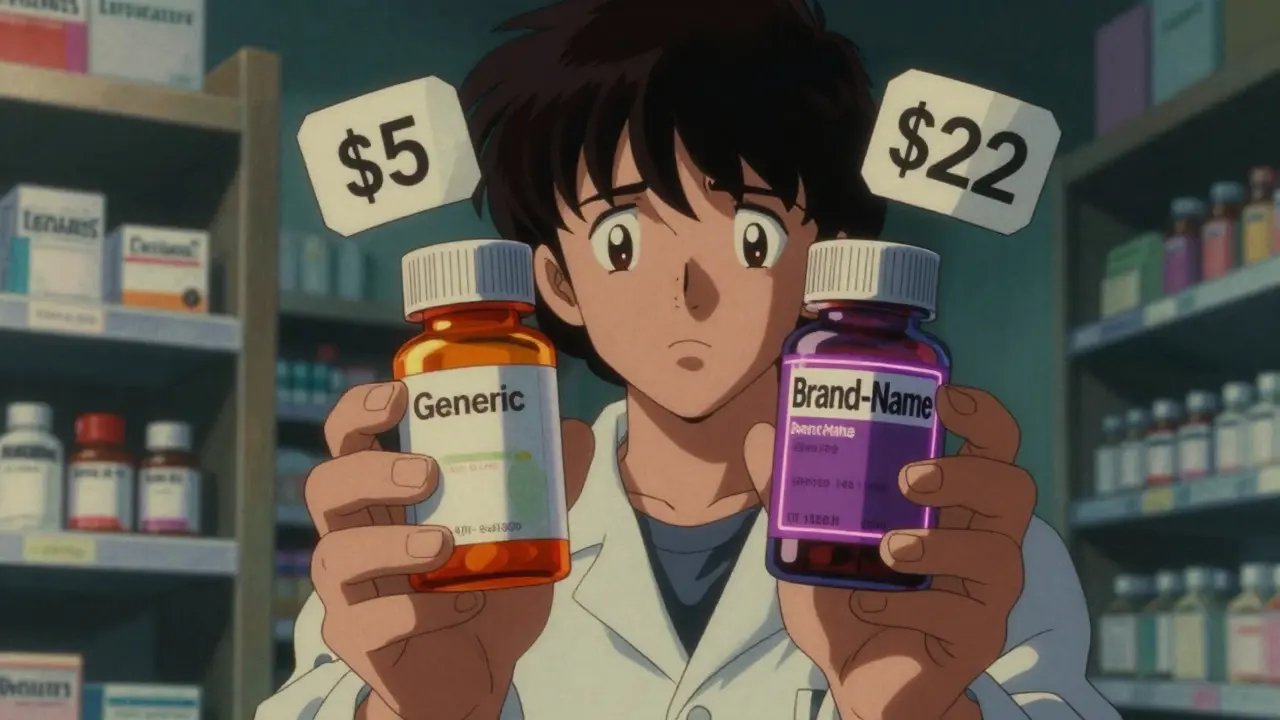
When you pick up a prescription, the price on the receipt can feel random. One month, your generic blood pressure pill costs $5. The next, it’s $22. Meanwhile, your neighbor pays $10 for the same brand-name drug. Why does this happen? The answer isn’t about quality-it’s about how the system is built.
Generics aren’t cheaper because they’re worse
The FDA requires generic drugs to have the same active ingredients, strength, and dosage as their brand-name versions. They must also prove they work the same way in your body. That’s not a suggestion-it’s the law. So if your doctor prescribes lisinopril and you get the generic version, it’s not a downgrade. It’s the exact same medicine, just without the marketing budget.
On average, generics cost 80-85% less than brand-name drugs. In the U.S., about 90% of all prescriptions filled are for generics. But here’s the twist: even though generics make up most of the prescriptions, they only account for about 18% of total drug spending. That means brand-name drugs, which are far fewer in number, are soaking up most of the money.
Insurance doesn’t always protect you
Many people assume insurance keeps their drug costs low. But that’s not always true. It depends on your plan’s structure.
If you have a flat copay-say, $10 for any generic-you won’t feel price hikes. Even if the drug’s list price jumps 16.7% over two years (which happened in many cases), your out-of-pocket cost stays the same. But if your plan uses coinsurance (like 25% of the drug’s price) or a deductible, you’re directly exposed to those increases. A $50 drug becomes $58. You pay $14.50 instead of $12.50. That’s not inflation-it’s a hidden tax.
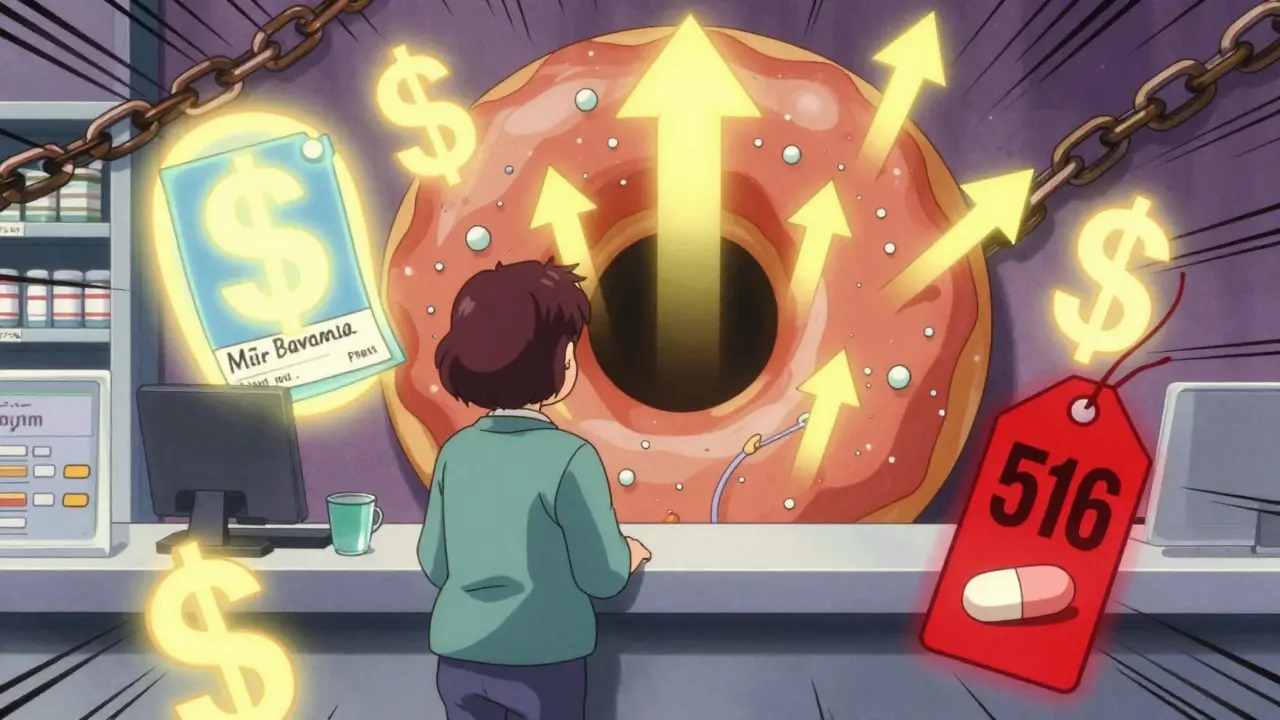
And it gets worse in Medicare Part D. Here’s how: brand-name manufacturers pay discounts during the coverage gap (the "donut hole") that count toward your out-of-pocket spending. Generics? No such discounts. So if you’re on a high-cost generic like gabapentin or omeprazole, you might have to spend over $3,700 to reach catastrophic coverage. Meanwhile, someone on a brand-name drug hits that same threshold at just $982. That’s not a mistake. It’s policy.
Why your generic sometimes costs more than the brand
This isn’t a myth. In Medicare Part D, patients have paid more out-of-pocket for certain generics than for their brand-name equivalents. The reason? The math of the coverage gap. Since generic makers don’t offer rebates that count toward your spending, you’re stuck paying full price until you hit the catastrophic threshold. Brand-name drugs? The manufacturer’s discount lowers your bill and pushes you faster into the 5% coinsurance zone.
For example, a 2019 study found that patients on a brand-name drug needed to spend $982 to qualify for catastrophic coverage. Those on generics? $3,730. That’s nearly four times more. And when the out-of-pocket threshold rose from $5,100 to $6,350 in 2020, the gap only widened.
What you can do: cash beats insurance sometimes
Here’s something most people don’t know: paying cash for a generic can be cheaper than using insurance.
Companies like Mark Cuban Cost Plus Drug Company and Blueberry Pharmacy sell generics at transparent, low prices-often below what insurance pays. A 2024 study found that 11.8% of generic prescriptions cost less when paid for in cash, with a median savings of $4.96 per prescription. For uninsured patients, the savings were even bigger. Medicaid patients? No change. But for those with high-deductible plans or Medicare Part D, cash can be a lifeline.
And it’s not rare. In 2020, 97% of all cash-paid prescriptions were for generics. That’s because cash buyers know: if you’re not using insurance, you’re not paying the hidden fees, rebates, and middlemen markups that inflate the system.
Why the system is broken
The U.S. drug pricing system is built on layers of middlemen-pharmacy benefit managers (PBMs), insurers, and manufacturers-all negotiating rebates behind closed doors. Patients never see the full picture. What you pay at the counter is often based on the list price, not the net price after rebates.
According to the USC Schaeffer Center, patients are overpaying for generics by 13-20% because of these inefficiencies. The system rewards complexity. The more convoluted the pricing, the more profit flows to intermediaries-not patients.
Dr. Stacie Dusetzina from Vanderbilt University put it bluntly: "Making brand-name drugs more expensive doesn’t make generics cheaper. It just makes the system more unfair."
What you can do right now
- Ask your pharmacist: "Is the cash price lower than my insurance copay?" Many will check for you.
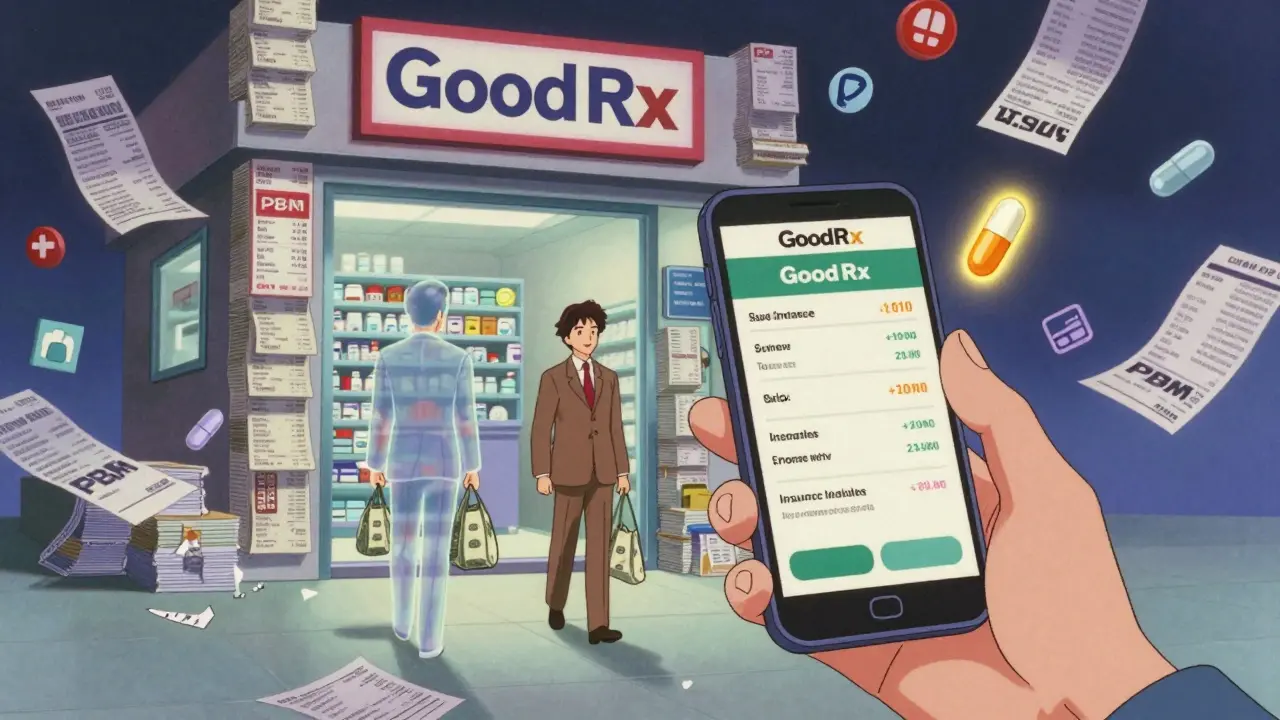
- Use GoodRx or similar apps to compare prices across local pharmacies. Sometimes the difference is $15 or more.
- If your doctor prescribes a brand-name drug, ask: "Is there a generic?" If they say no, ask why. Sometimes it’s habit, not necessity.
- If you’re on Medicare Part D, check your plan’s formulary. Some generics are in higher tiers than brands-meaning you pay more.
- Don’t assume your insurance is saving you money. Run the numbers. Sometimes paying out of pocket is smarter.
And if your doctor writes "dispense as written" or "do not substitute," ask them why. It’s your right to know. Not every brand is necessary. Many are just more expensive.
It’s not about the drugs. It’s about the system
Generic drugs are safe. They’re effective. They’re the same medicine. The problem isn’t the pill in your hand. It’s the pricing maze around it.
Every year, generics save the U.S. healthcare system over $300 billion. In 2020 alone, they saved $338 billion. But you’re not seeing those savings at the pharmacy counter. Instead, you’re paying for a broken system that rewards opacity.
Until the rules change, you have to play the game smarter. Know your plan. Ask questions. Compare prices. Pay cash if it makes sense. Your wallet-and your health-will thank you.
Ken Porter
January 9, 2026 AT 07:41Generic drugs are just as good, but the system is rigged. Pay cash. Always. Insurance is a scam for middlemen.
Manish Kumar
January 11, 2026 AT 02:28You know, it’s funny how we blame the pharmaceutical companies, but we never ask why we let them write the rules. The entire pricing model is built on fear-fear of not being cured, fear of being labeled non-compliant, fear of dying because you couldn’t afford the pill. And so we pay. We pay for branding, for logos, for ads that tell us our life depends on the color of the capsule. But the chemistry? Identical. The science? Unchanged. The only thing that changed is the price tag-and the people who profit from it. We’ve turned medicine into a luxury good, and the irony is, we’re the ones who bought the ticket to our own exploitation.
Donny Airlangga
January 12, 2026 AT 18:49This hits hard. I had to switch my mom from brand-name omeprazole to generic last year, and her copay jumped from $12 to $48. We didn’t even know why until we checked GoodRx-and the cash price was $7. I cried in the pharmacy aisle. No one should have to choose between their meds and groceries.
swati Thounaojam
January 13, 2026 AT 09:55cash price lower? i always ask now. saved me $20 on my thyroid med. thanks for this.
Annette Robinson
January 14, 2026 AT 09:53If you’re on Medicare Part D, please, please, please ask your pharmacist to compare cash vs. insurance. I didn’t know this was even an option until last year-and I’ve been on Part D for a decade. You don’t need a degree in pharmacy to save hundreds a year. Just ask. Seriously. Just ask.
Joanna Brancewicz
January 16, 2026 AT 08:30PBMs are the hidden villains here. They negotiate rebates with manufacturers, then pass the inflated list price to patients. The net price? Never seen. The out-of-pocket? Skyrocketing. It’s a structural fraud.
Evan Smith
January 17, 2026 AT 12:45So let me get this straight… I pay more for a generic than a brand-name drug… because the brand-name company gives a discount… to the middleman… who doesn’t pass it to me… but the generic company doesn’t even try? Wow. I’m not mad. I’m impressed. This is like a sitcom written by a hedge fund.