
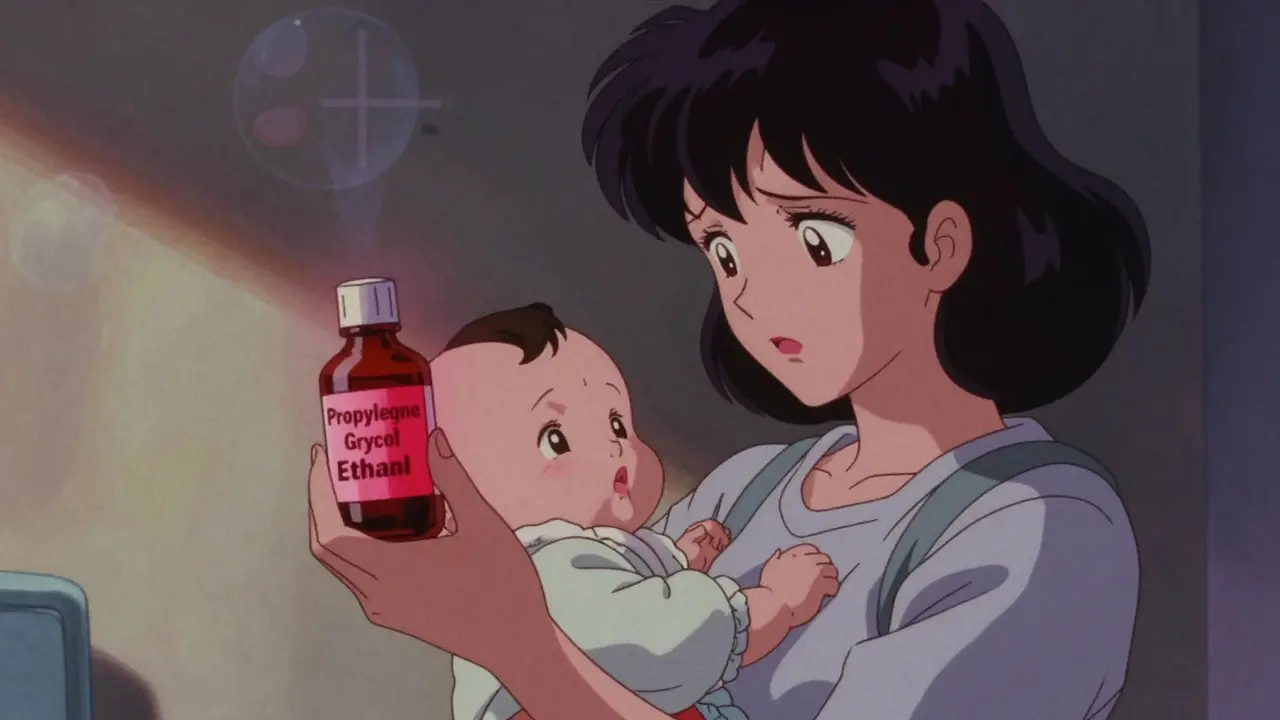
When you give your child medicine, you trust it’s safe. You check the dosage, read the label, and assume the inactive ingredients - the excipients - are harmless. But that’s not always true. In babies and young children, common additives like alcohol, sorbitol, and benzyl alcohol can cause serious harm, even death. These substances are not meant to treat illness. They’re there to make the medicine taste better, last longer, or flow easier through a syringe. Yet for infants and toddlers, these "inert" ingredients are anything but safe.
Why Children Are at Higher Risk
Children aren’t small adults. Their bodies process drugs and chemicals differently. A newborn’s liver can’t break down alcohol like an adult’s. Their kidneys can’t flush out toxins efficiently. Their skin is thinner, so topical medicines absorb more. Their blood-brain barrier is still developing, making them more vulnerable to nervous system damage. A 2020 study in PMC found that immature absorption, distribution, metabolism, and elimination pathways put pediatric patients at unique risk. Even tiny amounts of excipients that are fine for adults can build up to toxic levels in babies. One study showed that 63% of neonates received at least one medication containing a potentially harmful excipient. That’s more than half of all newborns in the study.Alcohol: Propylene Glycol and Ethanol
Propylene glycol is one of the most common alcohol-based excipients in children’s medicines. You’ll find it in liquid antibiotics, seizure meds like phenobarbital, and even sedatives like lorazepam. Some formulations contain up to 80% propylene glycol. That’s not a typo. Eighty percent. In adults, this chemical is generally safe. In newborns, especially preemies, it can cause seizures, low blood pressure, heart rhythm problems, kidney failure, and even hemolysis - where red blood cells burst. A 2020 review in Contemporary Pediatrics documented cases where continuous IV infusions led to life-threatening toxicity in infants under 2 kg. The same study noted that topical use on broken skin - like severe diaper rash or burns - can lead to systemic poisoning because the barrier is compromised. Ethanol, or drinking alcohol, is less common but still present in some cough syrups and liquid formulations. In children, even small amounts can cause low blood sugar, coma, and respiratory failure. A child’s liver lacks the enzymes to metabolize ethanol quickly. One dose meant for an adult could be fatal for a baby.Sorbitol: The Sweet Trap
Sorbitol is a sugar alcohol used to sweeten liquid medicines and make tablets easier to swallow. It sounds harmless - after all, it’s in sugar-free gum. But in kids, especially those under two, it’s a different story. When children can’t digest sorbitol properly, it draws water into the intestines, causing severe diarrhea, bloating, and dehydration. In babies with immature guts, this can spiral into metabolic acidosis - a dangerous drop in blood pH - or bacterial overgrowth that leads to sepsis. One 2021 review linked sugar alcohols like sorbitol to prolonged gastrointestinal distress that can mimic serious infections. Worse, sorbitol isn’t always labeled clearly. Parents might see "sugar-free" and assume safety, not realizing it’s replaced with a chemical that can harm their child’s digestive system. Some formulations contain more than 100 mg per mL. For a 5 kg infant, that’s a toxic load.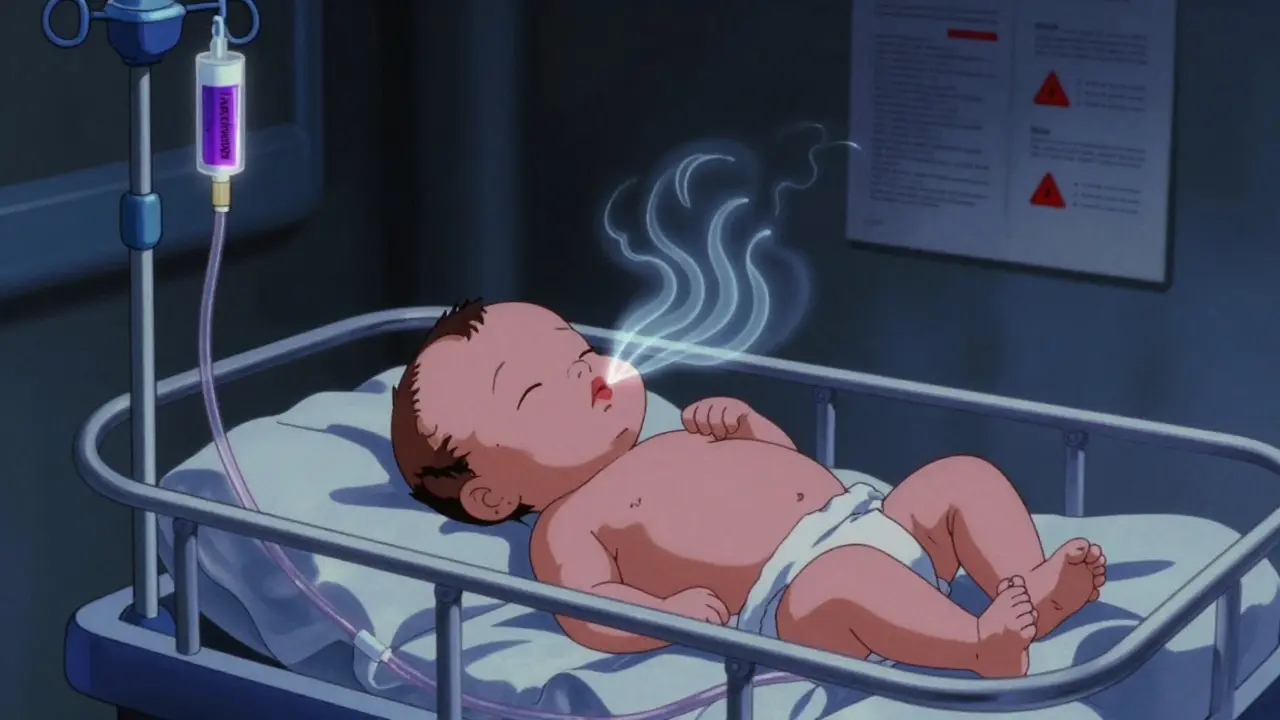
Benzyl Alcohol: A Silent Killer in Neonates
Benzyl alcohol is perhaps the most dangerous of the three. It’s used as a preservative in injectable medicines, eye drops, and nasal sprays. In adults, it’s tolerated in small doses. In newborns, especially those under 4 weeks old or weighing less than 1.5 kg, it can be fatal. In the 1980s and 1990s, multiple infants died after receiving medications containing benzyl alcohol. The cause? A syndrome called "gasping syndrome" - characterized by seizures, liver enlargement, kidney failure, and respiratory distress. It was traced back to benzyl alcohol in E-Ferol, a vitamin supplement given to preemies. Eight babies under 1.2 kg died in one hospital alone. Even today, benzyl alcohol remains in many off-label medications. The Pediatric Pharmacy Association’s 2025 KIDs List warns against using any product with benzyl alcohol in infants under 28 days old. Yet, because many pediatric drugs aren’t specifically formulated for babies, clinicians are forced to dilute adult versions - unknowingly exposing infants to toxic levels.What’s Being Done - and What’s Not
Regulators know this is a problem. The European Medicines Agency created the Paediatric Committee in 2007. The U.S. passed the Best Pharmaceuticals for Children Act in 2002. Both pushed for better pediatric testing. But progress is slow. The STEP database - a global safety resource for pediatric excipients - lists around 250 substances, but data for neonates is still incomplete. A 2022 survey found that 78% of hospital pharmacists struggle to find safe, age-appropriate formulations. As a result, 63% regularly compound drugs themselves - often using excipients with known risks. The FDA’s 2023 draft guidance admits excipient safety remains an "unmet need," especially for babies under six months. The European Commission plans to require full excipient safety dossiers by 2026. But until then, the burden falls on parents and clinicians to spot the danger.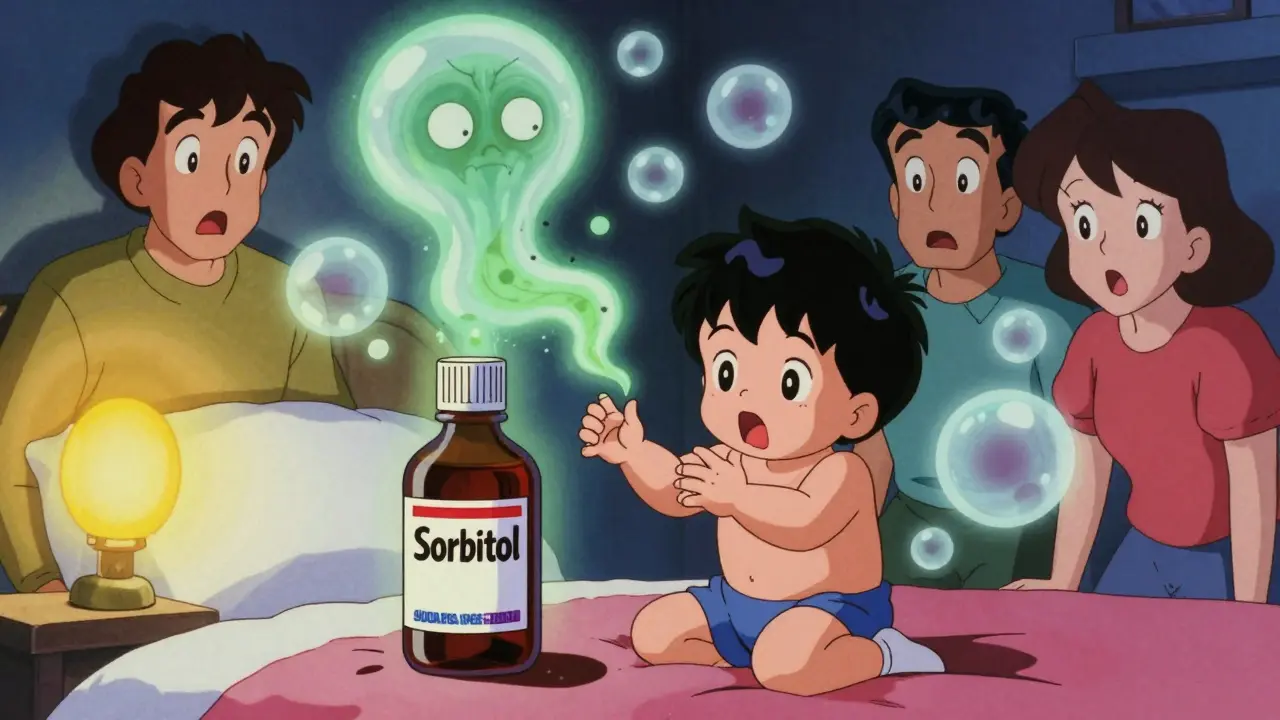
What Parents and Caregivers Can Do
You don’t need to be a pharmacist to protect your child. Here’s how:- Check the ingredients list - not just the active drug. Look for "propylene glycol," "ethanol," "sorbitol," or "benzyl alcohol." If you see them, ask if there’s an alternative.
- Ask for preservative-free versions - especially for eye drops, nasal sprays, or injectables.
- Never use adult medications for children - even if you dilute them. The excipient concentration doesn’t scale down safely.
- Use the Pediatric Pharmacy Association’s KIDs List - it’s free, online, and updated annually. It tells you exactly which excipients to avoid by age.
- Report adverse reactions - if your child has a seizure, unusual drowsiness, or severe diarrhea after taking medicine, tell your doctor and report it to your national drug safety agency.
The Bigger Picture
This isn’t just about one chemical or one medicine. It’s about a system that still treats children as afterthoughts. Of the 2,095 medications analyzed in one major study, 31% contained harmful excipients. That’s one in three. And neonates - the most vulnerable - are exposed to them the most. The global pediatric drug market is growing fast - projected to hit $150 billion by 2030. But money isn’t being spent on safe formulations. It’s being spent on marketing adult drugs to pediatric populations. That has to change. Until then, knowledge is your best defense. If you’re giving your child medicine, don’t assume it’s safe. Ask questions. Demand alternatives. And remember: just because something is labeled "medicinal" doesn’t mean it’s safe for your child’s body.Is benzyl alcohol safe in children’s medicine?
No, benzyl alcohol is not safe in infants under 28 days old or those weighing less than 1.5 kg. It has been linked to a life-threatening condition called "gasping syndrome," which causes seizures, liver and kidney failure, and respiratory distress. Even small amounts in injectable or topical medications can be fatal. The Pediatric Pharmacy Association’s KIDs List explicitly advises avoiding all products containing benzyl alcohol in this age group.
Can propylene glycol cause seizures in babies?
Yes. Propylene glycol can cause seizures in infants, especially those receiving continuous IV infusions of medications like phenobarbital or lorazepam. These drugs can contain up to 80% propylene glycol. In premature or low-weight babies, the body can’t process it fast enough, leading to buildup that depresses the central nervous system. This can trigger seizures, low blood pressure, and even heart rhythm problems. The risk increases with prolonged use or broken skin.
Is sorbitol harmful to toddlers?
Yes, sorbitol can be harmful to toddlers, especially those under two. It’s a sugar alcohol that isn’t fully absorbed in the gut, pulling water into the intestines and causing severe diarrhea, bloating, and dehydration. In young children, this can lead to metabolic acidosis or bacterial overgrowth. Some formulations contain over 100 mg per mL - a dangerous dose for a small child. Always check labels and ask for alternatives like starch or cellulose powder.
Are there safe alternatives to these excipients?
Yes. For sweetening, alternatives like erythritol, starch, or dehydrated calcium hydrogen phosphate are safer and work well in pediatric formulations. For preservatives, benzyl alcohol can be replaced with phenethyl alcohol or no preservative at all in single-dose vials. For solvents, water-based or glycerin-based solutions are preferred over propylene glycol. But these alternatives aren’t always used because they’re more expensive or harder to formulate with.
How do I know if my child’s medicine contains dangerous excipients?
Look at the inactive ingredients list on the packaging or the patient information leaflet. Common harmful ones include propylene glycol, ethanol, benzyl alcohol, sorbitol, and polyethylene glycol. If you’re unsure, ask your pharmacist or use the Pediatric Pharmacy Association’s free KIDs List, which identifies high-risk excipients by age. Never assume "sugar-free" or "alcohol-free" means safe - some products use hidden or alternative forms.
Why aren’t safer pediatric formulations more widely available?
Because developing child-specific medicines is expensive and not profitable enough for many manufacturers. Most drugs are designed for adults, then diluted for kids - a practice that ignores how excipients behave differently in small bodies. Regulatory agencies are pushing for change, but progress is slow. Only 12-15 new pediatric formulations are approved each year in the U.S., compared to hundreds for adults. Many hospitals still compound medications because safe options simply don’t exist.
Isabel Rábago
December 21, 2025 AT 07:44My son had a seizure after a simple antibiotic. The doctor said it was just a coincidence. Turns out, the liquid contained propylene glycol - 75% of it. No one warned me. No label screamed danger. Just a tiny bottle with a smiley face on it. I almost lost him because no one thought to check the "inactive" ingredients.
Now I read every single line. Even the tiny print. Even the insert I throw away.
Parents need to know this isn’t just medical jargon - it’s life or death.
Dev Sawner
December 23, 2025 AT 07:44It is imperative to underscore the systemic failure inherent in the current pharmaceutical regulatory paradigm. The absence of mandatory excipient safety profiling for pediatric populations constitutes a gross dereliction of duty by both industry and regulatory agencies.
Statistical data from the STEP database, while informative, remains woefully incomplete for neonatal subpopulations. The reliance upon off-label compounding by hospital pharmacists is not merely a workaround - it is an ethical crisis.
Furthermore, the economic disincentives for developing pediatric-specific formulations are not merely market-driven; they are indicative of a societal devaluation of infant and toddler physiological integrity.
Moses Odumbe
December 24, 2025 AT 00:43Y’all are losing your minds over sugar alcohols?? 😅
My kid’s had sorbitol syrup since he was 3 months. He’s 5 now - runs marathons in the backyard. I’m not a doctor but I know what I’ve seen.
Also, benzyl alcohol? My niece got it in her IV for weeks. Still alive. Still laughing.
Maybe stop reading scary studies and start trusting your pediatrician?
Also, I use the KIDs List. It’s fire 🔥
Vicki Belcher
December 25, 2025 AT 14:04Thank you for writing this. I’m a NICU nurse, and I see this every single shift.
Parents are terrified when they find out their baby’s medicine has benzyl alcohol - and rightly so.
We’re not supposed to use it in preemies under 28 days - but sometimes, we have no other option. The hospital doesn’t stock the safe version. The manufacturer won’t make a baby-specific batch because it’s "not profitable."
I’m so glad someone’s finally talking about this. We need change. Not just awareness - real reform.
And yes, I’ve cried over a syringe full of propylene glycol more times than I can count. 💔
Andrew Kelly
December 26, 2025 AT 05:57Let’s be honest - this whole post feels like fearmongering dressed up as public service.
Alcohol in medicine? Since when did that become a scandal? We’ve been giving kids cough syrup with ethanol since the 1950s. And yes, we’ve also been giving them aspirin, lead paint, and DDT. Progress means we learn - not panic.
There’s no evidence that occasional exposure to these excipients causes harm in healthy infants. The cases cited are extreme outliers - often from IV drips in ICUs, not oral syrups.
Stop treating your child like a lab rat. Trust science, not sensationalism.
Also - why are we still using sugar alcohols in gum? Because they’re safe. So why not in medicine?
holly Sinclair
December 27, 2025 AT 06:11What does it mean to be a human being in a world where we outsource our children’s safety to corporate chemistry labs?
We treat medicine like a product, not a covenant. We assume that because something is approved, it is benign. But approval is not safety - it’s liability management.
The real tragedy isn’t that benzyl alcohol kills neonates. It’s that we knew it did in the 1980s - and did nothing. We didn’t ban it. We just stopped labeling it clearly.
And now we’re still here - parents Googling ingredients at 2 a.m., pharmacists compounding drugs in basements, regulators waiting for the next infant to die before they act.
Is this what progress looks like? Or is it just the same cycle, repackaged in PDFs and press releases?
Who decides what a child’s body is worth? And why does it always seem to be someone who never held a trembling newborn with a fever, begging for a solution that doesn’t come with hidden poisons?
Monte Pareek
December 28, 2025 AT 22:21Listen up - this isn’t about fear. It’s about power.
You have the power to read the label. You have the power to ask for alternatives. You have the power to refuse a prescription if the excipients are dangerous.
Most parents don’t know this because no one ever taught them. But you? You’re reading this now. That’s your wake-up call.
Go to the pharmacy. Ask for the preservative-free version. Ask if they have a sugar-free, alcohol-free, benzyl-alcohol-free option. If they say no - push harder. Call the manufacturer. File a complaint. Tweet it.
Change doesn’t come from petitions. It comes from parents who stop being polite and start being loud.
I’ve done this. My daughter’s on a custom formulation now. No sorbitol. No PG. No BS. And she’s thriving.
You can too. Don’t wait for someone else to fix it. Fix it yourself.
And if your doctor looks at you funny? Tell them you’ve read the KIDs List. Watch their face change.
You’re not being paranoid. You’re being a parent.
Now go do it.
Edington Renwick
December 29, 2025 AT 05:34They’re poisoning our babies with chemicals we wouldn’t put in a toilet cleaner.
And the FDA? They’re asleep at the wheel.
Big Pharma doesn’t care. They’re making billions off this. Every child who gets sick from sorbitol? Just a statistic.
My cousin’s baby died from benzyl alcohol. They didn’t even tell us it was in the medicine until the autopsy.
How many more have to die before someone gets fired?
This isn’t medicine. It’s murder by label.
Lynsey Tyson
December 30, 2025 AT 18:16I get that this is terrifying. I really do.
But I also think we need to be careful not to make parents feel guilty for trusting the system.
Most of us don’t have the time, the training, or the resources to become pharmaceutical chemists.
Maybe the real problem isn’t that we’re not reading labels - it’s that the system doesn’t make safe options easy to find.
Let’s push for better labeling. For mandatory pediatric excipient warnings. For funding real child-safe formulations.
Because no parent should have to choose between giving their child medicine… and risking their life.
We can do better. And we will - if we keep talking. And listening.
Thank you for starting this conversation.