
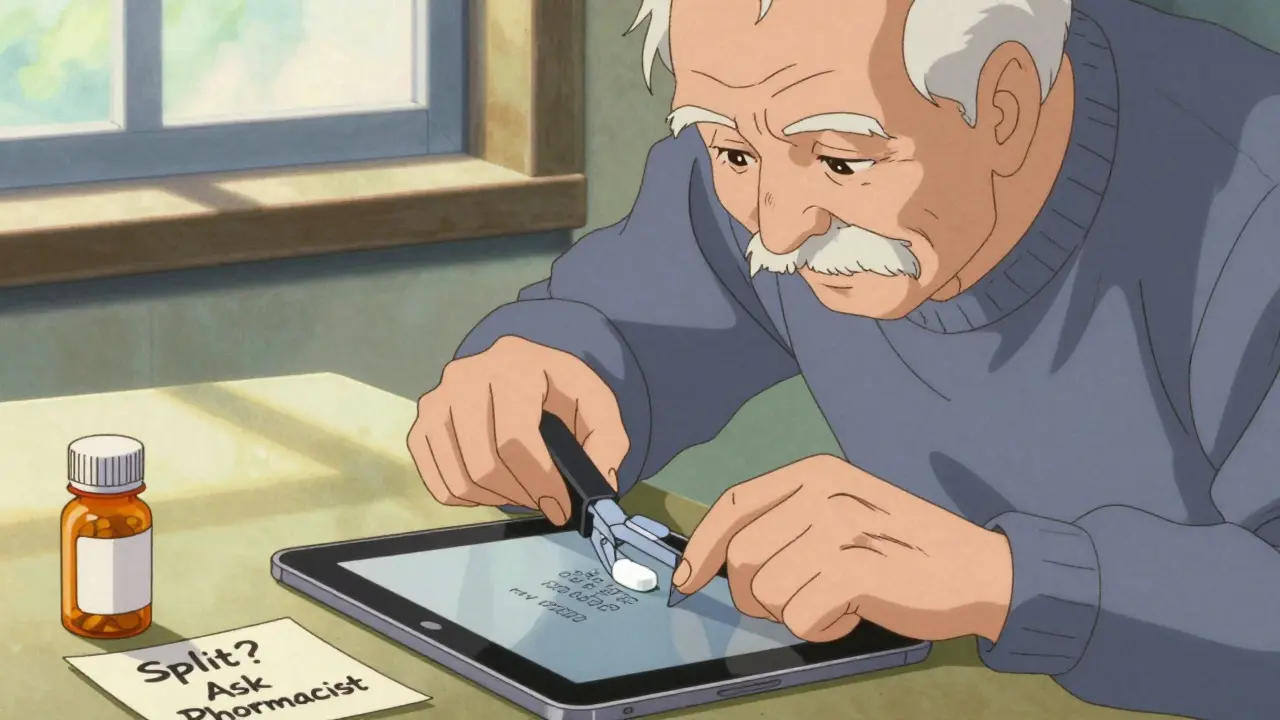
Pill Splitting Safety Checker
Check if your medication is safe to split
Enter a medication name below to see if it's safe to split. Always consult your pharmacist or doctor before splitting any medication.
Splitting pills might seem like a simple way to save money or make swallowing easier-but it’s not always safe. Many people do it without knowing the risks, and the consequences can be serious. A 2023 survey found that 41% of adults over 65 split their pills without talking to a doctor or pharmacist first. That’s a problem. Some pills are designed to release medicine slowly over hours. If you cut them in half, you could get the whole dose all at once. Others crumble, break unevenly, or lose potency when exposed to air. The truth is, pill splitting isn’t a one-size-fits-all trick. It works for some medications-and can be dangerous for others.
Why People Split Pills
Most people split pills for two reasons: cost and swallowing trouble. A 10mg tablet often costs the same as a 5mg tablet. Splitting the higher dose gives you two doses for the price of one. For medications like amlodipine or sertraline, that can save $25-$30 every 90 days. For someone on a fixed income, that adds up fast. According to GoodRx data, the average annual savings from splitting one medication is about $187. Then there’s the swallowing issue. About 14% of adults over 65 have trouble swallowing pills, according to the National Institute on Aging. Splitting a large tablet into smaller pieces can make it easier to take. But neither reason justifies doing it blindly. The key is knowing which pills are safe to split-and which aren’t.Safe to Split: The Right Kind of Pills
Not all pills are created equal. The only pills that should ever be split are immediate-release, scored tablets. That means they have a visible line down the middle (a score line) and release the full dose right after you swallow them. Here are common medications that are generally safe to split:- Citalopram (Celexa)
- Escitalopram (Lexapro)
- Fluvoxamine (Luvox)
- Sertraline (Zoloft)
- Amlodipine (Norvasc)
- Hydrochlorothiazide (HCTZ)
- Atorvastatin (Lipitor)
- Metoprolol (Lopressor)
Never Split: The Dangerous Ones
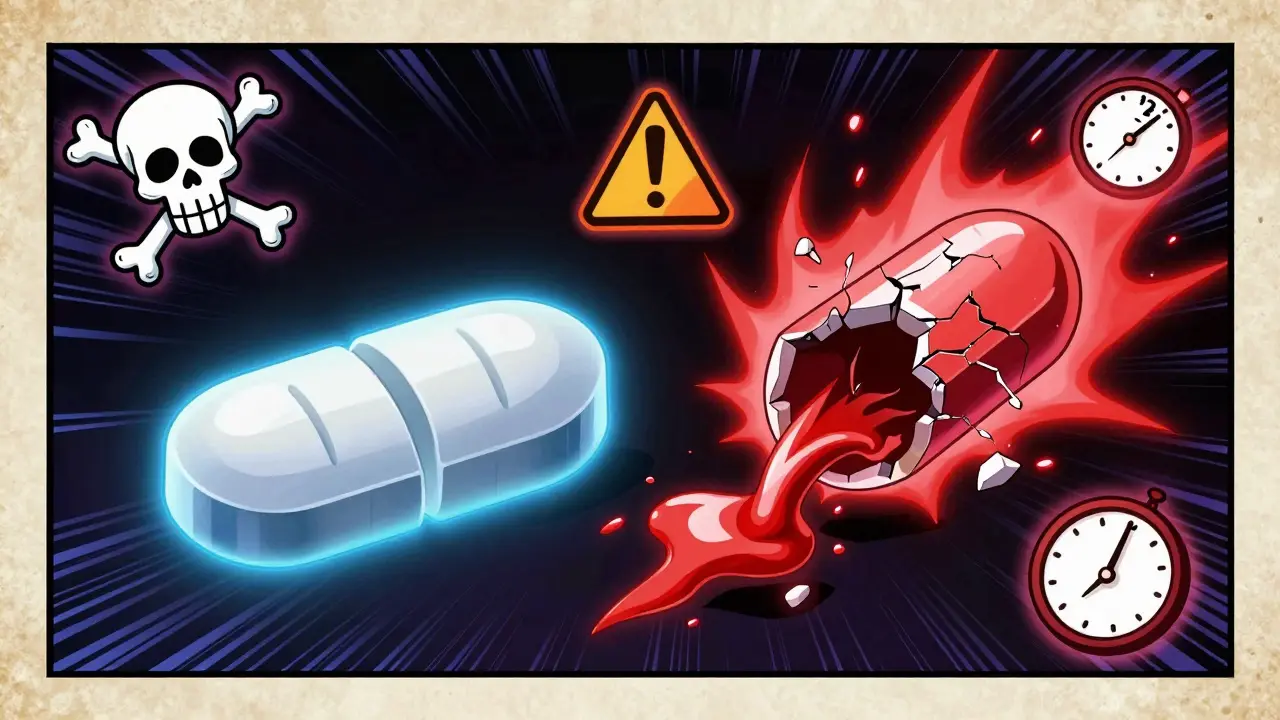
Some pills should never, ever be cut. Splitting them can cause serious harm. Here’s the list of high-risk medications:- Extended-release tablets (like OxyContin, Adderall XR, Metformin XR)
- Enteric-coated pills (like aspirin EC, omeprazole)
- Capsules with powders or gels (like ciprofloxacin or many probiotics)
- Hazardous drugs (like paroxetine, alendronate, chemotherapy pills)
- Sublingual or buccal tablets (like nitroglycerin)
The Right Way to Split Pills
If your doctor or pharmacist says it’s okay to split a pill, do it right. Here’s how:- Use a tablet cutter, not scissors, knives, or your fingers. A $10 plastic cutter from the pharmacy gives you clean, even splits. Studies show it reduces dose variation to 8-15%. Without one, you’re looking at 25-72% variation.
- Split only one pill at a time. Never split your whole month’s supply. Exposure to air and moisture can reduce potency by up to 35% in just 72 hours, according to the Institute for Safe Medication Practices.
- Store split halves in an opaque, airtight container. Keep them away from sunlight and humidity. Replace them every 3 days.
- Wash your hands before and after. Dust from crushed pills can be harmful, especially with certain medications.
- Check the package insert. If it doesn’t say the pill can be split, assume it can’t.
What Happens When You Split Wrong
Improper splitting isn’t just about getting the wrong dose-it’s about risk. The FDA documented 14 cases of serious adverse events between 2015 and 2022 from split extended-release pills. One patient took a split OxyContin tablet and ended up in the ER with respiratory depression. Another split a time-release blood pressure pill and suffered a sudden drop in blood pressure. The Institute for Safe Medication Practices reports that 23% of medication errors in long-term care facilities between 2014 and 2016 involved improper tablet splitting. Many of those were in nursing homes where staff used knives or broke pills with their fingers. On Reddit, users shared stories of dizziness, headaches, and nausea after splitting pills unevenly. One person split their amlodipine and felt faint for hours. Another split a sertraline tablet and noticed mood swings-because one half had more drug than the other.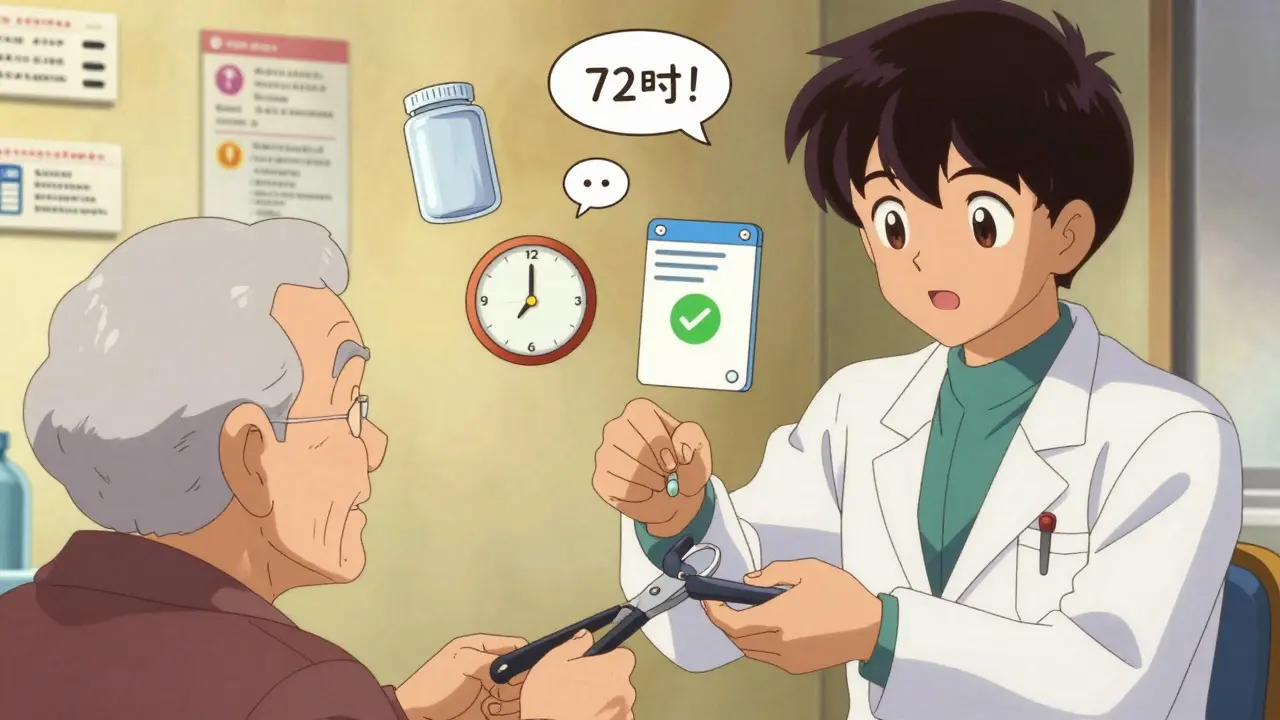
Alternatives to Splitting
If splitting feels risky or too hard, there are better options:- Ask for a lower-dose tablet. Many drugs come in 5mg, 10mg, or 20mg versions. Even if it costs a bit more, you avoid the risk of inaccuracy.
- Use liquid formulations. Some medications, like sertraline or fluoxetine, come in liquid form. It’s easier to measure exact doses and easier to swallow.
- Try oral soluble films. These are thin strips that dissolve on the tongue. No swallowing required. They’re becoming more common for antidepressants and blood pressure meds.
- Use a pill organizer with pre-sorted doses. If you take multiple pills, a pharmacy can pre-package your doses by day and time.
Who Should Avoid Splitting Altogether
Some people shouldn’t split pills, even if the drug is technically safe:- People with arthritis or shaky hands
- Those with vision problems
- Anyone taking drugs with a narrow therapeutic index (like warfarin, digoxin, or lithium)
- Patients with cognitive impairment
What to Do Next
If you’re currently splitting pills:- Check the name of every pill you split. Look up its formulation online or ask your pharmacist.
- Throw away any split pills older than 72 hours.
- Buy a tablet cutter if you don’t have one. They cost less than a coffee.
- Call your pharmacy. Ask: “Is this pill safe to split?”
- Don’t guess. If the label doesn’t say it’s okay, assume it’s not.
Medication safety isn’t about cutting corners. It’s about knowing exactly what you’re taking-and how to take it safely.
Can I split my blood pressure pill in half?
Only if it’s an immediate-release tablet with a score line, like amlodipine or hydrochlorothiazide. Never split extended-release versions like Norvasc XR or Coreg CR. Always check the package insert or ask your pharmacist. Splitting the wrong type can cause dangerously high blood pressure spikes or drops.
Is it safe to split antidepressants like Zoloft?
Yes, sertraline (Zoloft) is one of the most commonly split antidepressants. It’s an immediate-release tablet with a score line and is considered safe when split with a proper tablet cutter. But split only one pill at a time, and store the half in an airtight container. Don’t split your entire month’s supply.
Why do some pills crumble when I try to split them?
Pills crumble when they’re not designed to be split-often because they’re made with a brittle formulation or lack a proper score line. Some extended-release tablets have a hard outer shell that shatters instead of cutting cleanly. If your pill crumbles, don’t force it. That’s a sign it shouldn’t be split.
Can I use scissors to split pills?
No. Scissors, knives, or your fingers create uneven splits and can crush the pill, leading to inconsistent dosing. Studies show using a dedicated tablet cutter reduces dose variation from 25-72% down to 8-15%. A $10 tablet cutter is the safest, most reliable tool.
How long can I store a split pill?
No more than 72 hours. Once a tablet is split, the exposed surface is vulnerable to moisture and air, which can reduce potency by up to 35%. Store split halves in an opaque, airtight container and replace them every three days.
Are there apps that help with pill splitting?
Yes. Major pharmacy chains like Walgreens and CVS now offer pill-splitting apps with visual guides, dosage calculators, and safety checklists. These apps reduce splitting errors by 29%, according to internal data. They’re free to download and can help you confirm whether your medication is safe to split.
What if I accidentally split a pill that shouldn’t be split?
Don’t take it. Call your pharmacist or doctor immediately. If you’ve already taken it and feel dizzy, nauseous, or have an irregular heartbeat, seek medical attention. Extended-release or enteric-coated pills that are split can release their full dose too quickly, leading to overdose symptoms.
Does Medicare cover tablet cutters?
Medicare Part D doesn’t cover tablet cutters, but some Medicare Advantage plans include over-the-counter benefits that may reimburse up to $50 per year for items like pill splitters. Check with your plan. Many pharmacies sell them for under $15, so it’s usually cheaper to buy one outright.
Martin Spedding
December 16, 2025 AT 17:04BETH VON KAUFFMANN
December 18, 2025 AT 00:55CAROL MUTISO
December 19, 2025 AT 06:36Jane Wei
December 20, 2025 AT 05:05Jigar shah
December 21, 2025 AT 18:17Linda Caldwell
December 22, 2025 AT 19:06Philippa Skiadopoulou
December 23, 2025 AT 12:38Victoria Rogers
December 24, 2025 AT 17:20Anna Giakoumakatou
December 26, 2025 AT 14:13Nishant Desae
December 28, 2025 AT 08:27Radhika M
December 30, 2025 AT 02:48Jody Patrick
December 31, 2025 AT 04:00Naomi Lopez
January 1, 2026 AT 14:33Marie Mee
January 1, 2026 AT 22:55Erik J
January 2, 2026 AT 09:26