
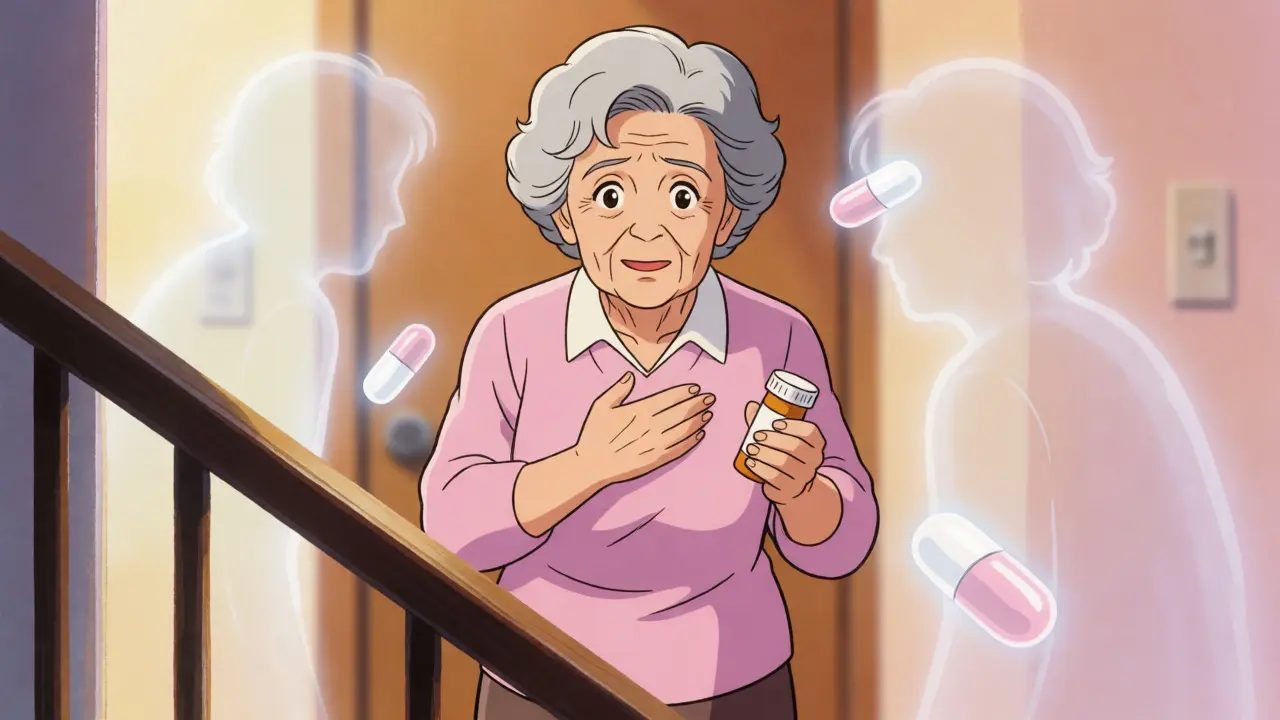
Your grandmother takes a blood pressure pill from her cardiologist, a sleeping aid from her GP, and an over-the-counter painkiller for her arthritis. She feels fine until one Tuesday morning when she nearly faints on the stairs. It wasn’t just bad luck; it was a drug-drug interaction (DDI). For older adults, mixing medications isn’t just about swallowing pills-it’s a complex chemical balancing act where the stakes are incredibly high.
If you’re caring for someone over 65, or if you are one yourself, you’ve likely heard the term "polypharmacy." It sounds academic, but it’s real life for millions. Roughly 40% of older adults take five or more medications daily. The problem? Our bodies don’t process drugs the way they did at 30. Add to that fragmented care-seeing three different doctors who don’t talk to each other-and you have a recipe for preventable harm. This guide breaks down exactly why this happens, how to spot the risks, and what practical steps you can take to keep medication safe.
Why Older Bodies Handle Drugs Differently
You might think a dose is a dose, regardless of age. But biology disagrees. As we age, our physiology shifts in ways that directly impact how drugs work. Think of your body as a factory processing raw materials (medications). In younger years, the machinery runs fast and efficiently. In older adults, several key systems slow down.
First, consider the liver. It’s the primary site for drug metabolism, relying heavily on enzymes like the cytochrome P450 family. These enzymes break down about 75% of clinically used drugs. With age, liver mass decreases and blood flow to the liver drops by up to 40%. This means drugs stay in the system longer, potentially reaching toxic levels even at standard doses. Then there’s the kidneys. Renal clearance-the rate at which kidneys filter waste-declines naturally. If a drug is excreted via urine, slower filtration means accumulation.
Body composition changes too. Older adults typically have less muscle mass and more body fat. Fat-soluble drugs (like certain sedatives) get stored in fat tissue, lingering in the body for days or weeks. Water-soluble drugs (like some antibiotics) have less volume of distribution because total body water decreases, leading to higher concentrations in the blood. These aren’t minor tweaks; they make seniors up to 50% more susceptible to adverse events than younger adults.
The Polypharmacy Trap and Fragmented Care
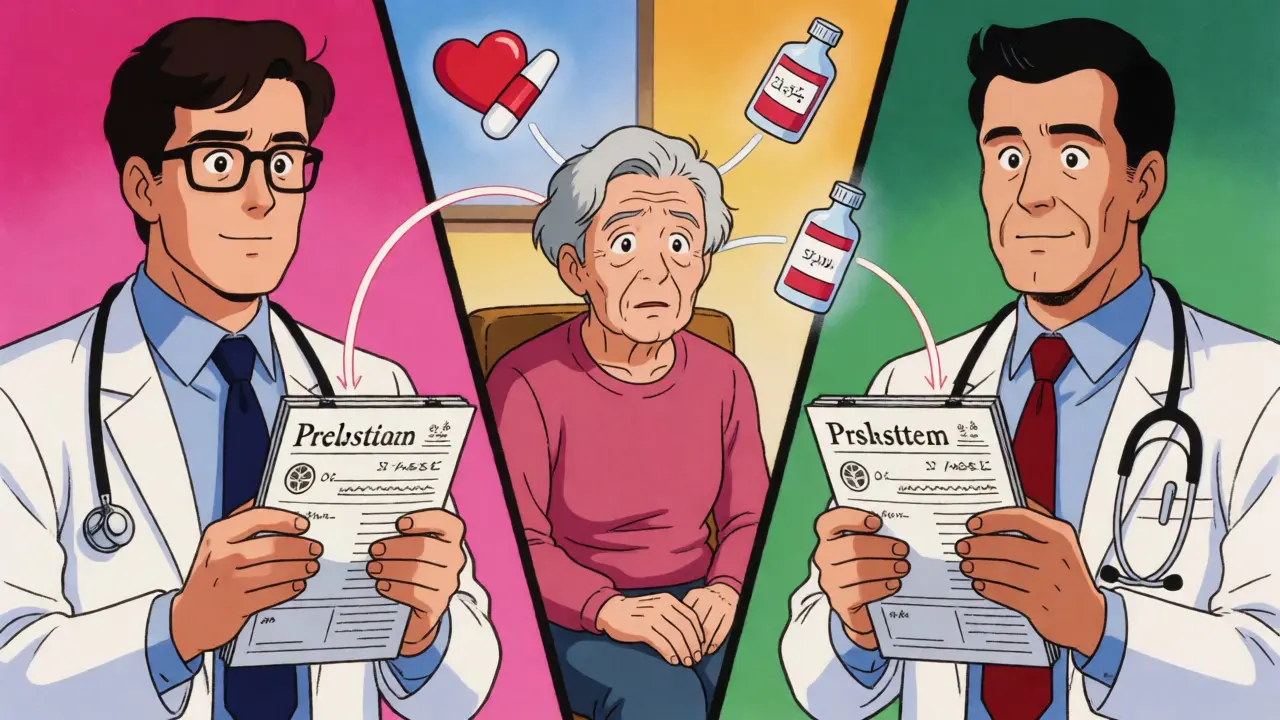
Polypharmacy itself isn’t always bad. If you have diabetes, hypertension, and osteoporosis, you need multiple meds. The danger arises when prescriptions aren’t coordinated. Data shows that more than two-thirds of older adults see multiple specialists. Your cardiologist prescribes a beta-blocker. Your neurologist adds a calcium channel blocker for migraines. Neither doctor knows the other prescribed anything. Both are appropriate individually, but together, they might drop your heart rate dangerously low.
This fragmentation is worsened by pharmacy hopping. One-third of seniors use multiple pharmacies. Without a central record, no single pharmacist sees the full picture. Compounding this, many patients don’t disclose over-the-counter (OTC) drugs or herbal supplements. A 2023 survey noted that 68% of older adults fail to mention these to their doctors. St. John’s Wort, a common herbal remedy for mood, interacts with over 50 prescription drugs, including warfarin and birth control. Ignoring it can render life-saving treatments ineffective or dangerous.
Spotting High-Risk Combinations
Not all interactions are equal. Some cause mild nausea; others lead to hospitalization. Research highlights specific classes of drugs that frequently clash in the elderly. Cardiovascular drugs account for nearly 39% of serious interactions, while central nervous system (CNS) drugs contribute another 29%. Why? Because both systems are sensitive to dosage changes, and older brains are particularly vulnerable to CNS depressants.
Let’s look at a concrete example. Many seniors take aspirin for heart protection and ibuprofen for joint pain. Ibuprofen can interfere with aspirin’s antiplatelet effect, reducing its ability to prevent clots. Worse, combining NSAIDs (like ibuprofen) with ACE inhibitors (blood pressure meds) and diuretics creates a "triple whammy" that significantly increases the risk of acute kidney injury. This combination is surprisingly common and often overlooked.
| Drug Class | Common Examples | Primary Risk in Seniors |
|---|---|---|
| Benzodiazepines | Diazepam, Lorazepam | Falls, confusion, respiratory depression |
| Anticholinergics | Oxybutynin, Diphenhydramine | Cognitive decline, dry mouth, constipation |
| NSAIDs | Ibuprofen, Naproxen | Kidney damage, gastrointestinal bleeding |
| Opioids | Hydrocodone, Oxycodone | Constipation, sedation, fall risk |
Using Proven Screening Tools
Doctors can’t memorize every possible interaction. That’s why clinical tools exist. Two stand out for geriatric care: the Beers Criteria and STOPP.
The Beers Criteria, maintained by the American Geriatrics Society, lists medications that should generally be avoided in adults aged 65+. The 2023 update includes 30 medication classes to avoid and specifies dose adjustments based on renal function. Studies show that applying these criteria reduces hospitalizations by roughly 17%. It’s not a ban list; it’s a caution flag. If a doctor prescribes a Beers-listed drug, ask: "Is there a safer alternative? Is the benefit worth the risk?"
STOPP (Screening Tool of Older Persons’ Potentially Inappropriate Prescriptions) is another powerful tool. It identifies 114 potentially inappropriate medications across 22 body systems. Unlike Beers, STOPP focuses heavily on drug-disease interactions. For instance, prescribing a non-selective beta-blocker to someone with asthma is flagged because it can trigger bronchospasm. Implementing STOPP during hospital discharge has been shown to reduce readmissions by 22%.
For a simpler, patient-friendly approach, try the NO TEARS framework. It helps structure conversations about medication reduction:
- Need: Do I actually need this drug?
- Optimization: Is this the right dose for my age/kidneys?
- Trade-offs: Are the side effects outweighing the benefits?
- Economics: Can I afford this long-term?
- Administration: Am I taking it correctly (with food, at night)?
- Reduction: Can any drugs be stopped or tapered?
- Self-management: Do I understand why I’m taking this?
Practical Steps to Prevent Interactions
Knowledge is power, but action prevents harm. Here is a checklist to integrate into your routine healthcare visits.
Consolidate your records. Keep a current list of every single thing you swallow. Include prescriptions, OTC meds, vitamins, and herbs. Note the dosage and frequency. Bring this list to every appointment, even if you’re seeing a specialist for a new issue. Don’t assume they have your history.
Use one pharmacy. If possible, fill all prescriptions at the same location. Pharmacists are trained to spot interactions. They run automated checks against databases that include thousands of potential conflicts. If you must use multiple pharmacies, ask them to share records electronically or provide printouts to each provider.
Ask the "One New Thing" question. Whenever a doctor prescribes a new medication, ask: "What should I stop, if anything?" Never start two new drugs simultaneously if you can help it. If you feel unwell after starting a med, it’s easier to pinpoint the culprit if only one variable changed.
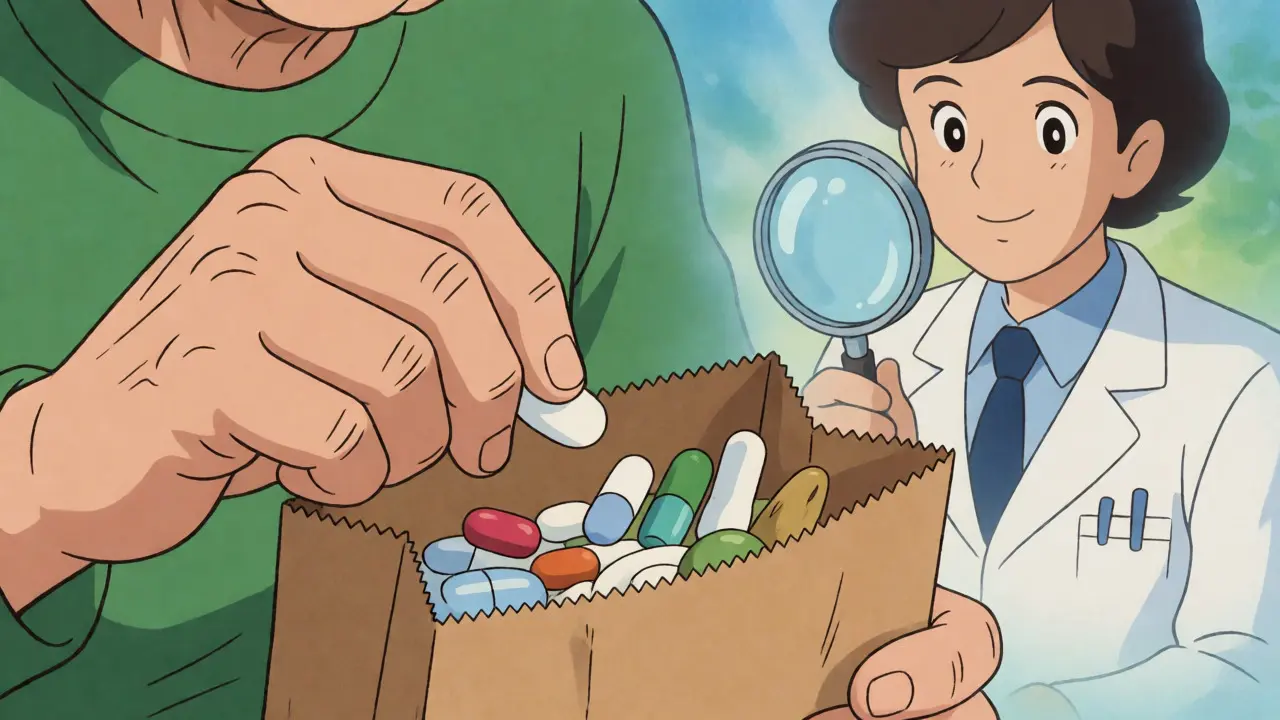
Review regularly. Set a calendar reminder for an annual "brown bag review." Put all your meds in a bag and bring them to your primary care provider. Ask them to go through each one. Is it still needed? Has your condition improved enough to lower the dose? Many seniors continue taking medications for conditions that have resolved, simply because no one told them to stop.
The Role of Technology and Future Trends
Healthcare is catching up. Artificial Intelligence (AI) is increasingly used in clinical decision support systems. By 2023, nearly half of U.S. hospitals had adopted AI-powered tools to flag interactions in real-time. These systems analyze patient data faster than humans, spotting subtle patterns that might indicate risk.
However, technology isn’t a silver bullet. Clinical trials historically excluded older adults, meaning much of our drug data comes from younger, healthier populations. The FDA is now pushing for better geriatric pharmacokinetic data, requiring studies to include patients aged 65-75 and 75+. While progress is slow, the trend is toward more personalized dosing guidelines rather than one-size-fits-all recommendations.
Ultimately, preventing drug-drug interactions requires vigilance from everyone involved: the patient, the caregiver, the doctor, and the pharmacist. It’s a collaborative effort. By understanding the physiological changes of aging, using established screening tools, and maintaining open communication, you can significantly reduce the risk of adverse events. Medications save lives, but only when they are managed with care and precision.
What is polypharmacy?
Polypharmacy is typically defined as the concurrent use of five or more medications. In elderly patients, it is common due to multiple chronic conditions. While sometimes necessary, it significantly increases the risk of drug-drug interactions, side effects, and falls.
Are herbal supplements safe for older adults?
Not necessarily. Herbal supplements are not regulated as strictly as prescription drugs and can interact with many medications. For example, St. John's Wort can reduce the effectiveness of antidepressants and blood thinners. Always inform your doctor about any supplements you take.
How often should I review my medications?
A comprehensive medication review should occur at least once a year. However, reviews should also happen whenever a new medication is started, a condition changes, or you experience new symptoms. Regular reviews help identify unnecessary drugs or potential interactions early.
What are the Beers Criteria?
The Beers Criteria is a guideline published by the American Geriatrics Society. It lists medications that may be inappropriate for older adults due to increased sensitivity or risk of adverse events. It serves as a reference for doctors to prescribe safer alternatives when possible.
Can diet affect drug interactions?
Yes. Certain foods can alter how drugs are absorbed or metabolized. Grapefruit juice, for instance, can increase levels of statins and some blood pressure medications. Leafy greens can affect blood thinners like warfarin. Always check if your medication has dietary restrictions.
Jeremy Westcott
September 6, 2026 AT 08:02It’s not just about the pills, it’s about who is pulling the strings behind the scenes. The fragmented care system isn't an accident; it's a feature designed to keep us dependent and confused so they can bill us twice for the same problem.
They hide the real data because if you knew how much your liver mass drops by age 70, you’d realize standard dosing is basically poison for half of us.
Kim Pender
September 8, 2026 AT 05:37Most doctors are too rushed to explain this stuff properly.
Jenn Bell
September 9, 2026 AT 02:07This is such a helpful reminder! I used to be terrified of mixing meds, but knowing that simple steps like keeping one pharmacy or using the NO TEARS framework makes it feel so manageable. We really have the power to protect our loved ones if we just stay organized and ask those specific questions during visits. It’s all about small, consistent habits rather than big medical overhauls.
I’ve started keeping a dedicated notebook for my mom’s meds, and honestly, it has reduced my anxiety so much. Seeing everything in one place helps me spot when something doesn’t match up before we even leave the appointment. It’s empowering to know that being proactive like this actually reduces hospitalizations significantly.
We don’t have to accept confusion as the norm for aging parents. By taking ownership of these records, we become active partners in their care instead of passive observers. This guide gives us the confidence to advocate effectively without feeling rude or pushy. Every little check-in counts towards keeping them safe and healthy at home.
Thank you for breaking down the science into plain English. It’s easy to get overwhelmed by terms like polypharmacy, but seeing the practical application changes everything. Let’s keep supporting each other through these challenges with positivity and clear communication. We are capable of navigating this complex healthcare landscape together.
It’s amazing what a difference a simple list makes. I wish more people knew about these tools earlier in their caregiving journey. Sharing this kind of information helps build a community where no one feels alone in managing chronic conditions. Together, we can ensure our elders live safer, happier lives.
The focus on patient empowerment here is exactly what we need right now. Instead of blaming individuals for not remembering details, we provide them with systems that work. That shift in perspective is crucial for improving overall health outcomes for seniors everywhere. We should celebrate every success story of avoiding a bad interaction. It proves that prevention is truly better than cure. Keep spreading the word!
Amanda SF
September 9, 2026 AT 06:08Frankly, this article is a masterclass in stating the obvious while ignoring the systemic rot at the core of American medicine. You speak of 'fragmented care' as though it were a weather pattern rather than a deliberate corporate strategy to maximize billing codes. The Beers Criteria are merely band-aids on a gunshot wound caused by insurance companies dictating treatment protocols.
It is utterly absurd to suggest that a patient, often cognitively impaired or simply exhausted, should bear the burden of coordinating between three specialists who refuse to communicate. The laziness of modern healthcare administration forces the victim to become the manager. One must wonder why pharmacists, who are arguably the most knowledgeable regarding interactions, are treated as mere dispensers rather than clinical gatekeepers.
The tone here is patronizingly optimistic, assuming that 'asking questions' will yield results when physicians are pressured to see patients in seven-minute intervals. True reform would require mandatory electronic health record interoperability across all providers, yet we are told to use paper bags and hope for the best. It is a testament to the failure of our institutions that basic safety relies on individual vigilance rather than structural integrity.
We do not need another guide; we need accountability. Until the profit motive ceases to override patient safety, these tips remain platitudes for the privileged who have time to manage their own care. The elderly deserve better than being left to navigate a labyrinth of incompetence with nothing but a pamphlet. It is tragic, really, how little respect is shown to those who built this country. They are discarded when they become inconvenient to the bottom line. This is not a solution; it is a distraction from the truth.
Neil Martin
September 10, 2026 AT 23:00You’re missing the critical pathophysiological nuance here. While polypharmacy is the symptom, the root cause is often inappropriate prescribing practices driven by lack of geriatric pharmacokinetic understanding. Clinicians frequently fail to adjust for decreased renal clearance and altered volume of distribution, leading to supratherapeutic levels.
The mention of CYP450 metabolism is accurate, but underemphasizes the impact of first-pass effect reduction in hepatic insufficiency. Without rigorous medication reconciliation utilizing tools like STOPP/START criteria, adverse drug events remain inevitable. It is not merely about 'communication'; it is about evidence-based deprescribing protocols enforced at the point of care. If providers do not adhere to these guidelines, the risk-benefit ratio tilts dangerously toward harm.
Neil Sahli
September 12, 2026 AT 20:24Love the energy! 🚀 But seriously, stop treating older adults like broken machines. They are resilient warriors who deserve dignity, not just dosage adjustments. Let’s hype up the pharmacists-they are the unsung heroes saving lives every day!
And yeah, maybe the system is messy, but look at the wins! Fewer falls, clearer minds, more independence. That’s progress worth celebrating. Let’s keep pushing for better tech and better training. We got this! 💪
Pramay Dattani
September 13, 2026 AT 07:02In India we handle this way better. Our ayurvedic traditions understood body balance long before western pharma started messing with enzymes. You guys rely too much on chemicals and ignore holistic approaches. That is why you have so many side effects. We integrate diet and lifestyle naturally. No need for complicated lists when you listen to your body. Western medicine is too aggressive and ignores the whole person. It treats symptoms not causes. That is why elderly suffer so much there. We respect nature and her rhythms. Your approach is too mechanical and cold. Fix your system first before blaming biology. We have known this for thousands of years. Stop making it so complicated for everyone else. Simple living means fewer drugs. That is the truth nobody wants to hear.
Falgun R Patel
September 13, 2026 AT 21:56I appreciate the passion, Pramay, but let us consider the context. Traditional systems offer valuable insights into lifestyle and prevention, which aligns well with the 'NO TEARS' framework mentioned. However, acute conditions and severe chronic diseases often require precise pharmacological intervention that herbal remedies alone may not provide consistently.
The key lies in integration, not rejection. Understanding both perspectives allows for a more holistic approach to care. We should value the wisdom of tradition while leveraging the precision of modern science. Balance is indeed the goal, whether through Ayurveda or geriatric pharmacology. Let us support each other in finding what works best for each individual, respecting diverse cultural approaches to health. Peace and wellness to all.
Mary Tait
September 13, 2026 AT 22:14While cultural pride is admirable, dismissing Western medical advancements based on anecdotal tradition ignores the statistical reality of increased life expectancy in developed nations. The physiological changes described are universal, regardless of nationality. Ignoring evidence-based guidelines like the Beers Criteria due to nationalistic bias puts patients at unnecessary risk. We must prioritize scientific rigor over romanticized notions of traditional healing when dealing with complex drug interactions. Safety standards are non-negotiable.
Rebecca Makayla Crane
September 15, 2026 AT 16:02Ugh, the sheer audacity of expecting regular folks to understand cytochrome P450 pathways! 😒 Like, hello? We are busy trying to survive rent and groceries. Why does healthcare always put the burden on the patient? It’s exhausting. ✨ But okay, fine, the brown bag tip is cute. At least it’s cheap. 🛍️ Still, shouldn’t the doctor remember who I am? Just saying. 🙄
Aurelio Haney
September 16, 2026 AT 20:20Don’t be so hard on yourself! 😊 Remember, knowledge is power. Using that brown bag method is actually super smart and saves money too. You’re doing great just by caring enough to ask these questions. Keep it up! 👍