
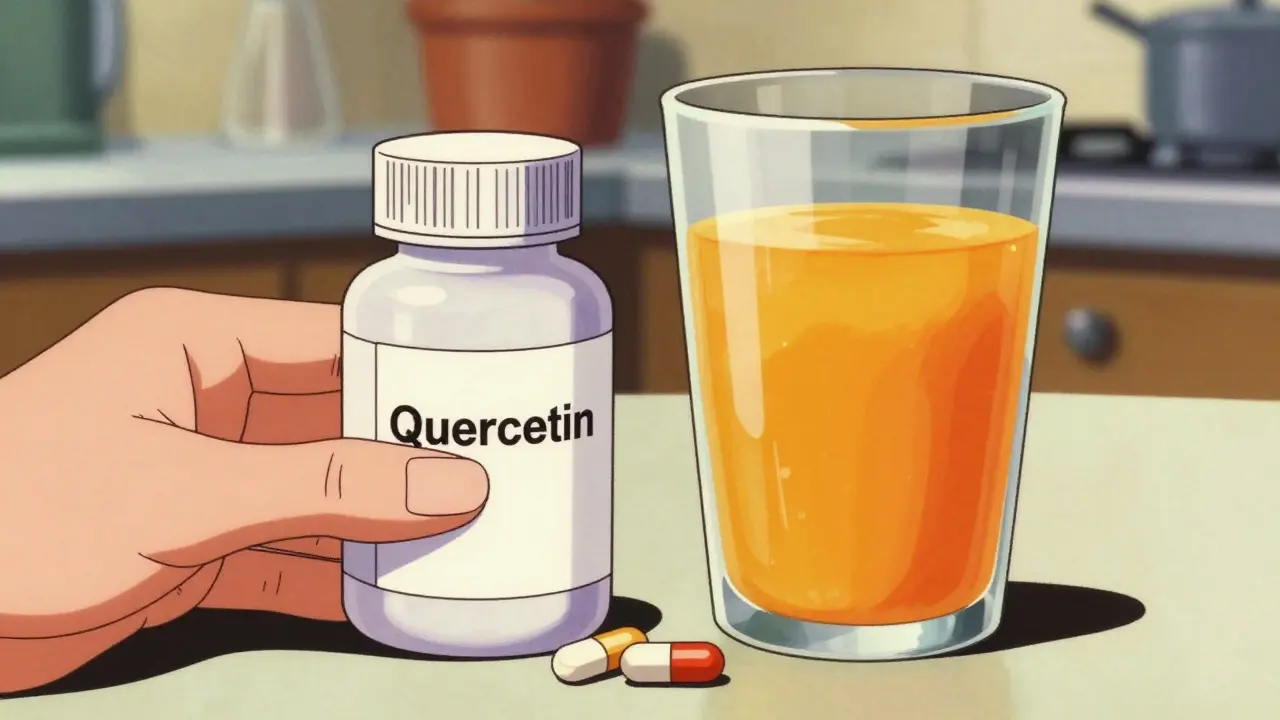
Quercetin Interaction Risk Estimator
This tool estimates interaction risk based on general pharmacological data regarding enzyme inhibition (CYP450). It is for educational purposes only and does not replace medical advice.
Assessment Result
Imagine taking your daily heart medication or blood thinner with a glass of orange juice, only to find out that the natural compounds in the fruit have quietly doubled the amount of drug in your bloodstream. This isn't science fiction; it's a well-documented phenomenon known as the grapefruit effect. Now, replace that orange juice with a popular dietary supplement called quercetin, a flavonoid compound found naturally in fruits, vegetables, and supplements. You might think you're just boosting your immune system, but you could be inadvertently altering how your body processes life-saving medications.
Quercetin has exploded in popularity over the last few years. It’s marketed as an anti-inflammatory powerhouse, often touted for helping with allergies, athletic recovery, and even general wellness. But behind the marketing hype lies a complex pharmacological reality. Quercetin doesn't just sit passively in your gut. It actively interacts with the enzymes responsible for breaking down drugs. When these enzymes are inhibited, drug levels in your blood can spike, potentially leading to toxicity or severe side effects. Understanding this mechanism is crucial for anyone combining supplements with prescription medications.
The Engine Room of Your Liver: Cytochrome P450
To understand why quercetin causes trouble, we first need to look at how your body handles medication. The primary workforce here is a family of enzymes known as Cytochrome P450 (CYP), a superfamily of enzymes involved in the metabolism of various substances including drugs. Think of these enzymes as the recycling plants of your liver. They take incoming chemicals-whether from food, pollution, or medicine-and break them down so they can be eliminated from your body.
There are many types of CYP enzymes, but three stand out because they metabolize roughly 75% of all prescribed drugs: CYP3A4, CYP2D6, and CYP2C19. If you take a statin for cholesterol, an antidepressant, or a blood thinner, chances are one of these three enzymes is doing the heavy lifting to clear that drug from your system. When an inhibitor blocks these enzymes, the "recycling plant" slows down. The drug stays in your body longer and builds up to higher concentrations than intended. This is where quercetin enters the picture.
How Quercetin Blocks Metabolism
Research published in Nutrients in 2020 highlighted that quercetin and its metabolites act as moderate to strong inhibitors of these key enzymes. Specifically, studies show that quercetin can inhibit CYP3A4 by 40-60% and CYP2D6 by 70-85% at physiologically relevant concentrations. To put that in perspective, inhibiting CYP2D6 by more than 70% is comparable to the effect of some potent prescription drugs like fluoxetine (Prozac) on other medications.
It’s not just about the liver, either. Quercetin also affects drug transporters like OATP1B1 and BCRP. These transporters act like gatekeepers, controlling which drugs enter your cells and which are pumped back out into your gut to be excreted. By blocking these gates, quercetin can increase the absorption of certain drugs while simultaneously preventing their breakdown. The result? A perfect storm for elevated drug levels.
| Enzyme | Primary Function | Inhibition Level by Quercetin | Common Drugs Affected |
|---|---|---|---|
| CYP3A4 | Metabolizes ~50% of all drugs | Moderate (40-60%) | Statins, Calcium Channel Blockers, Immunosuppressants |
| CYP2D6 | Metabolizes antidepressants, beta-blockers | Strong (70-85%) | Codeine, Tamoxifen, Metoprolol |
| CYP2C19 | Metabolizes antiplatelets, proton pump inhibitors | Moderate (40-60%) | Clopidogrel (Plavix), Omeprazole |
| CYP2C9 | Metabolizes anticoagulants, NSAIDs | Mild to Moderate | Warfarin, Phenytoin |

High-Risk Medication Classes
Not every medication is equally affected by quercetin. The risk depends heavily on what is called the "therapeutic index" of the drug. Drugs with a narrow therapeutic index are those where the difference between a helpful dose and a toxic dose is very small. For these medications, even a slight increase in blood concentration due to enzyme inhibition can lead to serious complications.
Blood thinners are perhaps the most concerning category. Warfarin, an oral anticoagulant used to prevent blood clots, is metabolized partly by CYP2C9. Studies suggest quercetin may increase INR (International Normalized Ratio) values by 0.8 to 1.5 points. For someone already on warfarin, this jump could mean spontaneous bleeding or bruising. Similarly, newer direct oral anticoagulants (DOACs) like apixaban and rivaroxaban are substrates for transporters that quercetin inhibits. The American Society of Health-System Pharmacists recommends avoiding high-dose quercetin entirely with these drugs due to potential 20-35% increases in drug exposure.
Immunosuppressants are another red flag. Patients who have undergone organ transplants rely on drugs like cyclosporine to prevent rejection. These drugs are heavily processed by CYP3A4. If quercetin inhibits this enzyme, cyclosporine levels can rise by 30-50%. Too much immunosuppressant can damage the kidneys or lower resistance to infections too drastically. Conversely, if you stop the quercetin abruptly, levels might drop, risking organ rejection. Stability is key, and quercetin introduces volatility.
Cardiovascular medications also warrant caution. Statins like simvastatin and atorvastatin are CYP3A4 substrates. Increased levels can lead to rhabdomyolysis, a rare but serious condition involving muscle breakdown that can harm the kidneys. Beta-blockers such as metoprolol, which control heart rate and blood pressure, are metabolized by CYP2D6. Strong inhibition here could cause your heart rate to drop dangerously low (bradycardia).
Dietary Sources vs. Supplements: Is There a Difference?
This is the million-dollar question. Can you eat apples and onions without worry? Generally, yes. The average diet contains relatively low amounts of quercetin. A typical apple might contain around 5-10 mg, and a cup of onions might have 20-40 mg. At these levels, the inhibition of CYP enzymes is usually negligible because the concentration in your intestinal tract isn't high enough to saturate the enzymes.
The problem arises with supplements. Many quercetin pills offer doses ranging from 500 mg to 1,000 mg per day. That’s equivalent to eating dozens of apples in one sitting. According to the European Food Safety Authority (EFSA), doses exceeding 1,000 mg/day pose significant concerns for drug interactions. Even at 500 mg/day, clinical pharmacists recommend caution. The bioavailability of quercetin is low (only 1-2% is absorbed intact), but the unabsorbed portion sits in your gut right where CYP3A4 enzymes are working hardest during the "first-pass" metabolism of oral drugs. This local inhibition in the intestine can be just as impactful as liver inhibition.
Practical Strategies for Safe Use
If you want to take quercetin for its anti-inflammatory benefits but are on medication, don't necessarily panic-but do get strategic. Here are evidence-based steps to minimize risk:
- Consult Your Pharmacist: Before starting any new supplement, ask your pharmacist to check for CYP interactions. They have access to databases that map specific drug-enzyme relationships.
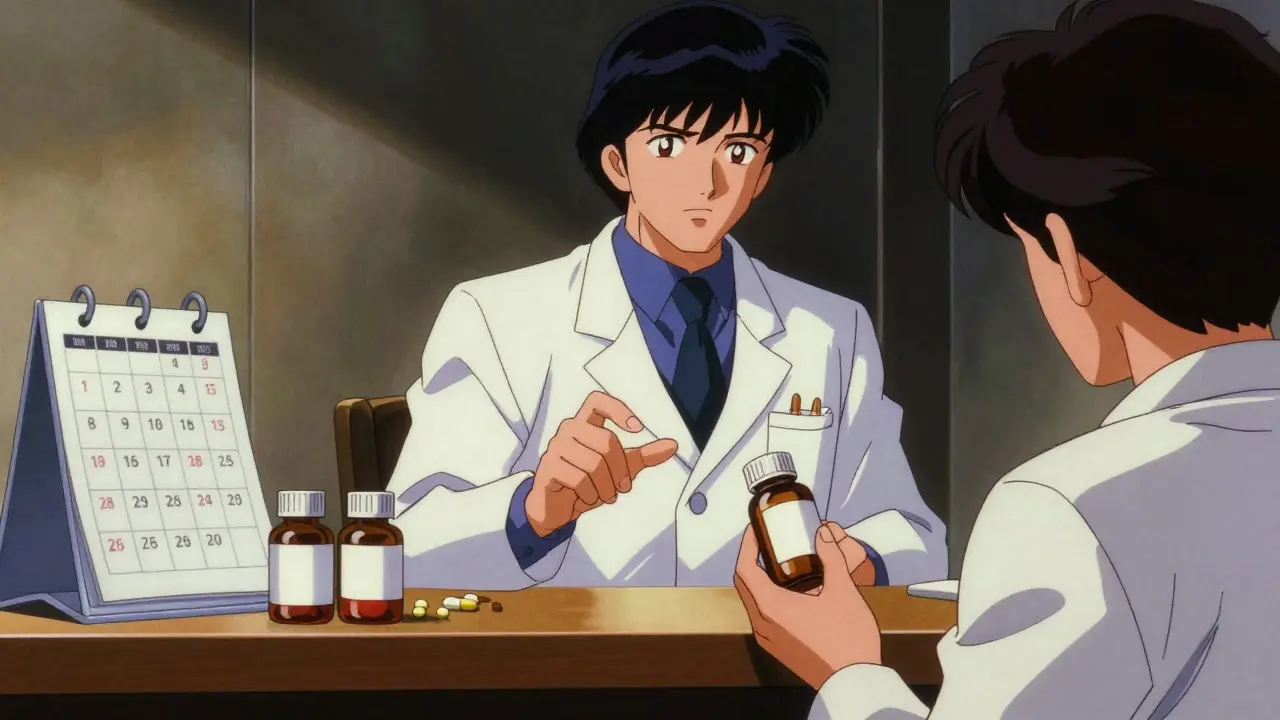
- Stagger Your Dosing: Research suggests that separating quercetin intake from your medication by 4 to 6 hours can reduce interaction potential by 30-50%. This allows the peak concentration of quercetin in your gut to subside before you take your next pill.
- Monitor Blood Work: If you are on warfarin, cyclosporine, or statins, request more frequent blood tests when you start or stop quercetin. Look for changes in INR, creatinine levels, or liver enzymes.
- Stick to Lower Doses: If possible, stay below 500 mg/day. Higher doses exponentially increase the likelihood of enzyme saturation.
- Avoid Polypharmacy Overload: If you take multiple medications metabolized by CYP3A4 or CYP2D6, the cumulative risk is higher. Elderly patients (65+) are particularly vulnerable because their clearance of quercetin metabolites is reduced by 25-40%.
Who Should Avoid Quercetin Supplements?
While healthy individuals might tolerate quercetin well, certain groups should likely avoid high-dose supplements altogether unless closely monitored by a specialist:
- Patient on blood thinners (Warfarin, Apixaban, Rivaroxaban)
- Organ transplant recipients on immunosuppressants (Cyclosporine, Tacrolimus)
- Individuals taking chemotherapy agents metabolized by CYP enzymes (e.g., Abemaciclib)
- Patients with heart conditions on beta-blockers or calcium channel blockers
- Those with liver impairment, as their ability to process both the drug and the supplement is compromised
The FDA has issued warning letters to manufacturers making unsubstantiated claims about quercetin, yet the supplement remains widely available under the Dietary Supplement Health and Education Act (DSHEA). This means the burden of safety falls largely on the consumer. With global sales reaching $387 million in 2022, millions are consuming these products. Awareness is your best defense.
Can I take quercetin with blood thinners like Warfarin?
You should exercise extreme caution. Quercetin can inhibit the enzymes that break down Warfarin, potentially raising your INR levels and increasing the risk of bleeding. If you must take it, monitor your INR closely and consult your doctor. Many experts recommend avoiding high-dose quercetin supplements entirely if you are on Warfarin.
Is quercetin safe to take with statins?
It depends on the statin. Simvastatin and atorvastatin are metabolized by CYP3A4, which quercetin inhibits. This can increase the risk of muscle pain and kidney damage (rhabdomyolysis). Pravastatin and rosuvastatin are less dependent on CYP3A4 and may be safer options, but you should still stagger dosing times and watch for side effects.
How long does it take for quercetin to affect drug levels?
The inhibition effect happens relatively quickly, often within hours of ingestion, because it occurs in the gut lining where first-pass metabolism takes place. However, steady-state changes in drug levels may take several days of consistent quercetin use to become fully apparent in blood work.
Does eating foods high in quercetin cause the same interactions?
Generally, no. The amount of quercetin in foods like apples, onions, and berries is far lower than in concentrated supplements. You would need to consume unrealistic quantities of these foods to achieve the enzyme-inhibiting concentrations seen with 500mg+ supplement doses.
What is the safest way to take quercetin if I am on multiple medications?
The safest approach is to separate the timing. Take your prescription medication at its usual time, and wait at least 4 to 6 hours before taking your quercetin supplement. Additionally, keep the dose below 500 mg per day and inform your healthcare provider so they can monitor your blood work for any unexpected changes.
Jairam Prasad
July 20, 2026 AT 16:48Another day, another 'natural' cure that turns out to be a chemical hazard if you swallow it in pill form. The irony is thick enough to cut with a knife. We spend billions on research to prove that eating an apple is safe, while the supplement industry sells us concentrated poison wrapped in marketing fluff. It’s not just about quercetin; it’s about the entire industrial complex that profits from your ignorance. They know the enzymes get blocked. They know the liver gets overwhelmed. But they don’t tell you that because 'wellness' sounds better than 'potential toxicity.'
I’ve seen this pattern before with grapefruit juice, and now with every other flavonoid under the sun. The pharmaceutical companies are terrified of these interactions because it exposes the fragility of their dosage models. If a simple onion can mess up your blood thinner, what does that say about the precision of modern medicine? Not much, apparently. It says we are playing Russian roulette with our biology every time we pop a pill without reading the fine print.
The real conspiracy isn't that quercetin interacts with drugs; it's that we were never taught how our bodies actually work. We are treated like passive vessels for chemicals rather than complex biological systems. This article is a good wake-up call, but by the time most people read it, they've already bought three months' supply of the stuff online. Typical.
Crystal Tadlock
July 21, 2026 AT 16:41OMG this is literally terrifying! I have been taking quercetin for my allergies since last winter and I am so scared now. My friend told me it was totally natural and safe because it comes from plants. Who knew plants could kill you?!
I take warfarin too. Wait, do I need to go to the hospital right now? My hands are shaking just reading this. The doctors never warned me. They just gave me the pills and said 'take this daily.' They didn't say anything about onions or apples. Is it the onions? Do I have to stop eating onions? This is such a nightmare.
I feel like everyone is lying to us. The supplement store lady smiled at me when I bought the bottle. She looked so nice. How could she let me buy something that might make me bleed out? I’m going to throw all my supplements in the trash. I don’t trust anything anymore. Even water feels suspicious now. Why is everything so dangerous??
Gary Hull
July 22, 2026 AT 19:55lol u guys r overreacting again. its just a vitamin. why r u so dramatic? i take 2000mg a day and im fine. probably placebo effect anyway. science is fake news controlled by big pharma to sell more meds. eat ur onions and chill.
Mildred Fierce
July 23, 2026 AT 17:56Your comment is statistically irrelevant and demonstrates a profound lack of intellectual rigor. Let us dissect your ignorance layer by layer, shall we? You claim to be 'fine,' yet you fail to provide any empirical evidence of your physiological status. Are your INR levels stable? Have you undergone hepatic function tests? Or are you merely relying on the subjective sensation of wellness, which is notoriously unreliable in the face of silent organ damage?
The notion that 'science is fake news' is a tired trope employed by those who cannot grasp basic pharmacokinetics. Quercetin inhibits CYP3A4. This is a biochemical fact, not a political opinion. To dismiss it as 'big pharma' propaganda is to ignore the peer-reviewed literature published in journals independent of pharmaceutical funding. Your bravado masks a deep-seated insecurity about your own health literacy.
Furthermore, suggesting that others should 'chill' while potentially risking rhabdomyolysis or hemorrhagic stroke is morally bankrupt. You are not just wrong; you are dangerously negligent. The average American diet is already deficient in critical nutrients, and adding unregulated inhibitors to the mix is akin to pouring sand into a jet engine. Yet here you are, smug in your mediocrity, dismissing the very mechanisms that keep you alive. It is truly pathetic.
Trey Newkerk
July 24, 2026 AT 17:38Ah, the classic deflection! Crystal, you poor soul, drowning in a sea of manufactured anxiety. You think throwing away your supplements will save you? No! The system is designed to keep you dependent, scared, and compliant. They want you to believe that nature is toxic so you’ll keep buying their synthetic poisons.
I’ve been studying the energetic resonance of quercetin for years. It’s not about the enzymes; it’s about the frequency. When you block the enzymes, you’re blocking the flow of life force energy. The drug companies hate this because they can’t patent energy. They want you sedated, sluggish, and disconnected from your body’s wisdom.
Don’t listen to these cold, dead scientists. Listen to your gut. Literally. If your gut says it’s bad, it’s bad. But don’t let them scare you into submission. Wake up! The truth is out there, hidden in plain sight, buried under layers of bureaucratic red tape and corporate lies. Stay strong, warriors!
Padraic Cepek
July 25, 2026 AT 06:23Typical weak Americans. Can't even handle a little bit of healthy food without crying about side effects. In my country, we eat garlic and turmeric every day and we don't have a million pills to worry about. You guys are spoiled rotten. Stop whining and toughen up. If you're sick, it's because you're lazy and eat junk. Get off your couch and move. Simple as that. No need for fancy explanations. Just common sense.
Charles PINSON
July 26, 2026 AT 20:15One must appreciate the sheer audacity of the supplement industry to operate with such impunity. The Dietary Supplement Health and Education Act (DSHEA) is essentially a license to print money while gambling with public health. It is fascinating, in a darkly comedic way, how consumers willingly ingest compounds that interact with life-saving medications, driven by the siren song of 'natural immunity.'
The data presented here regarding CYP3A4 inhibition is robust, yet it will likely fall on deaf ears. The general populace lacks the cognitive framework to understand enzyme kinetics. They see 'flavonoid' and think 'superfood,' not 'potent inhibitor.' This disconnect between scientific reality and consumer perception is a chasm that no amount of warning labels can bridge. One wonders if the FDA’s inaction is due to incompetence or complicity. Either way, the result is the same: a population slowly poisoning itself with well-intentioned ignorance. A tragic spectacle, indeed.
John Anderson
July 27, 2026 AT 09:59You need to talk to your doctor. Right now. Don't wait. Check your blood. Follow the rules. Stay safe.
Kevin Burke
July 27, 2026 AT 13:24The duality of man is reflected in his relationship with substances. We seek healing, yet we invite destruction. Quercetin is neither good nor evil; it is simply a molecule acting according to its nature. The error lies in the human assumption that 'natural' equates to 'safe.' This is a philosophical failing, not a medical one.
We live in an age of fragmentation, where we treat symptoms rather than causes. We add supplements to a broken lifestyle, expecting miracles. Instead, we create chaos within our own biochemistry. The inhibition of CYP enzymes is a metaphor for the broader societal breakdown: we are blocking the pathways of clarity and balance.
To take quercetin without understanding its impact is to walk blindfolded through a minefield. Wisdom requires knowledge. Knowledge requires humility. Humility requires admitting that we do not know everything. Perhaps the true benefit of quercetin is not anti-inflammatory, but epistemological: it forces us to confront our own limitations. Embrace the uncertainty. Seek the deeper truth beyond the label.