
Pancreatitis Risk & Symptom Checker
Based on the Revised Atlanta Classification system and FDA warnings.
Severe Abdominal Pain
Constant upper belly pain radiating to back
Nausea/Vomiting
Persistent vomiting, unable to keep fluids down
Fever
Temperature spike indicating inflammation
Rapid Heartbeat
Racing pulse or stress response
Tenderness
Pain when touching upper middle abdomen
Swollen Abdomen
Bloating caused by fluid or gas accumulation
Assessment Result
Risk Probability
--
Imagine waking up at 3 AM with a pain so intense in your upper abdomen that it feels like someone is stabbing you through to your back. You can’t find a comfortable position. You feel nauseous. This isn’t just a bad stomach bug. For thousands of people every year, this is the sudden onset of severe pancreatitis triggered by the very medications they take to stay healthy. We often trust our prescriptions implicitly. We assume that if a doctor prescribed it, it’s safe. But for a small percentage of patients, certain drugs cause a dangerous inflammatory reaction in the pancreas. While gallstones and alcohol are the most common causes of pancreatitis, medications account for roughly 1.4% to 3.6% of all acute cases. The scary part? Drug-induced severe pancreatitis has a higher mortality rate than many other forms, ranging from 15% to 30% if not caught early. The good news is that this condition is potentially reversible. If you identify the offending drug and stop taking it immediately, your body can heal. The key is knowing which drugs are the usual suspects and recognizing the warning signs before the damage becomes irreversible.
How Medications Trigger Pancreatic Inflammation
To understand why this happens, we need to look at what the pancreas does. It’s a vital organ behind your stomach that produces enzymes for digestion and hormones like insulin to regulate blood sugar. When a medication triggers pancreatitis, it essentially causes the digestive enzymes to activate prematurely inside the pancreas itself. Instead of breaking down food in your intestines, these enzymes start digesting the pancreatic tissue. This leads to swelling, bleeding, and sometimes necrosis (tissue death).
The exact mechanism varies by drug class. Some medications cause direct toxicity to the acinar cells (the cells that produce enzymes). Others trigger an immune-mediated hypersensitivity reaction, where your body mistakenly attacks the pancreas. A third group causes metabolic disturbances that alter how fluid flows through the pancreatic ducts, leading to blockages and pressure buildup.
According to data from the Cleveland Clinic and NIH reviews, this process doesn’t always happen overnight. While some reactions are immediate, many cases develop insidiously over 7 to 14 days after starting a new medication. This delay makes diagnosis tricky because patients often attribute mild abdominal discomfort to indigestion or stress, missing the critical window for early intervention.
The Usual Suspects: High-Risk Medication Classes
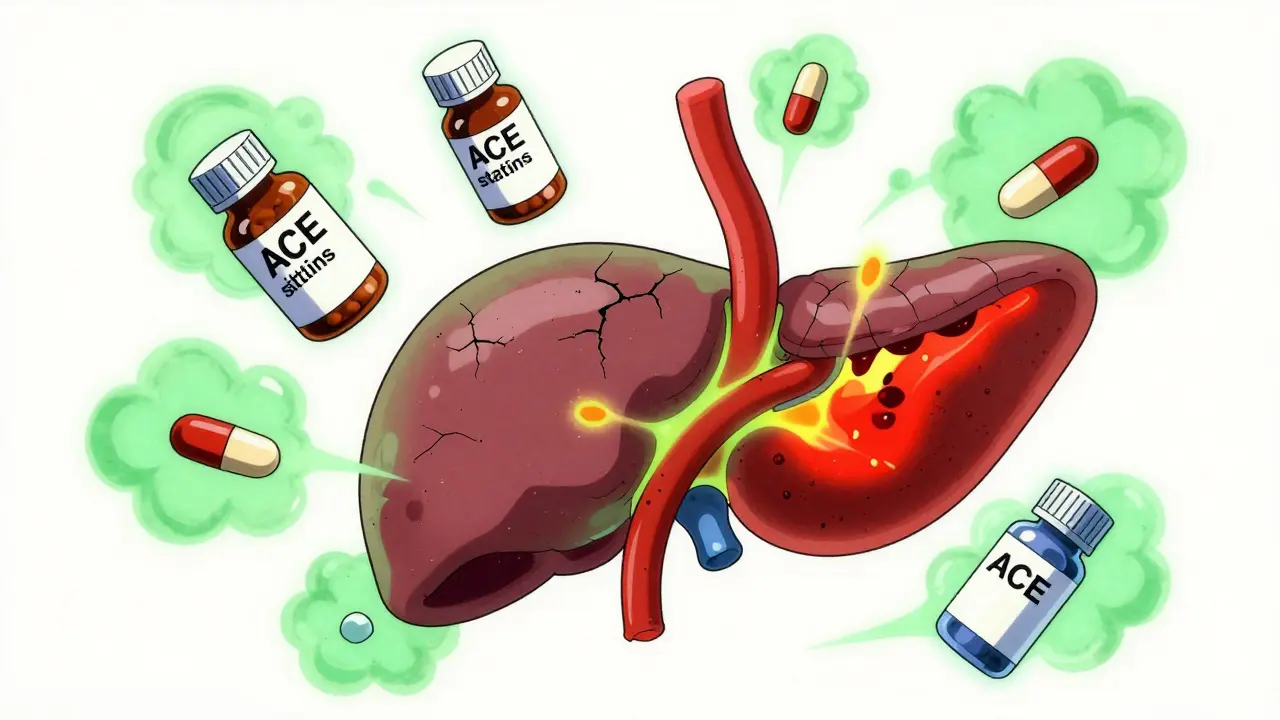
Not all pills carry the same risk. Medical literature has identified eight specific classes of medications with strong evidence linking them to drug-induced pancreatitis. If you are taking any of these, pay close attention to your body.
| Medication Class | Common Examples | Risk Profile & Notes |
|---|---|---|
| ACE Inhibitors | Lisinopril, Enalapril | Used for high blood pressure. Can cause delayed onset symptoms even after months of use. |
| Antiretrovirals | Didanosine | Used in HIV treatment. Higher risk when combined with other HAART drugs. |
| Diuretics | Furosemide, Thiazides | Water pills used for heart failure and hypertension. Often linked to metabolic shifts. |
| Hypoglycemic Agents | Exenatide (Byetta), Sitagliptin (Januvia) | Diabetes medications. FDA issued stronger warnings in 2023 due to case clusters. |
| Oral Contraceptives | Ethinyl estradiol formulations | Birth control pills. Risk increases with long-term use and high estrogen doses. |
| Statins | Simvastatin, Atorvastatin | Cholesterol-lowering drugs. Rare but documented cause of acute inflammation. |
| Valproic Acid | Depakote | Used for seizures and bipolar disorder. Carries a high risk of severe outcomes. |
| Azathioprine | Imuran | Immune suppressant for autoimmune diseases. Genetic factors (TPMT variants) increase risk. |
Among these, valproic acid and azathioprine are particularly concerning. Dr. Dhiraj Yadav, a professor at the University of Pittsburgh, notes that these two drugs lead to necrotizing pancreatitis (where tissue dies) in 18% to 22% of cases, compared to just 5-7% for most other drug classes. If you are on these medications, regular monitoring is non-negotiable.
Warning Signs: What to Look For
Recognizing the symptoms early can save your life. The hallmark sign of acute pancreatitis is severe, constant pain in the upper abdomen that often radiates to the back. Unlike typical heartburn or gas pain, this pain does not go away with antacids or changing positions. It often worsens after eating.
Other critical warning signs include:
- Nausea and vomiting: Persistent vomiting that prevents you from keeping fluids down.
- Fever: A temperature spike indicating systemic inflammation.
- Tenderness: Your abdomen feels tender to the touch, especially in the upper middle section.
- Rapid heartbeat: Your pulse may race as your body enters a stress response.
- Swollen abdomen: Bloating caused by fluid accumulation or gas.
If you have recently started a new medication from the list above and experience these symptoms, do not wait. Go to the emergency room. Tell the triage nurse explicitly: "I am concerned about drug-induced pancreatitis." This prompt helps doctors prioritize the correct tests.
Diagnosis: Ruling Out Other Causes
Diagnosing drug-induced pancreatitis is challenging because there is no single test that says "this drug caused it." Doctors must rule out other common causes first, primarily gallstones and alcohol use. This is known as a diagnosis of exclusion.
The diagnostic criteria, established by the Revised Atlanta Classification system, require at least two of the following three features:
- Abdominal pain: Acute onset, persistent, severe epigastric pain often radiating to the back.
- Elevated enzymes: Serum lipase levels at least three times higher than the normal upper limit. Lipase is more specific to the pancreas than amylase.
- Imaging findings: Contrast-enhanced CT scan, MRI, or transabdominal ultrasound showing characteristic changes in the pancreas.
Once gallstones and alcohol are ruled out, doctors look at the timeline. Did symptoms start within four weeks of beginning the medication? Did they resolve after stopping it? According to the American Gastroenterological Association, if symptoms resolve within eight weeks of discontinuing the drug, the classification moves from "possible" to "probable." Definite causality usually requires a "rechallenge"-taking the drug again to see if symptoms return-but this is rarely done today due to ethical safety concerns.

Treatment Protocols: From ER to Recovery
The cornerstone of treatment is simple but critical: stop the offending medication immediately. Studies show that delaying withdrawal beyond 24 hours of suspicion increases complication risks by 37%. Once the drug is stopped, the focus shifts to supporting your body while the inflammation subsides.
Hospitalization is typically required for severe cases. The standard protocol includes:
1. Aggressive Fluid Resuscitation
In the first 24 to 48 hours, you will receive intravenous (IV) fluids at a rate of 250-500 mL per hour. This keeps the pancreas well-perfused with blood, preventing tissue death. Doctors monitor your hematocrit levels closely, aiming to keep them between 35% and 44% to ensure optimal oxygen delivery to the organ.
2. Pain Management
Pain control is essential. Treatment usually starts with IV acetaminophen (1,000 mg every 6 hours). If that isn’t enough, low-dose opioids like morphine (2-4 mg IV every 2-3 hours) are titrated carefully. The goal is to keep you comfortable without suppressing your breathing or masking worsening symptoms.
3. Nutritional Support
Gone are the days of strict "nothing by mouth" (NPO) orders for weeks. Current guidelines from the European Association for the Study of the Pancreas recommend starting enteral feeding via a nasojejunal tube within 24-48 hours if you cannot eat orally. Early nutrition helps maintain gut barrier function and reduces infection risk. The target is 20-25 kcal/kg/day by day 3.
4. Antibiotics (Only If Infected)
Antibiotics are not given routinely. They are reserved for cases where pancreatic necrosis becomes infected. In those scenarios, meropenem (1g IV every 8 hours) is the standard treatment. Unnecessary antibiotic use can disrupt your microbiome and lead to resistance.
Prognosis and Long-Term Outlook
The outlook depends heavily on how quickly the drug was stopped. In mild-to-moderate cases, 65-75% of patients recover completely with no lasting damage. However, severe cases involving organ failure or extensive necrosis carry significant risks. Mortality rates for drug-induced severe pancreatitis hover around 28%, which is higher than the 18% seen in severe gallstone pancreatitis.
For survivors, the pancreas often heals fully, but some may experience chronic issues like diabetes or exocrine insufficiency (difficulty digesting fats) if too much tissue was lost. Follow-up care involves monitoring pancreatic function and avoiding re-exposure to the culprit drug and its chemical relatives.
As we move into 2026, awareness is growing. The FDA has updated warnings for SGLT2 inhibitors and GLP-1 agonists based on recent case clusters. Hospitals are implementing automated EHR alerts to flag high-risk medication combinations, especially in older adults who take multiple drugs. If you are over 60, you are statistically more likely to be affected due to polypharmacy-the average patient with drug-induced pancreatitis takes 5.2 medications versus 2.7 in other cases.
Can drug-induced pancreatitis happen years after starting a medication?
Yes, although it is less common. Most cases occur within the first few weeks or months of starting a drug. However, some medications like ACE inhibitors and statins can cause delayed reactions after years of stable use. This is why new-onset abdominal pain should always be evaluated, regardless of how long you have been on a prescription.
Is there a genetic test to predict who will get drug-induced pancreatitis?
For some specific drugs, yes. For example, testing for TPMT gene variants can help identify patients at higher risk for pancreatitis when taking azathioprine. Researchers are also developing broader pharmacogenetic screening tools, but currently, routine genetic testing for all high-risk medications is not yet standard practice. The NIH is funding registries to improve these predictive models.
What should I do if I suspect my medication is causing pancreatitis?
Do not stop your medication abruptly without consulting your doctor, unless the pain is severe and sudden. If you have severe upper abdominal pain radiating to your back, nausea, and fever, go to the emergency room immediately. Tell them you suspect drug-induced pancreatitis. They will run lipase tests and imaging to confirm. Never restart the suspected medication without explicit clearance from a specialist.
Are natural supplements safe regarding pancreatitis risk?
Most natural supplements are not monitored as strictly as pharmaceuticals, and data on their link to pancreatitis is limited. However, some herbal remedies and high-dose vitamins have been anecdotally linked to liver and pancreatic stress. Always disclose all supplements to your healthcare provider, especially if you have a history of pancreatic issues.
How does drug-induced pancreatitis differ from alcohol-induced pancreatitis?
Alcohol-induced pancreatitis often presents with recurrent episodes and progressive permanent damage to the pancreas over time. Drug-induced pancreatitis, if caught early and the drug is stopped, often resolves completely without long-term sequelae. However, severe drug-induced cases can be more lethal in the acute phase due to the complexity of managing concurrent medications and underlying conditions.