
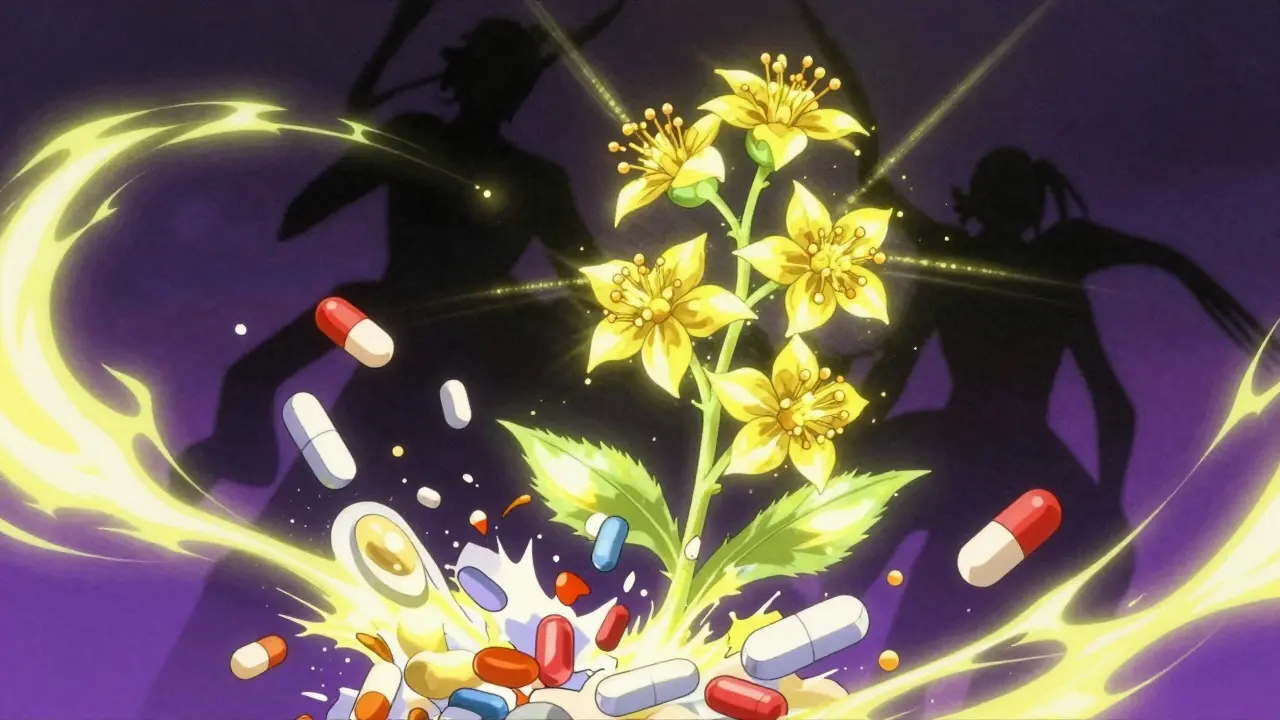
Many people turn to St. John’s Wort because they want a "natural" way to feel better-especially if they’re dealing with mild depression, low mood, or anxiety. It’s sold over the counter, often labeled as "herbal" or "dietary supplement," and many assume that means it’s safe. But here’s the truth: St. John’s Wort isn’t harmless. It can turn your prescription drugs into useless pills-or worse, cause dangerous side effects you never saw coming.
How St. John’s Wort Changes How Your Body Handles Medicines
St. John’s Wort doesn’t just float through your system. It actively changes how your liver and intestines process drugs. The key player is a compound called hyperforin. This one chemical turns on enzymes-specifically CYP3A4 and CYP2C9-that break down medications faster than normal. It also flips on a protein called P-glycoprotein, which kicks drugs out of your cells before they can do their job.
Think of it like this: if your medicine is a key trying to unlock a door, St. John’s Wort is someone who keeps changing the lock every time you try. The key still looks the same, but it no longer fits. That’s why your antidepressant, birth control, or blood thinner suddenly stops working-even if you’re taking it exactly as prescribed.
Studies show that after just two weeks of taking 900 mg of St. John’s Wort daily, CYP3A4 activity can jump by up to 40%. That’s not a small tweak. That’s a full-system override. And the effects don’t vanish the day you stop taking it. They can linger for up to two weeks. That means even if you quit St. John’s Wort, your meds might still be underdosed until your body resets.
The Medications That Can Become Ineffective-or Dangerous
St. John’s Wort doesn’t pick and choose. It messes with a wide range of drugs. Here’s what you need to watch out for:
- Anticoagulants like warfarin: One case report showed a patient’s INR (a measure of blood clotting) dropping from 2.5 to 1.3 in just seven days after starting St. John’s Wort. That’s not just risky-it’s life-threatening. INR below 2 means your blood isn’t thin enough to prevent clots. You could have a stroke or pulmonary embolism without warning.
- Immunosuppressants like cyclosporine: Organ transplant patients who took St. John’s Wort saw cyclosporine levels drop by 30-50%. That’s not a typo. One patient nearly lost their new kidney because their body started rejecting it. This isn’t rare-it’s been documented in multiple countries.
- HIV medications: Drugs like saquinavir and ritonavir can lose up to 50% of their effectiveness. That means the virus can bounce back, become resistant, and spread. People who thought they were protected suddenly became vulnerable.
- Antidepressants (SSRIs and others): This is where things get scary fast. St. John’s Wort boosts serotonin in your brain. So does fluoxetine, sertraline, citalopram, and others. Combine them, and you risk serotonin syndrome-where your nervous system goes into overdrive. Symptoms: high fever, rapid heart rate, confusion, seizures, muscle rigidity. It can kill. Six cases were reported in Australia alone between 2000 and 2020.
- Birth control pills: Ethinyl estradiol, the hormone in most pills, drops by 25-35%. Thirteen documented cases of unintended pregnancy happened in women who took St. John’s Wort and believed they were protected. One woman wrote online: "I took my pill perfectly. I didn’t miss one. Then I got pregnant after three weeks of St. John’s Wort. No one warned me."
- Statins: Atorvastatin and simvastatin lose 30-40% of their effect. Your cholesterol might spike back up. But pravastatin and fluvastatin? They’re safe. Why? Because they don’t go through the same liver pathway.
- Benzodiazepines like Xanax: Alprazolam levels can drop by 40%. Your anxiety comes roaring back. You might think your medication isn’t working-when it’s actually being flushed out of your system.
- Anticonvulsants: Phenytoin and carbamazepine levels fall by 30-40%. That’s a direct path to breakthrough seizures in people with epilepsy.
- Digoxin: Levels drop 25%. That’s dangerous for heart failure patients. Your heart can’t pump properly without the right dose.
- Theophylline: Used for asthma. Levels drop 30%. You could end up in the ER with a severe attack.
Why People Don’t Realize the Risk
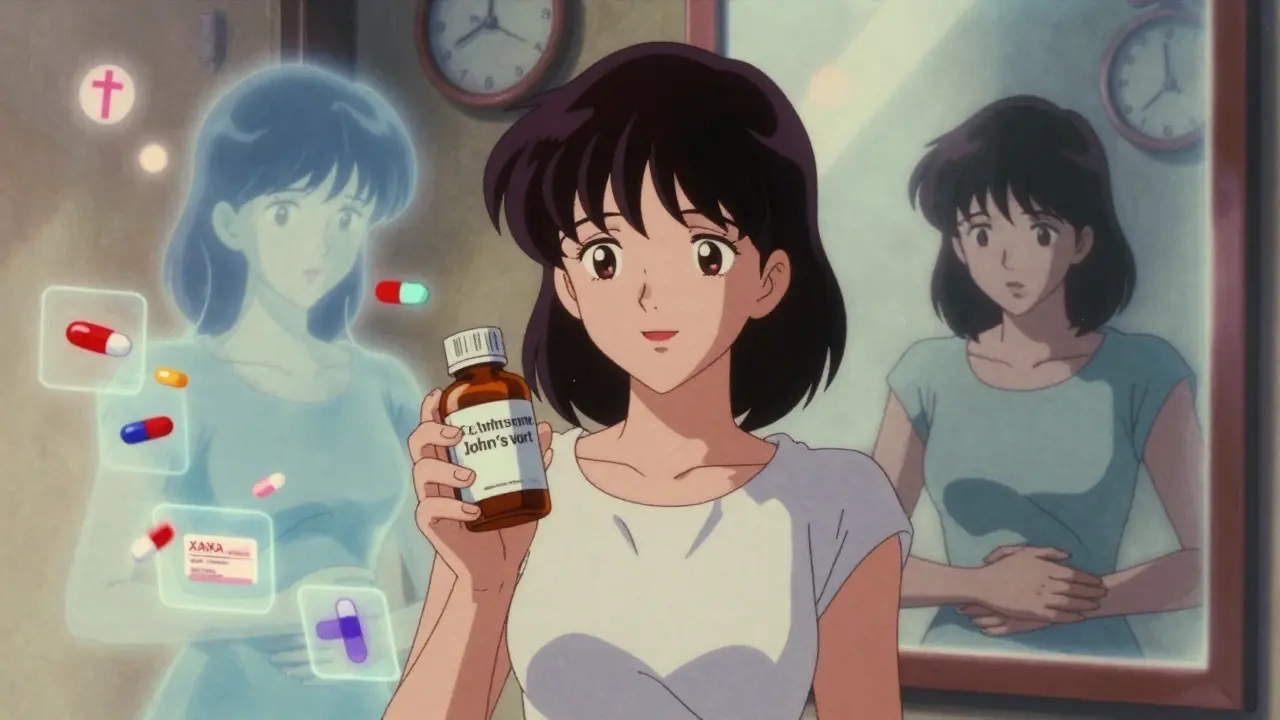
Here’s the biggest problem: most people don’t tell their doctors they’re taking St. John’s Wort. In a 2022 Johns Hopkins study, 41% of patients taking prescription meds didn’t mention their herbal supplements-even when asked. Why? Because they don’t think of it as medicine.
"I just take it for my mood," one patient said. "It’s not a drug."
But it acts like one. And worse, it’s not regulated like one. In the U.S., it’s sold as a dietary supplement under DSHEA, meaning the FDA doesn’t test it for purity, potency, or safety before it hits shelves. A bottle labeled "900 mg" might contain anywhere from 300 mg to 1,200 mg of active ingredients. You have no idea what you’re really swallowing.
Even the packaging doesn’t help. The FDA requires a warning label since 2019: "Ask a doctor before use if you are taking prescription drugs." But most people skip that line. They read "natural," assume "safe," and move on.
What Happens When You Stop Taking It?
Many think the danger ends when they quit St. John’s Wort. But that’s not true. Because it induced enzymes, your body is still breaking down meds faster than normal-even after you stop.
That means if you stop St. John’s Wort and keep taking your regular dose of warfarin, your INR could suddenly spike. Your blood might thin too much. You could bleed internally. Same with cyclosporine-your levels could rise dangerously high, damaging your kidneys.
This is why experts say: if you’re going to stop St. John’s Wort, do it under medical supervision. Your doctor needs to monitor your drug levels for at least two weeks after you quit.

What Should You Do?
If you’re thinking about starting St. John’s Wort:
- Stop. Talk to your doctor first. Not your friend. Not your pharmacist. Your doctor. The one who knows your full medical history.
- Bring a list of every supplement, herb, vitamin, and over-the-counter pill you take-even if you think it’s "nothing."
- If you’re already taking it, don’t quit cold turkey. Tell your doctor. They may need to adjust your meds or run blood tests.
- Don’t assume "natural" means safe. As one pharmacist put it: "Aspirin comes from willow bark. That’s natural too. But you don’t take it with blood thinners without a doctor’s okay."
If you’re on any of the medications listed above, St. John’s Wort is not worth the risk. The American Psychiatric Association’s 2023 guidelines no longer recommend it for anyone taking prescription drugs. Period.
There are safer alternatives for mild depression: therapy, exercise, light therapy, and FDA-approved supplements like omega-3s or S-adenosylmethionine (SAMe)-all with far fewer interaction risks.
Bottom Line
St. John’s Wort isn’t a gentle herbal tea. It’s a powerful biochemical disruptor. It doesn’t just interact with medications-it can undo them. And the consequences aren’t theoretical. People have had strokes, organ rejection, seizures, and unintended pregnancies because they didn’t know.
Just because it’s sold on a shelf doesn’t mean it’s safe. Just because it’s called "natural" doesn’t mean it’s harmless. If you’re on any prescription drug, St. John’s Wort is not a risk you can afford to take.
Can I take St. John’s Wort with my antidepressant?
No. Combining St. John’s Wort with SSRIs, SNRIs, or other antidepressants can cause serotonin syndrome-a potentially fatal condition. Symptoms include high fever, rapid heartbeat, confusion, muscle stiffness, and seizures. Six documented cases in Australia involved this exact combination. Never mix them.
Does St. John’s Wort affect birth control?
Yes. St. John’s Wort reduces ethinyl estradiol levels in birth control pills by 25-35%. Thirteen cases of unintended pregnancy have been reported in women who took it while on the pill-even with perfect adherence. Use backup contraception or avoid St. John’s Wort entirely.
How long does St. John’s Wort stay in your system?
The enzyme-inducing effects of hyperforin can last up to two weeks after you stop taking it. That means your body may still break down medications too quickly during this time. Always wait at least two weeks before starting a new drug that interacts with St. John’s Wort.
Is there a safe dose of St. John’s Wort if I’m on meds?
No. Even low doses can trigger enzyme induction. The European Food Safety Authority concluded there is no safe threshold for St. John’s Wort use if you’re on prescription drugs. Individual metabolism varies too much to predict who’s at risk.
What should I tell my doctor if I’ve taken St. John’s Wort?
Tell them exactly what you took, how much, and for how long. Mention the brand if you know it. Ask them to check your medication levels-especially if you’re on warfarin, cyclosporine, HIV drugs, or seizure meds. Don’t assume they’ll ask. Most don’t.
Are there safer herbal options for depression?
Yes. Omega-3 fatty acids (especially EPA), SAMe, and 5-HTP have shown some benefit for mild depression with far fewer drug interactions. But even these should be discussed with your doctor before starting. Therapy and regular exercise remain the most effective, evidence-based options.
If you’re considering St. John’s Wort for mood support, remember this: what feels like a natural solution can become a medical emergency. Talk to your doctor before you take another pill.
Carolyn Rose Meszaros
January 21, 2026 AT 04:17Okay but like… I took St. John’s Wort for 3 months last year and my anxiety dropped so hard I cried in Target over a cereal aisle. 🥲 No meds, no side effects. Maybe it’s just my body? I’m not trying to be a dumbass, but I’ve seen people get mad at herbs while they’re on 7 prescriptions. 🤷♀️
Thomas Varner
January 21, 2026 AT 17:53Look, I get it-natural doesn’t mean safe, but neither does pharmaceutical. I’ve had my INR spike because of a new antibiotic, and no one warned me about that either. Why is this herb the villain when the system is full of silent killers? The real issue? Doctors don’t ask. They assume. And patients assume they’re not supposed to mention the stuff they buy at GNC. It’s a communication failure, not a herbal conspiracy.
Emily Leigh
January 23, 2026 AT 01:08Wow. So… natural = bad? So aspirin’s bad? Caffeine’s bad? Water’s bad? Next you’ll tell me sunlight causes skin cancer. I mean, sure, technically true-but also, like, duh? People have been using this for centuries. The real problem? Pharma doesn’t own it. So they make it sound scary so you’ll buy their $800/month antidepressants. 😴
Greg Robertson
January 24, 2026 AT 15:19I appreciate the depth here. My mom was on warfarin and started St. John’s Wort because she thought it’d help her sleep. Didn’t know it’d mess with her INR until she got dizzy and almost fell. We got lucky. But yeah-this isn’t scare tactics. It’s real. Talk to your doc. Even if it feels awkward. Seriously.
thomas wall
January 25, 2026 AT 07:12It is profoundly alarming that a substance with such demonstrable pharmacological potency-capable of inducing cytochrome P450 enzymes and modulating P-glycoprotein efflux-is freely available in the United States without prescription oversight. The regulatory vacuum surrounding dietary supplements represents not merely negligence, but a systemic abdication of public health responsibility. One cannot, in good conscience, permit the populace to self-administer biochemical disruptors with the same impunity as tea bags.
Shane McGriff
January 26, 2026 AT 15:44Hey-I’ve been there. Felt down, tried St. John’s Wort, felt better. Then I got on a new med for blood pressure and started feeling weird. Turns out, my doc had no idea I was taking it. I didn’t even think to mention it. Now I keep a list. Every. Single. Thing. I take. And I show it to my doctor every visit. It’s not about fear. It’s about being smart. You don’t have to be perfect-just honest.
Jacob Cathro
January 26, 2026 AT 23:54so like… hyperforin?? cyp3a4?? p-glycoprotein?? bro i just wanted to feel less sad not take a biochem final. also why is everyone acting like this is new? i’ve been taking sjw with my zoloft since 2018 and im fine. maybe my liver is just a beast?? 🤓
Paul Barnes
January 27, 2026 AT 04:00The assertion that St. John’s Wort causes dangerous interactions is empirically supported by peer-reviewed literature. However, the claim that these effects persist for up to two weeks post-discontinuation is overstated. Clearance kinetics vary significantly based on individual metabolic rate, dosage, and concomitant medications. Generalizations without context risk inducing unnecessary fear.
kumar kc
January 28, 2026 AT 10:58People die because they think herbs are safe. This is why India bans this stuff. No excuses.
Art Gar
January 28, 2026 AT 11:53It is intellectually dishonest to label this as a 'natural remedy' while simultaneously acknowledging its pharmacological potency. The term 'natural' is a marketing construct designed to circumvent regulatory scrutiny. One cannot simultaneously claim biochemical efficacy and exemption from pharmaceutical standards. The inconsistency is not merely illogical-it is ethically indefensible.
Edith Brederode
January 30, 2026 AT 04:31I had no idea about the two-week lag after quitting. 😳 I stopped SJW and started my new antidepressant right away. My doctor didn’t mention it either. I’m so glad I read this. Going back to talk to them tomorrow. Thanks for the warning-really.
clifford hoang
January 30, 2026 AT 11:26They don’t want you to know this, but the FDA and Big Pharma are in bed together. SJW is a miracle herb that cures depression without the side effects… but they’re suppressing the truth because it’s not profitable. The enzyme stuff? That’s just a distraction. They want you addicted to pills. Watch the documentary ‘Herbal Cover-Up’-it’s all there. 🕵️♂️💊
Arlene Mathison
February 1, 2026 AT 07:27STOP. Just stop. If you’re on meds, don’t touch this. I know it’s tempting. I’ve been there. But your brain and your body are worth more than a quick mood fix. Try therapy. Walk outside. Drink water. Journal. These things actually help-and they don’t risk your life. You got this. 💪
Renee Stringer
February 1, 2026 AT 17:05My sister took this with her birth control. Got pregnant. Then blamed the pill. She didn’t even realize she was taking it. I don’t know what’s sadder-the fact that it happened, or that no one told her. This needs to be on every supplement bottle. Like, a giant red warning. Not a tiny line.