
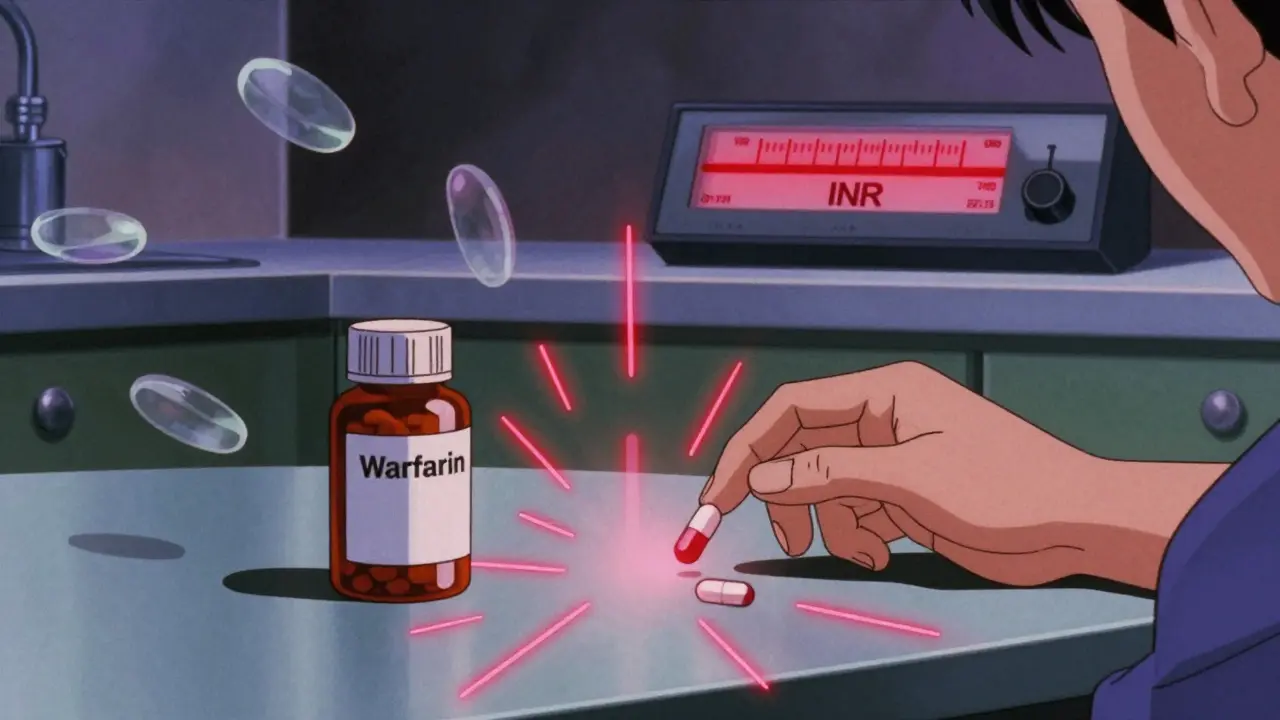
Vitamin E & Warfarin Risk Calculator
This tool helps you determine if your vitamin E intake is within safe limits while taking warfarin. Based on medical guidelines, doses above 400 IU daily may increase bleeding risk.
Risk Assessment
Enter your vitamin E intake above to see if it's safe.
Important Medical Guidance
Always consult your doctor before changing supplements while on warfarin. The 400 IU threshold is a guideline, but individual factors like genetics and other medications can affect your risk. Regular INR monitoring is essential.
If you're taking warfarin for a heart condition, stroke prevention, or blood clots, you might think a daily vitamin E supplement is harmless - maybe even helpful. But here’s the truth: vitamin E can make warfarin work too well, and that can lead to dangerous bleeding. It’s not just a theory. Real people have ended up in the hospital because of this combo, even when they took what they thought was a safe dose.
How Vitamin E and Warfarin Don’t Get Along
Warfarin works by blocking vitamin K, which your body needs to make clotting factors. Without enough of those factors, your blood doesn’t clot as easily. That’s why it’s used for atrial fibrillation, deep vein clots, or after heart valve replacements. It’s precise. Too little, and you risk clots. Too much, and you risk bleeding. Vitamin E doesn’t work the same way. It doesn’t touch vitamin K directly. Instead, it messes with platelets - the tiny cells that rush to seal cuts. Think of them like first responders. Vitamin E, especially at higher doses, slows them down. So now you’ve got two things thinning your blood: warfarin reducing clotting factors, and vitamin E dulling your platelets. It’s a one-two punch. This isn’t just theory. In a 2013 study of over 1,000 patients on warfarin, those with higher vitamin E levels in their blood had a significantly higher chance of bleeding. Not just minor nosebleeds - but serious ones, including brain bleeds. The risk jumped when vitamin E levels hit 4.49 μmol/mmol cholesterol. That’s not a huge number. It’s something you can reach with a daily 400 IU supplement.The Dose Makes the Danger
Here’s where things get tricky. Not all vitamin E is the same. A 100 IU supplement? Probably fine. A 800 IU pill? That’s where trouble starts. A 1996 study claimed vitamin E was safe at 400 IU daily. But that study only lasted a few weeks. Real life isn’t a short trial. People take supplements for years. And bleeding risk builds up slowly. One case report showed a patient had no issues for three weeks - then suddenly started bleeding internally. The vitamin E had been quietly weakening clotting all along. The real red flag? Doses above 400 IU. Multiple guidelines - including those from the University of California San Diego and the American College of Chest Physicians - warn against it. The European Society of Cardiology now says: if a patient on warfarin has an unexplained bleed, check their vitamin E levels. That’s how seriously this is being taken now. And it’s not just pills. Many multivitamins, fish oil blends, and antioxidant formulas include vitamin E. You might not even realize you’re getting it. A 2022 survey found that 78% of anticoagulation clinics routinely warn patients about vitamin E. That’s not paranoia. That’s experience.Why Some Studies Say It’s Safe - And Why You Shouldn’t Trust Them
You’ll find articles online saying vitamin E and warfarin don’t interact. They’re usually quoting that 1996 study. But here’s the catch: that study had only 21 people. It looked at INR levels - a quick blood test - and saw no change. It didn’t track bleeding. And it didn’t last long. Modern research tells a different story. The 2013 study didn’t just look at INR. It measured actual bleeding events over time. And it found a clear link. Even more telling: the bleeding risk stayed high even after adjusting for other factors like age, kidney function, or blood pressure. That means vitamin E was acting on its own. Another problem? Genetic differences. Some people have variations in genes like CYP2C9 and VKORC1. These affect how your body breaks down warfarin. If you’re a slow metabolizer, even a small dose of vitamin E can push your INR into the danger zone. But if you’re a fast one? You might not see a thing. That’s why blanket statements like “it’s safe” are dangerous. One person’s harmless supplement is another person’s emergency.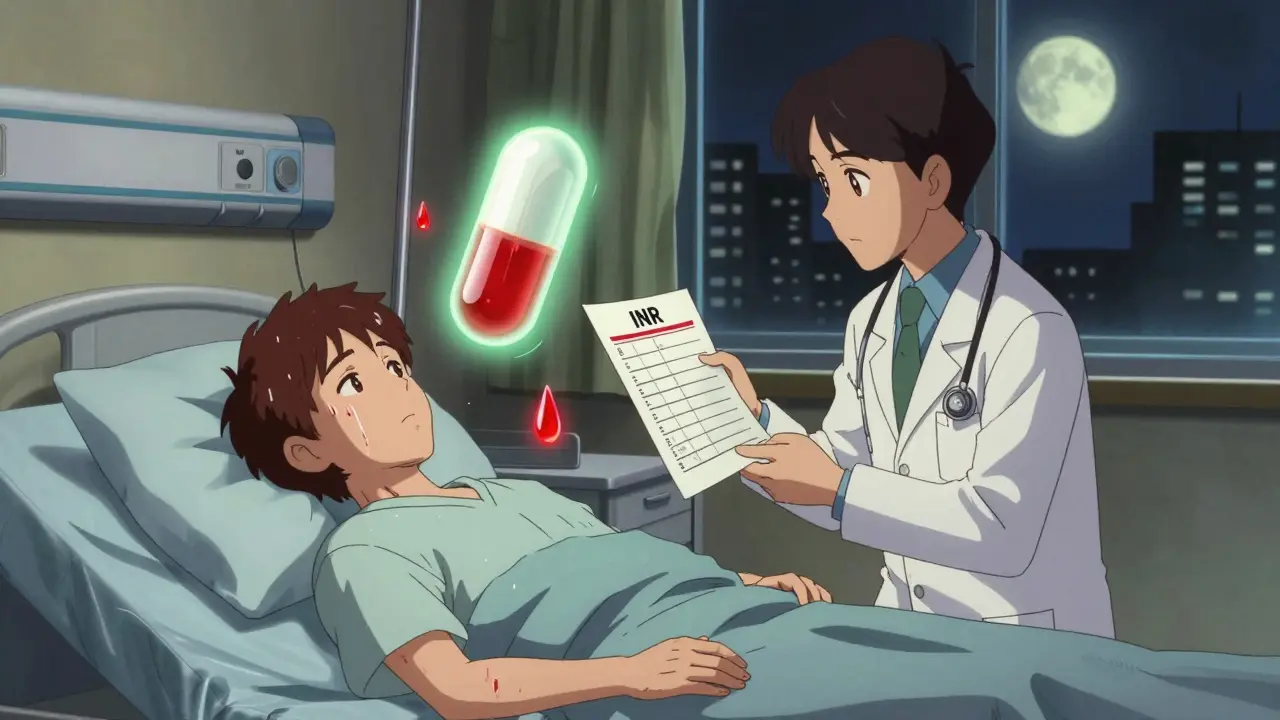
What You Should Do If You’re on Warfarin
If you’re taking warfarin, here’s what matters:- Don’t start vitamin E without talking to your doctor. Even if you’ve taken it for years.
- Avoid doses over 400 IU daily. That’s the line most experts agree on.
- Check your labels. Many supplements list vitamin E as “alpha-tocopherol.” If you’re not sure, look at the ingredient list.
- Get regular INR checks. If you’re already taking vitamin E, your doctor should check your INR more often - at least weekly for the first month, then every two weeks.
- Watch for signs of bleeding. Unusual bruising, nosebleeds that won’t stop, blood in urine or stool, headaches that feel different, or dizziness could mean your blood is too thin.
What About Other Supplements?
Vitamin E isn’t alone. Garlic, ginger, ginkgo, turmeric, and fish oil all have similar effects. They’re often sold as “heart-healthy” or “anti-inflammatory.” But when you’re on warfarin, “natural” doesn’t mean “safe.” The same 2013 study that found the vitamin E link also showed that patients taking multiple supplements had a higher bleeding risk than those taking just one. The more you add, the more unpredictable your INR becomes. That’s why many anticoagulation clinics now ask patients: “What are you taking besides your prescription?” They don’t just mean pills. They mean teas, powders, and capsules you bought online.
The Bigger Picture
The supplement industry is worth billions. Vitamin E alone sold $287 million worth in 2022. Most people take it because they believe it prevents heart disease or slows aging. But science doesn’t back that up. In fact, the American Heart Association warned in 2009 that doses above 400 IU might increase the risk of hemorrhagic stroke - especially in people on blood thinners. And here’s the kicker: supplements aren’t regulated like drugs. The FDA can’t require proof of safety before they hit shelves. So you can buy 1,200 IU vitamin E pills without a doctor’s approval. But your doctor can’t unsee what happens when those pills meet warfarin.Bottom Line
Vitamin E isn’t the enemy. But when you’re on warfarin, it becomes a silent risk. You can’t rely on old studies. You can’t assume low doses are safe. You can’t trust labels that don’t tell you the full story. If you’re taking warfarin, the safest move is simple: skip vitamin E supplements unless your doctor says otherwise. If you’re already taking it, don’t quit cold turkey - talk to your provider. They can adjust your warfarin dose and monitor your INR. Your life depends on that balance.There’s no magic pill that makes you healthier while on anticoagulants. The best supplement is consistency - and honesty with your care team.
Gloria Ricky
February 14, 2026 AT 15:44Stacie Willhite
February 16, 2026 AT 08:51Jason Pascoe
February 17, 2026 AT 12:26Sonja Stoces
February 17, 2026 AT 20:34Annie Joyce
February 18, 2026 AT 03:00Rob Turner
February 19, 2026 AT 05:36Luke Trouten
February 19, 2026 AT 15:31Gabriella Adams
February 20, 2026 AT 14:23Joanne Tan
February 21, 2026 AT 02:18Carla McKinney
February 21, 2026 AT 09:32Ojus Save
February 22, 2026 AT 17:45