
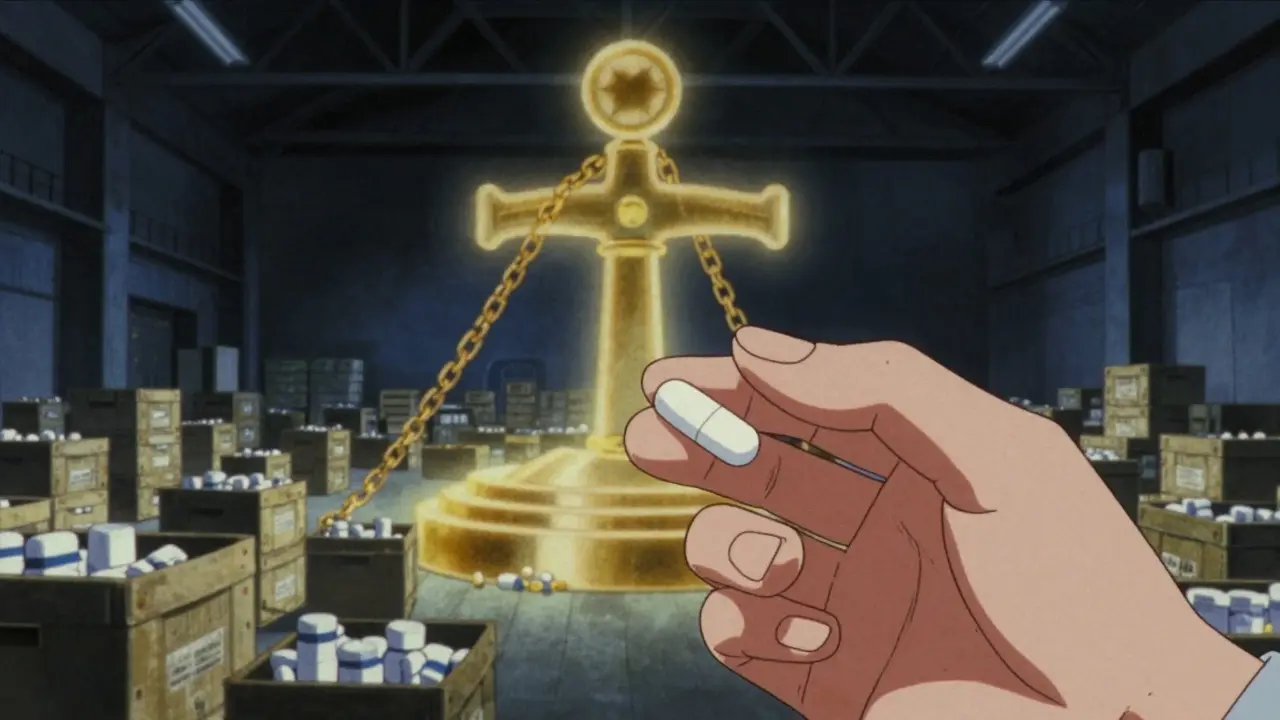
Imagine finding out a cheaper, generic version of your life-saving medication has been approved by the FDA, only to be told by your pharmacist that you still can't buy it. You're stuck paying $1,200 a month for a brand-name drug while the affordable alternative sits in a warehouse. This isn't a logistics error; it's the result of a high-stakes legal game. In the pharmaceutical world, the gap between a drug's official approval and its actual appearance on pharmacy shelves is often filled by aggressive legal battles designed to keep competition away.
The Engine of Delay: The Hatch-Waxman Act
To understand why these delays happen, we have to look at the Hatch-Waxman Act is a 1984 U.S. law designed to balance the need for innovation in brand-name drugs with the need for affordable generic alternatives. While it sounds like a fair deal, the law created a specific loophole that brand-name companies now use as a shield. The core of this is the Paragraph IV certification is a process where a generic manufacturer claims a brand-name patent is invalid or not infringed, allowing them to seek approval before the patent expires.
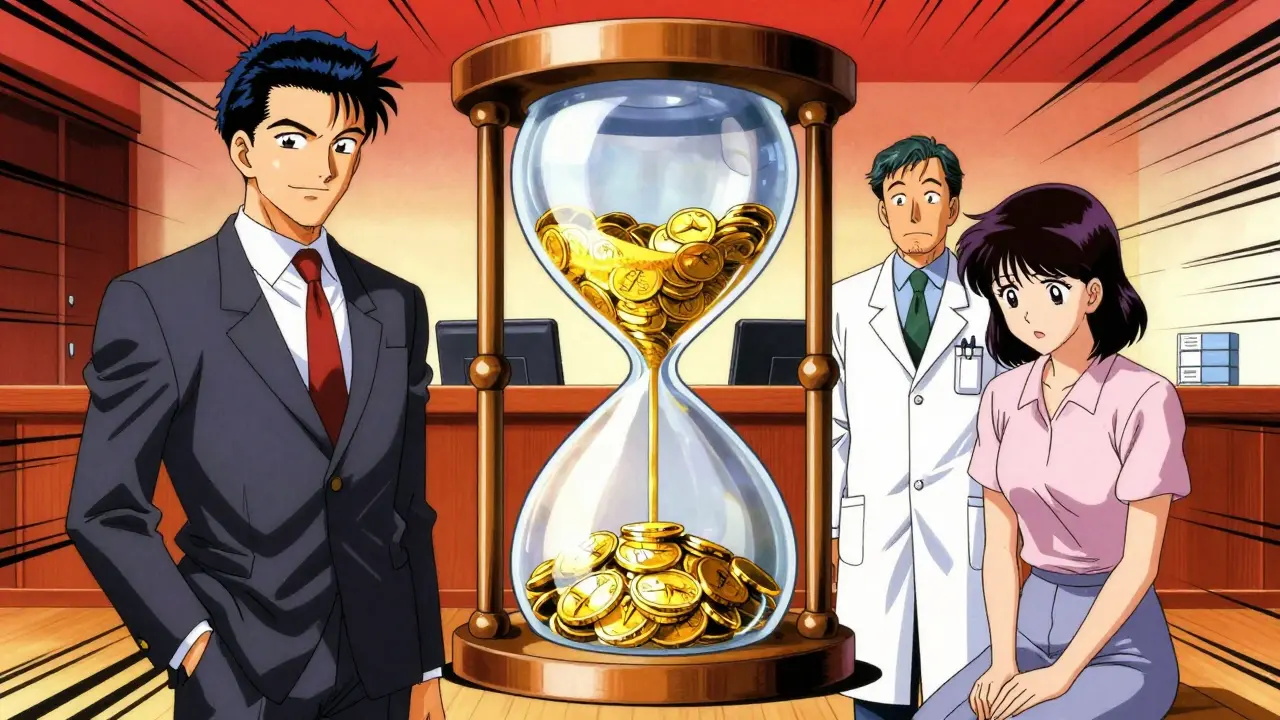
Here is where the "delay engine" kicks in. Once a generic company files this challenge, the brand-name company has just 45 days to sue them. If they do, it triggers an automatic 30-month stay on the FDA's approval. This means that even if the generic drug is perfectly safe and effective, the government cannot approve it for two and a half years while the court decides who is right. For a company making billions in annual sales, paying a few million in legal fees to buy an extra 30 months of monopoly is a bargain.
Strategic Tactics: Beyond the 30-Month Stay
If the 30-month stay were the only hurdle, generics would eventually flow into the market. However, the reality is much slower. Data shows a median gap of 3.2 years between the end of that legal stay and the actual product launch. How is this possible? The answer lies in "serial litigation" and "patent thickets."
A Patent Thicket is a dense web of overlapping intellectual property rights surrounding a single drug, often including secondary patents on dosages, formulations, or delivery methods. Brand companies don't just rely on the original compound patent. They file dozens of smaller patents after the drug is already on the market. When the first patent is challenged and defeated, they simply pivot and sue based on the next patent in the thicket. It's a game of whack-a-mole where the generic company is the mole.
| Strategy | How it Works | Impact on Consumer |
|---|---|---|
| Secondary Patents | Filing new patents on delivery systems or coatings after initial approval. | Extends monopoly beyond the original compound's life. |
| Pay-for-Delay | Brand companies pay generics to stay out of the market for a set time. | Artificially keeps prices high by removing competition. |
| Sample Restriction | Refusing to sell samples of the drug to generics for testing. | Prevents generics from completing the FDA application. |
| Serial Litigation | Filing successive lawsuits based on different patents in a cluster. | Creates a multi-year legal treadmill that exhausts generic resources. |
The Financial Stakes and Market Distortion
The motivation for these delays is purely financial. In 2023, the U.S. pharmaceutical market hit $643 billion. A shocking 78% of that revenue came from brand-name drugs, even though they only made up 10% of all prescriptions. When a drug like Humira faces generic competition, the stakes are in the billions. For example, delayed generic entry for that specific drug cost large employers an additional $1.2 billion in 2023 alone.
Generic manufacturers aren't just passive victims; they have to make massive bets. To challenge a patent, a company might spend $3 to $5 million just to get through a trial, and over $10 million if it goes to appeal. Some choose to "launch at risk," meaning they put the drug on the market while the lawsuit is still pending. It's a high-stakes gamble: if they win, they capture the market early; if they lose, they owe the brand company astronomical damages.
Real-World Impact: Patients in the Crossfire
While lawyers argue over technicalities in court, patients deal with the fallout. It's common to hear stories from pharmacists about patients rationing their medication because they can't afford the brand name, knowing a generic is "approved" but not "available." One primary care physician in Chicago reported patients rationing insulin because a generic version was delayed by 18 months due to patent challenges.
This dysfunction extends to the newest class of drugs: biosimilars. Because biosimilars are more complex to manufacture than simple chemical generics, the legal battles are even more protracted. Research indicates that Biosimilars are biologically engineered versions of brand-name biologic medicines that are highly similar to the original. Litigation for these products typically takes 25% longer than for standard generics, meaning the most expensive and complex medicines are often the most shielded from competition.
Are Things Changing? Regulatory Pushback
Regulators are finally starting to push back. The Federal Trade Commission (FTC) is the U.S. agency tasked with protecting consumers and preventing anticompetitive business practices. In 2023, the FTC challenged over 100 patents from giants like AbbVie and GlaxoSmithKline. They are specifically targeting "pay-for-delay" deals, where a brand company essentially bribes a generic competitor to stay off the market.
There is also the CREATES Act, which aims to stop brand companies from withholding drug samples. Without these samples, generic companies can't prove their version is the same as the original, creating a bottleneck before the legal battle even begins. While these steps are helpful, many experts argue that without a complete overhaul of how patents are listed in the FDA's Orange Book, the cycle of patent litigation will continue to prioritize corporate profit over patient access.
Why does the FDA approve a drug but it's not available in pharmacies?
This usually happens because of patent litigation. Even if the FDA confirms the generic is safe and effective, a court order or a settlement agreement between the brand-name company and the generic manufacturer may prevent the drug from being sold until a specific date or until a lawsuit is resolved.
What is a 'Paragraph IV' filing?
A Paragraph IV filing is a legal move by a generic drug company stating that the brand-name drug's patent is either invalid or that the generic version doesn't infringe upon it. This allows the generic to try and enter the market before the patent officially expires.
How long does the 'automatic stay' last?
Under the Hatch-Waxman Act, if a brand company sues a generic company within 45 days of a Paragraph IV filing, the FDA is automatically barred from approving the generic for 30 months.
What is 'evergreening' in the pharma industry?
Evergreening is the practice of filing new patents on slight modifications of an existing drug-such as a new extended-release version or a different pill coating-to extend the period of market exclusivity and block generics from entering.
Do generics usually win these lawsuits?
Yes, statistically they do. FTC data has shown that generics prevail in about 73% of patent litigation cases that reach a court decision. However, the "win" comes after years of delays, during which the brand company has already collected billions in revenue.
Next Steps and Practical Realities
For patients, the best course of action when facing these delays is to work with their healthcare provider to find therapeutic alternatives. If a generic is delayed, your doctor might be able to prescribe a different drug in the same class that already has generic availability.
For generic manufacturers, the strategy is shifting toward more aggressive "at-risk" launches and forming consortia to share the massive legal costs of challenging patent thickets. As the FTC increases its scrutiny of anticompetitive behavior, we may see a slight reduction in the duration of these delays, but for now, the legal machinery remains the primary gatekeeper of affordable medicine.
Jasmin Stowers
April 15, 2026 AT 08:40this is just wild. imagine a world where we actually prioritize people over profits
Princess Busaco
April 16, 2026 AT 00:34Oh, please, as if we are actually surprised that the pharmaceutical industry is essentially a giant legalized racket designed to extract every single cent from the suffering of the masses while hiding behind a thin veil of innovation, because let's be honest, filing a patent on a slightly different pill coating isn't innovation, it's a corporate heist of the highest order and it's honestly laughable that people still think the system is just "broken" when it is actually working exactly as intended for the people at the top who view human life as a quarterly revenue stream.
Haley Moore
April 16, 2026 AT 07:22literally so exhausted by this 🙄 like why do we even pretend the FDA has any power when Big Pharma just treats the law like a suggestion box? it's giving dystopia
mimi clouet
April 16, 2026 AT 16:02Actually, the Orange Book is the key here! 📚 It's where all these patents are listed, and the lack of transparency in how the FDA manages it is what really allows the thickets to grow 🌿. It's all about the administrative gaps! ✨
S.A. Reid
April 17, 2026 AT 12:45One must consider the possibility that these "delays" are not merely financial strategies, but perhaps a coordinated effort to regulate the distribution of specific chemistries to the population. While the legal framework appears tedious, the synchronization of these patent thickets suggests a level of orchestration that transcends simple greed. It is quite quaint to believe the FTC is simply "pushing back" without a deeper, more clandestine agenda at play.
Brooke Mowat
April 19, 2026 AT 10:08this whole thing is just a laбиринт of greed man!! its like the law is just a playground for these suits to dance around while we pay the price. totaly bonkers how a tiny change in a coating can cost someone their health. we need a total vibe shift in how we handle med patents before everything just becomes a subscription service for staying alive lol
Tabatha Pugh
April 20, 2026 AT 18:03The 30-month stay is the most critical part of the Hatch-Waxman Act and most people don't even realize that the timeline is practically written by lobbyists.
Catherine Mailum
April 20, 2026 AT 19:32wow so shocking that companies want more money
totally unexpected that people are rationing insulin while lawyers get rich
what a surprise
Olivia Lo
April 21, 2026 AT 12:37The systemic capture of the regulatory apparatus ensures that the intellectual property regime remains skewed. We are seeing a manifestation of rent-seeking behavior where the marginal utility of the patent extension is purely extractive rather than additive to public health. This creates a precarious equilibrium where the cost of entry for generic firms becomes prohibitive, effectively stifling the intended competitive mechanism of the market.
Anurag Moitra
April 22, 2026 AT 23:36The CREATES Act is indeed a step in the right direction. Ensuring that generic manufacturers have access to samples is a fundamental prerequisite for the entire process of bioequivalence testing.
David Snyder
April 23, 2026 AT 17:13It's great that the FTC is finally stepping up to challenge these patents. If we keep pushing for more transparency, I'm sure we'll see more affordable options hitting the shelves soon. Every bit of progress helps!
Becca Suttmiller
April 24, 2026 AT 10:25Finding therapeutic alternatives with a doctor is a very practical piece of advice for anyone currently struggling with these costs.