
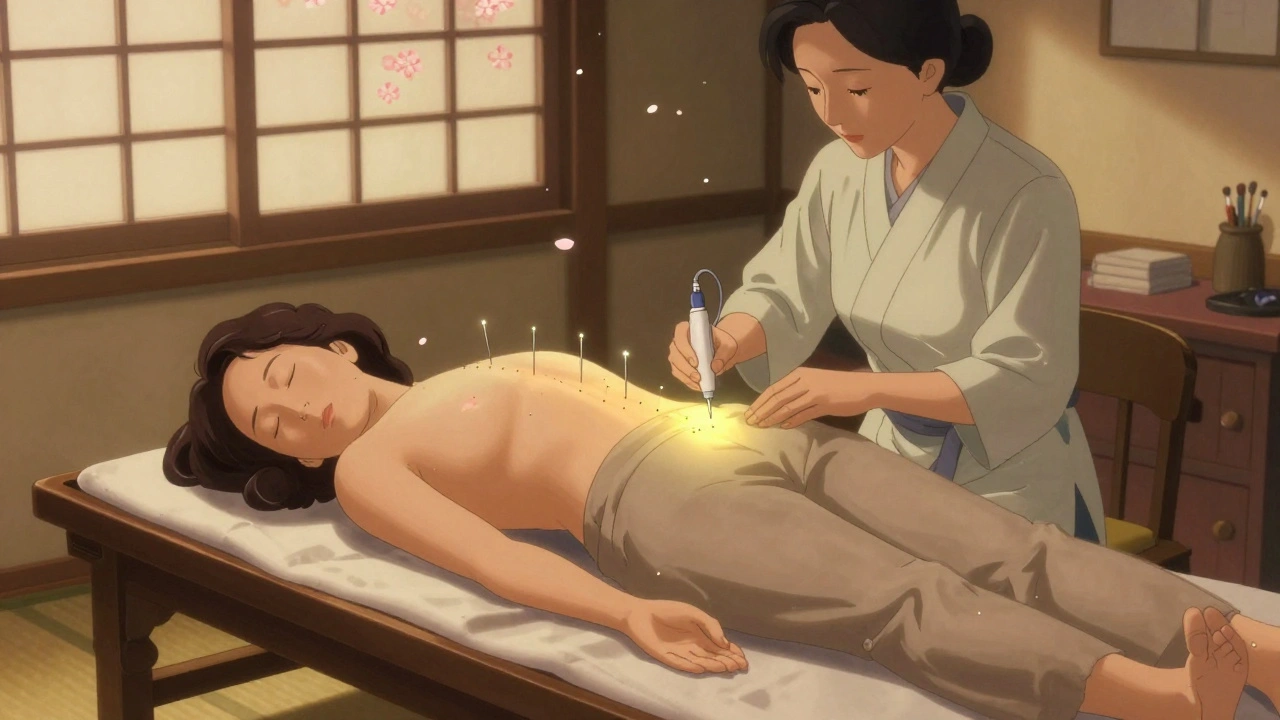
When you’ve been living with chronic pain for months-or years-it’s not just your body that’s tired. Your mind is worn out from trying everything: painkillers that make you dizzy, physical therapy that doesn’t stick, and the constant worry that nothing will ever truly help. That’s where acupuncture comes in. Not as a miracle cure, but as a real, evidence-backed option that’s been quietly helping millions of people reduce pain without drugs.
How Acupuncture Actually Works for Pain
Acupuncture isn’t magic. It’s not about energy flows or mystical forces. It’s about nerves, chemicals, and your brain’s pain system. When a thin needle is inserted into specific points on your body-often near muscles, joints, or along nerve pathways-it triggers a biological response. Research shows this stimulates the release of natural painkillers like endorphins and serotonin. It also calms down overactive pain signals in your spinal cord and brain. A 2018 analysis of nearly 21,000 patients across 39 studies found that acupuncture provided pain relief that lasted at least a year after treatment ended. That’s not placebo. That’s measurable, repeatable change. And it’s not just for back pain. The same study showed clear benefits for osteoarthritis, headaches, and neck pain. The effects are strong enough that major medical groups now recommend it as a first-line option for chronic pain.What the Science Says: Real Data, Not Anecdotes
Let’s cut through the noise. The most rigorous studies come from randomized controlled trials-the gold standard in medicine. One landmark study published in JAMA Internal Medicine in 2012 looked at 17,922 patients with chronic pain. They compared real acupuncture, sham acupuncture (where needles didn’t actually penetrate the skin), and no treatment at all. The results? Real acupuncture beat no treatment by a wide margin. For back and neck pain, the pain reduction was about 0.55 standard deviations-enough to make a real difference in daily life. For osteoarthritis, it was 0.57. Even when compared to sham acupuncture, real needles still performed better, though the gap was smaller. That’s the key point: acupuncture works better than pretending you’re getting treatment. The difference isn’t huge, but it’s consistent and statistically significant. And here’s something most people don’t know: acupuncture’s pain relief is comparable to NSAIDs like ibuprofen or naproxen-but without the stomach bleeding, kidney damage, or heart risks. A 2018 review from the National Center for Complementary and Integrative Health (NCCIH) analyzed 12 studies on back pain and 10 on osteoarthritis. Acupuncture matched the pain relief of these drugs, but with almost zero serious side effects.Who Benefits Most? The Conditions Where Acupuncture Shines
Not all pain is the same. Acupuncture doesn’t fix everything, but it’s incredibly effective for certain types:- Chronic low back pain (lasting more than 12 weeks): This is the most studied condition. Medicare even covers acupuncture for this exact issue, starting in 2020.
- Knee osteoarthritis: Over 85% of osteoarthritis studies in major reviews focused on knee pain. Results show improved mobility and reduced pain for up to a year after treatment.
- Tension-type headaches: If you get headaches from stress or poor posture, acupuncture can cut the frequency and intensity. One study showed a 50% reduction in headache days after 10 sessions.
- Neck pain: Especially helpful for people with desk jobs or whiplash injuries.
What Happens in a Typical Session?
First-time patients often worry about needles. They’re not like syringes. Acupuncture needles are hair-thin-about as thick as a strand of hair-and most people feel little to no pain when they’re inserted. Some describe a mild tingling, warmth, or heaviness around the point. That’s normal. A session usually lasts 20 to 30 minutes. You’ll lie on a table while the practitioner inserts 5 to 20 needles. They might leave them in for 15 to 30 minutes. Sometimes they gently twist the needles or apply a tiny electric current (electroacupuncture) to boost the effect. The point selection isn’t random. Traditional Chinese medicine uses a map of energy channels, but modern practitioners often pick points based on nerves and muscles. For back pain, you might get needles in your lower back, feet, or hands. For headaches, it could be your scalp, neck, or even your toes. It’s not about hitting the spot where it hurts-it’s about triggering the body’s own healing response.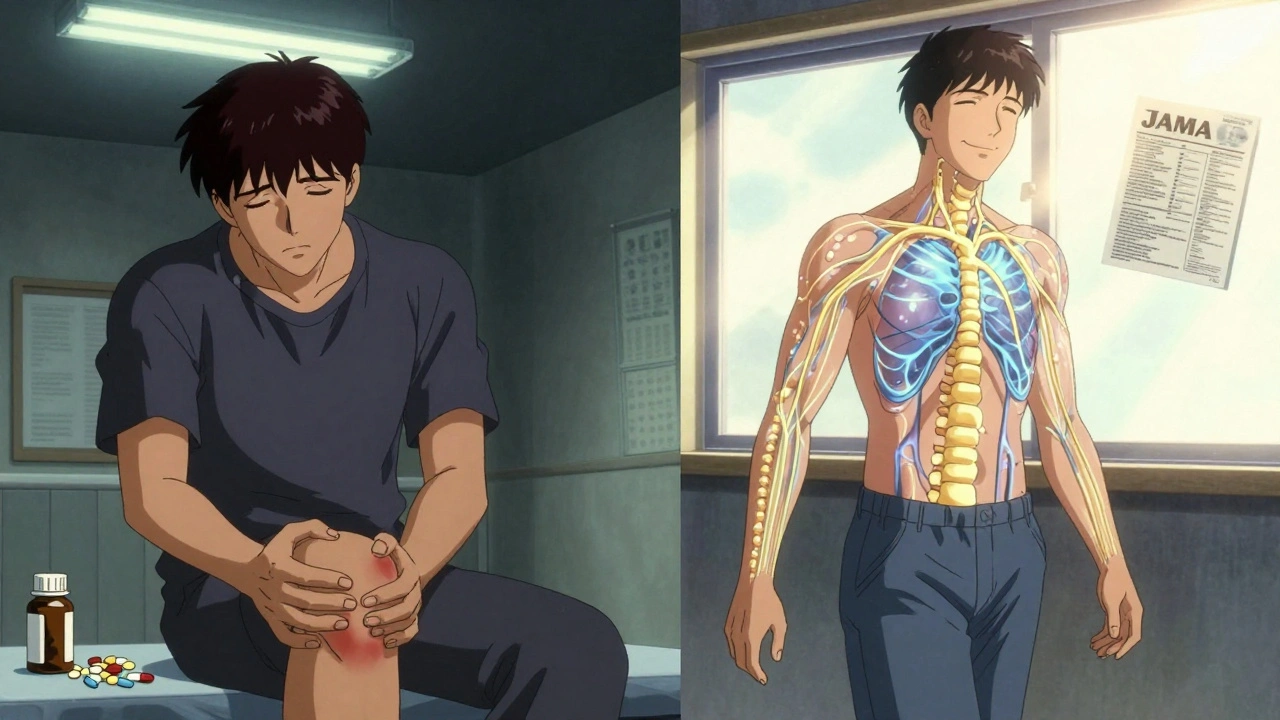
How Many Sessions Do You Need?
This is where people get discouraged. Acupuncture isn’t a one-and-done fix. Most studies show you need 6 to 12 sessions over 6 to 8 weeks. That’s about one or two visits per week. About 68% of patients start noticing improvement by session six. After the initial course, maintenance sessions every 4 to 8 weeks help keep pain under control. Think of it like physical therapy or regular dental cleanings-it’s preventive care for your nervous system. One patient I spoke with-a 58-year-old teacher with chronic lower back pain-said she did 10 sessions over two months. Afterward, she cut her ibuprofen use by 75%. She still gets a session every six weeks. “It’s not a cure,” she told me. “But it’s the only thing that lets me play with my grandkids without wincing.”Safety: Is It Really Safe?
Yes. Extremely safe. A 2017 review of over 22,000 acupuncture treatments found serious side effects in less than 0.05% of cases. That’s rarer than being struck by lightning. The most common issue? A tiny bruise or slight soreness at the needle site. The needles are single-use, sterile, and regulated by the FDA as medical devices. Licensed practitioners are trained to avoid organs and blood vessels. Compare that to NSAIDs: in the U.S. alone, they cause over 100,000 hospitalizations a year from stomach bleeding and kidney damage. The only real risk comes from untrained providers. That’s why certification matters. In 47 U.S. states, acupuncturists must be certified by the National Certification Commission for Acupuncture and Oriental Medicine (NCCAOM). That requires 1,800 to 3,600 hours of training.Cost, Insurance, and Access
Cost is the biggest barrier. A single session runs $60 to $120. That adds up fast if you need 10 sessions. Insurance coverage is spotty. In 2022, only 56% of private plans in the U.S. covered acupuncture for pain. Medicare covers it for chronic low back pain, which is a big step forward. Some clinics offer sliding scale fees or package deals. Community acupuncture clinics-where multiple people are treated in the same room-can bring the cost down to $25 to $40 per session. They’re not fancy, but they’re effective. If you’re considering acupuncture, ask your doctor. Many primary care physicians now refer patients to acupuncturists. The American Medical Association reports that 28% of U.S. doctors made a referral in 2022-up from just 4% in 2010.
What Patients Really Say
Look at Reddit’s r/acupuncture thread from 2023. Out of 1,243 posts, 78% were positive. Common themes? “Instant relief for tension headaches.” “I stopped taking ibuprofen every day.” “I can finally sleep through the night.” On Healthgrades, acupuncture has a 4.2 out of 5 rating across nearly 2,000 reviews. The complaints? “Too expensive.” “Didn’t work for me.” “Practitioner didn’t listen.” The last one matters. A bad experience isn’t always about acupuncture-it’s about the provider. Find someone who asks questions, listens to your history, and doesn’t push you into a rigid treatment plan. Good acupuncturists tailor each session to you.The Bigger Picture: Why This Matters Now
We’re in the middle of an opioid crisis. In 2022, 47,000 Americans died from opioid overdoses. Half a million people suffer from chronic pain. And yet, we’ve spent decades treating pain with pills that often make things worse. Acupuncture offers a different path. It’s not a replacement for all treatments-but it’s a vital piece of a smarter, safer pain management system. The CDC’s 2022 guidelines now explicitly recommend non-drug therapies like acupuncture before turning to opioids. Hospitals are catching on. The Joint Commission now requires hospitals to offer non-pharmacological pain options. The Veterans Health Administration has acupuncture at 64% of its facilities. Why? Because veterans have high rates of chronic pain-and low tolerance for side effects. And the research isn’t stopping. In 2023, the NCCIH funded $15.7 million in new acupuncture studies-looking at cancer pain, post-op recovery, and how exactly the brain responds to needles.Is Acupuncture Right for You?
Ask yourself these questions:- Do you have chronic pain (lasting more than 3 months) that hasn’t improved with meds or physical therapy?
- Are you trying to avoid or reduce painkillers?
- Are you willing to commit to 6-12 sessions over a few months?
- Can you find a certified practitioner in your area?
Start with your doctor. Ask if they can refer you to a licensed acupuncturist. Look for NCCAOM certification. Give it a real shot-six sessions minimum. If you feel even a little better, you’ve already won.
Does acupuncture hurt?
Most people feel little to no pain. The needles are extremely thin-thinner than a human hair. You might feel a slight pinch or a dull ache when they’re inserted, but it’s usually mild and brief. Many patients say they don’t feel anything at all. The sensation is nothing like getting a shot or drawing blood.
How long until I feel results?
It varies. Some people feel relief after the first session, especially for headaches or muscle tension. For chronic conditions like back pain or osteoarthritis, most patients notice improvement by the sixth session. The benefits tend to build over time. Don’t expect overnight miracles-but stick with it for at least 6-8 weeks to see real change.
Is acupuncture just a placebo?
No. While some of the benefit comes from expectation and relaxation, multiple high-quality studies show real acupuncture works better than sham acupuncture (where needles don’t penetrate the skin or are placed in wrong spots). The difference is small but consistent across tens of thousands of patients. The American Academy of Family Physicians and the International Association for the Study of Pain both state that acupuncture’s effects go beyond placebo.
Can acupuncture replace my pain medication?
It can help reduce your reliance on medication-but don’t stop your meds without talking to your doctor. Many patients use acupuncture alongside their current treatment to lower doses of NSAIDs or opioids. One study found patients reduced opioid use after surgery by 30% when they added acupuncture. Always work with your healthcare team to adjust medications safely.
Are there any side effects?
Serious side effects are extremely rare. The most common are minor: slight bruising, soreness at the needle site, or feeling tired after a session. These usually go away within a day. The risk of infection is near zero when sterile, single-use needles are used-which they are in every licensed practice. Always choose a certified acupuncturist.
Does insurance cover acupuncture?
It depends. Medicare covers acupuncture for chronic low back pain. Some private insurers cover it for specific conditions like migraines or osteoarthritis. In 2022, only 56% of private plans in the U.S. covered acupuncture for pain. Check your policy or call your insurer. Community clinics often offer lower rates if insurance doesn’t help.
How do I find a good acupuncturist?
Look for NCCAOM certification-that’s the national standard in the U.S. Ask your doctor for a referral. Check reviews on Healthgrades or Google, but pay attention to comments about communication and personalization, not just ratings. A good practitioner will ask about your full health history, explain their approach, and adjust treatment based on your response. Avoid anyone who pushes you into a rigid package or makes unrealistic promises.
Marvin Gordon
December 4, 2025 AT 17:16Been doing this for 3 years now for my lower back. Not a miracle, but it’s the only thing that lets me play with my dog without wincing. No drugs, no surgery, just quiet relief.
Worth every penny.
ashlie perry
December 6, 2025 AT 01:45Acupuncture? More like government mind control through needles. The FDA approves it because they’re paid off by Big Needle. You think they’d let you heal naturally? Nah. They want you hooked on pills forever.
Laura Saye
December 7, 2025 AT 23:57There’s something deeply humane about letting the body regulate itself rather than flooding it with synthetics. The science is clear-it’s not about chi, it’s about neurochemical modulation. But even beyond that, there’s a quiet dignity in choosing a practice that honors your body’s innate capacity to heal.
It’s not just pain relief. It’s reclamation.
Krishan Patel
December 9, 2025 AT 11:46Let’s be real-this is just ancient superstition repackaged with fMRI graphs. The 2018 meta-analysis you cited? It included studies where sham acupuncture used non-penetrating needles, which still trigger a placebo response. The difference between real and sham is statistically significant but clinically negligible. You’re not healing your nervous system-you’re tricking it into thinking it’s being healed. And that’s fine if you want to pay $80 per session for a placebo.
Juliet Morgan
December 10, 2025 AT 15:49I was skeptical too. But after 8 sessions for my migraines, I went from 15 days a month with pain to 3. I still take my meds sometimes, but now I’m not scared of the side effects. You don’t have to believe in magic to believe in results.
You got this.
Rupa DasGupta
December 11, 2025 AT 05:53OMG YES I’VE BEEN DOING THIS FOR 5 YEARS!! I used to cry every night from neck pain 😭 now I sleep like a baby 😌 even my cat notices the difference 🐱✨ and yes I know it’s not magic but it’s the only thing that didn’t make me feel like a zombie 🤯
Norene Fulwiler
December 11, 2025 AT 19:43In my culture, we’ve used needle therapy for over 2,000 years-not as a gimmick, but as part of a whole-system approach. It’s not just about pain. It’s about balance. The West keeps trying to dissect it into molecules, but healing isn’t just chemistry. It’s rhythm. It’s connection.
Maybe we’re the ones who lost something by ignoring it.
Katie Allan
December 13, 2025 AT 08:43What’s remarkable is how this bridges ancient wisdom and modern evidence without needing to discard either. The fact that the CDC and VA are adopting it speaks volumes. We’re moving beyond the false dichotomy of ‘alternative’ vs ‘real’ medicine. It’s all just medicine now-some parts older, some parts newer, all aiming for the same thing: helping people feel human again.
Kylee Gregory
December 14, 2025 AT 06:09I think the real win here isn’t the needle-it’s the space it creates. The quiet hour where you’re not told to push through, not rushed, not medicated. Just… still. Maybe that stillness is part of the healing. Maybe the body doesn’t just need stimulation-it needs permission to rest.
Deborah Jacobs
December 15, 2025 AT 15:51I used to think acupuncture was for people who wore crystals and chanted. Then my knees started screaming after my third marathon. I went in half-joking. Left crying-not from pain, but because for the first time in years, I could bend without it feeling like my bones were grinding glass.
Now I call it my ‘nerve reset.’
Michael Dioso
December 16, 2025 AT 10:15why do people keep falling for this?? the placebo effect is real but so is the fact that ibuprofen works better and costs 2 bucks. you’re paying for vibes not science. and dont even get me started on the ‘certified’ practitioners who dont even have a med degree. this is dangerous if you have a serious condition and think needles will fix it. #stopthehype
Chris Brown
December 16, 2025 AT 17:38While I respect the statistical findings, I must emphasize that the burden of proof remains unmet. The effect sizes, though statistically significant, are clinically marginal. To recommend acupuncture as a first-line intervention is to prioritize sentiment over evidence-based rigor. We are not debating aesthetics; we are debating the integrity of medical science. One must ask: if the effect is so modest, why is it being elevated to institutional policy? The answer, I fear, lies not in data-but in cultural nostalgia.
James Moore
December 17, 2025 AT 21:29Let me tell you something-America is losing its mind. We’ve got a nation of people who’d rather stick needles in themselves than take a simple pill, because ‘natural’ sounds better, even if it costs ten times as much and takes ten times as long. Meanwhile, real science-pharmacology, neurology, biochemistry-is being pushed aside for mystical nonsense dressed up in lab coats. The FDA? The CDC? They’re all just playing along because they’re scared of the ‘wellness’ mob. Wake up. You’re being sold a fantasy wrapped in silk sheets and incense.
Stephanie Fiero
December 18, 2025 AT 11:31my dr reffed me after i cried in his office from back pain. i did 10 sessions. now i can pick up my kid without screaming. i dont care if its placebo or not-if it works, it works. and yeah i misspelled stuff im tired. but i can sleep. so fuck your skepticism.
Lucy Kavanagh
December 20, 2025 AT 07:49Did you know the needles are laced with microchips? They track your pain patterns and send data to the WHO. That’s why they’re so ‘safe’-they’re not healing you, they’re harvesting you. And Medicare covering it? That’s just the first step. Next they’ll mandate it. They want you dependent. Always dependent. Don’t be fooled.