
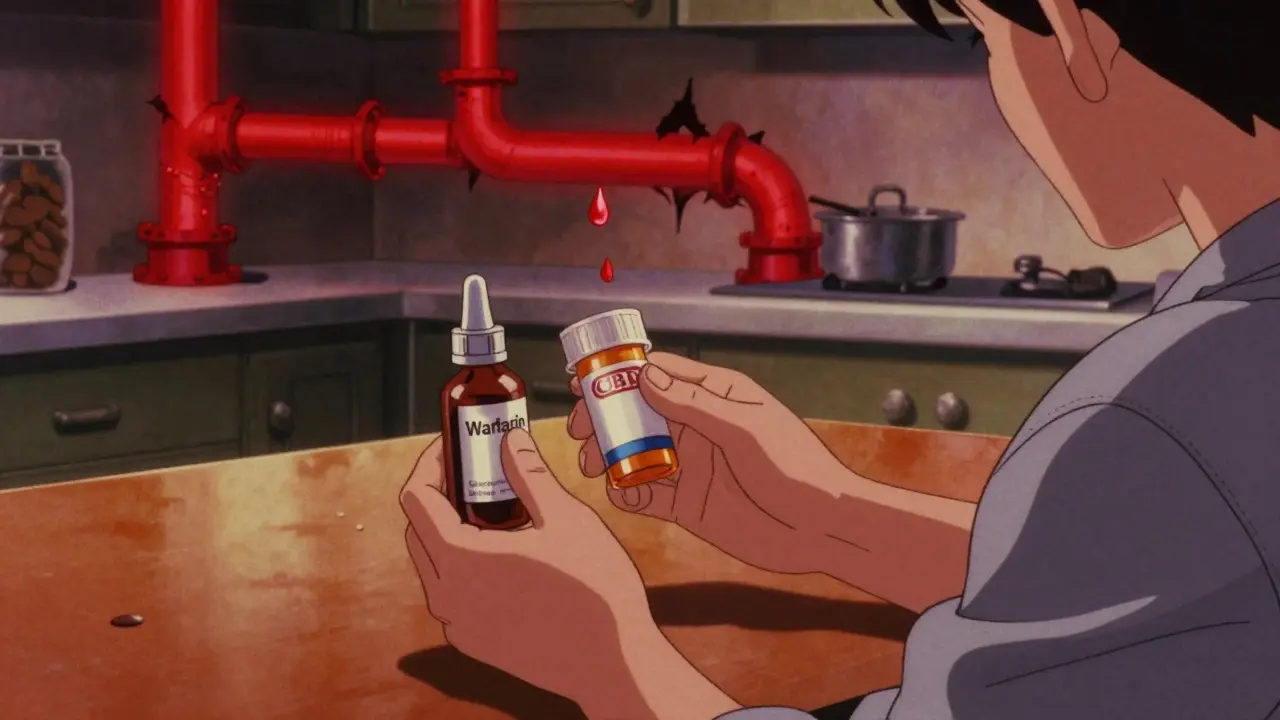
More people are trying CBD for sleep, pain, or anxiety - but few realize it could be quietly messing with their prescription meds. If you're on blood thinners, heart medication, thyroid pills, or seizure drugs, mixing them with CBD isn't just a gray area. It’s a potential health risk. And it’s happening more than you think.
Why CBD Can Interfere With Your Meds
Your body uses a group of liver enzymes called cytochrome P450 to break down most prescription drugs. About 60% of all medications - including common ones like warfarin, amiodarone, and levothyroxine - rely on this system. CBD doesn’t just pass through your body. It actively blocks those same enzymes. Think of it like a clog in a pipe. When CBD gets in the way, your meds don’t get broken down the way they should. That means they can build up to dangerous levels in your blood.This isn’t theory. A 2024 review in Frontiers in Pharmacology found 31 documented cases of serious interactions between cannabinoids and narrow therapeutic index (NTI) drugs. These are meds where even a small change in dose can cause harm. One of the most common? Warfarin. In six out of seven reported cases, people on warfarin needed urgent dose changes after starting CBD. Two had dangerous bleeding episodes.
Medications That Can Turn Dangerous With CBD
Not all drugs react the same. Some are fine. Others? Not even close. Here’s what to watch for:- Warfarin (Coumadin) - A blood thinner. CBD can make it too strong, raising your risk of internal bleeding.
- Amiodarone (Cordarone) - Used for irregular heartbeat. CBD can cause toxic buildup, leading to heart rhythm problems.
- Levothyroxine (Synthroid) - For hypothyroidism. CBD can make it less effective, leaving you tired, cold, and gaining weight.
- Clobazam, Valproate, Lamotrigine - Seizure meds. CBD can spike blood levels, causing dizziness, confusion, or even liver damage.
- Tacrolimus and Sirolimus - Immunosuppressants after organ transplants. CBD can push levels into toxic range, increasing infection risk.
Here’s a simple rule: if your pill bottle says "Avoid grapefruit", treat CBD the same way. Both grapefruit and CBD inhibit the same liver enzyme (CYP3A4). That’s not a coincidence - it’s a red flag. Around 85 prescription medications carry this warning. If yours is on the list, CBD could be risky.
What About Low Doses? Is a Little CBD Safe?
Some argue that small amounts of CBD - like 5 or 10 mg - won’t cause problems. But the science doesn’t back that up. Even low doses can build up over time, especially if you take CBD daily. CBD’s half-life is 18 to 32 hours. That means if you take it every night, it’s still in your system the next day. And the enzyme-blocking effect can linger for days after you stop.One 2023 analysis in the Journal of Clinical Pharmacology found that claims about low-dose CBD being "safe" lack real-world evidence. Clinical trials with Epidiolex - a pharmaceutical-grade CBD used for epilepsy - showed liver enzyme spikes in 20% of patients, even at controlled doses. That’s not a side effect you ignore.

Other Risks You Might Not Know
CBD doesn’t just mess with your liver. It can also make other drugs stronger in ways you don’t expect.- Sedatives - If you take Xanax, Ambien, Benadryl, or opioids, CBD can make you overly sleepy. That increases your risk of falls, car accidents, or breathing problems.
- Alcohol - Mixing CBD and alcohol doubles the drowsiness. No one talks about this, but it’s dangerous.
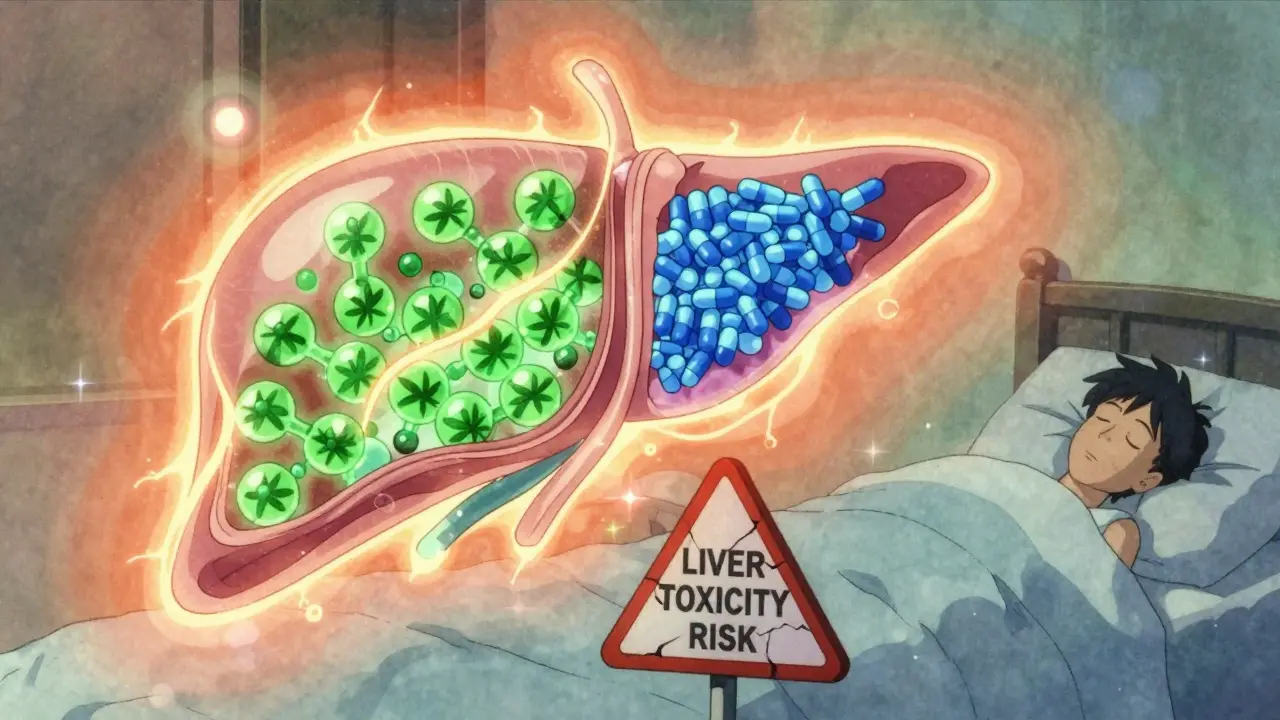
- Liver damage - The FDA flagged liver toxicity as a key risk with CBD. People with existing liver disease should avoid it entirely.
One patient in a 2023 case report developed severe liver inflammation after using a daily CBD tincture while on multiple medications. His liver enzymes jumped 500%. He stopped CBD - and recovered. But he was lucky.
What Should You Do If You’re Already Using CBD?
If you’re on any prescription medication and using CBD - stop assuming it’s harmless. Here’s what to do now:- Check your meds for grapefruit warnings. If it’s there, CBD is likely risky too.
- Don’t stop your meds. But don’t keep using CBD without talking to your doctor.
- Bring your CBD product to your pharmacist. Pharmacists are trained to spot interactions. They can check your full list and tell you if it’s safe.
- Ask for blood tests. If you’re on warfarin, thyroid meds, or seizure drugs, your doctor can check your blood levels before and after starting CBD to see if it’s changing how your body handles them.
- Start low, if you must. If your provider says it’s okay, begin with 5 mg once a day. Wait at least 4 hours between taking your medication and CBD. Monitor for dizziness, unusual fatigue, or bruising.
The Portland Clinic recommends avoiding CBD entirely if you’re on immunosuppressants like tacrolimus. There’s no safe middle ground - the risk of organ rejection or infection is too high.
What About CBD Labels and Quality?
Not all CBD is created equal. A 2023 study found that 43% of CBD products sold online had inaccurate labels - some had way more CBD than stated. Others had hidden THC or contaminants. If you’re using CBD for health reasons, you need to know what’s in it.Look for a Certificate of Analysis (COA) from a third-party lab. It should show exact CBD and THC levels, plus tests for heavy metals, pesticides, and solvents. In 2020, only 32% of brands provided this. By 2023, it jumped to 68%. That’s progress - but still not universal.
What’s Being Done About It?
The FDA is stepping up. In February 2024, they announced new rules requiring CBD products to include clear warnings about drug interactions on their packaging by Q3 2024. That’s a big deal. For years, these products were sold like supplements - no warnings, no oversight. Now, they’ll have to tell you the truth.Researchers at Penn State also built a free tool called CANN-DIR to help doctors and patients check for possible interactions. You can type in your medication and see if CBD is a known risk. It’s not perfect, but it’s a start.
Bottom Line: CBD Isn’t Just a Natural Supplement
CBD isn’t a harmless herbal tea. It’s a powerful compound that changes how your body processes drugs. For some people, it helps. For others - especially those on prescription meds - it can be dangerous.If you’re taking any medication regularly, don’t guess. Don’t rely on internet advice. Talk to your doctor or pharmacist. Show them your CBD product. Ask: "Could this interfere with my meds?" If they’re unsure, ask for a blood test. Better safe than sorry.
The goal isn’t to scare you off CBD. It’s to make sure you’re not putting your health at risk because no one told you the truth.
Can I take CBD with my blood thinner like warfarin?
No - not without close medical supervision. CBD can increase warfarin levels in your blood, raising your risk of dangerous bleeding. At least six out of seven documented cases required urgent dose changes. If you’re on warfarin, avoid CBD unless your doctor orders blood tests and adjusts your dose carefully.
Is CBD safe if my medication has a grapefruit warning?
No. Both grapefruit and CBD block the same liver enzyme (CYP3A4), which can cause your medication to build up to toxic levels. If your pill bottle says "avoid grapefruit," treat CBD the same way. Around 85 prescription drugs carry this warning - including common heart, cholesterol, and blood pressure meds.
How long does CBD stay in my system?
CBD’s half-life is 18 to 32 hours, depending on how you take it. If you use it daily, it builds up. The enzyme-blocking effect can last for days after you stop. That means even if you take CBD in the morning and your medication at night, they’re still interacting. Don’t assume timing alone makes it safe.
Can CBD cause liver damage?
Yes. Clinical trials of Epidiolex, a prescription CBD, showed elevated liver enzymes in about 20% of patients - a sign of liver stress. People with existing liver disease should avoid CBD entirely. If you’re taking CBD and notice yellowing skin, dark urine, or unexplained fatigue, get your liver checked immediately.
Should I tell my pharmacist I’m using CBD?
Absolutely. Pharmacists are trained to catch drug interactions - often better than doctors, because they see your full prescription list. Bring your CBD product (bottle or label) to them. They can check for risks, suggest alternatives, or warn you if it’s unsafe. Many pharmacies now offer free interaction checks.
Are there any CBD products that are safer?
No. All CBD - whether oil, gummies, or capsules - affects the same liver enzymes. The risk isn’t about the form, it’s about the compound itself. Even "broad-spectrum" or "isolate" CBD can interfere with meds. The only exception is topical CBD (creams, lotions) applied to skin - it doesn’t enter your bloodstream in significant amounts, so it’s unlikely to cause interactions.
What if I’m using CBD for epilepsy and my doctor prescribed it?
If your doctor prescribed Epidiolex or another medical-grade CBD for epilepsy, they’ve already factored in interactions. Never switch to an over-the-counter CBD product - those aren’t tested for consistency or purity. Stick to what your doctor prescribed and keep your blood levels monitored.
What to Do Next
If you’re on meds and thinking about CBD: pause. Don’t buy it yet. First, make a list of every prescription, over-the-counter, and supplement you take. Bring it to your pharmacist. Ask them to run a drug interaction check. If they say no, believe them. If they say yes - ask how to monitor it safely.There’s no shortcut. Your health isn’t worth gambling on a trend. CBD might help - but only if you use it wisely.
Bradly Draper
December 30, 2025 AT 04:58This blew my mind. I’ve been taking CBD for back pain and warfarin for AFib. I had no idea they could clash like this. I’m canceling my next order and calling my pharmacist tomorrow.
ANA MARIE VALENZUELA
December 31, 2025 AT 17:13Of course people are dying from this. No one reads the fine print. You think CBD is just ‘natural wellness’? It’s a silent killer hiding in gummy bears. I’ve seen three patients in six months with bleeding ulcers because they thought ‘plant-based’ meant ‘safe.’ Wake up.
Ellen-Cathryn Nash
January 1, 2026 AT 18:35It’s not just CBD-it’s the entire wellness industrial complex preying on people’s desperation. You’re not healing, you’re poisoning yourself while feeling virtuous. And don’t even get me started on the influencers selling ‘therapeutic doses’ while sipping matcha lattes in Bali. 🤮
James Hilton
January 2, 2026 AT 11:14Y’all are acting like CBD is the new nicotine. Chill. I’ve been taking 10mg nightly for a year with my blood pressure med-zero issues. Maybe your doctor just sucks at their job.
Vu L
January 4, 2026 AT 10:00So… if I take CBD and my meds at opposite ends of the day, it’s fine right? Science says no? Cool. I’ll just ignore it. I’ve got better things to do than be scared by a blog post.
Samantha Hobbs
January 4, 2026 AT 18:41OMG I JUST REALIZED MY CBD OIL IS ON MY NIGHTSTAND NEXT TO MY THYROID PILLS 😱 I’VE BEEN DOING THIS FOR 8 MONTHS. I’M GOING TO THROW IT OUT RIGHT NOW. THANK YOU.
Nicole Beasley
January 5, 2026 AT 23:18Wait so if I use topical CBD cream for my knees… is that safe?? 🤔 I don’t swallow it, just rub it on. I need to know before I buy more!! 🙏
Gran Badshah
January 6, 2026 AT 20:00you think this is bad? in india we have ayurvedic herbs that do way worse and no one cares. you americans panic over everything. cbd is just oil. drink tea, stop yelling.
sonam gupta
January 7, 2026 AT 19:18Western medicine is a scam. CBD is ancient wisdom. Your enzymes are weak because you eat processed food. I took CBD with my hypertension pills for two years. I’m healthier than ever. Your doctors are scared of natural solutions.
Julius Hader
January 8, 2026 AT 07:12I get it. We all want quick fixes. But if your meds have a grapefruit warning, CBD’s the same deal. I told my uncle this last week-he’s on statins and was using gummies. He cried. Said he didn’t know. We need more education, not fear.
Mimi Bos
January 9, 2026 AT 19:49so i just found out my cbd gummies have 25mg each not 10 like i thought?? i think i might be dying?? my head feels weird??
Payton Daily
January 11, 2026 AT 08:44This whole thing is a metaphor for modern life. We’re all just trying to numb the pain of capitalism with plant-based chemicals while ignoring the systemic rot. CBD doesn’t cause liver damage-society does. The real interaction is between your trauma and your need to feel something, anything, even if it’s poisoning you slowly. We’re not patients. We’re casualties. And the doctors? They’re just the janitors cleaning up the mess we made by believing in magic pills. 🌱💔