
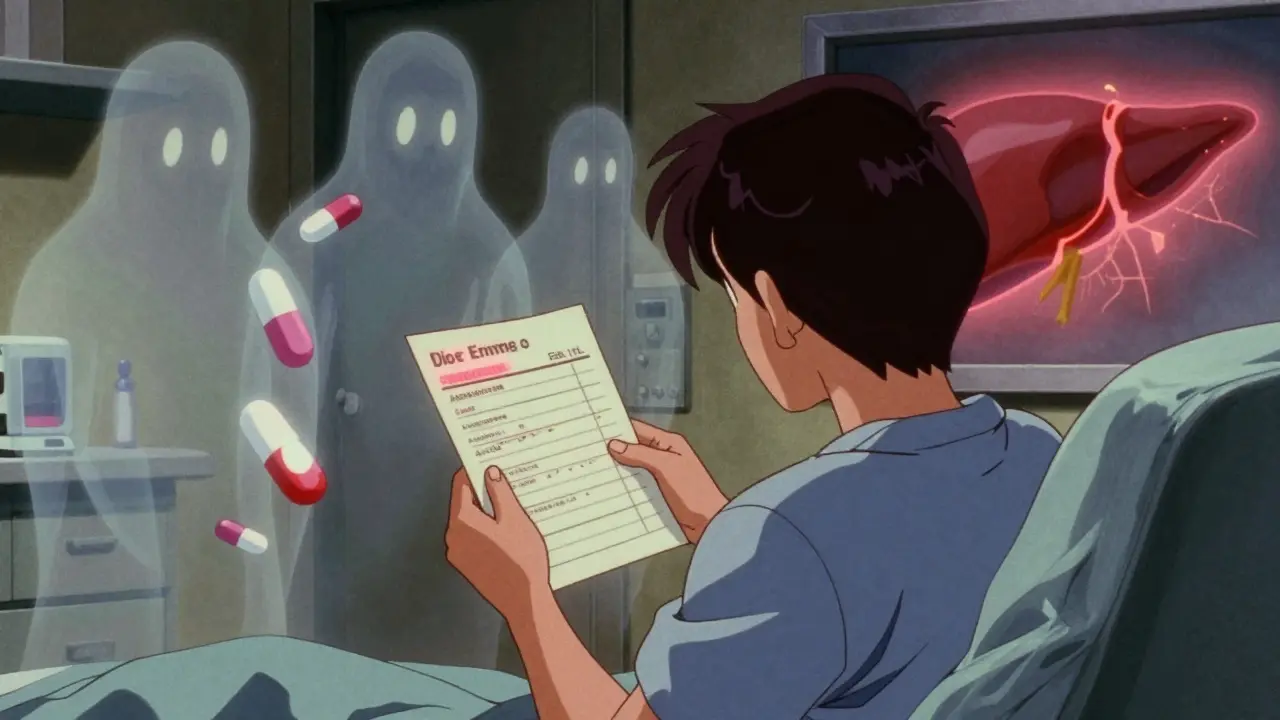
Every year, thousands of people end up in the hospital not because of a virus or an accident, but because of something they took to feel better. Medications that are meant to heal can sometimes hurt the liver. This is called drug-induced liver injury (DILI). It doesn’t happen to everyone, but when it does, it can be serious - even life-threatening. The liver breaks down drugs, but sometimes that process creates harmful byproducts. And when those build up, the liver gets damaged. It’s silent at first. No pain. No warning. Just a slow rise in liver enzymes, often found only through a routine blood test.
What Makes a Drug High-Risk for the Liver?
Not all medications carry the same risk. Some are predictable - if you take too much, you’ll get hurt. Others strike randomly, like a lightning bolt. The two main types are intrinsic and idiosyncratic.
Intrinsic DILI is dose-dependent. Think acetaminophen. Take 4 grams or more in a day, and you’re in danger. The liver can’t handle the overload. That’s why the maximum daily dose for most adults is now 3 grams - especially if you’re older, have liver disease, or drink alcohol. A single overdose of 7-10 grams can cause acute liver failure. In fact, acetaminophen is behind nearly half of all acute liver failure cases in the U.S.
Idiosyncratic DILI is trickier. It doesn’t follow the rules. You could take the right dose for weeks and still end up with liver damage. This type makes up about 75% of all DILI cases. It’s often immune-driven. Your body mistakes a drug metabolite for a threat and attacks your liver. There’s no way to predict who it will hit. That’s why monitoring is so important.
The Top Culprits: Which Medications Are Most Dangerous?
Some drugs are far more likely to cause liver injury than others. Here’s what the data shows:
- Antibiotics - especially amoxicillin-clavulanate (Augmentin). It’s the most common cause of idiosyncratic DILI. One study found it caused liver injury in 1 in every 2,000 to 10,000 courses. Symptoms can show up weeks after you start taking it - jaundice, dark urine, itching, fatigue.
- Antiepileptic drugs - valproic acid and carbamazepine. Valproic acid can cause severe liver damage in children under 2, especially if they’re on multiple seizure meds. Fatality rates in severe cases hit 10-20%.
- Isoniazid - used to treat tuberculosis. About 1% of people taking it develop liver injury. Risk jumps to 2-3% if you’re over 35. Monthly liver tests are recommended during treatment.
- Statins - like atorvastatin or simvastatin. They cause mild enzyme elevations in up to 2% of users, but severe injury? Only 1 in 50,000 to 100,000 people. Routine monitoring isn’t needed, but if you feel unusually tired or your skin turns yellow, get checked.
- Herbal and dietary supplements - this is the fastest-growing category. Green tea extract, kava, anabolic steroids, and weight-loss products are now responsible for about 20% of DILI cases in the U.S. That’s up from 7% in the early 2010s. Many people assume “natural” means safe. It doesn’t.
Even common painkillers like NSAIDs (ibuprofen, naproxen) and antidepressants (SSRIs, SNRIs) can cause injury - though less often. The risk is low, but it’s real.
How Doctors Diagnose Drug-Induced Liver Injury
There’s no single test for DILI. It’s a diagnosis of exclusion. That means your doctor must rule out everything else first - hepatitis A, B, or C; autoimmune disease; fatty liver; alcohol damage.
The key is in the blood. Two liver enzymes tell the story:
- ALT (alanine aminotransferase) - rises when liver cells are damaged. A level more than 3 times the upper limit of normal (ULN) is a red flag.
- ALP (alkaline phosphatase) - rises when bile flow is blocked. More than 2 times ULN suggests cholestatic injury.
Pattern matters. High ALT? That’s hepatocellular damage - like with acetaminophen. High ALP? That’s cholestatic - common with amoxicillin-clavulanate. If both ALT and bilirubin are elevated (ALT >3x ULN and bilirubin >2x ULN), you’re in the danger zone. This is called Hy’s Law. It means you have a 10-50% chance of developing acute liver failure.
Doctors use the RUCAM scale to score how likely a drug caused the injury. A score of 8 or higher means “highly probable.” It looks at timing, dose, other causes, and whether symptoms improved after stopping the drug.
Who Should Be Monitored - And How?
Not everyone needs blood tests. But if you’re taking a high-risk drug, monitoring is non-negotiable.
For isoniazid (TB treatment):
- Test liver enzymes before starting.
- Test again at 2 weeks, then monthly for the first 3 months.
- Stop the drug if ALT rises above 3x ULN - or if you develop nausea, vomiting, or yellow skin.
For valproic acid or carbamazepine:
- Baseline test before starting.
- Test at 2 weeks, then 1 month, then every 2-3 months.
- Watch for confusion, fatigue, or vomiting - signs of hyperammonemia or liver stress.
For antibiotics like amoxicillin-clavulanate:
- Test at 2 weeks if you’re over 50, have liver disease, or are on multiple meds.
- Call your doctor if you develop itching, dark urine, or pale stools - even if you feel fine.
For statins - no routine testing. But if you’re over 65, have diabetes, or drink alcohol, ask your doctor about a baseline test.
For herbal supplements - no official guidelines. But if you’re taking more than one supplement, or combining them with prescription drugs, get tested before and after 4-6 weeks.
What Happens When DILI Is Caught Early
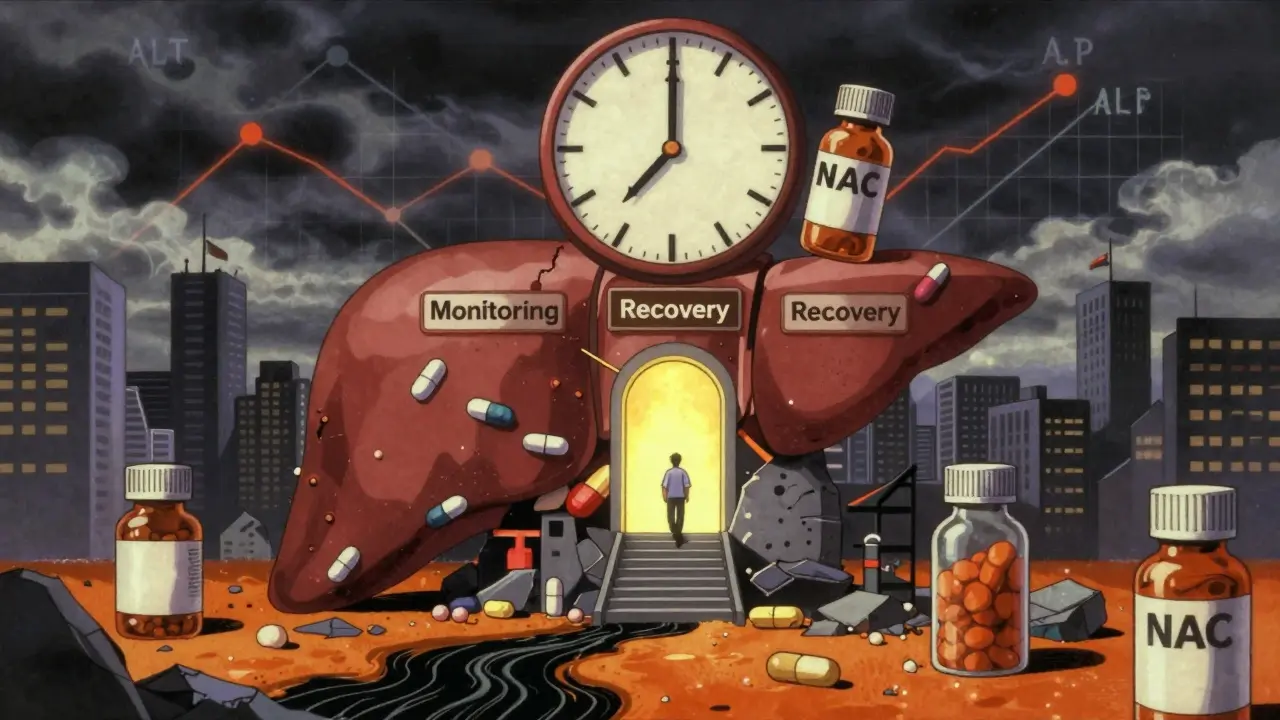
Stopping the drug is the most important step. In 90% of cases, liver enzymes start to drop within 1-2 weeks. Full recovery can take 3-6 months. Some people bounce back completely. Others end up with permanent scarring - cirrhosis - if the injury was severe.
For acetaminophen overdose, time is everything. N-acetylcysteine (NAC) works best if given within 8 hours. After 16 hours, it’s only 40% effective. That’s why emergency rooms have protocols ready - and why it’s critical to call 911 immediately if someone takes too much.
There’s no magic pill for other types of DILI. Supportive care - fluids, rest, avoiding alcohol - is the main treatment. In the worst cases, a liver transplant is the only option. About 13% of all liver transplants in the U.S. are due to DILI.
Real Stories - What Patients Say
A 45-year-old woman in Ohio took amoxicillin-clavulanate for a sinus infection. Three weeks later, her skin turned yellow. Her eyes were bright orange. She had itching so bad she couldn’t sleep. It took three doctors and two months to connect the dots. She recovered - but it took six months.
A man in Florida was on isoniazid for TB. His ALT jumped to 1,200 (normal is under 40). He had no symptoms. His doctor missed it until his routine bloodwork came back. He spent three months in recovery.
One Reddit user said: “I’d been on simvastatin for a year. My doctor said my liver enzymes were ‘slightly high’ - no big deal. I kept taking it. Two months later, I was in the ER. They said I had drug-induced hepatitis. I almost died.”
But not all stories are tragic. One patient in Australia told her pharmacist she was taking green tea extract for weight loss. The pharmacist checked her meds - she was also on an anticonvulsant. They flagged a dangerous interaction. She stopped the supplement before she ever got sick.
What You Can Do - Before and After
You don’t have to wait for symptoms. Here’s how to protect yourself:
- Always tell your doctor and pharmacist about everything you take - supplements, herbs, over-the-counter meds, even vitamins.
- Ask: “Is this drug known to affect the liver?” Especially if you’re over 50, have a history of liver disease, or drink alcohol.
- Don’t ignore fatigue, nausea, or dark urine. They’re not just “being tired.”
- If you’re on a high-risk drug, get a baseline liver test. Keep a copy.
- Use one pharmacy. That way, your pharmacist can see all your meds and catch dangerous combos.
- Don’t assume natural = safe. Kava, green tea extract, and weight-loss supplements have caused more liver injuries than some prescription drugs.
The bottom line: Liver damage from drugs is often preventable. It’s not about avoiding medicine. It’s about knowing which ones carry risk - and being smart about monitoring.
What’s New in DILI Research
Science is catching up. Researchers are now using genetic testing to find who’s at risk. People with HLA-B*57:01 are 80 times more likely to get liver injury from flucloxacillin. Those with HLA-DRB1*15:01 have 5 times the risk from amoxicillin-clavulanate. Genetic screening isn’t routine yet - but it’s coming.
There’s also a new tool called the DILI-similarity score. It looks at a drug’s chemical structure and predicts liver risk with 82% accuracy. That could change how new drugs are tested.
And blood tests are getting smarter. A biomarker called microRNA-122 rises before ALT does - by 12-24 hours. That could mean earlier detection. Trials are underway.
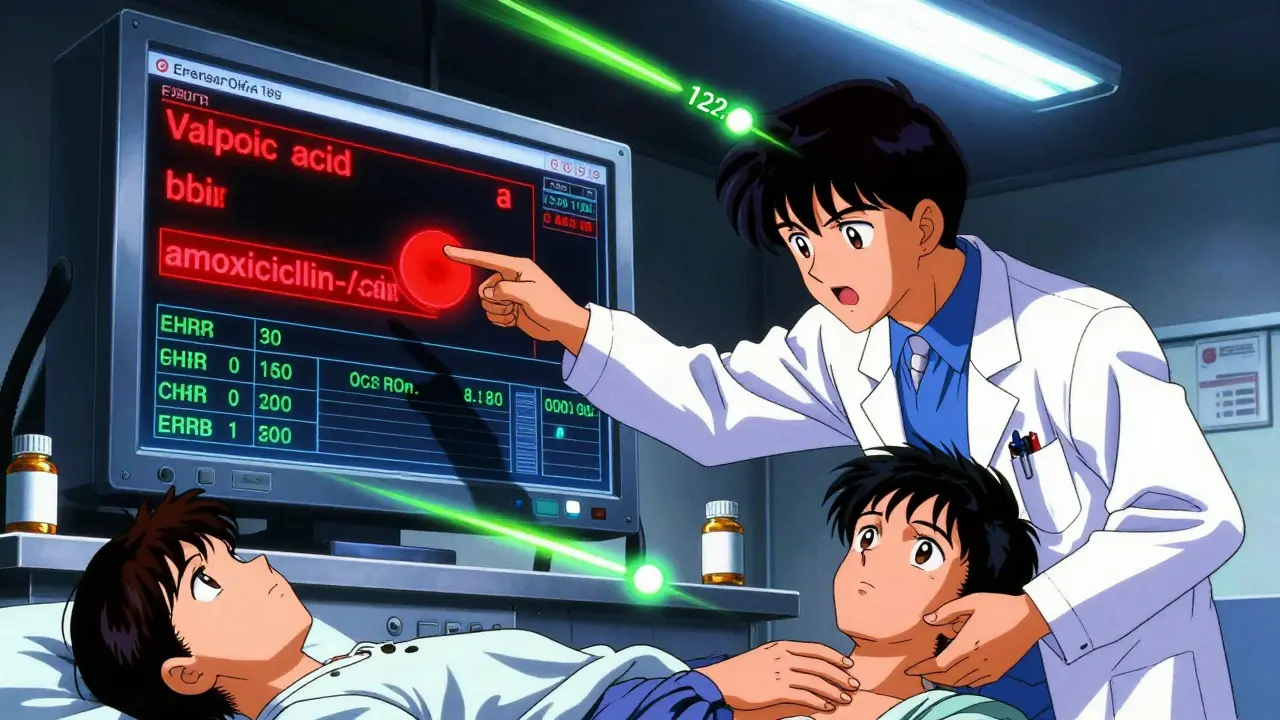
Meanwhile, hospitals are adding EHR alerts. If your doctor tries to prescribe amoxicillin-clavulanate to someone already on valproic acid, the system flags it. Early data shows this prevents 15-20% of serious cases.
Final Thoughts
Drug-induced liver injury isn’t rare. It’s underrecognized. Most people think liver damage only comes from alcohol or hepatitis. But the truth? It’s often the medicine in your cabinet. The supplement you bought online. The antibiotic you took without a second thought.
The good news? You can protect yourself. Know your meds. Ask questions. Get tested if you’re on a high-risk drug. Don’t wait for jaundice. Don’t wait for fatigue. Your liver doesn’t scream - it whispers. Listen early.
Andy Cortez
February 7, 2026 AT 19:24Monica Warnick
February 8, 2026 AT 10:40Jacob den Hollander
February 10, 2026 AT 09:19Camille Hall
February 11, 2026 AT 19:11Chelsea Deflyss
February 11, 2026 AT 23:50Tricia O'Sullivan
February 13, 2026 AT 17:56Alex Ogle
February 15, 2026 AT 05:34Tasha Lake
February 15, 2026 AT 13:56Brett Pouser
February 15, 2026 AT 14:00Karianne Jackson
February 16, 2026 AT 13:26Ashlyn Ellison
February 17, 2026 AT 05:07