

Hip pain can feel like a betrayal. One day you are walking fine, and the next, every step feels like grinding glass. If you have been diagnosed with osteoarthritis of the hip, you have likely heard the standard advice: "Lose weight." It is the go-to suggestion from doctors, friends, and internet forums alike. The logic seems sound-less body mass means less pressure on your joints. But here is the twist that many patients miss: hip osteoarthritis does not always respond to weight loss the way knee osteoarthritis does.
For years, medical guidelines lumped all osteoarthritis together. We assumed that because shedding pounds helps knee pain, it must help hip pain too. Recent research from 2023 and 2024 has complicated this picture. Some studies show dramatic improvements with significant weight loss, while others suggest that for the hip, the mechanical link isn't as direct. So, if you are sitting there wondering if dropping those extra kilograms will actually save your hip or just make you hungry, you are asking the right question. The answer depends on how much weight you lose, how you lose it, and what your specific biology looks like.
The Hip vs. Knee Difference: Why Location Matters
To understand why weight loss is such a debated topic for hip pain, we need to look at anatomy. Your knee is a hinge joint that takes the brunt of your body weight when you walk. When you are overweight, that force multiplies. Every pound of body weight puts about four pounds of pressure on your knees during normal walking. Lose ten pounds, and you take forty pounds off your knees with every step. It is simple physics.
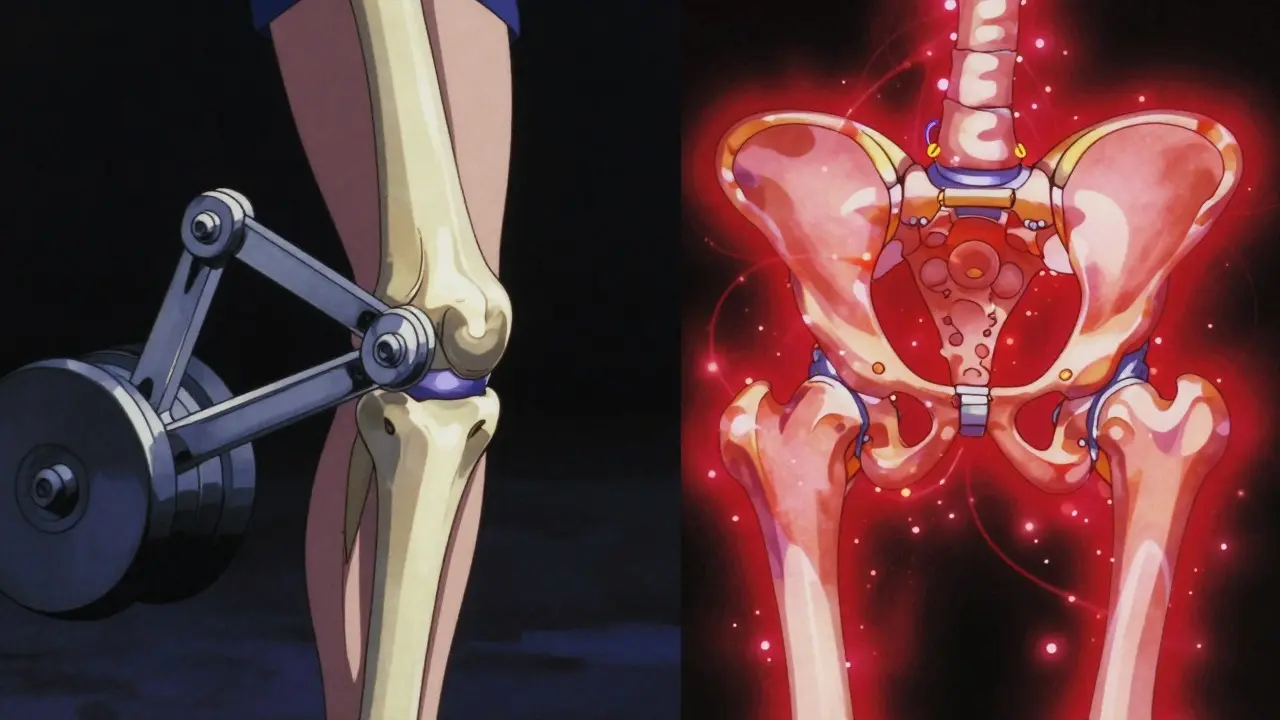
Your hip works differently. It is a ball-and-socket joint located higher up in your pelvis. While it does bear weight, the biomechanics are more complex. A controversial perspective published in the New England Journal of Medicine (NEJM) Journal Watch in August 2023 stated bluntly that "Osteoarthritis of the Hips Is Unaffected by Weight Loss." The commentary noted that while the evidence for knee arthritis is strong, little data supports the same efficacy for hip arthritis. This created a stir in the medical community. If the hip doesn't react to weight changes like the knee, why push diet so hard?
However, this view is not universal. The debate highlights a critical gap in older research. Most large-scale studies focused on knees because knee replacements are more common. Hip-specific data was sparse. That is changing fast. Newer studies are peeling back the layers to see exactly what happens inside the hip joint when body composition changes.
The Dose-Response Reality: How Much Weight Actually Helps?
If you are going to commit to weight loss for hip health, casual efforts might not be enough. A pivotal study published in Nature in 2024 by Atukorala et al. provided some of the clearest data we have seen yet. They looked at participants with an average age of 65, most of whom were female and had obesity (BMI ≥30 kg/m²). The researchers tracked their progress using the Hip disability and Osteoarthritis Outcome Score (HOOS), a standard tool for measuring hip function.
Here is what they found: there is a clear dose-response relationship. In other words, the more weight you lose, the better your symptoms improve. Participants who lost more than 10% of their body weight saw the biggest gains. Specifically, they improved by 14.42 points in the "Hip-related Quality of Life" subscale-a 31% improvement. That is not a minor tweak; that is a life-changing difference for someone struggling to get out of bed or play with their grandchildren.
Compare this to smaller losses. Losing just 5% of your body weight is often cited as a general health goal, but for hip OA, it may fall short of delivering major symptom relief. The Nature study suggests that aiming for that 7-10% range, or even higher, is where the real therapeutic benefit kicks in. Another systematic review in the Journal of Metabolic Health (2023) supported this, noting that groups losing 10-20% of their body weight through low-carb diets and exercise showed significantly better functional outcomes than those losing less than 5%.
| Weight Loss Amount | Clinical Impact | Key Benefit Area |
|---|---|---|
| < 5% | Marginal | General metabolic health; minimal hip pain reduction |
| 5-7% | Moderate | Slight improvement in mobility; reduced systemic inflammation |
| > 10% | Significant | Major boost in quality of life scores; meaningful pain relief |
Inflammation: The Silent Driver of Hip Pain
If the mechanical load argument is weak for hips, why does weight loss still help? The answer lies in biology, not just physics. Fat tissue is not inert storage; it is an active endocrine organ. Adipose tissue releases cytokines and adipokines-chemical messengers that promote inflammation throughout the body.
Osteoarthritis was once thought to be purely "wear and tear." Now we know it involves low-grade chronic inflammation. When you carry excess weight, your body is bathed in these inflammatory markers. This environment accelerates cartilage breakdown and sensitizes nerves, making pain signals louder. By losing weight, you reduce this inflammatory burden. Even if the mechanical pressure on the hip socket doesn't drop drastically, the chemical environment inside the joint improves. This explains why some patients report less pain after weight loss even if their X-rays don't show immediate structural changes.
Diet and Exercise: The Winning Combination
You cannot separate weight loss from movement when treating hip OA. Exercise alone strengthens the muscles around the hip-the glutes, hamstrings, and core-which stabilizes the joint and reduces strain. Diet alone reduces the inflammatory load. Together, they create a synergistic effect.
A randomized controlled trial published in PubMed in 2023 compared two groups of adults with hip OA and obesity. One group followed a very-low-calorie diet (VLCD) plus exercise, while the other did exercise only. After six months, the VLCD group lost 8.5% more weight. Interestingly, at the six-month mark, there was no significant difference in hip pain severity between the two groups. This aligns with the skepticism mentioned earlier. However, the story changed at twelve months. The group that combined aggressive dietary intervention with exercise showed superior results in HOOS pain and function scores. This delay suggests that hip tissue remodeling and neurological adaptation take time. You might not feel the full benefit immediately, but sticking with the program pays off.
Programs like the Osteoarthritis Healthy Weight For Life (OAHWFL), originally designed for knees but adapted for hips in Australia and New Zealand, offer a structured path. These programs typically involve an 18-week intensive phase focusing on both nutrition and physical activity, followed by maintenance. The structure matters because willpower fades, but accountability systems sustain change.
When Diet Isn't Enough: Medical Interventions
Let's be realistic. For many people, especially those with long-standing obesity, lifestyle changes are incredibly difficult. The American College of Rheumatology conditionally recommends weight loss for adults with hip OA who are overweight or obese, but they also recognize the barriers. If conventional non-drug therapies fail after six months, pharmacotherapy becomes an option.
FDA-approved weight loss medications are now considered for patients with a BMI over 30, or over 27 with additional risk factors like hypertension or diabetes. These drugs can help bridge the gap, allowing patients to achieve the 10%+ weight loss threshold that shows clinical benefit for hip OA. However, medication is a tool, not a cure. It works best when paired with the behavioral changes discussed above. Always consult your rheumatologist or primary care provider before starting any new medication regimen.

Practical Steps to Start Today
If you are ready to try weight loss for joint preservation, start with these actionable steps:
- Set a realistic target: Aim for 10% body weight loss over six to twelve months. Do not rush it. Slow and steady prevents muscle loss, which you need for hip stability.
- Focus on anti-inflammatory foods: Reduce processed sugars and refined carbs. Increase intake of omega-3 fatty acids (found in fish, flaxseeds), leafy greens, and berries. These foods directly combat the cytokines driving your pain.
- Choose low-impact exercise: Avoid high-impact activities like running or jumping. Opt for swimming, cycling, or elliptical training. These keep your heart rate up without pounding the hip joint.
- Strengthen the surrounding muscles: Work with a physiotherapist to design a routine that targets the hip abductors and extensors. Strong muscles act as shock absorbers.
- Track non-scale victories: Pain levels, sleep quality, and ease of climbing stairs are better metrics than the number on the scale. Use tools like the HOOS questionnaire to monitor progress.
Conclusion: Hope Amidst the Complexity
The science on hip osteoarthritis and weight loss is no longer black and white. It is nuanced. Yes, the hip responds differently than the knee. Yes, small amounts of weight loss might not move the needle on pain. But substantial weight loss-10% or more-combined with targeted exercise offers a powerful, non-surgical strategy to preserve joint function and improve quality of life. It is not a magic bullet, but it is one of the most effective tools you have in your arsenal.
Does weight loss really help hip osteoarthritis pain?
Yes, but the effect is dose-dependent. Research from 2024 indicates that losing more than 10% of your body weight leads to clinically significant improvements in hip pain and quality of life. Smaller losses (under 5%) may provide minimal symptomatic relief compared to knee osteoarthritis.
Why is hip osteoarthritis different from knee osteoarthritis regarding weight loss?
The hip is a ball-and-socket joint with different biomechanics than the knee's hinge structure. Mechanical load reduction is less direct in the hip. Therefore, the benefits of weight loss in the hip are driven more by reduced systemic inflammation and improved metabolic health rather than just decreased physical pressure on the joint surface.
How much weight should I aim to lose for hip OA?
Aim for at least 7-10% of your total body weight. Studies show that crossing the 10% threshold yields the most substantial improvements in function and pain scores. Losing 10-20% can further enhance outcomes, though the difference between 10% and 20% is less pronounced than the jump from under 5% to 10%.
Can exercise alone help if I don't lose weight?
Exercise helps strengthen the muscles supporting the hip, which can reduce strain on the joint. However, for optimal symptom management in obese individuals, combining exercise with dietary changes to achieve weight loss produces better long-term results than exercise alone, particularly after the 12-month mark.
Are weight loss medications safe for hip OA patients?
FDA-approved weight loss medications can be an option for patients with a BMI >30 (or >27 with comorbidities) who have failed lifestyle interventions. They should be used under medical supervision as part of a comprehensive treatment plan that includes diet and exercise. Consult your doctor to assess suitability and potential side effects.