

Medication Side Effect Tracker
Track your side effects using the form below. This will help you communicate more effectively with your doctor. Enter details about your medication and any side effects you're experiencing.
Your Side Effect History
Click the button below to print or download your side effect log for your next doctor's appointment.
It’s not uncommon to feel like your voice doesn’t matter when you’re sitting across from a doctor who’s already written your prescription. You’ve read the leaflet. You’ve noticed the dizziness, the nausea, the sleepless nights. But when you try to say something, you catch yourself holding back - afraid you’ll sound like a complainer, or worse, that they’ll dismiss you. You’re not alone. And you shouldn’t have to stay silent.
Why Speaking Up Isn’t Optional - It’s Life-Saving
Every year in the U.S. alone, adverse drug reactions send about 1.3 million people to the emergency room. Many of these cases could have been prevented if patients had spoken up earlier. The World Health Organization says nearly half of all medication treatments fail - not because the drugs don’t work, but because people stop taking them. And the top reason? Side effects they didn’t feel heard about. When you notice something off - a new rash, strange fatigue, mood swings, or even just a feeling that something’s "not right" - it’s not "just in your head." It’s data. And your body is the most accurate sensor you’ve got. The truth is, doctors don’t know what they don’t hear. If you don’t mention it, it doesn’t get recorded. And if it doesn’t get recorded, it doesn’t get addressed.What to Track Before Your Appointment
You don’t need to be a medical expert to be an effective advocate. You just need to be honest and consistent. Start by keeping a simple log. For at least a week before your next visit, write down:- What symptom? (e.g., "headaches," "dry mouth," "feeling shaky after dinner")
- When did it start? (e.g., "three days after I started the new blood pressure pill")
- How bad is it? Rate it 0-10, where 0 is nothing and 10 is unbearable
- Does anything make it better or worse? (e.g., "worse when I stand up," "better after drinking water")
- Did you miss a dose? Even one skipped pill can change how your body reacts
How to Say It Without Sounding Like You’re Accusing
You don’t need to argue. You don’t need to be aggressive. You just need to be clear. Try this simple script:"I’ve been taking [medication name] for [time period], and since then, I’ve noticed [specific symptom]. It’s been happening [frequency], and it’s affecting [daily activity]. I’m not sure if it’s related, but I wanted to check because I’m worried it might be a side effect. Can we talk about whether this is normal or if we should adjust something?"
This works because it’s factual, not emotional. It’s collaborative, not confrontational. And it gives your doctor an easy path to respond - not defend.
Use the "Ask Me 3" Framework
One of the most powerful tools for patients is the "Ask Me 3" program, developed by the National Patient Safety Foundation. It gives you three simple questions to ask every time a new medication is prescribed:- What is my main problem? (Get the diagnosis in plain language - no jargon)
- What do I need to do? (Dosing, timing, food restrictions, how long to take it)
- Why is it important for me to do this? (What happens if I don’t? What’s the risk of skipping it?)
Bring Your Medications - All of Them
Don’t just rely on your memory. Bring your pill bottles - or better yet, your entire medication bag - to every appointment. Pharmacists call this a "brown bag review." It’s not just for new patients. Even if you’ve been on the same meds for years, things change. New supplements. Over-the-counter painkillers. Herbal teas. All of it interacts. A 2022 study found that 63% of older adults were taking at least one medication that interacted with another - and most didn’t realize it. Your doctor might not know about the magnesium you started for cramps, or the turmeric capsule you take for inflammation. Bring it all. Let them see it.What If They Dismiss You?
Sometimes, despite your best efforts, you’ll be brushed off. "That’s normal." "It’ll pass." "Lots of people feel that." That’s not enough. If your concerns are ignored, say this: "I understand you think it’s common, but it’s not common for me. I need to know if this is safe for my body, not just statistically normal." If they still don’t listen, ask for a referral. Say: "Can you refer me to a pharmacist who specializes in medication reviews?" Or: "Could we schedule a follow-up in two weeks to see if this improves?" And if you’ve had a bad experience - like someone who ignored leg cramps and later had a stroke - you’re not alone. That story is real. And it’s why your voice matters.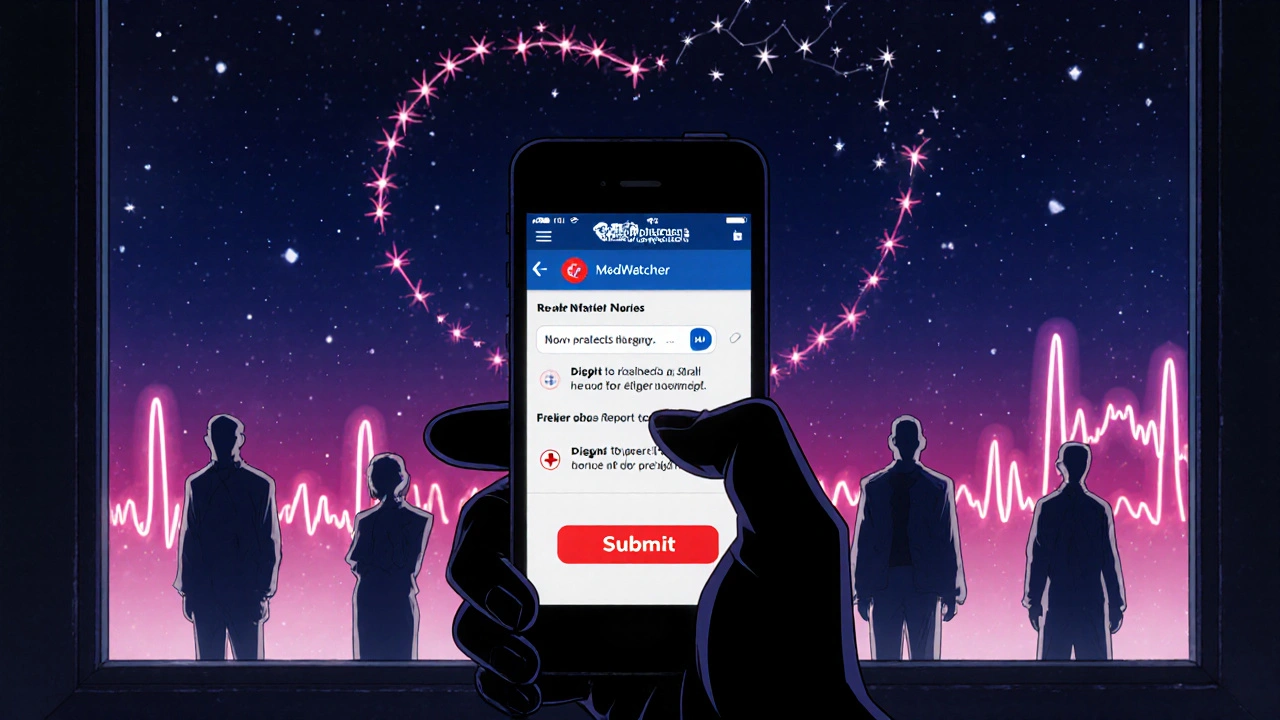
Tools That Actually Help
There are apps and tools designed to make this easier. The FDA-approved Medisafe app lets you track side effects, set reminders, and generate reports to print or email to your doctor. In a 2022 study, 87% of users said it helped them notice patterns they’d missed before. If you prefer paper, try a free printable symptom tracker from MedlinePlus (a U.S. government site). You can find it by searching "MedlinePlus medication tracker." No sign-up needed. No ads. Just clear, simple forms. And don’t underestimate the power of the Patient Information Leaflet (PIL) that comes with your prescription. Yes, it’s long. Yes, it’s full of small print. But the side effect section is the most important part. If you can’t understand it, ask your pharmacist to explain it in plain language. They’re trained to do exactly that.It’s Not Just About You - It’s About Everyone
When you report a side effect, you’re not just helping yourself. You’re helping future patients. Right now, only 1-10% of all adverse drug reactions are reported to the FDA. That means the system is blind to most of what’s happening. In September 2023, the FDA launched a new tool called MedWatcher Connect - a simple online portal where you can report side effects directly. It takes less than five minutes. And in the first month, over 12,000 people used it. That’s more than triple the usual monthly reports. Your report could help uncover a pattern. A hidden risk. A warning that saves someone else’s life.Don’t Wait for Permission
You don’t need to be sick to speak up. You don’t need to be loud. You don’t need to be perfect. You just need to be honest. Your health is not a checklist. It’s not a number on a screen. It’s your life - your sleep, your energy, your mood, your ability to play with your kids, walk your dog, or sit quietly with a cup of tea. If something feels off, say something. Write it down. Bring your bottles. Ask the three questions. Use the app. Report it. Doctors are trained to treat diseases. But they can’t treat what they don’t know is there. You are the only one who knows what your body is really doing. So speak up. Not because you have to. But because you deserve to be heard.What if I’m scared my doctor will think I’m overreacting?
It’s normal to feel this way - but remember, your doctor’s job is to listen. Most doctors want to hear from you. In fact, 78% of patients say they want to talk about side effects, but 61% feel rushed. If you prepare your concerns ahead of time and use clear, factual language - like "I’ve had this symptom for X days, it happens Y times a week, and it stops me from doing Z" - you’re not overreacting. You’re being responsible. And responsible patients help doctors make better decisions.
Can side effects show up weeks after starting a medication?
Yes. Many side effects don’t appear right away. Some take days. Others take weeks or even months. For example, certain antidepressants can cause weight gain or sexual side effects after several weeks of use. Blood pressure medications can cause swelling or fatigue after prolonged use. That’s why tracking symptoms over time matters. Don’t assume something isn’t related just because it started later.
Should I stop taking a medication if I think it’s causing side effects?
Never stop a prescribed medication without talking to your doctor first. Some drugs, like blood pressure or antidepressant medications, can cause serious withdrawal symptoms if stopped suddenly. Instead, document your symptoms, schedule a follow-up, and ask: "Could this be a side effect? What are my options?" Your doctor may lower the dose, switch the medication, or add something to help manage the side effect - without putting you at risk.
What if I can’t afford to see my doctor often?
You don’t need frequent visits to be an advocate. Use your pharmacy as a resource - pharmacists are medication experts and often have more time than doctors. Many offer free medication reviews. You can also use free tools like MedlinePlus symptom trackers or the FDA’s MedWatcher Connect to report side effects online. Even one well-prepared conversation can change your treatment plan for the better.
Is it really worth the effort to track side effects?
Yes. Research shows that patients who track side effects have 25% better medication adherence and reduce unnecessary hospital visits by nearly two per year. It takes about 7 minutes a day to log symptoms - less time than scrolling through social media. That small investment can mean the difference between feeling okay and feeling trapped by your own body.
Julie Pulvino
November 24, 2025 AT 14:41I started tracking my side effects after reading this and honestly? Game changer. I didn’t realize my fatigue was tied to the new statin until I wrote it down. Now my doc adjusted my dose and I’m sleeping again. Thank you for this.
Patrick Marsh
November 24, 2025 AT 14:43Bring your pills. Always. I once forgot my blood thinner bottle. Doctor prescribed me a second one. Nearly killed me.
Danny Nicholls
November 26, 2025 AT 08:46This is the kind of post that makes me believe in humanity again 🙌 I’ve been using Medisafe for 8 months now and it’s saved me from two bad interactions. Also, pharmacists are LEGENDS. Don’t sleep on them. They know more than your doctor sometimes 😎
Robin Johnson
November 26, 2025 AT 14:07You don’t need permission to advocate for yourself. That’s not a suggestion. That’s your right. If your doctor rolls their eyes, find a new one. Your health isn’t negotiable.
Latonya Elarms-Radford
November 27, 2025 AT 03:41It’s fascinating, really, how the medical-industrial complex has conditioned us to be passive recipients rather than active participants in our own somatic narratives. We’ve been trained to defer to authority, to silence our embodied knowledge in favor of institutionalized dogma. And yet-here we are, in this digital agora, reclaiming agency through symptom logs and brown bag reviews. The revolution isn’t televised. It’s in the footnote of a pill bottle.
Mark Williams
November 29, 2025 AT 01:17Adverse drug reaction reporting rates remain critically low due to cognitive bias and systemic underreporting. The FDA’s MedWatcher Connect initiative represents a significant step toward pharmacovigilance democratization, though compliance remains suboptimal without behavioral nudges. Patient-reported outcomes must be integrated into EHR workflows to achieve clinical utility.
Justin Daniel
November 29, 2025 AT 12:45Man, I used to think I was just being dramatic about my headaches… until I tracked them. Turns out, they started right after I began taking that new antidepressant. Doc switched me and I feel like a human again. Thanks for the nudge. 😊
Melvina Zelee
November 30, 2025 AT 01:07omg yes i’ve been doing the ask me 3 thing and it’s wild how much more i understand now. like i didn’t even know what ‘anticoagulant’ meant until my pharmacist said ‘it’s a blood thinner’ and then it clicked. also i spell everything wrong but i’m still right lol
Holly Schumacher
November 30, 2025 AT 18:47Let’s be honest-this is just another feel-good, corporate-sponsored wellness article designed to shift responsibility onto patients while the pharmaceutical industry profits off the very side effects you’re being told to ‘track.’ You think your little symptom log changes anything? The FDA doesn’t act on 99% of these reports. You’re just a data point in a machine that doesn’t care.
Michael Fitzpatrick
December 2, 2025 AT 04:34I remember when I first started taking that blood pressure med. I didn’t say anything for weeks because I didn’t want to bother my doctor. Then one day I just blurted out, ‘I feel like I’m walking through Jell-O.’ Turns out, it was a known side effect. They lowered my dose and I’m fine now. Honestly, it’s not about being loud. It’s about being honest. Even if it feels small, it matters.
Shawn Daughhetee
December 4, 2025 AT 01:48just started using the medlineplus tracker and its so simple i cant believe i waited this long. also my pharmacist gave me a free printout with pictures of pills so i dont mix em up anymore. thank you whoever wrote this
Miruna Alexandru
December 5, 2025 AT 03:22While the sentiment is noble, the article romanticizes patient advocacy as if systemic change can be achieved through individual compliance. The real issue is the commodification of healthcare, the erosion of physician-patient trust, and the algorithmic dehumanization of clinical decision-making. Tracking symptoms won’t fix a system that treats bodies as transactional units.
Daniel Jean-Baptiste
December 5, 2025 AT 04:09bro i printed the tracker and stuck it on my fridge. my mom saw it and started tracking her meds too. now we have a little family health club. also i spelled ‘medication’ wrong in the first draft but you get the point 😅
ann smith
December 6, 2025 AT 10:05Thank you for writing this. I was terrified to say anything to my doctor after my last visit where I was told I was ‘too sensitive.’ But I used your script and said, ‘It’s not common for me.’ He paused. Then he said, ‘You’re right. Let’s talk.’ I cried in the parking lot. You gave me back my voice.
luke young
December 6, 2025 AT 13:56Just wanted to say-this is the best health advice I’ve read in years. I’m sharing it with my whole family. Seriously. Thank you.