
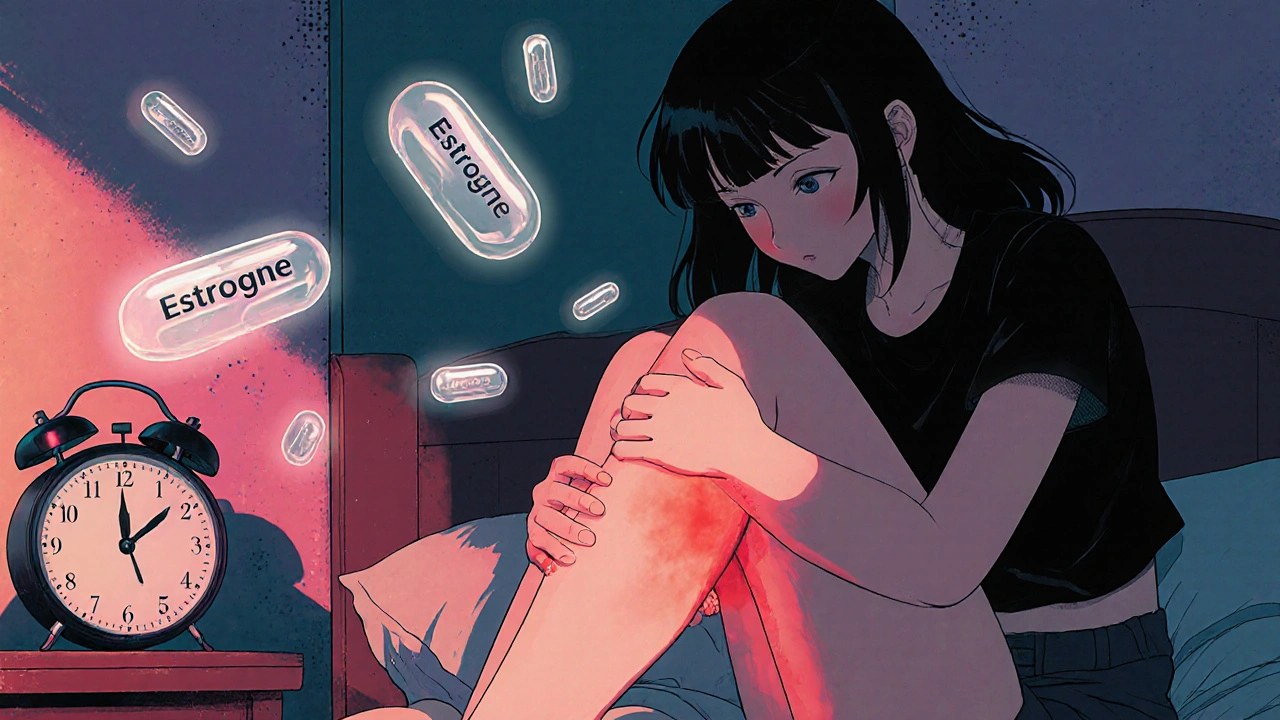
Every year, around 900,000 Americans develop dangerous blood clots. About one in three of those cases are linked to medications-not bad luck, not genetics alone, but drugs you’re taking for something else. That’s the scary part. You’re not taking a pill to cause a clot. You’re taking it to treat cancer, manage menopause, or prevent pregnancy. But sometimes, those same pills quietly turn your blood into a ticking time bomb.
What Makes a Medication Cause Blood Clots?
Your blood is always balancing on a tightrope. Too thin, and you bleed too much. Too thick, and it clots where it shouldn’t. Certain drugs tip that balance. They don’t just affect one thing-they change how your liver makes clotting proteins, how platelets stick together, or how your blood vessels respond to injury.
Estrogen is the most well-known offender. Combined birth control pills, hormone patches, and menopause treatments that contain estrogen raise your risk of deep vein thrombosis (DVT) by 3 to 5 times. Third-generation pills-those with desogestrel or gestodene-carry even higher risk than older ones with levonorgestrel. Why? They boost clotting factors like Factor VII and lower natural anticoagulants like Protein S. The result? Your blood becomes stickier, even if you’re young and healthy.
Cancer drugs are another major culprit. Cisplatin, a common chemotherapy, increases clot risk by 4 to 7 times. Tamoxifen, used for breast cancer, raises it 2 to 3 times. Even hormone therapy for prostate cancer-drugs that lower testosterone-can push your risk up by 1.5 to 2 times. These aren’t side effects you can ignore. They’re part of the treatment trade-off.
And it’s not just pills. Some injectables, IV fluids, and even certain antibiotics can trigger clots in vulnerable people. The key isn’t avoiding all meds-it’s knowing when your personal risk crosses the line.
How to Spot a Medication-Induced Blood Clot Early
Most people don’t realize they’re having a clot until it’s too late. That’s because the symptoms are easy to miss-or blame on something else. A sore calf? Must’ve been the workout. Shortness of breath? Probably just out of shape. But if you’re on a high-risk medication, these signs aren’t normal.
For deep vein thrombosis (DVT), watch for:
- Swelling in one leg-usually the calf, not both
- Pain or cramping that doesn’t go away with rest
- Red or bluish skin over the area
- Warmth in the leg, like a hot spot
For pulmonary embolism (PE), which happens when a clot travels to the lungs:
- Sudden shortness of breath, even at rest
- Chest pain that gets worse when you breathe in deeply
- Rapid heartbeat with no clear reason
- Dizziness, fainting, or feeling like you’re going to pass out
These symptoms usually show up within the first 3 to 6 months after starting the drug. About 60% of medication-related clots happen in that window. If you’re on birth control or hormone therapy and feel something off after 2 months, don’t wait. Get checked.
Doctors use tools like the Wells’ Criteria to assess your risk based on symptoms and history. It’s a 9-point checklist. If you score high, they’ll order a D-dimer blood test (which checks for clot breakdown products) and an ultrasound to look for clots in your legs. For suspected PE, a CT pulmonary angiogram is the gold standard. Don’t let a false sense of security stop you-ultrasounds miss clots in 5 to 10% of cases.
Who’s Most at Risk?
Not everyone on these meds will get a clot. But some people are sitting on a loaded gun. Here’s who needs extra caution:
- Women with inherited clotting disorders like Factor V Leiden (found in 5% of Caucasians)
- People with antiphospholipid syndrome-this condition alone can raise clot risk to 10-15% per year
- Those over 60 on hormone replacement therapy
- Cancer patients, especially those with pancreatic, lung, or brain tumors
- Anyone who’s recently had surgery or been hospitalized
- People who are overweight, smoke, or have been immobile for long periods
Doctors use scoring systems like the Khorana Score for cancer patients and the Padua Score for hospital stays. If your score is high enough, you should be getting preventive treatment-not just a warning.
Here’s the hard truth: Only about 40% of high-risk patients actually get the right prevention. Why? Many doctors underestimate the risk because they’re focused on treating the main condition-cancer, menopause, depression-and assume bleeding risk is too high to justify anticoagulants. But the data shows: for most, the benefit outweighs the risk.

How to Prevent Medication-Related Clots
Prevention isn’t one-size-fits-all. It’s layered. Think of it like a safety net-multiple layers, each catching what the others miss.
1. Compression Stockings
If you’re in the hospital or recovering from surgery, compression stockings are often the first line of defense. They need to provide 15-20 mmHg of pressure at the ankle, tapering off higher up. Poorly fitted ones can cause skin damage or even make clots worse. Get measured properly-three points on your leg, not a guess. Replace them every 3 to 6 months. Elasticity fades fast.
2. Movement and Hydration
Staying still is the enemy. If you’re flying, walking every 60 to 120 minutes cuts your clot risk by 30%. If you can’t walk, do seated calf raises-10 reps every 30 minutes. Drink 8 to 10 ounces of water every hour. Dehydration thickens your blood. Alcohol and caffeine make it worse.
3. Blood Thinners
For high-risk patients, anticoagulants are the most effective tool.
Low molecular weight heparin (LMWH) like enoxaparin (40 mg daily) is the standard for hospitalized patients. It reduces clot risk by 60 to 70%. It’s injected under the skin, and you need to monitor for bruising or bleeding.
Direct oral anticoagulants (DOACs) like rivaroxaban (10 mg daily) or apixaban (2.5 mg twice daily) are now preferred for outpatient use. No blood tests. No dietary restrictions. But they carry a 1.5 to 2 times higher bleeding risk than LMWH. They’re also cleared by the kidneys, so if your creatinine clearance drops below 30 mL/min, they’re not safe.
For cancer patients, ASCO guidelines say: if your Khorana Score is 2 or higher, you should be on LMWH for 3 to 6 months. That’s not optional-it’s standard of care.
What You Should Ask Your Doctor
You’re not just a patient. You’re a partner in your care. Don’t wait for them to bring it up. Ask these questions before starting any high-risk medication:
- “Is this drug linked to blood clots?”
- “What’s my personal risk based on my history?”
- “Do I need a clotting disorder test before starting?”
- “Should I be on a blood thinner or compression stockings?”
- “What symptoms should I watch for-and when do I go to the ER?”
If your doctor dismisses your concerns or says, “It’s rare,” push back. It’s not rare. It’s preventable. And you’re the one who has to live with the consequences.
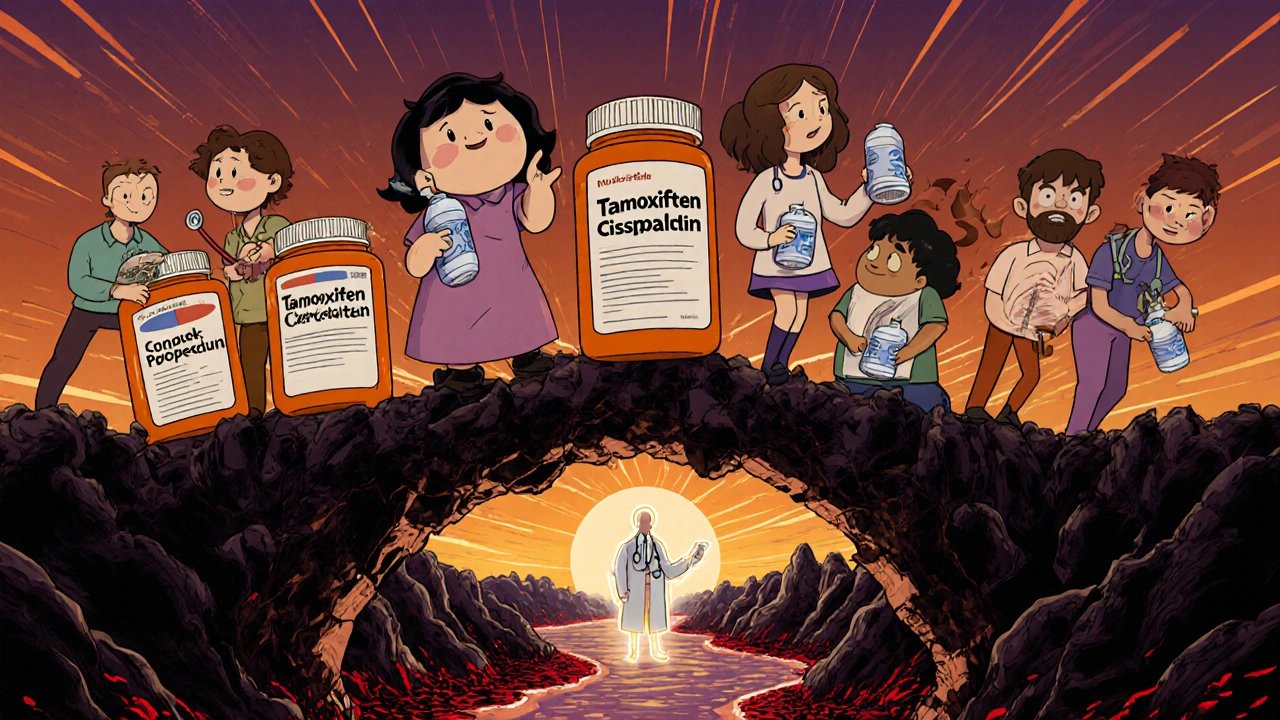
New Hope on the Horizon
Science is catching up. Researchers are testing new drugs like asundexian, a factor XI inhibitor that cuts clot risk by half without increasing bleeding. Early trials show it could be a game-changer for cancer patients and those on long-term hormone therapy.
Genetic testing for clotting disorders is getting faster. Right now, it takes 5 to 7 days to get results for Factor V Leiden or prothrombin mutations. In the next few years, point-of-care tests may let doctors screen you in minutes before prescribing estrogen.
Regulators are also stepping up. The FDA now requires black box warnings on all estrogen-containing medications. The EMA mandates clear prevention guidelines on labels. That’s progress. But it won’t help if no one reads the label-or if doctors don’t talk about it.
Final Takeaway
Medication-related blood clots aren’t accidents. They’re predictable. They’re preventable. And they’re happening to people who trusted their doctors, followed instructions, and never thought it could happen to them.
You don’t need to avoid all meds. You need to know your risk. You need to ask the right questions. You need to recognize the signs before it’s too late.
If you’re on birth control, hormone therapy, or cancer treatment-don’t wait for symptoms. Talk to your doctor now. Get screened. Get protected. Your life depends on it.
Melania Rubio Moreno
November 27, 2025 AT 15:20Gaurav Sharma
November 27, 2025 AT 20:36Shubham Semwal
November 28, 2025 AT 20:18Sam HardcastleJIV
November 30, 2025 AT 15:07archana das
December 1, 2025 AT 09:05Emma Dovener
December 2, 2025 AT 15:42Sue Haskett
December 3, 2025 AT 05:22Jauregui Goudy
December 5, 2025 AT 01:06Tom Shepherd
December 5, 2025 AT 05:43Rhiana Grob
December 7, 2025 AT 00:37Jonah Thunderbolt
December 7, 2025 AT 21:48