
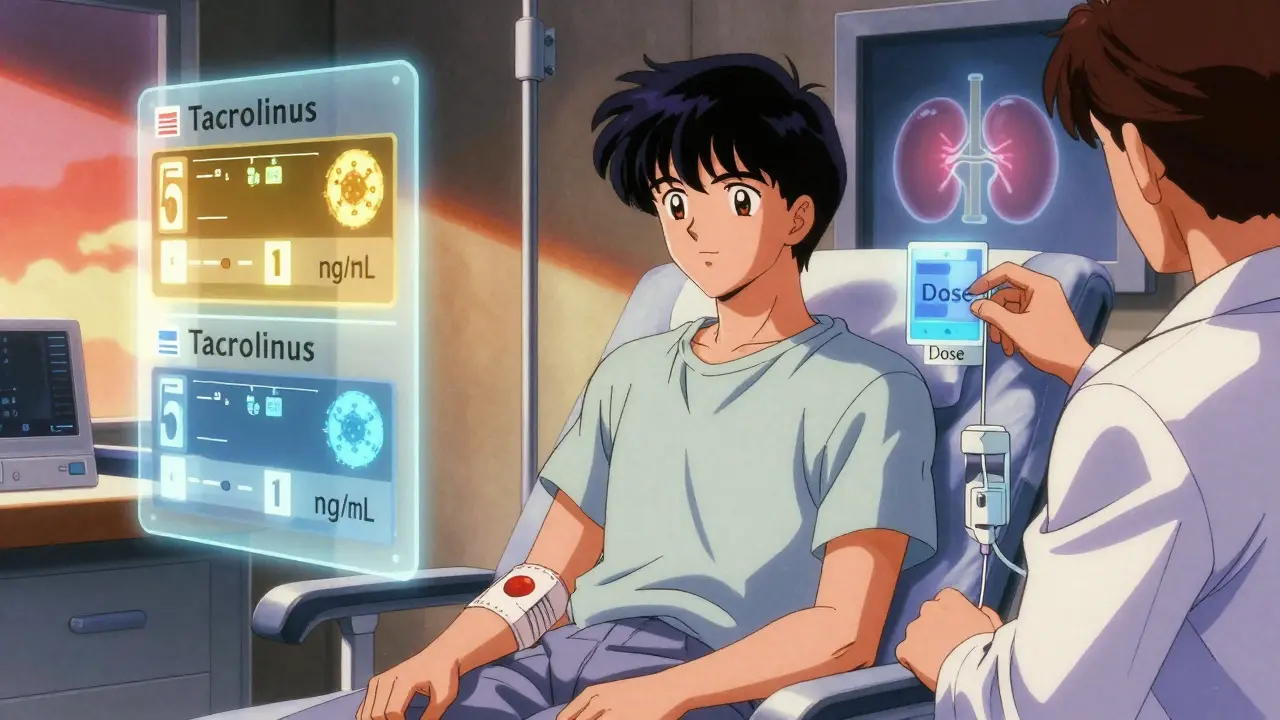
When you're on immunosuppressive drugs-whether after a kidney transplant, for lupus, or another autoimmune condition-your body is walking a tightrope. Too much suppression, and you’re at risk for serious infections or even cancer. Too little, and your immune system might attack your new organ or flare up your disease. That’s why monitoring during immunosuppressive therapy isn’t optional. It’s the difference between staying healthy and ending up back in the hospital.
Why Monitoring Isn’t Just a Routine Checkup
Not all drugs are created equal. Steroids like prednisone are easy to track-you can see side effects like weight gain or high blood sugar. But drugs like tacrolimus and cyclosporine? They’re trickier. Two people can take the same dose, and one might have a toxic level while the other’s level is too low to prevent rejection. That’s because of how your body absorbs, breaks down, and clears these drugs. Studies show some patients need 10 times more than others just to reach the same blood level. Without testing, you’re guessing.Therapeutic drug monitoring (TDM) is the backbone of safe immunosuppression. It’s not about seeing if the drug is present. It’s about finding the exact sweet spot: high enough to stop rejection, low enough to avoid kidney damage or infections. For kidney transplant patients, keeping tacrolimus between 5-10 ng/mL in the first three months, then dropping to 3-7 ng/mL after, cuts rejection rates by nearly 40%. That’s not a small win-it’s life-changing.
Which Drugs Need Blood Tests? And How Often?
You won’t need blood tests for every immunosuppressant. Corticosteroids and belatacept don’t require routine TDM because their effects are more predictable. But these do:- Tacrolimus: Monitored at trough levels (just before your next dose). Target: 5-10 ng/mL early on, 3-7 ng/mL later.
- Cyclosporine: Often checked as both a trough (C0) and a 2-hour post-dose level (C2). C2 is better at predicting rejection.
- Sirolimus and Everolimus: Target range is 5-10 μg/L, but evidence is weaker here. Some centers skip routine testing.
- Mycophenolic acid (MPA): Trough levels don’t tell the full story. The best measure is the area under the curve (AUC)-how much drug your body sees over 12 hours. An AUC of 30-60 mg·h/L links to 85% rejection-free survival at one year.
Testing frequency? In the first year after transplant, you might get blood drawn 12-18 times. After that, it tapers to every 1-3 months. It’s exhausting. But skipping a test can mean missing a dangerous trend before symptoms show up.
What Else Gets Checked in the Lab?
Blood tests aren’t just about drug levels. Your body’s reaction to these drugs shows up in other ways:- Renal function: Creatinine and urea levels track kidney damage. Cyclosporine and tacrolimus can raise creatinine by 30% or more in a quarter of patients.
- Electrolytes: Hypomagnesemia (low magnesium) happens in up to 60% of cyclosporine users. It can cause muscle cramps, heart rhythm issues, and seizures if ignored.
- Blood counts: Mycophenolate can drop your white blood cells (leukopenia in 25-30%), red blood cells (anemia in 20-25%), and platelets (thrombocytopenia in 10-15%).
- Lipids and glucose: Sirolimus raises cholesterol in 60-75% of patients. Tacrolimus increases diabetes risk by 30%. Fasting lipids and glucose get checked every six months.
- Liver enzymes: All these drugs can stress the liver. AST and ALT levels are watched closely.
These aren’t random tests. Each one flags a known side effect. Catching high cholesterol early means you can start a statin before you have a heart attack. Finding low magnesium means you can fix it before your heart skips a beat.
Imaging: Seeing What Blood Tests Can’t
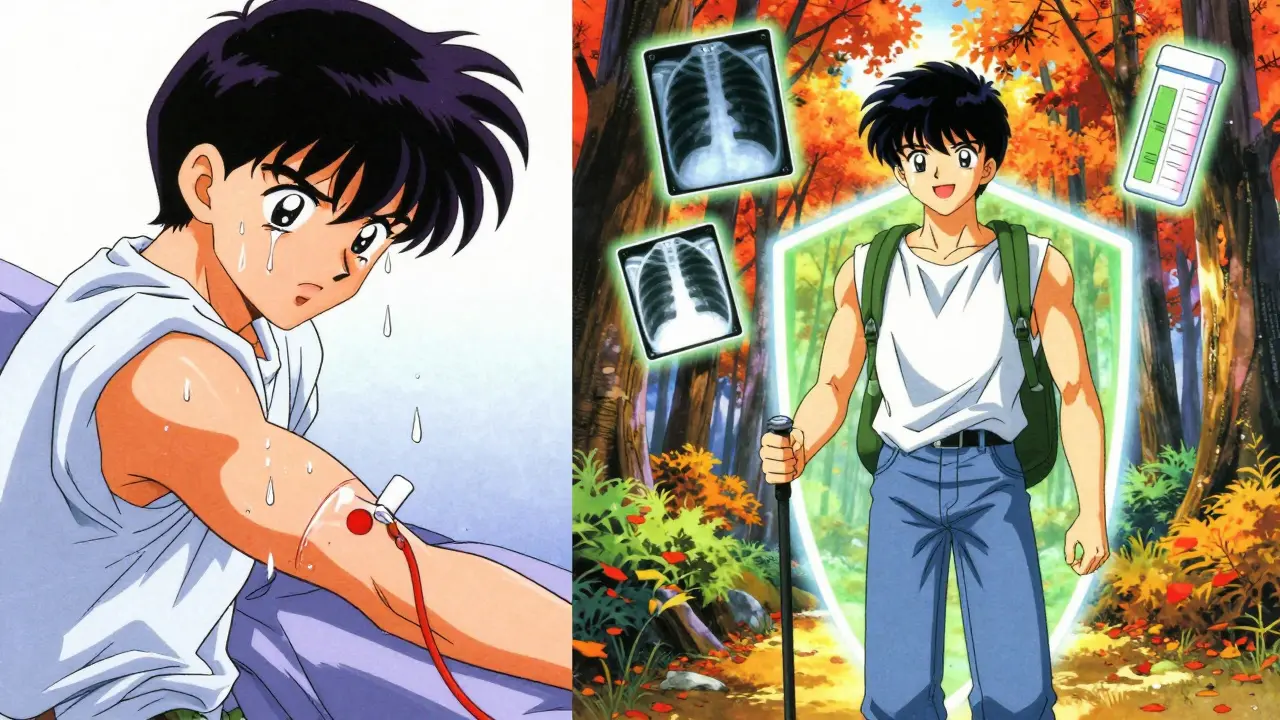
Some problems don’t show up in blood. That’s where imaging comes in:- Renal ultrasound: Done annually or if creatinine rises suddenly. It checks for blockages, fluid buildup, or changes in kidney size that suggest rejection or scarring.
- Chest X-ray: If you have a cough, fever, or shortness of breath, this helps spot pneumonitis-a rare but serious side effect of sirolimus and everolimus.
- Bone density scan (DEXA): After one year of steroid use, your bone density drops fast. A scan every year after that helps catch osteoporosis before you break a hip.
These aren’t fancy tests. They’re simple, widely available, and often covered by insurance. But they’re skipped too often. A chest X-ray might catch pneumonia before you’re on a ventilator. A DEXA scan might mean you start calcium and vitamin D before you need a hip replacement.
The New Frontier: TTV Monitoring
There’s a breakthrough you won’t hear about in every clinic yet: Torque Teno Virus (TTV). It’s a tiny, harmless virus found in 90% of healthy people. But in transplant patients? It’s everywhere-and it’s your body’s secret reporter.When your immune system is strong, it keeps TTV in check. When you’re over-immunosuppressed, TTV multiplies. Studies show a direct link: TTV levels in your blood mirror how much your immune system is suppressed. A TTV load of 2.5-3.5 log10 copies/mL is the Goldilocks zone. Below that? Higher rejection risk. Above it? Higher infection risk.
The TTVguideIT trial, running across 12 countries since 2020, showed a 28% drop in infections and 22% fewer rejections when doctors adjusted drug doses based on TTV levels instead of just drug concentrations. That’s not theory-it’s real data from real patients. France’s TAOIST trial, launching in 2024, will test if this works long-term.
It’s not perfect yet. There’s no FDA-approved TTV test. Labs use different methods. But the science is solid. Within the next two years, TTV could become a standard part of monitoring.
The Hidden Costs and Real Barriers
Let’s be honest: monitoring is expensive. A single LC-MS/MS test for tacrolimus costs $150-$250. Immunoassays are cheaper ($50-$100) but less accurate, with up to 20% false readings due to cross-reactivity with metabolites. Many clinics still use the cheaper option because insurance won’t cover the better one.Then there’s the human cost. Patients report anxiety before blood draws. Twelve tests a year means twelve trips, twelve needles, twelve hours of waiting. One survey found 35% of transplant patients avoid appointments because of test-related stress.
And not all centers do it right. A 2022 survey of 150 U.S. transplant centers found only 42% had standardized protocols for mycophenolate monitoring. Sixty-three percent said they lacked consistent reference ranges. This isn’t just about money-it’s about training. Centers with dedicated immunosuppression teams (pharmacists, nurses, doctors working together) see better outcomes. They review results within 24 hours. They adjust doses before problems start.
What’s Next? AI and Point-of-Care Testing
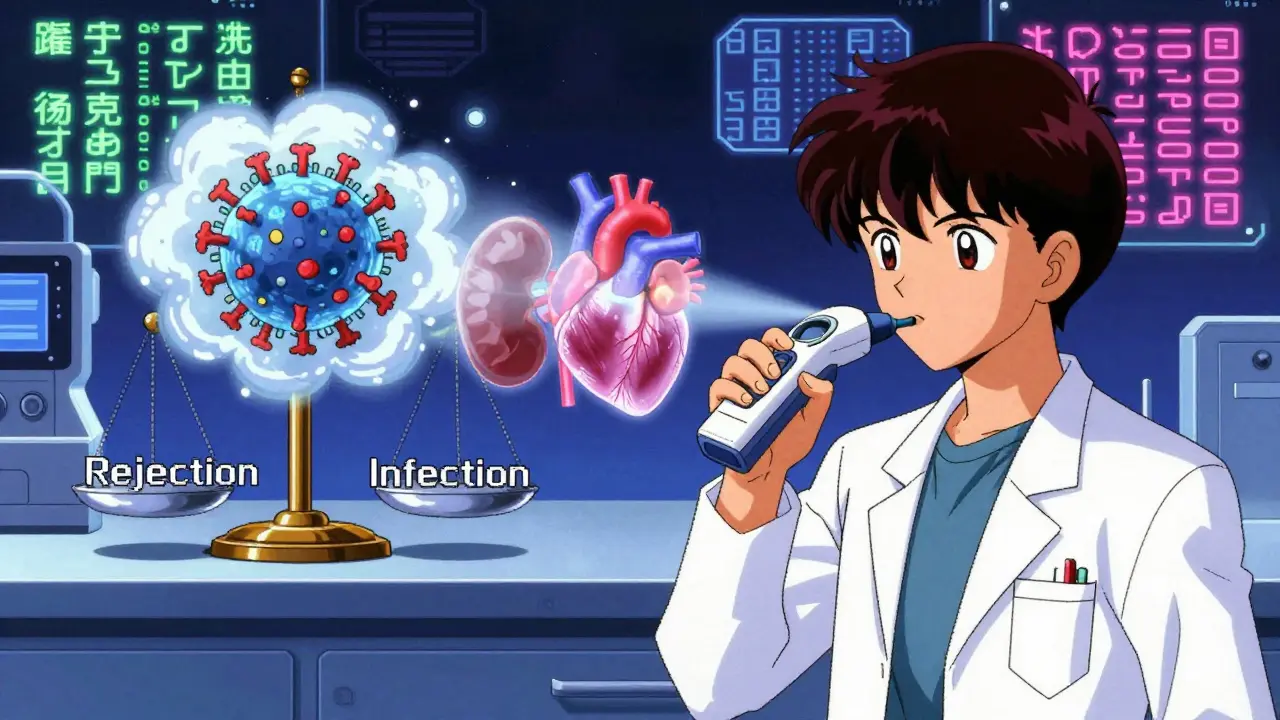
The future is coming fast. A 2023 study in Nature Medicine trained an AI to predict acute rejection 14 days before symptoms appeared. It looked at patterns in tacrolimus levels, TTV load, creatinine, and white blood cell counts. Accuracy? 87%. That’s not a guess. It’s a forecast.And it’s not just software. Point-of-care devices are in phase 2 trials. Imagine getting your tacrolimus level checked in the clinic, with results in 15 minutes-not a week. FDA approval is expected by 2026-2027. Non-invasive methods? Researchers are testing exhaled breath for drug metabolites. No needles. Just a breath.
The big picture? Monitoring is shifting from reactive to predictive. We’re moving from "What’s your level today?" to "What’s your body telling us it needs next week?"
What You Can Do Today
You don’t need to be a doctor to stay safe. Here’s what works:- Know your drug targets. Ask your team: "What’s my target tacrolimus level? When will it change?"
- Keep a log. Track your blood pressure, weight, and any new symptoms-fatigue, fever, swelling, diarrhea. Bring it to every appointment.
- Ask about TTV. If your center doesn’t offer it, ask why. It’s becoming standard.
- Don’t skip imaging. A simple ultrasound or DEXA scan might prevent a hospital stay.
- Know your lab numbers. If your creatinine jumps 30% from baseline, speak up. It’s not normal.
Monitoring isn’t about being controlled. It’s about staying in control. Every test, every scan, every conversation with your pharmacist is a step toward living longer, healthier, and freer.
Do all immunosuppressants need blood tests?
No. Drugs like corticosteroids (prednisone) and belatacept don’t require routine therapeutic drug monitoring because their effects are more predictable and their side effects are easier to spot clinically. But calcineurin inhibitors (tacrolimus, cyclosporine), mTOR inhibitors (sirolimus, everolimus), and mycophenolic acid (MPA) do need regular blood tests because they have narrow therapeutic windows and high variability between patients.
How often should I get my tacrolimus level checked?
In the first 3 months after a transplant, tacrolimus is usually checked weekly or biweekly. After that, it drops to every 2-4 weeks for the next 6-12 months. Once you’re past the first year, monthly or every 2-3 months is typical. But this varies based on your stability, kidney function, and whether you’re on TTV-guided therapy. Always follow your transplant team’s plan.
What’s the difference between C0 and C2 monitoring for cyclosporine?
C0 is the trough level-measured just before your next dose. C2 is measured 2 hours after you take the drug. C2 gives a better picture of how much drug your body absorbs overall and correlates more strongly with rejection risk (r=0.87) than C0 alone. While C0 is still used in some centers, C2 monitoring is becoming the preferred method for better accuracy.
Can TTV monitoring replace drug level testing?
Not yet. TTV is a biomarker of immune function, not a direct measure of drug concentration. It’s best used alongside TDM. A low TTV level might mean you’re over-suppressed and need less drug, but it doesn’t tell you exactly how much to adjust. TTV helps personalize dosing, but drug levels still guide the numbers.
Why is my doctor checking my cholesterol if I have a kidney transplant?
Immunosuppressants like sirolimus and tacrolimus significantly raise cholesterol and triglyceride levels-up to 75% of patients develop hyperlipidemia. High cholesterol increases your risk of heart disease, which is already elevated after transplant. Monitoring allows early intervention with diet, exercise, or statins, preventing long-term damage.
Is it worth the cost and hassle to monitor so closely?
Yes. A 2022 analysis found that comprehensive monitoring adds $2,850 per year to treatment costs-but prevents $8,400 in hospitalizations, rejections, and emergency care. That’s a return of $2.90 for every dollar spent. Beyond money, it means fewer hospital stays, fewer infections, and a better chance of keeping your transplant working for decades.
Rama Rish
March 23, 2026 AT 19:59No magic bullet, but this system? It's kept me alive.
Kevin Siewe
March 25, 2026 AT 15:40Your bones don't scream until it's too late.
Chris Farley
March 27, 2026 AT 12:37This is why American medicine is falling apart. All these fancy tests, and no one's asking if we should be taking these drugs at all.
Darlene Gomez
March 29, 2026 AT 13:00TTV is wild-imagine your body’s own little alarm system, just floating in your bloodstream, saying 'hey, you're too suppressed.'
It’s like having a tiny guard dog that doesn’t bark… but sends you a text.
I’ve been pushing my clinic to adopt it. They’re hesitant. I told them if it cuts infections by 28%, why wouldn’t they?
We’re not just managing drugs-we’re listening to biology. That’s revolutionary.
Katie Putbrese
March 29, 2026 AT 14:34I mean, my cousin got a transplant in 2010 and never got tested. Still alive.
This whole system feels like a money grab. Hospitals make bank on these tests.
I’m not buying it.
Jacob Hessler
March 30, 2026 AT 06:42also my doc told me to stop eating grapefruit. i did. still alive. lol
Amber Gray
March 31, 2026 AT 07:21So it’s like a body alarm? 🤖🩸
I’m telling my doc about this tomorrow. 👍
Danielle Arnold
March 31, 2026 AT 18:38I’m not impressed.
Kevin Y.
April 1, 2026 AT 16:46The emphasis on patient agency-knowing your numbers, keeping logs, asking questions-isn’t just good advice; it’s empowering.
And the AI prediction model? 87% accuracy? That’s not science fiction. That’s the future, and we’re already living in it.
Kudos to the team behind this.
Korn Deno
April 3, 2026 AT 00:42We used to wait for creatinine to spike, then panic. Now we look at trends-TTV, AUC, white cell patterns-and adjust before the crisis.
That’s medicine becoming an art. Not a guessing game.
And for that? I’m grateful.
Aaron Sims
April 4, 2026 AT 14:14This isn’t healthcare. It’s a surveillance state with IVs.
Who’s really in control here? Pharma? The labs? Or you?
peter vencken
April 6, 2026 AT 01:46But guess what? People still live.
Maybe we don’t need all this tech. Maybe we just need better access.
This post is great… but it’s for people with insurance. What about the rest of us?
Raphael Schwartz
April 7, 2026 AT 21:46i just want to live without being a lab rat.
Linda Foster
April 7, 2026 AT 23:11Centers with dedicated immunosuppression teams reduce rejection rates by up to 35% and cut emergency visits by nearly 50%.
The data is unequivocal.
What we’re seeing here isn’t over-treatment-it’s precision medicine in practice.
The challenge isn’t the science; it’s implementation.
We need more funding, more training, and less bureaucratic inertia.
This isn’t about profit. It’s about survival.