

Your kidneys are hard workers. They filter waste, balance fluids, and keep your electrolytes in check. But when they start to fail, the food you eat becomes a medical decision. A Renal Diet is a specialized eating plan designed to reduce the workload on compromised kidneys by limiting sodium, potassium, and phosphorus. It is not just about being "healthy"; it is about survival and slowing down Chronic Kidney Disease (CKD). If you have been diagnosed with stage 3, 4, or 5 CKD, or if you are on dialysis, this guide breaks down exactly how to manage those three critical minerals without feeling like you’re eating cardboard.
Why Your Diet Matters More Than Ever
Think of your kidneys as a coffee filter. When they work well, they let clean water through and trap the grounds. In CKD, that filter gets clogged or torn. The "grounds"-waste products and excess minerals-start backing up into your blood. This backup causes swelling, high blood pressure, and heart strain. According to the National Kidney Foundation, roughly 37 million adults in the US live with CKD, and most don’t know it until it’s advanced. Once diagnosed, diet is your first line of defense alongside medication. The goal isn’t perfection; it’s consistency. You want to prevent dangerous spikes in blood pressure and electrolyte levels that can lead to hospitalization.
The Big Three: Sodium, Potassium, and Phosphorus
You need to track three specific nutrients. Each one has a different role and a different limit. Here is what the current clinical guidelines say:
- Sodium: Aim for 2,000-2,300 mg per day. That’s about one teaspoon of salt. Most people get way more than this from processed foods alone.
- Potassium: Typically limited to 2,000-3,000 mg per day for stages 3-5. However, this varies wildly based on your blood tests. If your serum potassium is above 5.0 mEq/L, your doctor will tighten this limit.
- Phosphorus: Target 800-1,000 mg per day. The trick here is knowing which sources absorb easily into your body.
These numbers aren’t arbitrary. High sodium makes you retain fluid, stressing your heart. High potassium can stop your heart from beating correctly. High phosphorus pulls calcium from your bones, making them brittle. Managing these three keeps your system stable.
Navigating Sodium: The Hidden Trap
We think we add too much salt to our food, but that’s rarely the problem. About 75% of the sodium Americans consume comes from processed and restaurant foods. A single can of soup can hold 800-1,200 mg of sodium. That’s nearly half your daily allowance in one meal. To manage this, you have to become a label reader. Look for words like "sodium," "salt," "monosodium glutamate (MSG)," and "baking soda."
Does this mean you can never taste your food again? No. It means you swap out table salt for flavor boosters. Herbs, spices, lemon juice, and vinegar are your new best friends. Blends like Mrs. Dash are specifically formulated to be low-sodium. If you cook at home, rinse canned beans and vegetables thoroughly to wash away some of the added brine. This simple step can cut sodium content significantly without changing the texture of your dish.
Potassium Management: Fruit Isn’t Always Good
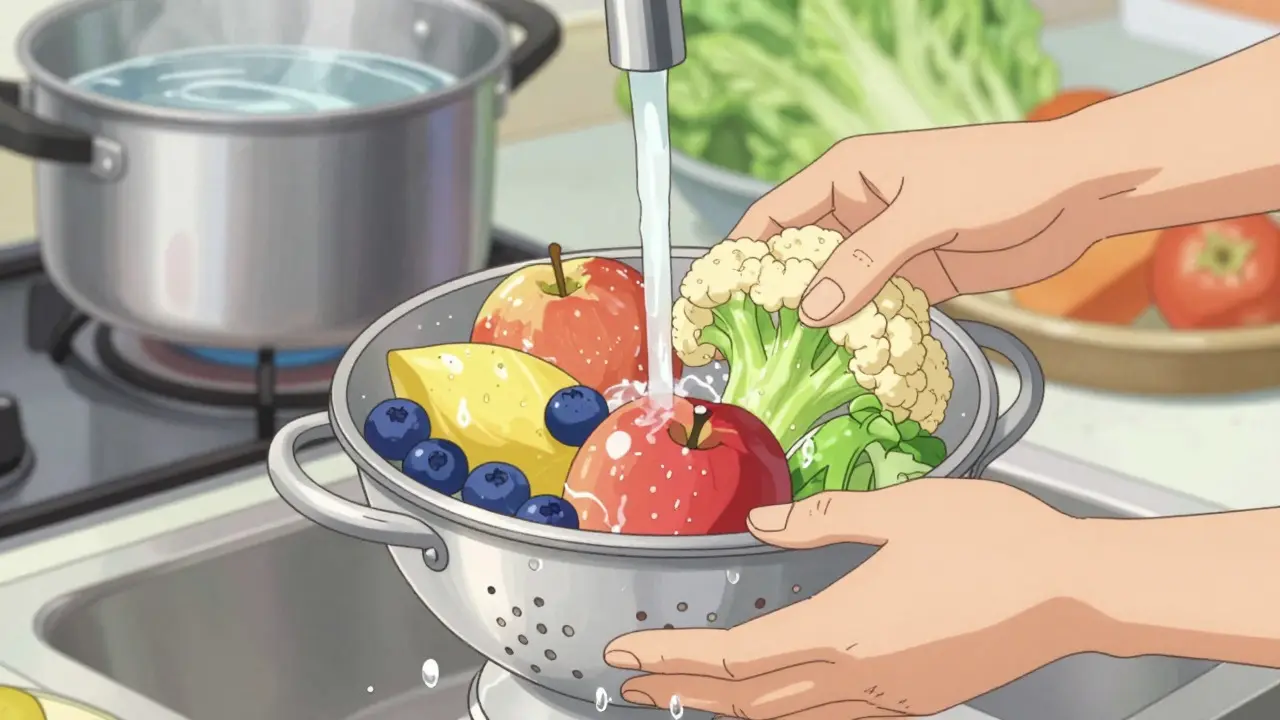
This is where healthy eating advice usually goes out the window. We’re told to eat more fruit and veggies, but for many CKD patients, those are the very foods that raise potassium levels dangerously. Bananas, oranges, potatoes, tomatoes, and avocados are all high in potassium. A medium banana has about 422 mg, while an apple has only 150 mg. Blueberries are even lower at 65 mg per half-cup.
So, do you stop eating plants? Not necessarily. You just change *which* plants and *how* you prepare them. Apples, berries, cabbage, and cauliflower are safer bets. For higher-potassium veggies like carrots or green beans, try "leaching." Soak them in warm water for two to four hours, then boil them in a large pot of water. Discard the water after cooking. This process can remove up to 50% of the potassium. It’s a bit of extra work, but it lets you keep variety in your meals.
Phosphorus: The Additive Problem
Phosphorus is tricky because not all phosphorus is created equal. Your body absorbs natural, organic phosphorus (found in meats, dairy, and nuts) at a rate of about 50-70%. But inorganic phosphorus, found in additives in processed foods, is absorbed at 90-100%. This means a slice of processed cheese or a can of cola can hit your bloodstream harder than a piece of meat, even if the total milligram count looks similar on the label.
To manage this, avoid foods with ingredient lists containing words like "phosphate," "phosphoric acid," or "calcium phosphate." These are common in deli meats, colas, and packaged snacks. Instead, focus on fresh whole foods. Dairy is allowed, but in moderation. Half a cup of milk provides about 125 mg of phosphorus. Swapping whole-grain bread (which is high in phosphorus) for white bread can also help, as the bran layer contains a lot of the mineral.
| High-Risk Food | Better Alternative | Reason |
|---|---|---|
| Banana (422 mg K+) | Apple (150 mg K+) | Lower potassium content |
| White Potato (926 mg K+) | Sweet Potato (small, leached) | Leaching reduces K+ significantly |
| Canned Soup (1,000 mg Na) | Homemade Broth-based Soup | Control over sodium addition |
| Cola (450 mg P) | Sparkling Water with Lemon | No inorganic phosphorus additives |
| Processed Cheese | Natural Hard Cheese (small portion) | Natural phosphorus absorbs less efficiently |

Practical Tips for Daily Life
Starting a renal diet feels overwhelming. You might spend more time reading labels than eating. Here is how to make it stick:
- Plan Ahead: Spend 30 minutes on Sunday planning your week. Check labels before you go shopping. Don’t rely on willpower in the aisle.
- Portion Control: Even "safe" foods can add up. Use small plates. Measure your protein portions (usually 3-4 ounces).
- Stay Hydrated Wisely: If your urine output is low, your doctor may restrict fluids to around 32 oz (1 liter) per day. Count every sip, including ice chips and soups.
- Work With a Pro: See a Registered Dietitian Nutritionist (RDN) who specializes in renal care. They can create a plan tailored to your specific lab results.
Remember, this isn’t a punishment. It’s a tool to keep you out of the hospital and potentially delay the need for dialysis. Studies show that proper dietary management can delay dialysis initiation by 6-12 months in stage 4 patients. That is significant quality-of-life time gained.
Frequently Asked Questions
Can I still eat fruits and vegetables?
Yes, but you need to choose carefully. Focus on low-potassium options like apples, berries, cabbage, and cauliflower. Avoid bananas, oranges, potatoes, and tomatoes unless you leach them. Portion size matters too; stick to half-cup servings of cooked vegetables.
What is the difference between natural and additive phosphorus?
Natural phosphorus comes from whole foods like meat and dairy and is absorbed at 50-70% efficiency. Additive phosphorus is in processed foods (like colas and deli meats) and is absorbed at 90-100% efficiency. This means additives impact your blood levels much faster and harder.
How much sodium should I limit myself to?
For most non-dialysis CKD patients, the target is 2,000 to 2,300 mg per day. This is roughly equivalent to one teaspoon of table salt. Since 75% of dietary sodium comes from processed foods, reading nutrition labels is essential to stay within this limit.
Do I need to restrict my protein intake?
Often, yes, but it depends on your stage. Recent guidelines suggest 0.55-0.8g of protein per kg of body weight for non-dialysis patients to prevent malnutrition while reducing waste buildup. Always follow your nephrologist's specific recommendation, as needs change once you start dialysis.
How long does it take to adjust to a renal diet?
Most patients report needing 3 to 6 months to fully adapt. The initial challenge is usually adjusting to less salty food and learning which fruits and vegetables are safe. Over time, your palate adjusts, and meal planning becomes routine.