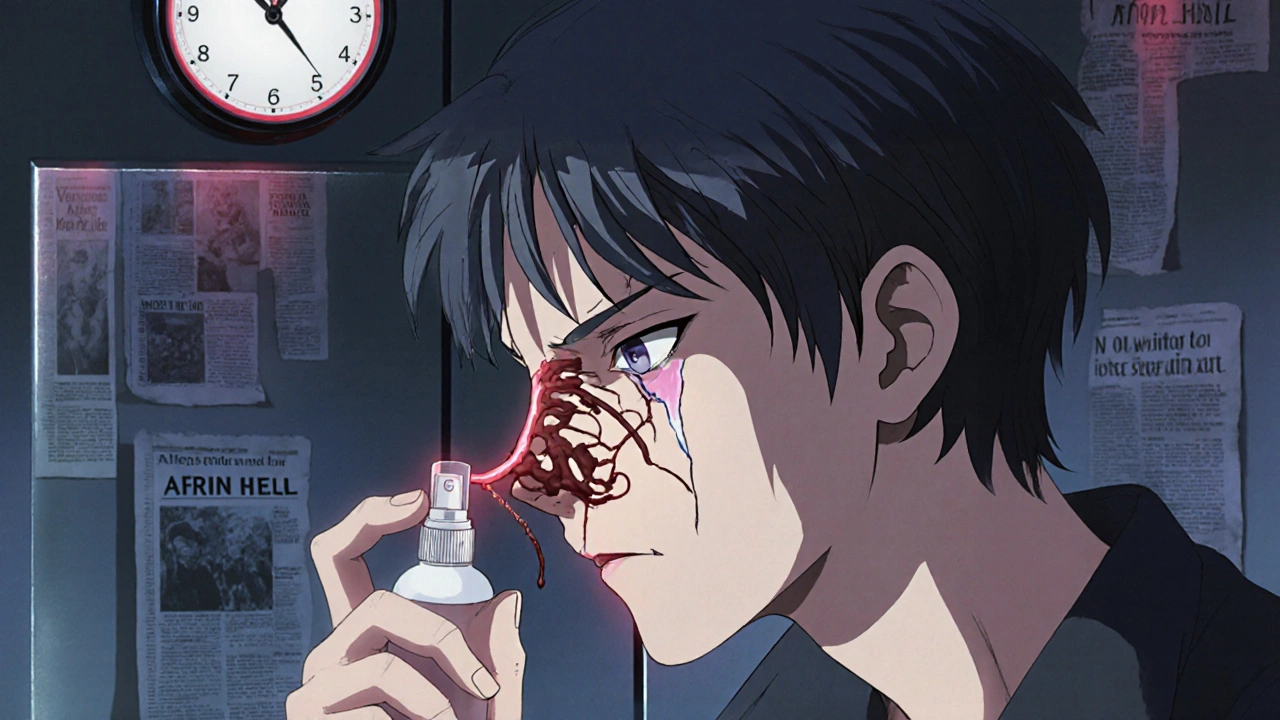
Afrin Misuse: Risks, Signs, and What to Do If You're Overusing It
When you reach for Afrin, a nasal decongestant spray containing oxymetazoline. Also known as oxymetazoline spray, it quickly shrinks swollen nasal passages to help you breathe better. But using it for more than three days in a row can backfire—badly. This isn’t just a side effect. It’s a cycle many people don’t realize they’re stuck in: relief, then worse congestion, then more spray. And before you know it, you’re dependent on a product meant for short-term use.
The problem is called rebound congestion, a condition where the nasal passages swell even more after the decongestant wears off. It’s not an allergy. It’s not a cold. It’s your body’s reaction to too much oxymetazoline. Your blood vessels, which were temporarily squeezed shut, now overcompensate by expanding wider than before. That’s why you feel more blocked than ever. And the only thing that seems to help? Another spray. It’s a trap. And it’s common. People use Afrin for weeks—or even months—thinking they’re treating congestion, when they’re really feeding an addiction.
Nasal spray addiction, a term used by doctors to describe physical dependence on topical decongestants isn’t about willpower. It’s about biology. Your nasal tissue changes. The lining becomes thinner, more sensitive, and less able to regulate itself. You might notice symptoms like constant stuffiness, dryness, burning, or even nosebleeds. Some people end up needing steroid sprays or even surgery to fix the damage. The good news? You can break free. But it takes a plan—not just willpower.
Stopping Afrin cold turkey can cause intense congestion for up to a week. That’s why many people need help. Doctors often recommend switching to a saline spray, using a nasal steroid like Flonase to reduce inflammation, or gradually tapering the dose. It’s not easy, but thousands have done it. What you need isn’t more spray. It’s a way out.
Below, you’ll find real-world advice from people who’ve been there. We’ve gathered posts that cover how to safely stop using decongestants, what alternatives actually work, how to prevent rebound congestion before it starts, and what to do if you’re already stuck. No fluff. No marketing. Just clear, practical steps to take control of your breathing again.