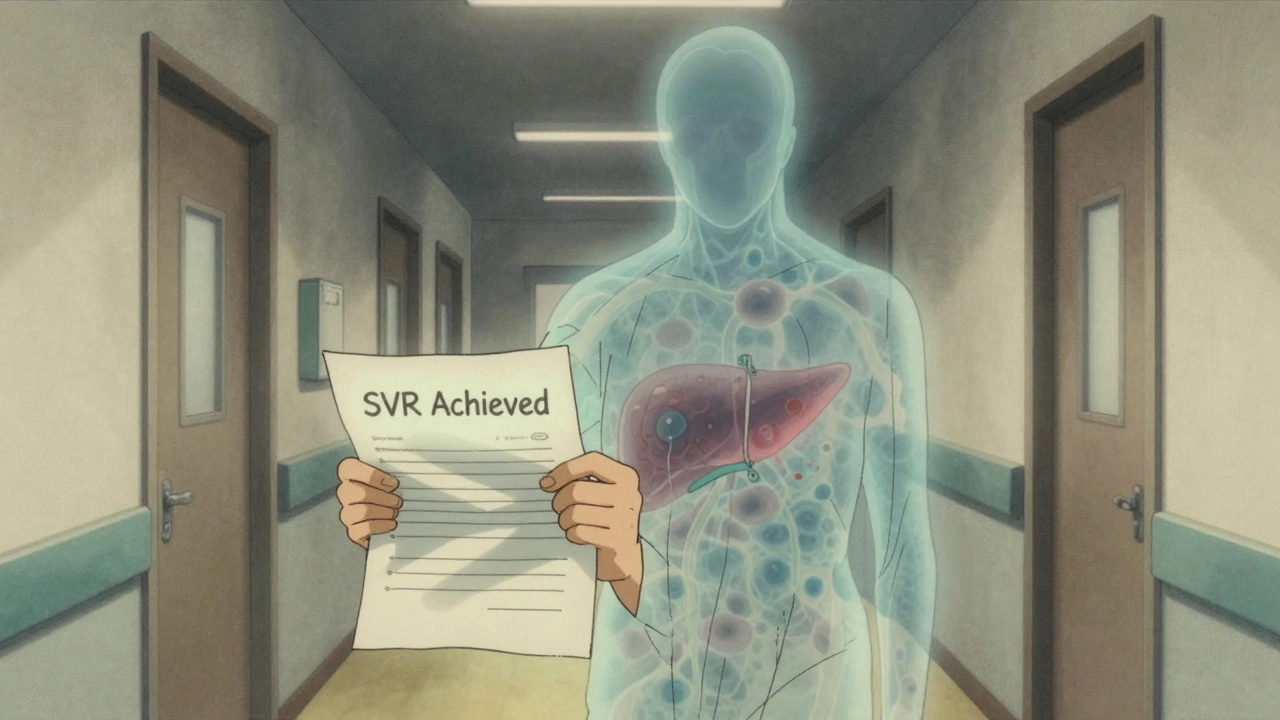
Liver Cancer Risk After SVR: What You Need to Know
When someone achieves SVR, Sustained Virologic Response, meaning the hepatitis C virus is undetectable in the blood for at least 12 weeks after finishing treatment. Also known as cured hepatitis C, it’s one of the biggest wins in modern medicine. But curing the virus doesn’t always mean your liver is back to normal — and that’s where the real concern begins.
Even after SVR, people with advanced cirrhosis, scarring of the liver caused by long-term damage from hepatitis C, alcohol, or fatty liver disease still face a real risk of developing liver cancer, a malignant tumor that starts in the liver cells and can spread quickly. Studies show that about 1 to 3% of people with cirrhosis develop liver cancer each year, even after the virus is gone. Why? Because the damage done before treatment doesn’t just disappear. Scarred tissue can keep turning abnormal over time, and that’s where cancer can grow.
This isn’t just a theory — it’s backed by real-world data from large patient groups tracked over a decade. The risk is highest for those who had cirrhosis before treatment, especially if they’re older, still drink alcohol, have diabetes, or carry other liver stressors like fatty liver. Even if your viral load is zero, your liver might still be working under heavy strain. That’s why regular monitoring doesn’t stop after SVR — it changes focus.
Here’s what matters: if you’ve cleared hepatitis C but still have cirrhosis, you need ongoing screening. That usually means an ultrasound every six months, sometimes with a blood test for AFP (alpha-fetoprotein). Skipping these checks because you feel fine or think you’re "cured" puts you at risk. Early detection saves lives — liver cancer caught early can often be treated successfully. But if it’s missed until symptoms show up, options shrink fast.
And it’s not just about the liver. People with past hepatitis C and cirrhosis also face higher risks for other problems — like fluid buildup in the belly, bleeding from swollen veins, or confusion from toxin buildup. These are signs your liver is still struggling. Managing them means watching your diet, avoiding alcohol completely, controlling blood sugar, and staying in touch with your doctor. It’s not enough to celebrate the cure — you’ve got to protect what’s left of your liver.
Some people wonder if newer antiviral drugs lower cancer risk more than older ones. The answer? They cure the virus just as well, but they don’t undo years of scarring. The key isn’t which drug you took — it’s whether your liver was already damaged when you started. That’s why your medical history matters more than your treatment regimen.
If you’ve reached SVR, congratulations — you’ve beaten a serious disease. But your work isn’t done. Liver cancer risk after SVR is real, but it’s not inevitable. With the right checks, habits, and awareness, you can take control. Below, you’ll find real stories, expert insights, and practical steps to help you stay safe long after the virus is gone.