

If you’ve ever felt like the room is spinning, even when you’re sitting still, and then a throbbing headache hits, you might be dealing with vestibular migraine. It’s not just a bad headache or a case of vertigo - it’s both, happening together. And it’s more common than you think. About 1 in 100 people have it, and women are more than three times as likely to be affected as men. Many people suffer for years before getting the right diagnosis, often mistaken for inner ear problems or stress-induced dizziness.
What Exactly Is Vestibular Migraine?
Vestibular migraine (VM) is a neurological condition where the brain’s balance and pain systems get tangled up. You don’t need a headache to have it - about half the time, people get dizzy, unsteady, or feel like they’re on a boat without any head pain. Episodes can last from a few minutes to three days. During an attack, you might feel nauseous, sensitive to light or sound, or see flashing lights or blind spots. Motion, like walking down a busy street or riding in a car, can make it worse.
The brain’s vestibular system - which helps you stay balanced - gets overstimulated during these episodes. This isn’t an ear problem like an infection or fluid buildup. It’s a brain issue, linked to the same wiring that causes classic migraines. Research shows that people with VM often have a family history of migraines, and some carry genetic changes (like CACNA1A mutations) that make their nerves more excitable. This means their brains react too strongly to triggers like stress, sleep loss, or certain foods.
How Is It Diagnosed?
There’s no blood test, scan, or X-ray that confirms vestibular migraine. Doctors rely on a set of clinical rules called the ICHD-3 criteria. To be diagnosed, you need:
- At least five episodes of moderate to severe dizziness lasting 5 minutes to 72 hours
- A current or past history of migraine (with or without aura)
- At least half of your dizziness episodes happen with typical migraine symptoms - like sensitivity to light, nausea, or headache
That’s it. No fancy lab work. But here’s the problem: most general doctors don’t know these criteria. A 2022 study found that 40% of people with VM are misdiagnosed - often as BPPV (a harmless inner ear issue) or Ménière’s disease (a different inner ear disorder). That means you might end up getting ear drops, diuretics, or even surgery that won’t help at all. If you’ve seen multiple specialists and still don’t have answers, ask specifically about vestibular migraine.
What Triggers Your Attacks?
Knowing your triggers is the first step to controlling VM. In a survey of 850 patients, the top triggers were:
- Stress (82%)
- Lack of sleep or irregular sleep (76%)
- Weather changes or barometric pressure shifts (68%)
- Caffeine (54%)
- Alcohol (49%)
- Aged cheeses, processed meats, MSG (38%)
Not everyone reacts to all of these. The key is to track your own patterns. Start a simple diary for 6-8 weeks. Write down:
- When you felt dizzy or had a headache
- What you ate or drank the day before
- How much sleep you got
- Any major stressors or changes in routine
After a few weeks, you’ll likely see patterns. Maybe every time you skip breakfast and drink two coffees, you get dizzy by noon. Or maybe your attacks spike after a long work week. That’s your personalized trigger list. Cut out the big ones first - especially caffeine and sleep disruption. Many patients cut their attack frequency by 35% just by quitting caffeine and fixing their sleep schedule.

How to Stop an Attack When It Hits
When a vestibular migraine attack starts, your goal is to calm the brain down fast. Here’s what actually works:
For Headache Pain:
- Triptans (like sumatriptan): These are migraine-specific drugs. They work for the headache part in about 70% of cases. Take them as soon as you feel the attack coming on - not after it’s full force.
- NSAIDs (ibuprofen, naproxen): Good for milder pain. Take 400-800 mg of ibuprofen early. They’re less effective than triptans but safer for long-term use.
For Dizziness and Nausea:
- Prochlorperazine (5-10 mg): This is the go-to for vertigo. It reduces dizziness in 68% of people within two hours. Available as a pill or suppository.
- Ondansetron (4-8 mg): Great for nausea. Doesn’t help dizziness directly, but makes it bearable.
- Benzodiazepines (like lorazepam): These can help with severe spinning, but only use them once in a while. Long-term use can make your balance worse over time.
Don’t rely on these for daily use. They’re for rescue, not prevention. And always avoid prolonged use of sedatives - they can stop your brain from relearning how to balance properly.
Non-Drug Rescue Tactics:
- Go into a dark, quiet room. Light and noise make symptoms worse.
- Drink 2 liters of water. Dehydration worsens dizziness.
- Stay still. Don’t try to power through it. Rest is medicine here.
Preventing Attacks Before They Start
If you have more than 4 attacks a month, prevention is not optional - it’s essential. Delaying treatment can lead to your brain becoming hypersensitive, making attacks longer and more frequent. Experts say 30% of people who wait develop chronic dizziness within two years.
First-Line Preventive Medications:
- Propranolol (40-160 mg daily): A beta-blocker. Studies show 62% of patients cut their attacks in half. Common side effects: fatigue, low heart rate.
- Amitriptyline (10-75 mg at night): A tricyclic antidepressant. Works well for both headache and dizziness. Side effects: drowsiness (reported by 65% of users), dry mouth.
- Topiramate (25-100 mg daily): An antiseizure drug. 54% of users see over 50% reduction in attacks. Side effects: brain fog, tingling, weight loss.
- Verapamil (120-240 mg daily): A calcium channel blocker. Good for people who can’t take beta-blockers.
Flunarizine (5-10 mg daily) is widely used in Europe and has strong evidence, but it’s not approved in the U.S. Ask your neurologist if it’s an option.
Supplements That Actually Help:
Many people prefer natural options. The most effective, backed by clinical trials:
- Magnesium (600 mg daily): Helps calm overactive nerves. Often used in combination with other preventives.
- Riboflavin (B2) (400 mg daily): Shown to reduce attack frequency by 40% in the CHARM study.
- Coenzyme Q10 (300 mg daily): Also reduces frequency by 30-40%, with almost no side effects.
Butterbur was once popular, but it’s been pulled from most shelves since 2015 due to liver damage risks. Skip it.
Vestibular Rehabilitation Therapy (VRT)
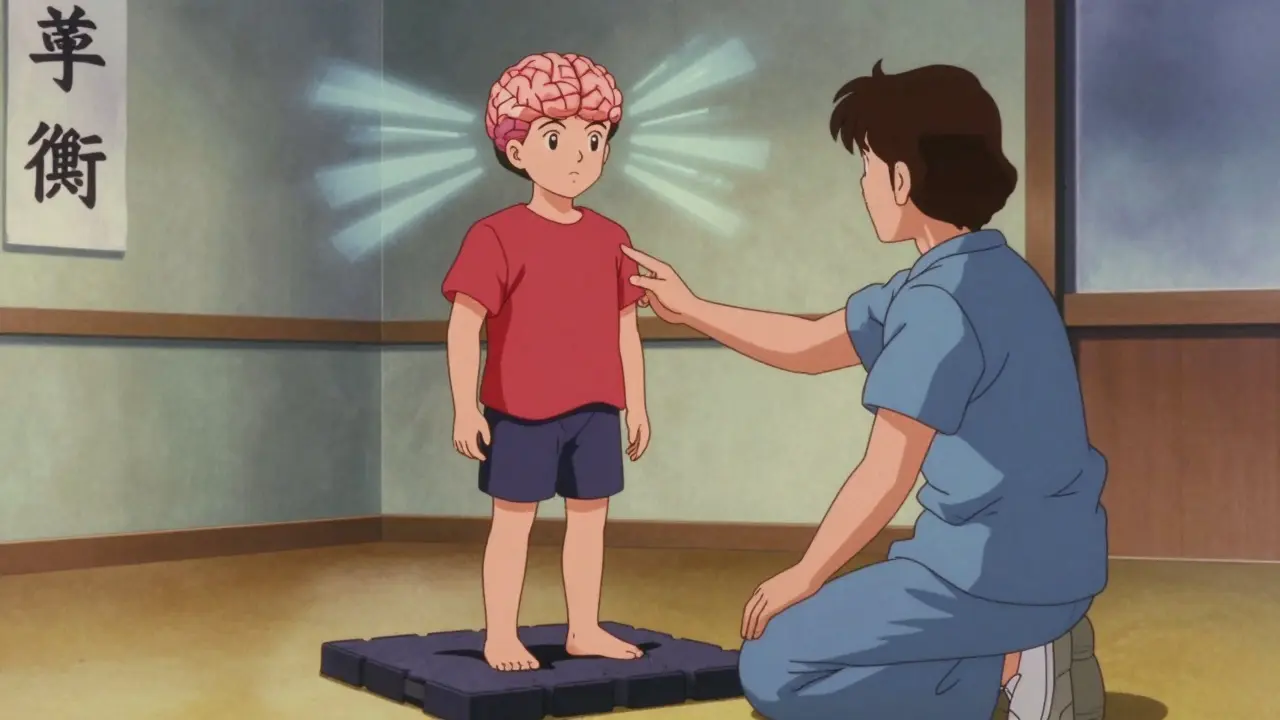
This is the most underrated tool in vestibular migraine management. VRT isn’t physical therapy for your ears - it’s brain retraining. You do simple, guided exercises that slowly expose your balance system to movement in a controlled way. Over time, your brain learns to ignore false signals.
A 2018 study found that after 8 weeks of VRT, patients improved their dizziness handicap scores by 40%. In a 2020 study, 78% of people who completed 12 sessions reported over 50% symptom reduction. You don’t need to be dizzy to start - even people with mild symptoms benefit.
Find a physical therapist trained in vestibular rehab. You’ll do exercises like:
- Slow head turns while keeping eyes focused
- Walking with head movements
- Balance exercises on foam or one foot
Do them daily. It takes 3-6 months to see full results, but many feel better within weeks. It’s the only treatment that helps your brain adapt long-term.
What Doesn’t Work - and Why
Many people waste time and money on treatments that don’t touch the root cause:
- Diuretics (like hydrochlorothiazide): Used for Ménière’s disease. Only 20% of VM patients respond - they’re useless here.
- Corticosteroids: Help vestibular neuritis (an infection), but only 30% of VM patients improve with them.
- Prolonged benzodiazepines: Can cause dependency and prevent your brain from recovering balance function.
- Ear surgery: If you’ve been misdiagnosed with BPPV or Ménière’s, surgery won’t fix VM. It can make things worse.
These treatments might seem logical - but they’re targeting the wrong system. VM is a brain disorder, not an ear one.
What’s New in 2026?
There’s real progress. In 2023, the FDA approved atogepant, a new preventive drug that targets CGRP (a molecule involved in migraine). In VM patients, it reduced attacks by 56%. Another drug, rimegepant, showed 49% fewer vertigo days in a 2022 trial.
Researchers are also testing non-invasive devices like gammaCore, a handheld device that stimulates the vagus nerve. In a 2021 trial, it cut vertigo by 45%.
And the biggest hope? Blood or brainwave tests that can diagnose VM reliably. Early studies using vestibular-evoked myogenic potentials (VEMPs) are 82% accurate - meaning a simple test might soon replace years of guesswork.
How to Get Started
Here’s your action plan:
- Start a symptom diary for 6-8 weeks. Track triggers, timing, and severity.
- Eliminate caffeine and fix your sleep schedule. This alone helps many people.
- See a neurologist who specializes in headaches or vestibular disorders. Ask if they’re familiar with ICHD-3 criteria.
- Ask about vestibular rehabilitation. Get a referral to a physical therapist trained in VM.
- If attacks are frequent, discuss preventive meds. Start with one - don’t stack them.
- Try magnesium, riboflavin, and CoQ10. They’re safe and often effective.
You don’t have to live with this. With the right approach, 65% of people see major improvement. It takes time, patience, and sometimes trial and error - but you can get your life back.
Can vestibular migraine happen without a headache?
Yes. In fact, about half of all vestibular migraine attacks occur without any head pain. The main symptom is dizziness, vertigo, or imbalance, often with nausea, light sensitivity, or motion intolerance. This is why it’s so commonly misdiagnosed as an inner ear problem.
Is vestibular migraine the same as BPPV?
No. BPPV (benign paroxysmal positional vertigo) is caused by tiny crystals in the inner ear shifting when you move your head. It causes brief spinning spells - usually under a minute - triggered by rolling over in bed or looking up. Vestibular migraine episodes last longer (5 minutes to 72 hours), aren’t always position-related, and often come with other migraine symptoms like light sensitivity or nausea. Treatments are completely different.
Why do some doctors think it’s anxiety?
Because dizziness and nausea can feel like panic attacks, and there’s no clear test for VM. Many doctors aren’t trained to recognize it. But VM is a neurological condition with real biological changes in the brain. Anxiety can worsen it, but it doesn’t cause it. If you’ve been told it’s "just stress," ask for a referral to a neurologist who specializes in migraines.
How long does vestibular rehabilitation take to work?
Most people notice improvement within 4-6 weeks of daily exercises. Full results usually take 8-12 weeks. It’s not a quick fix - it’s brain retraining. You’ll do guided exercises 2-3 times a day, often with a therapist for 8-12 sessions total, then continue at home. The key is consistency. Skipping days slows progress.
Are there any new drugs for vestibular migraine in 2026?
Yes. Atogepant, approved by the FDA in 2023, is now a first-line preventive option for VM patients. It’s a CGRP inhibitor, originally developed for migraine, and studies show it reduces vertigo days by 56%. Rimegepant also shows strong results for vertigo reduction. These drugs are safer than older preventives and have fewer side effects. They’re not yet widely known outside headache clinics, so ask your doctor if they’re right for you.
Can I still drink coffee if I have vestibular migraine?
Caffeine is a top trigger - reported by 54% of patients. But it’s complicated. For some, quitting cold turkey causes withdrawal headaches. The best approach is to reduce gradually: cut from 3 cups to 1 per day over two weeks, then stop. Many patients find their attacks drop by 35% after eliminating caffeine. If you must have it, keep it under 100 mg per day (about one small coffee) and never skip days.
What should I do if my current meds aren’t working?
Don’t give up. Most people need to try 2-3 medications before finding one that works. If propranolol caused fatigue, try amitriptyline. If topiramate made you foggy, switch to magnesium and riboflavin. Add vestibular rehab. It’s not about finding one magic pill - it’s about combining strategies. Talk to a specialist who understands VM. A 2021 survey showed 75% of patients needed multiple trials before finding success.
fiona vaz
January 28, 2026 AT 16:30I’ve been dealing with this for 5 years and finally found relief with magnesium + vestibular rehab. It’s not magic, but it’s real. Stick with it - your brain can rewire itself. You’re not broken, just misunderstood.
Start small: one exercise a day, cut caffeine, sleep like your life depends on it (because it kinda does). I went from 12 attacks/month to 1-2. It’s possible.
And please, if your doctor says it’s anxiety - get a second opinion. I cried when I finally met a neurologist who actually knew what VM was.
Sue Latham
January 29, 2026 AT 14:45Ugh. I’m so tired of people treating this like a lifestyle blog. You can’t ‘fix’ a neurological disorder with ‘sleep hygiene’ and herbal supplements. I’ve tried all that. Real treatment is prescription meds, not some TikTok guru telling you to ‘drink more water.’
Propranolol saved me. If you’re not on a real preventive, you’re just wasting time. And no, CoQ10 isn’t going to fix your brain wiring.
John Rose
January 31, 2026 AT 13:39Interesting breakdown. I appreciate the emphasis on diagnostic criteria - too many clinicians skip the ICHD-3 entirely. One thing missing: the role of vestibular dysfunction in migraine progression.
There’s emerging evidence that repeated vertigo episodes can lower the brain’s threshold for future attacks, creating a feedback loop. Early VRT may not just manage symptoms - it might alter disease trajectory. Worth considering in prevention protocols.
Colin Pierce
January 31, 2026 AT 22:12Just wanted to say thank you for writing this. I showed it to my neurologist and she actually nodded and said, ‘Yes, this is exactly right.’ I’ve been dismissed so many times.
I’m doing VRT now - 20 minutes a day, even when I feel fine. It’s boring, but I can feel my balance improving. Also quit caffeine cold turkey. First week was hell. Week 3? No attacks. Changed my life.
You’re not alone. Keep going.
Mark Alan
February 2, 2026 AT 11:10THIS IS WHY AMERICA IS FALLING APART 😭
People think they can just ‘do yoga’ and ‘take magnesium’ and fix a BRAIN DISORDER?!?!
My cousin had to go to Germany to get flunarizine because the FDA is asleep at the wheel. We need REAL medicine, not wellness cult nonsense.
Also, why is everyone on here saying ‘just sleep more’? I work two jobs. I don’t have time for your ‘lifestyle tips.’
🫠
Ambrose Curtis
February 3, 2026 AT 21:02Y’all are overcomplicating this. I had VM for 8 years. Tried everything. Propranolol gave me brain fog. Topiramate made me feel like a zombie. Then I just… stopped fighting it.
Fixed my sleep. Cut caffeine. Did VRT for 3 months. Took magnesium. That’s it.
Not magic. Not expensive. Not a miracle. Just basics done consistently. If you’re not doing those three things - sleep, caffeine, movement - no pill is gonna help. Stop looking for the silver bullet. It’s the brass knuckles of discipline.
And yeah, flunarizine’s great - but if you can’t get it, you’re not out of options. You’re just lazy.
jonathan soba
February 5, 2026 AT 03:36Let’s be honest - most of these ‘success stories’ are anecdotal and statistically insignificant. The sample size of self-reported VRT outcomes is laughable. And the claim that 65% see ‘major improvement’? Where’s the peer-reviewed longitudinal data? This reads like a pharmaceutical marketing brochure with a side of wellness propaganda.
Also, the author mentions ‘genetic changes’ but doesn’t cite the study. Suspicious.
matthew martin
February 5, 2026 AT 16:23Man. I used to think I was just ‘clumsy’ until I got my diagnosis. Now I look back and realize I was just a walking panic attack with vertigo.
What no one tells you? The guilt. You feel like a burden. Like you’re faking it because you ‘look fine.’
VRT felt silly at first - turning my head while staring at a pen? Come on. But after 6 weeks? I walked through a grocery store without wanting to cry. That’s the real win.
Also - yes, caffeine is the devil. I miss it. But I miss my life more.
Chris Urdilas
February 7, 2026 AT 06:17So let me get this straight - we’re supposed to believe that drinking water and doing head turns is the same as a real medical solution?
Meanwhile, people in Europe are getting actual drugs and we’re over here doing ‘migraine yoga’ and posting about it like it’s a TED Talk.
At least in 2026 we’ve got atogepant. Took long enough. Still waiting for the FDA to stop treating neurological disorders like they’re a bad Yelp review.
Jeffrey Carroll
February 8, 2026 AT 00:16Thank you for the comprehensive overview. The clinical criteria section is particularly valuable. I would only add a note regarding the importance of ruling out other central causes - particularly in patients with atypical presentations or new-onset symptoms after age 50.
While non-pharmacological interventions are essential, they should not delay access to evidence-based pharmacotherapy in moderate-to-severe cases. A multidisciplinary approach remains optimal.
Phil Davis
February 9, 2026 AT 06:25Wow. Someone actually wrote a post that doesn’t say ‘just meditate’ or ‘eat clean.’
Who knew the answer was… science? Who knew doctors who’ve read a journal article exist?
Anyway, VRT works. I did it. It sucked. I’m better. You should too.
Also - stop calling it ‘inner ear stuff.’ I’m tired of explaining this to ENTs who think I have a clogged ear.
Irebami Soyinka
February 10, 2026 AT 18:20USA always think they have the best medicine 🤡
Flunarizine is the real MVP - used in Nigeria for 20 years, safe, cheap, works. But you all need FDA stamp like it’s a holy relic.
And CoQ10? We use it for heart, not dizzy heads. You need real drugs, not fancy vitamins from Whole Foods.
Also, why is everyone so nice? This is a brain disorder, not a self-help podcast.
😂
doug b
February 10, 2026 AT 22:37Just one sentence: Cut caffeine, fix sleep, do the head exercises - you’ll thank yourself in 3 months.